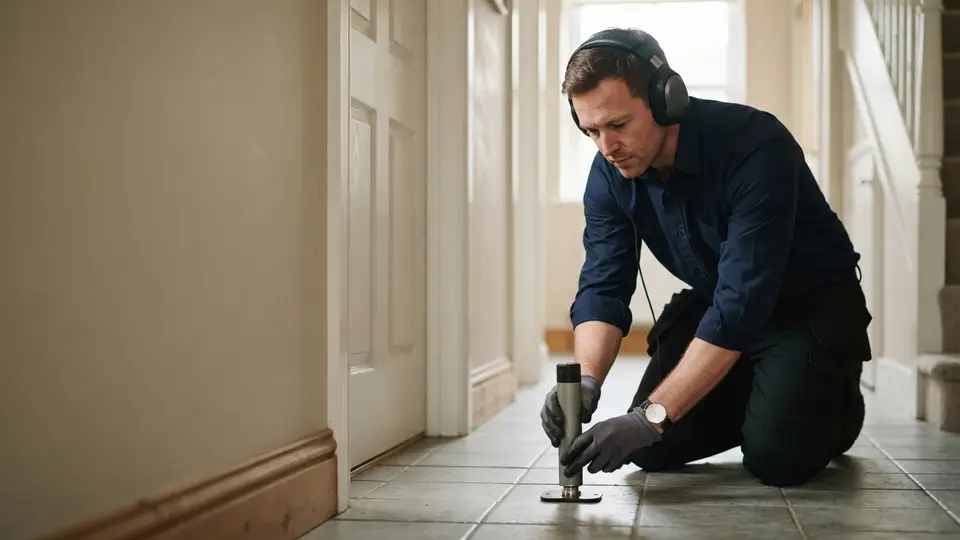
Meter test and isolation
What it reveals: Whether water is escaping and from which branch

Water bill jumped for no reason, or the crawl space always damp? We provide leak detection and repair in Georgia, opening only what we must. Georgia homes hide leaks in crawl spaces, under slabs and inside walls. Polybutylene fittings, aging copper and galvanized pipe, red clay that shifts buried lines and the occasional hard freeze in the north are the usual causes. We pinpoint leaks with pressure tests, listening equipment and thermal imaging, then repair them and confirm the meter has stopped. Here is how we work.
The service
We search for leaks in supply lines, drain lines, fixtures, water heaters, irrigation lines and the buried service line from the meter. After locating the leak, we open only what we must, repair it and confirm the fix with a pressure test and meter check.
How we find leaks
What it reveals: Whether water is escaping and from which branch
What it reveals: Escaping water in walls, under slabs or underground
What it reveals: Temperature patterns from leaking lines behind finishes
What it reveals: How far water has spread in drywall, subfloor and framing
What it reveals: The route of buried service and irrigation lines
Why Georgia
Homes built from the late 1970s to the mid 1990s, common in suburbs such as Sandy Springs (median 1989), Marietta (1987) and Dunwoody (1984), often have polybutylene supply pipe that cracks at fittings.
38% of Georgia homes in our data predate 1980, including 50% in Augusta-Richmond County and 53% in Columbus. Galvanized joints corrode and old copper pinholes.
Clay that swells and shrinks stresses buried service lines and pipes passing through foundations.
North Georgia and metro Atlanta get occasional hard freezes that split pipes in crawl spaces, exterior walls and unheated garages.
Warning signs
Our process
We check the meter with all fixtures off.
Testing hot, cold, irrigation and service lines separately narrows the search.
Listening equipment and thermal imaging find the spot.
You approve a written price before we open anything.
We fix it, pressure test and recheck the meter.
Typical cost
You approve a written price before work begins.
Get a written price: (833) 733-2357Crawl space pipe is quick; leaks under slabs or behind tile take longer.
Tile and finished walls cost more to open.
Polybutylene or thin copper may call for a repipe.
Freeze damage can involve several splits.
After-hours calls cost more.
Benefits
One access point instead of torn-up walls.
Stopping continuous leaks saves water.
Early repair protects framing in humid crawl spaces.
Photos and notes support a claim.
When a hard freeze hits, we find frozen sections, thaw them with controlled heat and check for splits before restoring pressure. For burst pipes, we shut off the water, replace the damaged section and check the rest of the run. Many Georgia homes have pipes in vented crawl spaces that were never insulated, so we insulate or reroute vulnerable runs after the repair.
Crawl spaces hide slow leaks for months. Water soaks the soil, raises humidity and can rot subfloor and joists. Georgia's humid climate makes it worse. We inspect the crawl space during leak calls, find drips from supply and drain lines, repair them and point out sagging or poorly supported pipe that may fail next.
Renters occupy 45% of Georgia homes in our data. Tenants may not notice a slow leak or report it right away. We find and fix leaks for landlords, document the cause and suggest simple upgrades, such as braided supply lines and leak sensors, that reduce the risk.
Lawn sprinkler systems are common in Georgia suburbs, and a broken lateral line can run underground every night without showing on the surface. Cracked heads and valves after a freeze add more. We isolate irrigation during testing so we can tell whether the loss is in the house or the yard, and repair or cap the leaking zone.
Water heaters in attics, closets and garages can leak slowly from fittings or the relief valve, or suddenly when the tank fails. Attic heaters are the most damaging, since water comes through the ceiling. We repair the leak and recommend a drain pan with a line to a safe location, plus a leak sensor.
After two or three leaks in polybutylene or old galvanized, the rest of the system is usually close behind. We price a repipe alongside the repair so you can compare the cost of fixing leaks one at a time with replacing the pipe once.
Policies often treat a sudden burst differently from a slow leak that went on for months. We document the cause and location with photos and notes so you have what your insurer asks for. Your policy decides coverage.
Homes at the bottom of a pressure zone can receive high street pressure that strains every pipe and fitting. We test static pressure during leak visits and replace failed regulators, which takes stress off the whole system.
Close the main shutoff, often in the crawl space, garage or at the meter by the street. Turn off the water heater. Stay away from wet electrical outlets.
Move belongings and take photos. For a frozen pipe, open the faucet it serves. Never use an open flame on pipes. Then call us.
Most leak repairs need no permit. Repiping and service line replacement usually do, from the city or county. Our plumbers hold the Georgia licenses required, and we pull permits when needed.
Why choose us
What you can count on every time one of our plumbers comes to your door.
Every job is handled by a plumber who holds the license your state or city requires, backed by liability insurance.
Our plumber explains the problem and the options, and you approve a written price before any work begins.
Burst pipes, sewage backups and failed water heaters get priority scheduling, including nights and weekends.
We pull permits when the job needs one and schedule the inspection, so the work holds up when you sell.
Repairs and installations come with a written warranty on labor, on top of the manufacturer's warranty on parts.
Our pages and plumbers account for your area's water, soil, climate and the age of the homes around you.
Service area
We find and repair leaks in 675 Georgia places, from Smyrna (27,040 homes) and Marietta to Augusta and Columbus. Choose yours:
It depends on the size of the home, where the leak is and the equipment needed. You receive a written price for the search before we begin.
Yes. Once we locate the leak and see the pipe, we give a written price for the repair options before opening anything.
Usually. Pipes in a crawl space are easier to reach than pipes under a slab or behind tile.
Isolation tests narrow it to one line, then acoustic and thermal tools locate it so we can open a small access point.
Most leaks are repaired on the same visit once located. Larger reroutes may need a scheduled return.
Yes. Flow-sensing valves close the main when they detect a leak, which helps rentals and homes left empty.
Close the main shutoff, turn off the water heater and stay away from wet electrical areas. Then call us.
No. Open flames can crack pipe and set crawl space framing on fire. Open the faucet and let us thaw it.
Many leaks are found within one to two hours. Slab and long buried lines take longer.
Most repairs restore water the same visit, and we tell you how long it will be off first.
Insulate crawl space and exterior wall pipes, close crawl space vents in winter, disconnect hoses and drip faucets on the coldest nights.
We recommend it. It becomes brittle and fails at fittings without warning.
Shut off the main, keep away from wet light fixtures and call us. Active leaks get priority scheduling.
Many homes have crawl spaces with long runs of aging pipe, and leaks there go unnoticed for a long time.
Clay that swells and shrinks can stress buried lines and pipes passing through the foundation until joints fail.