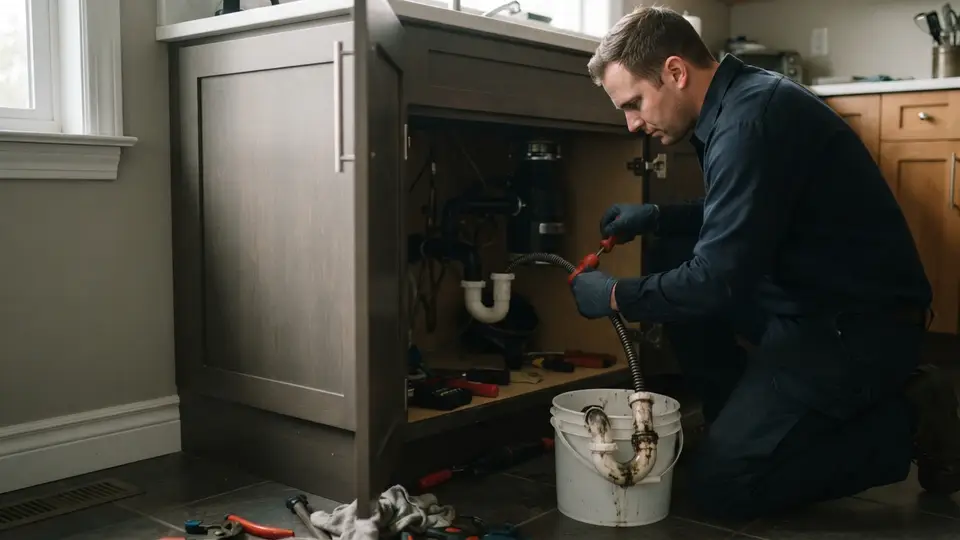
One fixture drains slowly
Usual cause: Hair, soap or grease near the trap
How we clear it: Hand auger or small machine
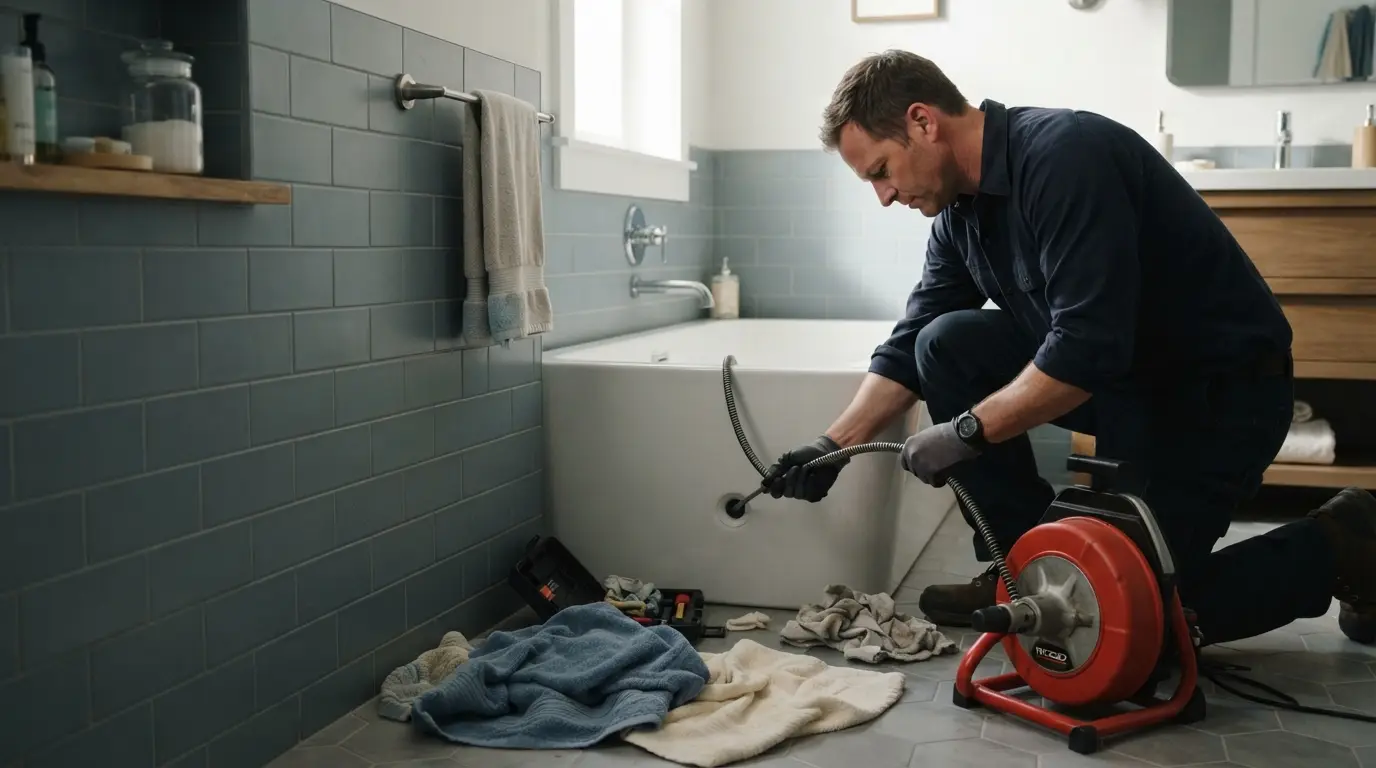
Toilet gurgling when the washer drains, or a kitchen sink that will not clear? We handle drain cleaning and clog removal in Georgia homes and businesses. Georgia clogs often start outside: oaks, pines and magnolias send roots into old clay and cast iron sewer laterals, and red clay that swells and settles pulls joints apart. Inside, grease, wipes and heavy use in rentals and college housing do the rest. In septic homes, a slow drain may mean a full tank. We clear the line, inspect it when that helps and explain what caused the clog.
The service
We clear every drain in the building: sinks, tubs, showers, toilets, kitchen lines, laundry standpipes, the main drain in the crawl space or under the slab and the lateral to the city sewer or septic tank. In apartments and condos, we clear shared stacks and building drains. Our goal is a clean pipe and an honest answer about why it clogged.
Symptoms and solutions
Usual cause: Hair, soap or grease near the trap
How we clear it: Hand auger or small machine
Usual cause: Main line or lateral blockage
How we clear it: Cable from a cleanout, then camera
Usual cause: Roots in a clay or cast iron lateral
How we clear it: Root cutting, camera, repair plan
Usual cause: Grease coating the pipe
How we clear it: Hydro jetting
Usual cause: Full tank or saturated drainfield
How we clear it: Check and pump the tank
Why Georgia
38% of the homes in our Georgia Census data predate 1980, including 59% in Savannah, 55% in Macon-Bibb County and 53% in Columbus. Many of those homes have clay or cast iron laterals, and Georgia's big shade trees send roots into every joint.
Clay soil swells in wet weather and shrinks in drought, shifting buried pipe. Offsets and sags catch paper and waste.
Renters occupy 59% of Athens-Clarke County homes and 54% of Atlanta homes. Shared drains in apartments and student housing take grease, wipes and heavy daily use.
Cooking grease cools and sticks to pipe walls, especially in long runs through crawl spaces, and builds up until the line closes.
Warning signs
Our process
Which fixtures are affected tells us whether it is a branch, the main or the septic system.
We clear main lines from an outdoor or crawl space cleanout, not through fixture traps.
Cutting heads for roots and paper; hydro jetting for grease and sludge.
For repeat clogs and older lines, we record the pipe and mark problem spots.
We run water through every line we cleared and tell you what we found.
Typical cost
You approve a written price before work begins.
Get a written price: (833) 733-2357A sink trap is quick; a main line or lateral takes larger equipment.
Missing or buried cleanouts add time.
Roots and grease take longer than hair.
Jetting costs more than cabling but lasts longer.
Added when we need to see the pipe.
After-hours calls cost more.
Benefits
Cleaning the full pipe wall slows buildup.
You see roots, cracks or sags and keep the footage.
Clear shared lines mean fewer backups.
Catching damage early costs less than a collapse.
Jetting sends high-pressure water through a nozzle that scours grease, sludge and root debris from the whole pipe wall. We use it on kitchen lines, restaurant drains, apartment building drains and laterals after root cutting. We camera older clay and cast iron first, since badly broken pipe may need repair rather than jetting.
Many Georgia homes, including many in suburban counties, are on septic. When every drain slows together, the cause may be a full tank, a blocked baffle or a drainfield saturated after heavy rain in slow-draining clay. We check the tank before cabling the house line, because clearing a line into a full tank only moves the backup.
Many Georgia homes sit on crawl spaces, where drain lines hang from the floor framing. Hangers fail over time and pipes sag, leaving low spots where waste settles. Leaks in the crawl space can go unnoticed for months. While clearing a line, we look at how it is supported and recommend re-hanging sagging sections.
Spring storms and tropical systems push rain into cracked laterals and overload older sewers, and homes with root-filled lines often back up during the wettest weeks. In low coastal areas around Savannah and Brunswick, high water tables make this worse. Clearing and inspecting lines before the rainy season gives the best chance of avoiding a backup, and a backwater valve can protect low homes from sewer surcharges.
Restaurant kitchens send grease into floor sinks and building drains every day. We jet commercial lines on a regular schedule, outside service hours, and keep records for inspectors.
A plunger is fine for one slow fixture. If several drains back up, stop using water everywhere in the house, including the washer and dishwasher.
Avoid chemical drain cleaners; they rarely clear main lines and can harm old pipe and septic systems. Keep children and pets away from sewage and call us.
Drain cleaning needs no permit. Sewer repair or replacement usually does, from the city or county. Our plumbers hold the Georgia licenses their work requires, and we pull permits when a repair needs one.
Why choose us
What you can count on every time one of our plumbers comes to your door.
Every job is handled by a plumber who holds the license your state or city requires, backed by liability insurance.
Our plumber explains the problem and the options, and you approve a written price before any work begins.
Burst pipes, sewage backups and failed water heaters get priority scheduling, including nights and weekends.
We pull permits when the job needs one and schedule the inspection, so the work holds up when you sell.
Repairs and installations come with a written warranty on labor, on top of the manufacturer's warranty on parts.
Our pages and plumbers account for your area's water, soil, climate and the age of the homes around you.
Related services
Service area
We clear drains in 675 Georgia places, from Atlanta's 265,899 homes to Decatur, where 54% of homes predate 1980. Choose yours:
It depends on which line is clogged, cleanout access, the cause and the method. Our plumber gives you a written price before any work begins.
Yes. Jetting takes more equipment and time but scours the whole pipe wall, so grease and roots take longer to return.
It is listed separately on your quote. For repeat clogs and older laterals, it shows the real cause so you only pay for needed repairs.
Yes. We clear stacks and building drains and coordinate with management so residents know what to expect.
Yes. We show you the camera picture as we go and give you a copy of the video.
We show you the damage and give written prices for a spot repair, a liner or a new line.
Yes. Sewage carries bacteria. Stop using water, keep people and pets away and let us clear the line before cleanup.
We advise against them. They rarely clear main line clogs and can harm old pipe and septic systems.
Many main lines are cleared and inspected in two to three hours. Heavy roots take longer.
Right after we finish testing. If the camera found damage, we tell you whether normal use is safe until the repair.
Often every year or two until it is repaired or lined. A camera check shows how fast roots return.
Wipe pans with a paper towel, pour cooled grease into a container and use strainers.
Stop using water and call us. Main line backups get priority scheduling.
Many older laterals are clay or cast iron with joints that roots can enter, and Georgia trees grow fast in the warm, wet climate.
No. A full tank or saturated drainfield can slow every drain. We check the tank first.