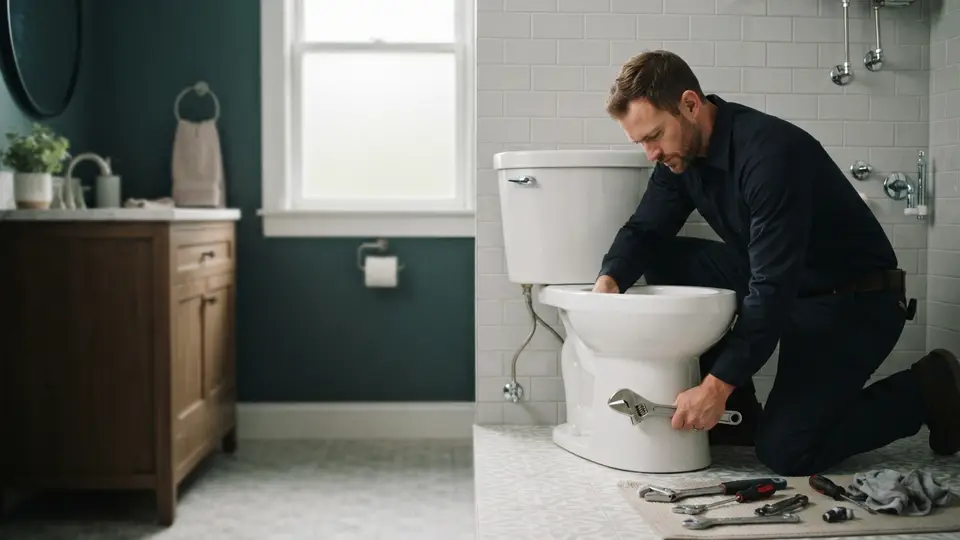
Toilet
Typical problem: Runs, rocks, weak flush, base leak
Usual fix: Flapper, fill valve, new seal, or replacement
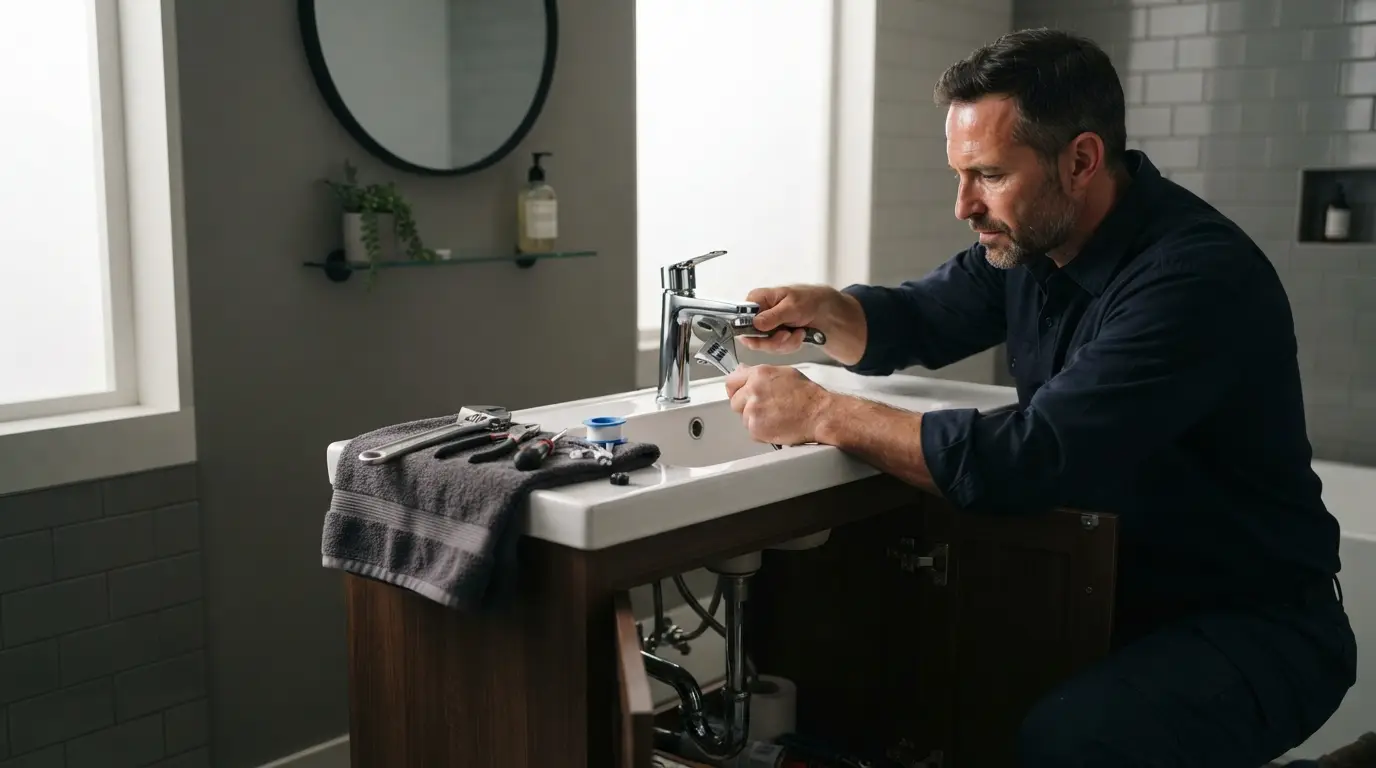
Toilet running all night, or a shower valve that will not stop dripping? We provide toilet, faucet and fixture repair in Georgia, plus installs and remodels. Fixtures fail differently across the state: original valves and old toilets in historic Savannah and Macon homes, polybutylene supply connectors in 1980s suburbs, hard water scale in South Georgia and heavy use in college towns and rentals. We repair or replace toilets, faucets, sinks, showers, tubs and disposals and handle plumbing for kitchen, bath and basement remodels.
The service
We work on every fixture in the house and the valves and supply lines that feed them. You can supply your own fixtures or choose from options we recommend. Before replacing anything, our plumber checks whether a repair will last and gives you the price of each choice, so you are not talked into a new fixture you do not need.
Common fixture work
Typical problem: Runs, rocks, weak flush, base leak
Usual fix: Flapper, fill valve, new seal, or replacement
Typical problem: Drips, scale, low flow
Usual fix: Cartridge, aerator cleaning, new faucet
Typical problem: Dripping valve, temperature swings
Usual fix: Cartridge or pressure-balancing valve
Typical problem: Old polybutylene or rubber connectors
Usual fix: Braided lines and new quarter-turn stops
Typical problem: Jammed, humming, leaking
Usual fix: Clear, reset or replace
Why Georgia
59% of Savannah homes and 55% of Macon-Bibb County homes predate 1980. Original two-handle showers, old toilets and seized stops in those homes are often past repair.
Homes from the 1980s and early 1990s may have polybutylene or rubber supply connectors under sinks and toilets that crack with age and fail suddenly.
Mineral scale from hard groundwater clogs aerators, shower heads and toilet valves and wears cartridges.
Renters occupy 59% of homes in Athens-Clarke County and 78% in Statesboro. Rental fixtures see heavy use and frequent turnover repairs.
Warning signs
Our process
We replace flappers, fill and flush valves, reset toilets on new seals after checking the flange and subfloor, and install new water-efficient toilets with new supply lines and shutoffs.
We replace cartridges, descale aerators and fix leaks under sinks. New faucets go in with braided supply lines.
We repair and replace drains, basins, shower valves and diverters, and upgrade old valves to pressure-balancing types that prevent scalding.
We clear jams, fix leaks and install new units. In septic homes, we discuss how a disposal affects pumping.
We move and add drains, vents and supply lines, set valves, pass inspection and set fixtures after finishes. Crawl space homes make moving drains simpler than slab homes.
Typical cost
You approve a written price before we begin.
Get a written price: (833) 733-2357Parts cost less than new fixtures.
Prices vary widely by brand and finish.
Old valves often need replacing first.
Rotted subfloor under a toilet adds work.
Moving drains and vents costs more than swapping fixtures.
Benefits
Running toilets waste water every hour.
Small leaks rot subfloors over time.
Pressure-balancing valves prevent scalding.
You can isolate a fixture in an emergency.
The small flexible lines that connect toilets and faucets to the wall are a common cause of sudden floods. Older plastic and rubber connectors crack with age. During any fixture visit, we check them and replace them with braided stainless lines and quarter-turn stops that close easily in an emergency. It is an inexpensive upgrade that prevents some of the most damaging leaks we see.
Many North Georgia and metro Atlanta homes have basements, often built into hillsides. Adding a bathroom there may need an ejector pump if the fixtures sit below the sewer line. We plan the layout around the drain and vent, install the pump if needed and handle the permit and inspections.
We install comfort-height toilets, lever faucets, handheld showers and low-threshold showers in place of old tubs, moving drains and valves as needed. Pressure-balancing and thermostatic valves keep water at a safe, steady temperature for children and older family members.
About 24% of Georgia homes are in buildings with five or more units, from Midtown towers to suburban townhome communities. In these buildings, a leaking toilet or tub can damage the unit below, and a fixture without a working stop can force a riser shutdown that affects neighbors. We coordinate with the association, install missing stops and work within building rules on hours and notices.
New toilets, faucets and showerheads use far less water than older ones, lowering bills and easing the load on septic systems. In older homes with long cast iron drains, we check the drain line so a new low-flow toilet clears properly.
In North Georgia and metro Atlanta, a hose left connected during a hard freeze can split the outdoor faucet inside the wall, and the leak shows up when it is first used in spring. We replace split faucets with frost-free models and add interior shutoffs so outdoor lines can be drained before winter.
A good faucet with a worn cartridge is worth fixing; a cracked toilet or corroded valve body is not. We price both choices so you can decide.
Close the shutoff under the sink or behind the toilet, or the main if the stop will not close. For an overflowing toilet, press the flapper down inside the tank.
Turn off a jammed disposal and never reach inside. Clear the work area and call us.
Like-for-like fixture replacements usually need no permit. Remodels and new bathrooms do. Our plumbers hold the Georgia licenses required, and we pull permits when needed.
Why choose us
What you can count on every time one of our plumbers comes to your door.
Every job is handled by a plumber who holds the license your state or city requires, backed by liability insurance.
Our plumber explains the problem and the options, and you approve a written price before any work begins.
Burst pipes, sewage backups and failed water heaters get priority scheduling, including nights and weekends.
We pull permits when the job needs one and schedule the inspection, so the work holds up when you sell.
Repairs and installations come with a written warranty on labor, on top of the manufacturer's warranty on parts.
Our pages and plumbers account for your area's water, soil, climate and the age of the homes around you.
Service area
We repair and install fixtures in 675 Georgia places, from Peachtree City (median built 1993) and Alpharetta (1996) to Savannah. Choose yours:
Most toilet repairs need one inexpensive part, so labor is most of the cost. Flange or subfloor damage adds to it. You get a written price before we start any work.
Repair if parts exist and the body is sound. Older, scaled or discontinued faucets are often better replaced with a new model.
Yes. It is an inexpensive job that prevents sudden floods from cracked old connectors under sinks and toilets.
Yes. We install customer-supplied fixtures and check that all the parts are present before we start the job.
Yes. We plan drains and venting, install an ejector pump if needed, and handle the permit and inspections.
Yes. We replace old valves with pressure-balancing or thermostatic valves, often through an access panel behind the wall.
Older valves do not balance pressure. A pressure-balancing valve keeps the temperature steady and prevents scalding.
No. Turn it off and use the hex key under the unit, or call us. Never put your hand inside.
Usually one to two hours, longer if stops or supply lines need replacing at the same time.
Rough-in usually takes one to three days plus inspection. Fixtures are set after tile and finishes.
Clean aerators and shower heads regularly, and consider a softener if your water is very hard.
When they stick, leak or will not close fully. Many older Georgia homes still have their original stops.
Close the valve behind it or press the flapper shut. If water keeps rising, close the main and call us.
A slow leak at the seal has likely soaked the subfloor. We repair the floor and reset the toilet on a new seal.
Yes. We schedule around tenants, use durable parts and document each repair for the owner.