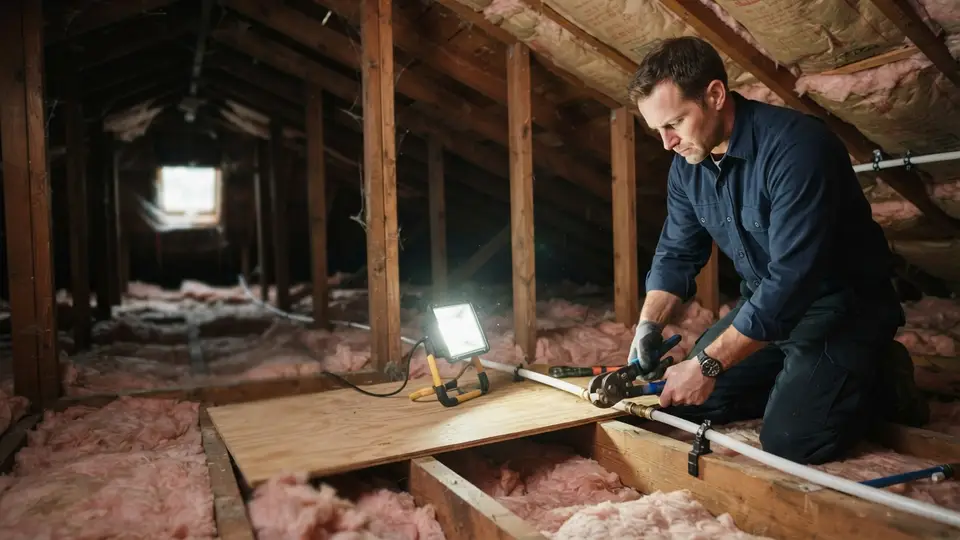
Direct repair
Best when: One leak in otherwise sound pipe
What it involves: Small opening in the floor and slab, repair, patch
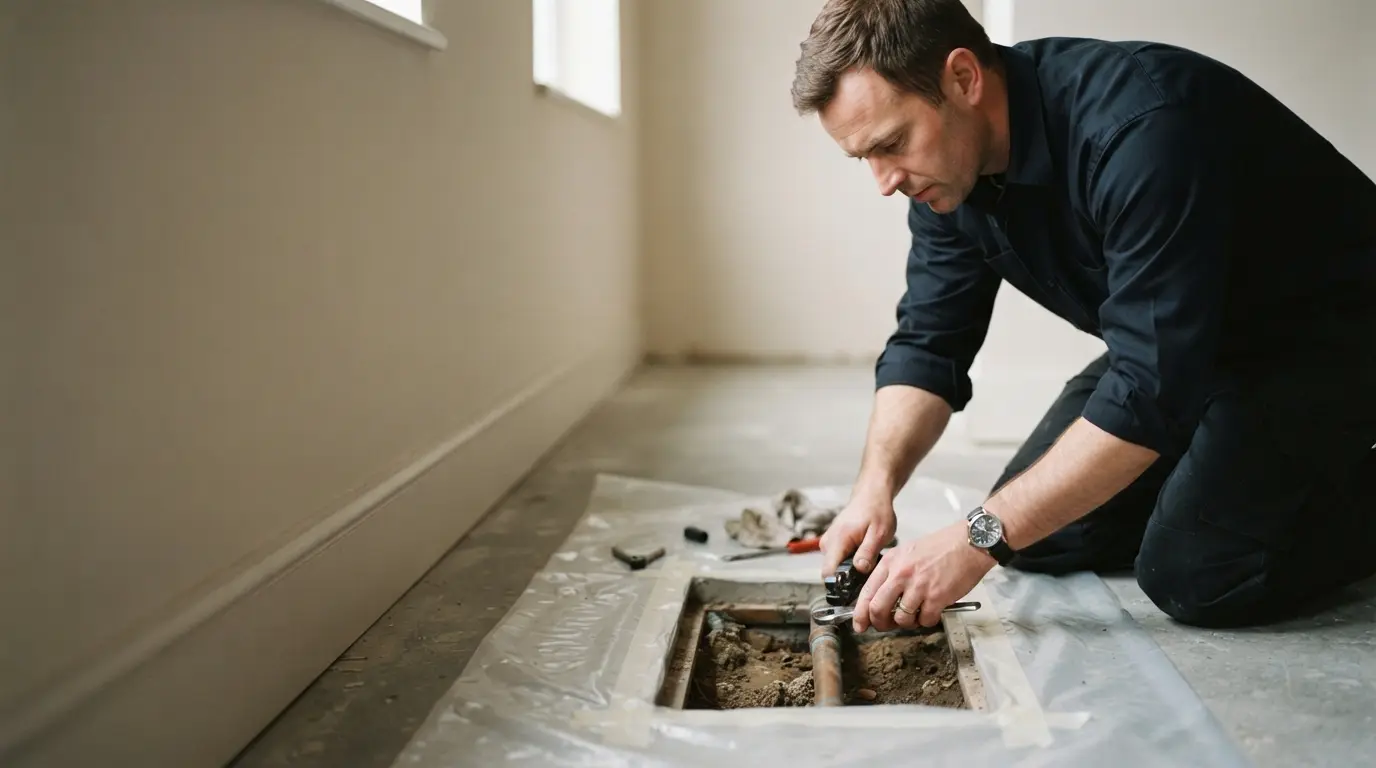
Warm patch on the kitchen floor, or the meter turning with every tap closed? We do slab leak repair in Georgia, locating the leak before we touch the floor. Many Georgia homes, especially in South Georgia and newer subdivisions, sit on concrete slabs with water lines underneath, while older homes may have slab basements or slab additions. Red clay that swells and shrinks, aging copper, polybutylene fittings and high water pressure all cause leaks under concrete. We pinpoint the leak and compare a direct repair with a reroute.
The service
A slab leak is a leak in a water or drain line under or inside a concrete floor. Hot water lines leak most often. In Georgia we find them in slab-on-grade houses, basement floors, garages and additions. Many older homes in North and Middle Georgia sit on crawl spaces instead, where pipes are easier to reach.
Repair options
Best when: One leak in otherwise sound pipe
What it involves: Small opening in the floor and slab, repair, patch
Best when: Older pipe or leaks under tile and cabinets
What it involves: New line through the attic or walls; old line capped
Best when: Repeat leaks or polybutylene throughout
What it involves: All supply lines replaced, mostly overhead
Best when: Leaking drain under the slab
What it involves: Spot repair or liner from inside
Why Georgia
Clay under a slab swells in wet months and shrinks in drought, flexing pipes that pass through or under concrete.
Copper lines rub against concrete and gravel as hot water expands and contracts them, wearing pinholes over decades.
Some homes from the 1980s and early 1990s have polybutylene under the slab, and its fittings crack with age.
High street pressure and very hot water heater settings add stress to buried lines.
Warning signs
Our process
A meter test and pressure tests on hot and cold lines tell us which is leaking.
Acoustic listening and thermal imaging locate the leak under the floor.
We give written prices for a direct repair and a reroute.
Direct repairs open the floor at one spot; reroutes run new pipe overhead.
We pressure test and recheck the meter.
Typical cost
You approve a written price before work begins.
Get a written price: (833) 733-2357Under open floor is simpler than under cabinets or showers.
Reroutes avoid the slab but use more pipe.
Tile and hardwood cost more to patch.
Polybutylene or thin copper may call for a repipe.
Reroutes and repipes usually need one.
Benefits
Water under a slab on clay can make soil swell or wash out.
Hot water slab leaks waste water and energy.
Moisture wicks into flooring and walls in humid weather.
Early leaks can be fixed before floors are ruined.
Slab construction is common in South Georgia and in many newer metro subdivisions. The median home in Warner Robins dates from 1989, in Valdosta from 1986, in Stonecrest from 1999, in South Fulton from 2003 and in Newnan from 2004. Homes from the 1980s and 1990s are now at the age when copper and polybutylene under slabs begin to fail.
Rerouting avoids breaking tile or hardwood, which can be hard to match. In single-story Georgia homes with attics, we run PEX overhead, insulate it against summer heat and winter cold, and drop into walls with small openings. In crawl space sections of the house, we run new pipe under the floor instead.
Many policies cover the cost of reaching a slab leak and repairing resulting water damage but not the pipe itself, and coverage varies. We document the leak location, cause and repair with photos and notes for your insurer.
After heavy rain, water seeping through a slab or basement floor can be groundwater rather than a plumbing leak. A meter test tells the difference before anyone breaks concrete; if it is groundwater, drainage or a sump pump may be the fix.
Not every slab leak is on a supply line. Old cast iron drains under slabs rust through and leak each time water drains, causing odors, pests and damp flooring without any change on the meter. We camera the drains and price lining or replacement, which can often be done without breaking more floor than necessary.
Ground-floor townhomes and condos have lines under shared slabs, and a leak can affect a neighbor. We coordinate access with the association, locate the leak and document whether it is a unit line or a common pipe so owners and the board can sort out responsibility.
Renters occupy 45% of Georgia homes in our data, and tenants may not notice a slab leak until the bill reaches the owner. We locate and repair leaks for landlords, schedule work around tenants and recommend a reroute when the pipe is likely to fail again.
Homes on wells have no meter, so a slab leak shows up as a pump that runs when no one is using water. We test the system in sections to find it.
If the floor is warm, close the cold supply valve at the water heater to stop a hot-side leak. For cold-side or large leaks, close the main between uses.
Photograph warm spots, damp flooring and your bills for your insurer. Do not break the floor yourself. Call us.
Small direct repairs often need no permit, but reroutes and repipes usually do, from the city or county. Our plumbers hold the Georgia licenses required, and we pull permits and schedule inspections.
Why choose us
What you can count on every time one of our plumbers comes to your door.
Every job is handled by a plumber who holds the license your state or city requires, backed by liability insurance.
Our plumber explains the problem and the options, and you approve a written price before any work begins.
Burst pipes, sewage backups and failed water heaters get priority scheduling, including nights and weekends.
We pull permits when the job needs one and schedule the inspection, so the work holds up when you sell.
Repairs and installations come with a written warranty on labor, on top of the manufacturer's warranty on parts.
Our pages and plumbers account for your area's water, soil, climate and the age of the homes around you.
Service area
We locate and repair slab leaks in 675 Georgia places, including Atlanta (265,899 homes). Choose yours:
It depends on the leak location, whether we repair or reroute, your flooring and permits. You get a written price for each option before we start.
Often, especially when the leak is under tile or cabinets and there is attic access. We price both options so you can compare.
After repeat slab leaks, or when the pipe is polybutylene or thin copper throughout. A repipe ends the cycle.
We isolate the leaking line with pressure tests, then pinpoint it with acoustic listening and thermal imaging.
Usually a small opening over the leak, just large enough to reach and repair the pipe.
Rarely under the main house, but slab additions, garages and basement floors can still have lines under concrete.
Water under a slab on clay can make the soil swell or wash out, which may lead to cracks. Prompt repair limits that risk.
For short periods, usually. Close the valve to the leaking line between uses and call us.
Most direct repairs or reroutes are done in one or two days.
Usually on the first visit, often within a few hours.
Keep pressure normal, manage drainage around the slab, water evenly in drought and consider a reroute after a first leak.
Yes. Comparing each bill with the same month last year is one of the best early warnings.
Shut off the main and call us. Surfacing leaks get priority scheduling.
It depends on your policy. Some cover access and water damage but not the pipe. We document the leak to support your claim.
Clay swells when wet and shrinks when dry, moving the slab slightly and stressing the pipes beneath it.