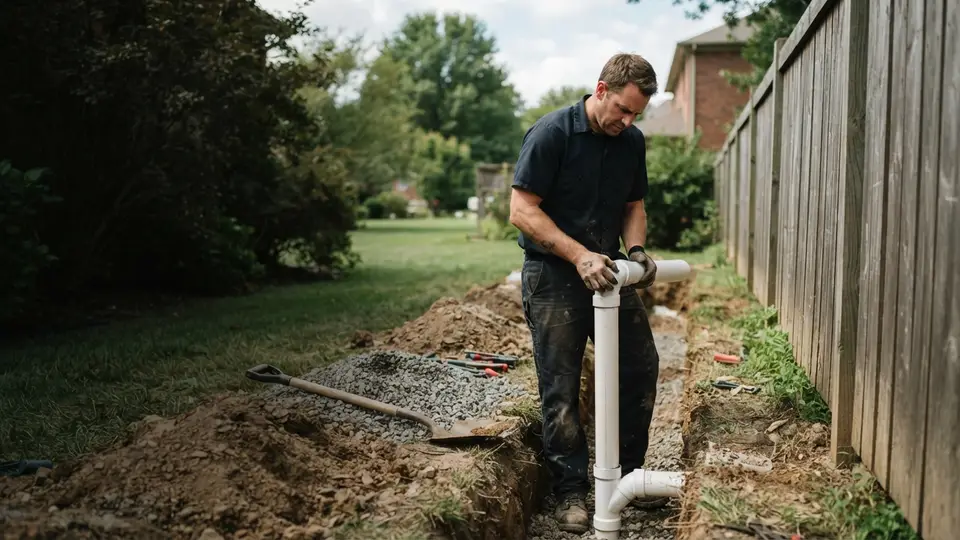
Spot repair
When it fits: One broken joint or short section
What it involves: One excavation at the marked spot
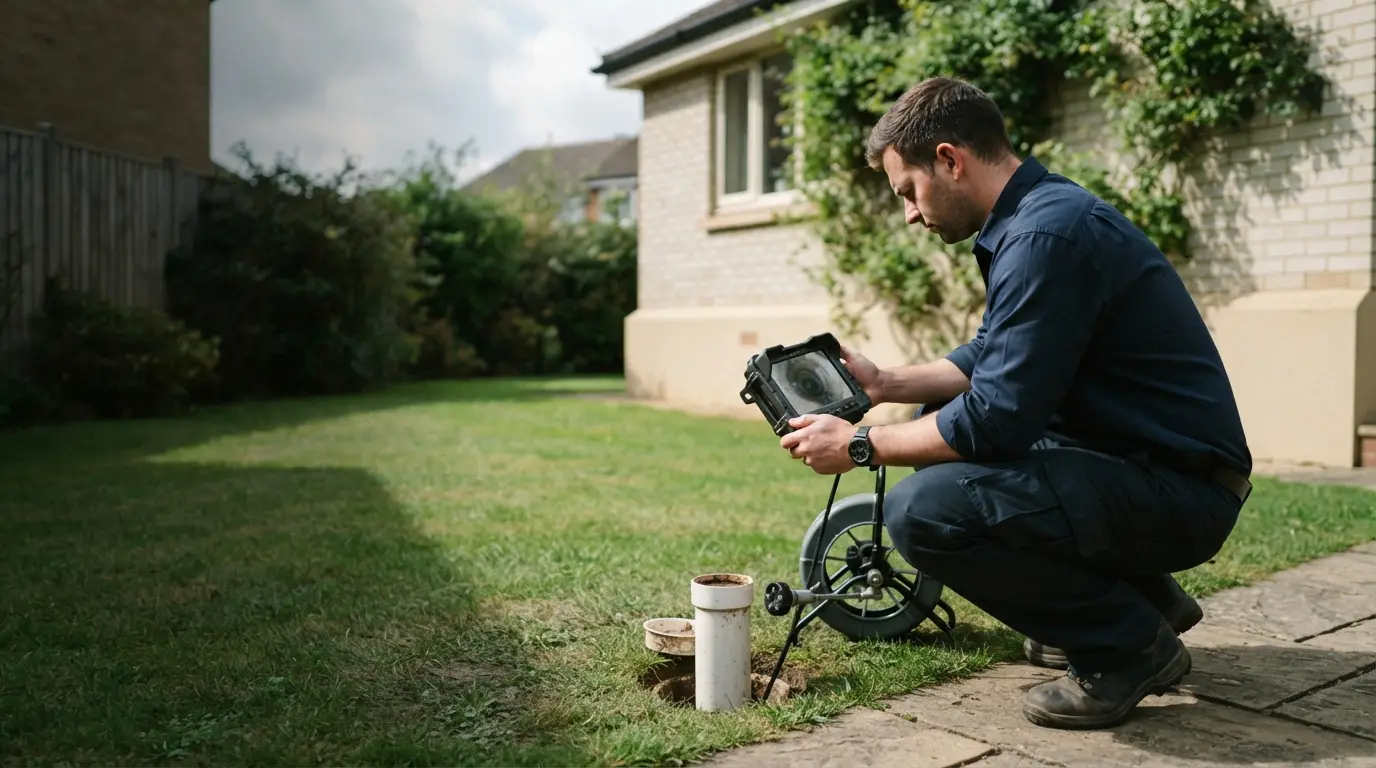
Roots back in the sewer every spring, or a soggy patch over the line? We do sewer line repair and replacement in Georgia, starting with a camera. Older Georgia laterals are mostly clay, cast iron or early fiber pipe, and they fail from tree roots, red clay that swells and settles, and age. We record the line on video, show you exactly where it is damaged and give written prices for a spot repair, a liner, pipe bursting or full replacement. Below are the warning signs, our process, the methods and what drives the price.
The service
The lateral carries wastewater from your house to the public sewer main or to a septic tank. In most Georgia cities and counties, the owner is responsible for the lateral from the house to the property line or the main, depending on local rules. We inspect, repair, line and replace laterals, add cleanouts and coordinate with the sewer utility.
Repair methods compared
When it fits: One broken joint or short section
What it involves: One excavation at the marked spot
When it fits: Cracked or root-filled pipe that is still round
What it involves: Resin liner forms a new pipe inside the old one
When it fits: Long runs under driveways, trees or landscaping
What it involves: New pipe pulled through between two pits
When it fits: Collapsed, sagging or badly offset pipe
What it involves: Excavate and relay at proper slope
Why Georgia
17% of the homes in our Georgia data were built before 1960. In East Point 64% of homes predate 1980, in Albany 63% and in Rome 59%. Clay joints from those decades loosen, cast iron rusts through and some homes have fiber pipe that flattens with age.
Oaks, pines, sweetgums and magnolias grow fast in Georgia's warm, wet climate and send roots into lateral joints, where they grow into dense mats.
Clay that swells in wet months and shrinks in drought moves buried pipe. Joints separate and sags form where waste settles.
Heavy rain soaks clay and pushes water into cracked laterals, overloading the system and causing backups in low homes.
Warning signs
Our process
We record the full lateral and note the distance and depth of each defect.
We mark the route and problem spots on the ground.
You watch the footage with us and get written prices for each suitable method.
We pull the permit and call Georgia 811 for utility locates before digging.
We complete the chosen repair and add a cleanout if the house lacks one.
A final camera run confirms the work; then we backfill and restore the surface.
Typical cost
We give you a written price for each option before you decide.
Get a written price: (833) 733-2357Longer, deeper lines cost more.
Spot repair costs least; full replacement under hardscape costs most.
Driveways, trees and landscaping add care.
Wet clay and North Georgia rock slow digging.
Connections at the main may need extra permits.
These vary by city and county.
Benefits
Sealed pipe keeps roots out.
A tight lateral keeps groundwater out.
New pipe keeps waste moving.
A new cleanout makes future work faster.
Many Georgia yards have mature trees, driveways and landscaping over the sewer line, and digging through wet red clay is slow and messy. When the camera shows pipe that is cracked or root-filled but still round, lining it from inside avoids most of the digging. Pipe bursting replaces a long run with two small pits. When the pipe has collapsed or sags badly, an open trench is still the right answer, and we explain why.
In crawl space homes, the building drain runs under the floor before it leaves the foundation. Cast iron there rusts and cracks, and leaks soak the soil under the house, causing odors and attracting pests. We inspect the drain under the house along with the lateral and replace failing sections, often without disturbing the floors above.
A sewer scope is a smart step before buying an older Georgia home, such as in Decatur (54% before 1980), Savannah or Macon. A failing lateral is invisible in a showing and expensive after closing. We record the line and give a written price for any repair so you can negotiate or plan.
In low neighborhoods where the public sewer can surcharge during heavy rain, sewage can push back into the lowest drains of a house even when the lateral is sound. A backwater valve on the building drain lets wastewater leave but closes when flow reverses. We install them during lateral repairs or as a separate job, and show you how to check the flap so it keeps working.
As sewer lines extend into growing counties, some homeowners on septic connect to the new main. We run the new lateral, reroute the building drain if needed, abandon the old tank as the county requires and coordinate inspections with the sewer utility.
If sewage is backing up, stop using water everywhere in the house. If the outdoor cleanout is reachable, opening the cap slowly may let sewage flow outside instead of inside; stand to the side.
Do not dig near the line yourself; gas, power and fiber lines are often nearby. Keep people and pets away from wet areas and call us.
Sewer repair and replacement usually need a permit and inspection from the city or county, and the sewer utility may need to approve work at the main. Our plumbers hold the Georgia licenses required, and we handle permits, locates and inspections.
Why choose us
What you can count on every time one of our plumbers comes to your door.
Every job is handled by a plumber who holds the license your state or city requires, backed by liability insurance.
Our plumber explains the problem and the options, and you approve a written price before any work begins.
Burst pipes, sewage backups and failed water heaters get priority scheduling, including nights and weekends.
We pull permits when the job needs one and schedule the inspection, so the work holds up when you sell.
Repairs and installations come with a written warranty on labor, on top of the manufacturer's warranty on parts.
Our pages and plumbers account for your area's water, soil, climate and the age of the homes around you.
Service area
We repair sewer lines in 675 Georgia places, from Savannah (68,174 homes) to Macon-Bibb County (71,962). Choose yours:
Length, depth, method, what lies above the line, soil and permit fees set the price. After the camera inspection, you get a written price for each option.
Often, when trees, driveways or long runs sit above the line. A collapsed or sagging pipe may still need excavation, which we price separately.
Saturated red clay is heavy and slow to dig, and trenches may need pumping or extra care to stay stable.
It records the inside of the lateral, showing roots, cracks, offsets, sags and collapses, with the distance and depth of each.
Yes. We record the line, give you the video and a written repair price if work is needed.
Yes. We pull city or county permits, call for utility locates and schedule inspections.
It can be. Leaking sewage contaminates soil, causes odors and can back up into the house. Keep people away and call us.
We advise against it. Buried utilities run nearby, and we call Georgia 811 before any digging.
Lining and spot repairs often take a day. Full replacements can take a few days, plus inspection.
Not while the line is open. We tell you when to stop using water and keep that time short.
Modern PVC and properly installed liners are expected to last for decades with normal use.
Lined or new pipe has no open joints. Plant new trees away from the line.
Stop using water and call us. Sewer backups get priority scheduling.
Usually the property owner, to the property line or main depending on local rules. Your sewer utility can confirm.
Red clay swells and shrinks with rain and drought, moving buried pipe until joints separate and low spots form.