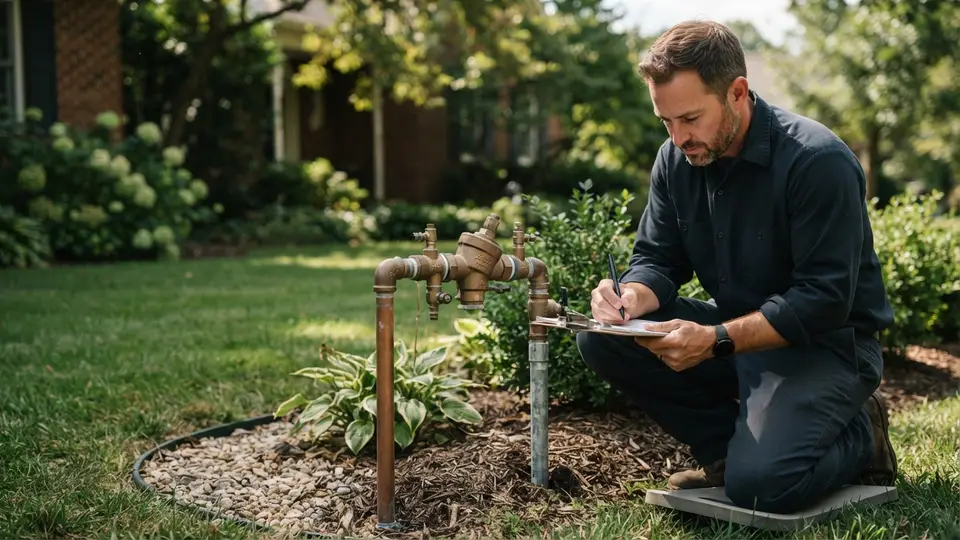
Pressure vacuum breaker (PVB)
Where you see it: Lawn sprinkler systems
Notes: Sits above ground; freezes if not drained
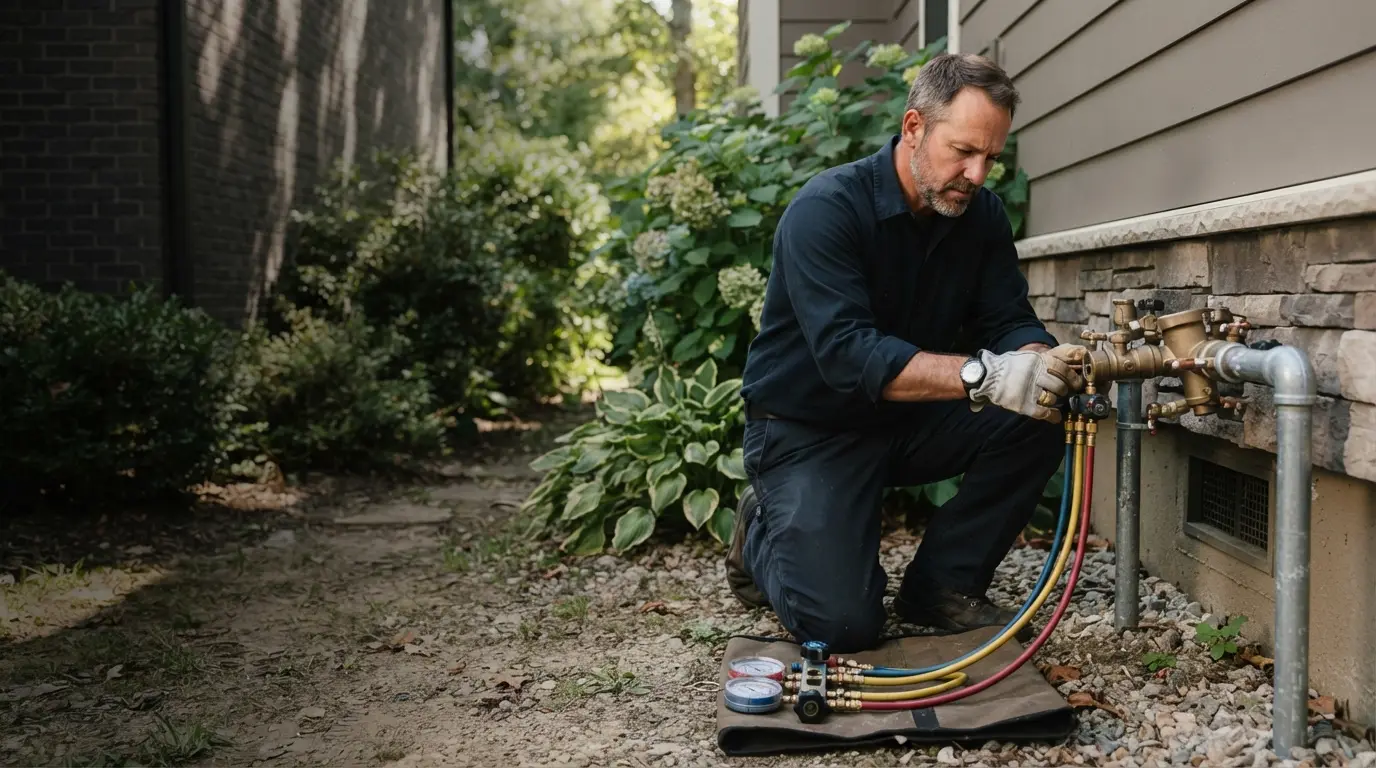
Yearly test letter from the water department, or a sprinkler device split by a freeze? We handle backflow testing and prevention in Georgia. Lawn irrigation is everywhere in Georgia suburbs, and restaurants, clinics and buildings with fire sprinklers all connect equipment to the public water supply. Georgia water systems run cross-connection control programs under state drinking water rules, and testable devices must be checked by a certified tester. We test, rebuild, replace and install devices and file the results with your water provider.
The service
Water is meant to move one way, from the street main into your building. If pressure in the main drops, for example during a main break or when firefighters open hydrants, water can be pulled backward. A pump or boiler can also push it backward. Without a device in the way, lawn chemicals, boiler additives or stagnant sprinkler water could end up in a neighbor's glass.
A backflow preventer is a set of spring-loaded check valves, sometimes with a relief port. Rubber and springs age, so the device is tested on a schedule and after every repair.
Devices found in Georgia
Where you see it: Lawn sprinkler systems
Notes: Sits above ground; freezes if not drained
Where you see it: Fire sprinkler lines, some irrigation and services
Notes: Common in a box near the meter
Where you see it: Restaurants, clinics, labs, car washes
Notes: High-hazard protection; drains through a relief port
Where you see it: Commercial fire lines
Notes: Includes a small meter to spot unauthorized use
Why Georgia
Newer suburbs are full of in-ground sprinklers, and each one needs protection. The median home in Johns Creek dates from 1995, in Milton from 2002, in South Fulton from 2003 and in Newnan from 2004. Homeowner associations add more devices on common-area irrigation.
North Georgia and metro Atlanta get enough hard freezes to crack sprinkler devices that were left full of water over winter.
Restaurants, dental and medical offices, labs and car washes typically need RPZ protection, tested on the schedule your provider sets.
Properties that irrigate from a private well while drinking public water need protection so the two can never mix.
Warning signs
Our process
A certified tester hooks a calibrated differential gauge to the test cocks, checks each valve against the required readings and logs the results. We send the report to your water provider in the form it asks for and give you a copy.
We fit the device your provider and the hazard call for, at a height and spot where it can be tested and drained, and test it on the day it goes in. Sprinkler devices get drain points so they can be winterized.
Most failures are fixed with a rebuild kit of seals and springs. Cracked bodies are replaced. Either way, the device is retested and the passing report filed.
Typical cost
You get a written price before any test or repair.
Get a written price: (833) 733-2357RPZ and fire-line devices take longer.
Several on one visit lowers the cost of each.
A rebuild kit costs less than a new device.
A cracked body means replacement.
Piping changes and a permit may be needed.
Benefits
A working device stops contamination at your property line.
Late reports can bring notices and, under provider rules, possible service action.
Testing finds worn parts before a failure.
We test, rebuild, winterize and file.
Before the first hard freeze, shut off the irrigation supply inside the house or at its valve, open the device test cocks to drain it, and leave the ball valves halfway open so trapped water can escape. An insulated cover helps. We can do this in fall and test and restart the system in spring, catching any freeze damage before the watering season.
Larger properties around Atlanta (265,899 homes in our data) and Augusta often have devices on irrigation, domestic and fire services, each with its own due date. We keep a list of serial numbers, locations and dates, test on one visit where schedules line up, and file every report. For fire lines, we coordinate with your fire protection company before any valve is closed.
Most homeowners first hear about backflow when a test letter arrives. The device is usually on the sprinkler line near the house or in a box by the meter. The letter names it by serial number and gives a due date. Spring start-up is a sensible time to test, because we can check for freeze damage at the same time.
A new or rebuilt device has to pass a test before it goes back into service, and providers want that report on file even if this year's routine test is already done. We test right after the work and send it in the same day whenever possible.
Pools with an automatic fill valve or a hose connection need protection too, so pool water cannot siphon back into the house supply. We check pool fills during visits.
Clear plants and mulch from around the device and unlock any box or cage. Keep your test letter handy; it lists the serial number and due date.
If a device is spraying, close the valve that feeds it. Never remove or bypass a backflow device. Then call us.
Georgia drinking water rules require public water systems to control cross-connections, and each provider decides which devices it requires, how often they are tested and which tester certifications it accepts. Our testers hold certifications Georgia providers recognize, and our plumbers hold the Georgia licenses required for installation and repair. New installs may need a permit, which we pull.
Why choose us
What you can count on every time one of our plumbers comes to your door.
Every job is handled by a plumber who holds the license your state or city requires, backed by liability insurance.
Our plumber explains the problem and the options, and you approve a written price before any work begins.
Burst pipes, sewage backups and failed water heaters get priority scheduling, including nights and weekends.
We pull permits when the job needs one and schedule the inspection, so the work holds up when you sell.
Repairs and installations come with a written warranty on labor, on top of the manufacturer's warranty on parts.
Our pages and plumbers account for your area's water, soil, climate and the age of the homes around you.
Service area
We test and repair backflow devices in 675 Georgia places. Choose yours:
It depends on the device type and size and how many we test on one visit. You get a written price before the test, with no surprises on the invoice.
Many failed devices need only a kit of seals and springs plus labor. A cracked body means a new device, which costs more.
Yes. Testing everything on one visit lowers the cost of each test, which helps associations and businesses.
Our certified tester connects a calibrated gauge to the test cocks, checks each valve against the required readings and records the results.
Yes. We file it in the format your provider requires and give you a copy for your records.
Yes. We drain it in fall, set the valves correctly and test and restart it in spring.
Yes. When main pressure drops, water from sprinklers, boilers or fire lines can be pulled into the main if no working device is in place.
No. Removing or bypassing a required device breaks provider rules and puts the water supply at risk.
Most residential tests take under an hour. Large commercial devices take longer.
Promptly after the test, so it reaches your provider before the due date.
Your provider sets the schedule; many require testable devices to be tested at least once a year and after any repair.
Drain it before hard freezes, leave the ball valves half open and cover it.
Close the valve feeding it and call us. Heavy discharge usually means a fouled check valve or relief valve.
Usually, yes. Providers require protection so well water cannot enter the public system.
State drinking water rules require cross-connection control, and each water provider sets the details for its customers.