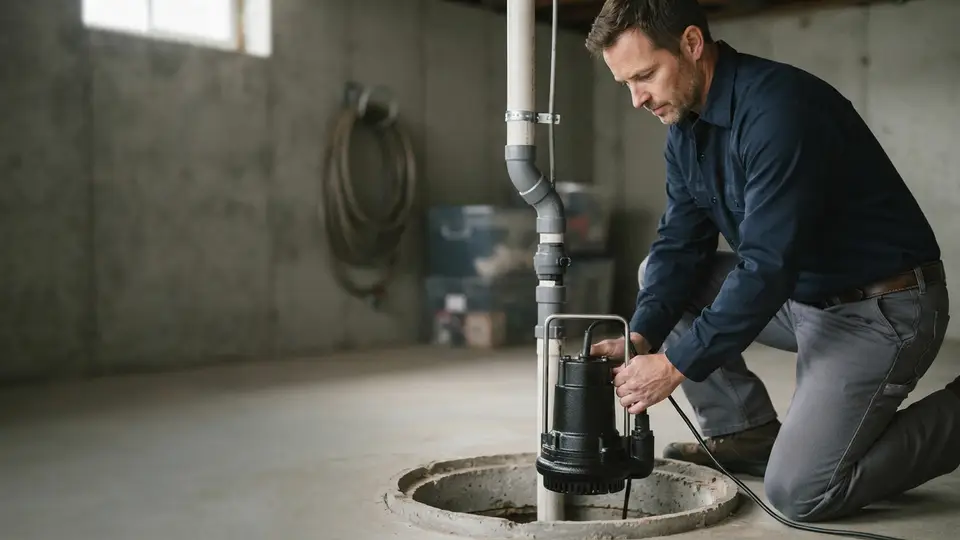
Submersible sump pump
Where: Most basement pits
Points to know: Quiet; sits in the water
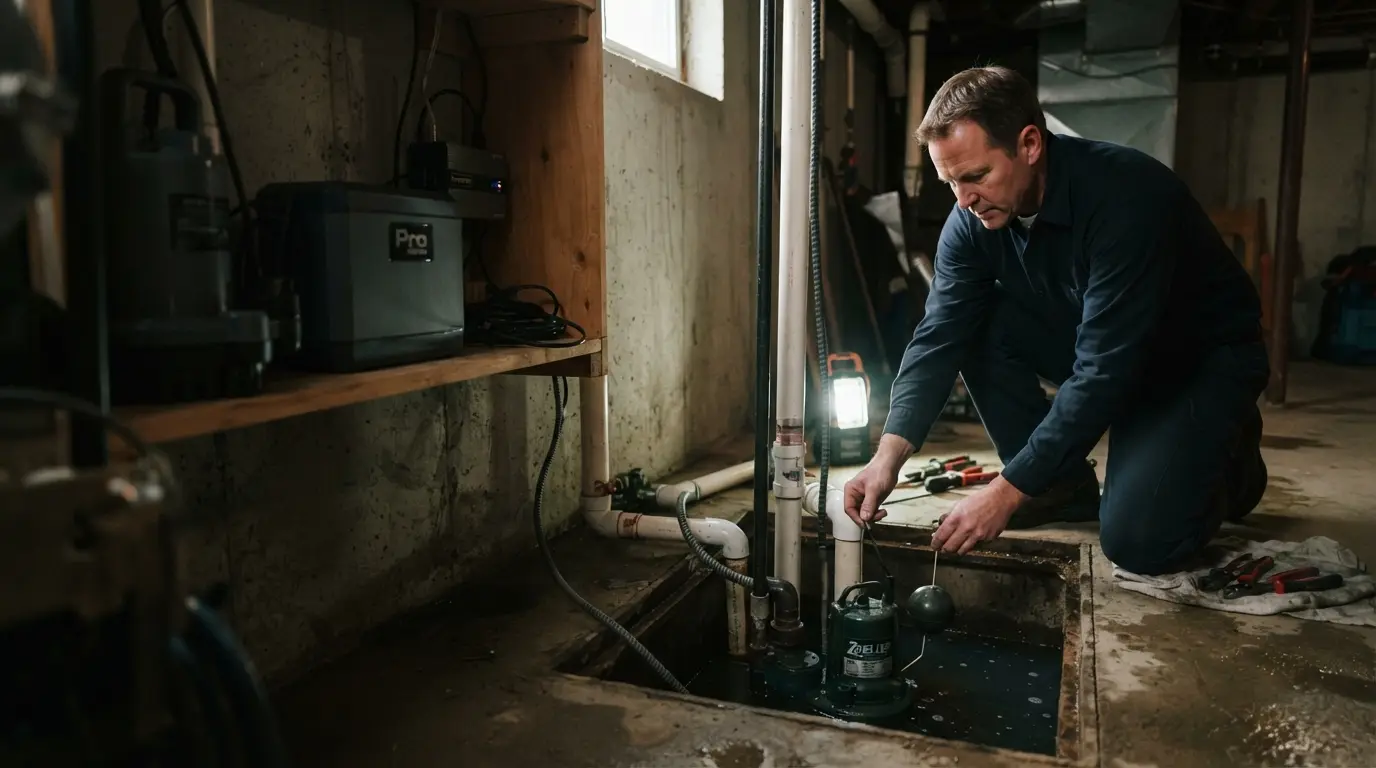
Basement taking water in a summer storm, or a sump pump that never stops? We do sump pump repair and installation in Illinois for homes and businesses. Most Illinois homes have basements, flat clay-soil lots and drain tile that sends groundwater to a sump pit. Thunderstorms dump inches of rain in hours and often knock out power at the same time. We repair and replace pumps, add battery and water-powered backups, and set discharge lines that keep working through winter.
The service
A sump pump collects water from drain tile around the foundation and pumps it out before it reaches the basement floor. Suburbs built from the 1960s onward, such as Naperville (57,135 homes), Aurora, Arlington Heights and Schaumburg, nearly all have sump pits. Older city homes, like most of those in Cicero, often have no sump and rely on the sewer, which is a different flood risk.
Pumps we service
Where: Most basement pits
Points to know: Quiet; sits in the water
Where: Narrow pits
Points to know: Easy to service, louder
Where: Paired with the main pump
Points to know: Runs during outages for hours
Where: Homes on city water
Points to know: Runs on water pressure, no battery
Where: Basement baths and overhead sewers
Points to know: Sealed basin with vent and alarm
Why Illinois
Summer storms can drop more water than a small or worn pump can move.
The same storms knock out power, so the main pump stops when it is needed most.
Flat lots and clay keep groundwater high for weeks after heavy rain, wearing pumps.
Buried or flat discharge lines freeze in winter and burn out the pump.
Warning signs
Our process
We test the motor, float, check valve and discharge, clean the pit and replace the failed part.
We size the pump to inflow and lift, set it with a check valve, sealed lid and alarm and run a discharge that drains between cycles.
We add a second pump with its own float and battery, or a water-powered backup, so the pit keeps draining in outages.
Typical cost
You approve a written price before work starts.
Get a written price: (833) 733-2357A float costs less than a pump.
Higher capacity costs more.
Battery and water-powered systems differ.
Cutting the floor adds work.
Long or buried runs add labor.
Benefits
Water leaves before it reaches the floor.
Backups keep running.
Discharge lines that drain.
Alarms alert you before flooding.
A battery backup runs for hours, depending on the battery and how often the pump cycles, and needs a battery replacement every few years. A water-powered backup uses city water pressure and runs as long as the water system works, with no battery, but uses treated water and is not suitable on private wells. Some homes use both. We explain which fits your house and storm history.
Northwest and west suburbs such as Palatine (28,469 homes), Des Plaines, Mount Prospect and Elgin see heavy summer storms that test every sump pump. Low areas near creeks and retention ponds flood fastest. We recommend heavy-duty pumps, a backup and a high-water alarm, and we test all three each spring.
We slope discharge lines to drain completely after each cycle, keep buried sections below frost or above ground, and add a freeze-relief fitting near the house so water can escape if the outer line freezes. That prevents burnouts in January.
In homes with overhead sewers or basement bathrooms, an ejector pump lifts waste to the sewer line. When it fails, the basement fixtures stop working or overflow. We repair and replace ejectors, basins, check valves and alarms.
Rockford (67,423 homes), Peoria and the Quad Cities have older basements, some with drain tile that has silted up. Pumps there run longer and may be undersized. We inspect the pit and tile inlet and upgrade where needed.
Much of the water a sump handles starts on the roof. Downspouts that drop next to the foundation and soil that slopes toward the house send storm water straight into the drain tile. Extending downspouts and fixing grading can sharply cut pump run time. In Joliet (53,814 homes), Orland Park and similar suburbs, we often recommend these steps with any pump work.
A flooded finished basement means ruined carpet, drywall and belongings. Before finishing a basement, upgrade the pump, add a backup and an alarm, and keep the pit accessible behind a removable panel.
The drain tile around your foundation feeds the sump pit. In older suburban homes, clay tile can crack, settle or fill with silt, and the pit may receive little water while the basement walls leak. If your pump rarely runs but the basement still gets wet along the walls, the tile may be blocked. We inspect the pit inlets, flush or camera the tile where possible and recommend repairs.
Many suburban subdivisions were built around detention and retention ponds and along creeks. After heavy rain, groundwater near these areas stays high for days. Pumps there run nearly nonstop and wear out faster. A larger, cast iron pump, a second pump and a dedicated circuit make sense for these homes.
A sump pump on a shared circuit can stop when another appliance trips the breaker. A dedicated outlet keeps it running, and a high-water alarm, ideally one that sends a phone alert, warns you if both pumps fall behind. We check the outlet and alarm whenever we service a pump, and we can coordinate with an electrician when a new circuit is needed for the pump and backup charger.
If water is rising near outlets or appliances, stay out and switch off power only from a dry spot. Move valuables up.
Check that the pump is plugged in and the breaker is on, but do not reach into a powered pit. Then call us.
New pits, ejectors and discharge changes may need a permit, which we pull. Some municipalities have rules on where sump discharge may go. Our plumbers hold the licenses Illinois requires.
Why choose us
What you can count on every time one of our plumbers comes to your door.
Every job is handled by a plumber who holds the license your state or city requires, backed by liability insurance.
Our plumber explains the problem and the options, and you approve a written price before any work begins.
Burst pipes, sewage backups and failed water heaters get priority scheduling, including nights and weekends.
We pull permits when the job needs one and schedule the inspection, so the work holds up when you sell.
Repairs and installations come with a written warranty on labor, on top of the manufacturer's warranty on parts.
Our pages and plumbers account for your area's water, soil, climate and the age of the homes around you.
Service area
We repair and install sump pumps in 1,461 Illinois communities, from Schaumburg (33,346 homes) to Peoria. Choose yours:
It depends on the failed part, pump type and access. A float costs much less than a pump. You approve a written price first.
In storm-prone areas, yes. Power often fails during the heaviest rain.
They can cost a bit more to install but need no battery. They require city water.
We look at inflow, lift height and discharge length.
Away from the foundation to an approved spot. Many towns ban discharge into the sanitary sewer.
Yes. We thaw it, regrade or reroute it and add a freeze-relief fitting.
Yes. Stay out and switch off power only from a dry spot.
Yes. Keep away, stop using water and call us.
A few hours in an existing pit.
Before storm season if it is near seven to ten years or fails a test.
Every few months and always in spring.
Every few years, per the manufacturer.
Stay safe, cut power from a dry spot if needed and call us. Flooding gets priority scheduling.
Heavy thunderstorms, clay soil and power outages combine to overwhelm pumps.
Often the combined sewer backs up. A backwater valve or overhead sewer addresses that.