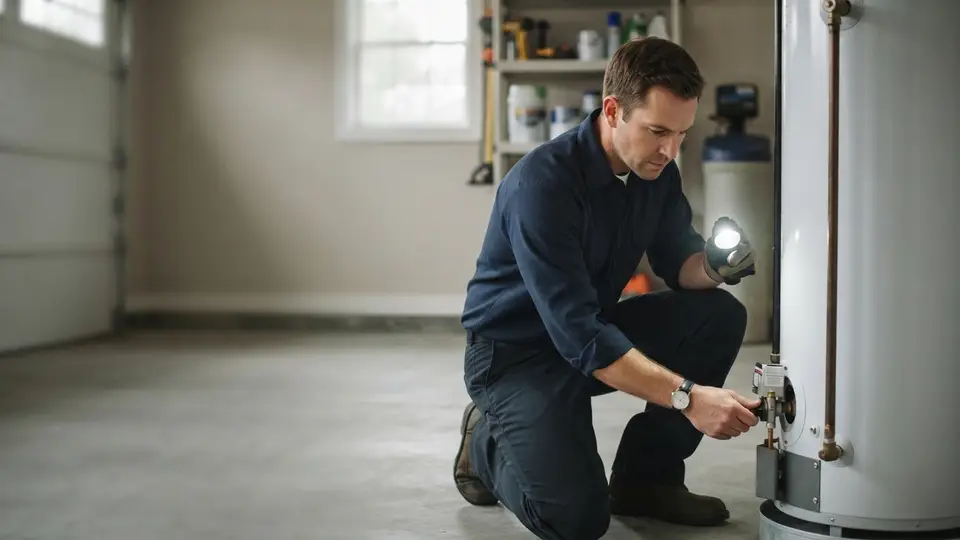
Atmospheric gas tank
Good fit: Most basement installs
Points to know: Needs a sound chimney or vent
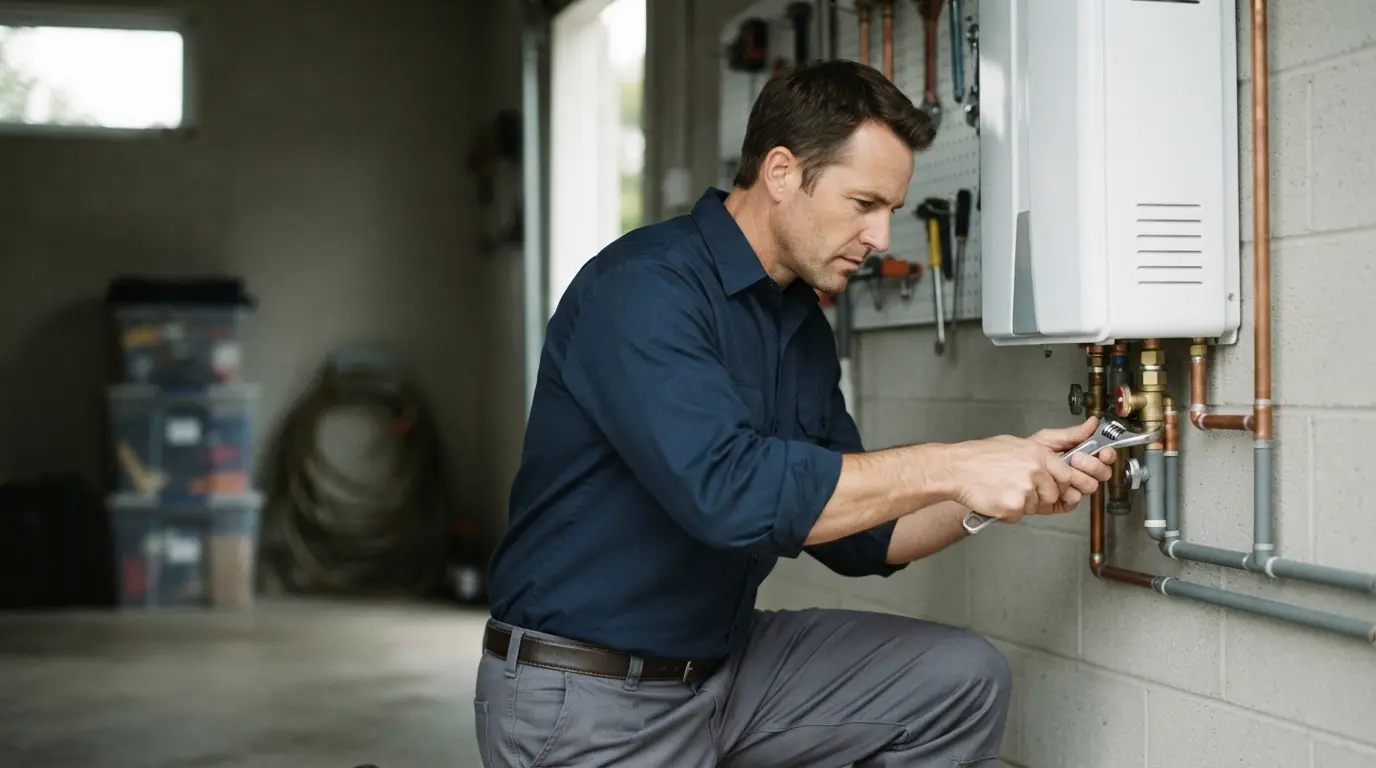
Hot water gone, or a basement tank rusting at the seams? We do water heater repair and replacement in Illinois for gas, electric, tankless and power-vent units. Most Illinois homes heat water with natural gas in the basement, often venting through an old chimney shared with the furnace. Cold winter inlet water makes heaters work hard, and hard water outside Lake Michigan service fills tanks with sediment. We repair what is worth saving, replace what is not and make sure the venting is safe.
The service
In our Illinois Census data, 78% of homes heat with utility gas and 18% with electricity. Gas dominates the Chicago area, at 91% in Berwyn, 92% in Cicero and 92% in Tinley Park, while southern Illinois towns lean more on electricity: only 30% of Carbondale homes and 31% of Marion homes heat with gas.
Water heater types
Good fit: Most basement installs
Points to know: Needs a sound chimney or vent
Good fit: Homes without a usable chimney
Points to know: Vents through the wall; needs power
Good fit: Southern Illinois, apartments
Points to know: Elements and thermostats wear
Good fit: Larger households
Points to know: Larger gas line and new venting
Good fit: Basements with space
Points to know: Efficient; needs a drain
Why Illinois
Winter water arrives very cold, so heaters run long cycles and wear faster.
Groundwater across much of the state leaves minerals that settle in tanks.
Masonry chimneys deteriorate, and after a furnace upgrade they may be too large for the water heater alone to draft well.
Moisture and occasional flooding rust tank bottoms and burner parts.
Warning signs
Our process
We test thermocouples, gas valves, igniters, elements and thermostats, check the anode and flush sediment.
We size the heater for winter demand, install it with correct venting, a relief valve discharge and an expansion tank where needed, and haul away the old one.
We size for cold inlet water, upgrade the gas line if needed and vent through the wall with isolation valves for descaling.
Typical cost
You get a written price before work starts.
Get a written price: (833) 733-2357A part costs far less than a heater.
Liners, power vents or new flues add work.
Tankless and larger tanks cost more.
Expansion tanks and gas updates may be required.
Replacement generally needs one.
Benefits
Sized for winter.
Exhaust leaves the house.
Less sediment, better efficiency.
Flushing and anode checks slow wear.
Many Illinois homes vent the water heater into a masonry chimney once shared with an old furnace. When the furnace is replaced with a high-efficiency model that vents through the wall, the water heater may be left alone in a chimney too large and cold to draft properly. Exhaust can spill into the basement. We check draft on every gas heater we service and recommend a liner, power vent or other fix when needed. Every home with gas appliances should have carbon monoxide alarms.
A heater that keeps up in July can fall short in January, when inlet water is near freezing. Tankless units lose flow rate as inlet temperature drops. We size for winter, especially in larger homes in Naperville (57,135 homes) and other suburbs with several bathrooms.
Two-flats often have one heater per unit side by side in the basement, and older apartment buildings may have a central boiler with an indirect tank. Renters occupy 56% of Champaign homes and 63% of Urbana homes. We work with owners on planned replacements and quick repairs.
With fewer gas homes in Carbondale, Marion and rural southern Illinois, electric tanks are common, along with some propane (2% of Marion homes). We repair elements and thermostats and discuss heat pump water heaters, which cut electricity use substantially in a basement or utility room.
If floodwater reached the burner or controls of a gas heater, do not use it until it has been inspected. Water damages gas valves and burners, and many manufacturers advise replacing the control or the heater. We inspect flooded heaters and replace what is unsafe.
Homes with a check valve or backflow device at the meter are closed systems, and heated water has nowhere to expand. A thermal expansion tank absorbs it. We check for one on every replacement.
A heat pump water heater takes heat from the surrounding air and uses far less electricity than a standard electric tank. Illinois basements stay cool but above freezing, which suits these units, and they dehumidify the space as a side benefit. They need room for airflow, a condensate drain and a suitable circuit. For all-electric homes in central and southern Illinois, they can cut water heating costs substantially; utilities sometimes offer rebates, so check yours.
In larger homes and two-story houses, the farthest bathroom may wait a long time for hot water. A recirculation pump keeps hot water near the fixtures, and insulating hot lines in the basement ceiling reduces heat loss along the way.
Older basements may have undersized or corroded gas piping to the water heater, or an old flexible connector that should be replaced. We check the gas supply on every installation and update the connector, shutoff and sediment trap as code requires, then test every joint for leaks before lighting the burner.
If the tank leaks, close the cold supply and turn the gas control to off or switch off the breaker. If you smell gas, leave and call the gas company from outside.
Do not cap the relief valve or drain a hot tank. Then call us.
Water heater replacement generally needs a permit and inspection. We pull it from your city or village. Our plumbers hold the licenses Illinois requires.
We repair and replace water heaters in 1,461 Illinois communities, from Springfield (57,424 homes) to Danville. Choose yours:
Why choose us
What you can count on every time one of our plumbers comes to your door.
Every job is handled by a plumber who holds the license your state or city requires, backed by liability insurance.
Our plumber explains the problem and the options, and you approve a written price before any work begins.
Burst pipes, sewage backups and failed water heaters get priority scheduling, including nights and weekends.
We pull permits when the job needs one and schedule the inspection, so the work holds up when you sell.
Repairs and installations come with a written warranty on labor, on top of the manufacturer's warranty on parts.
Our pages and plumbers account for your area's water, soil, climate and the age of the homes around you.
Service area
In Danville, Rockford (67,423 homes) and Springfield, many basements are tight, with low ceilings, old gas piping and floor drains that may be partly blocked. We check the gas supply, venting and drain path when we replace a heater, so the new one is safe and the old problems do not carry over.
Most repairs replace one part, such as a thermocouple, gas valve or element. You approve a written price first.
Repair usually makes sense under about ten years with no tank leak. A leaking tank needs replacement.
It adds to the job, but it may be required for safe venting. We explain why before quoting.
We count bathrooms, people and peak use and account for cold winter inlet water.
Yes. Removal and disposal are part of the installation.
Yes, when the chimney is unsuitable. They vent through the wall and need an outlet.
Leave, avoid switches and call the gas company from outside. We repair it once safe.
Not until inspected. Water damages gas controls and burners.
A standard tank takes a few hours; tankless conversions most of a day.
Most repairs are finished on the first visit. We give a timeline for replacements.
Once a year, more often with hard well water.
Yes. Place them near sleeping areas and on each floor, and test monthly.
Close the cold supply, turn off gas or power and call us. This gets priority scheduling.
Incoming water is near freezing, so the heater runs longer to reach temperature.
It is moderately hard. Groundwater elsewhere is often harder and leaves more sediment.