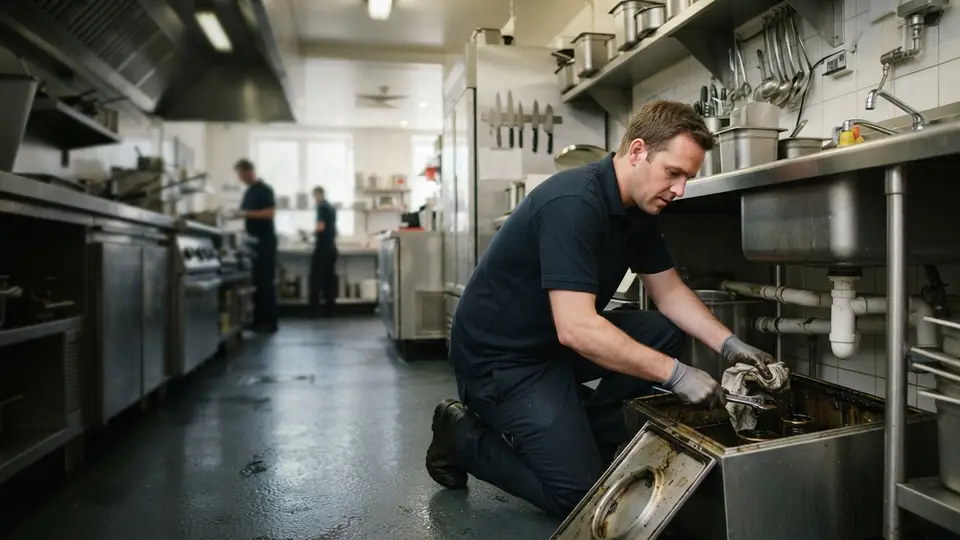
Restaurants and food service
Typical work: Grease interceptors, kitchen lines, water heaters
What matters most: Passing inspections, no downtime
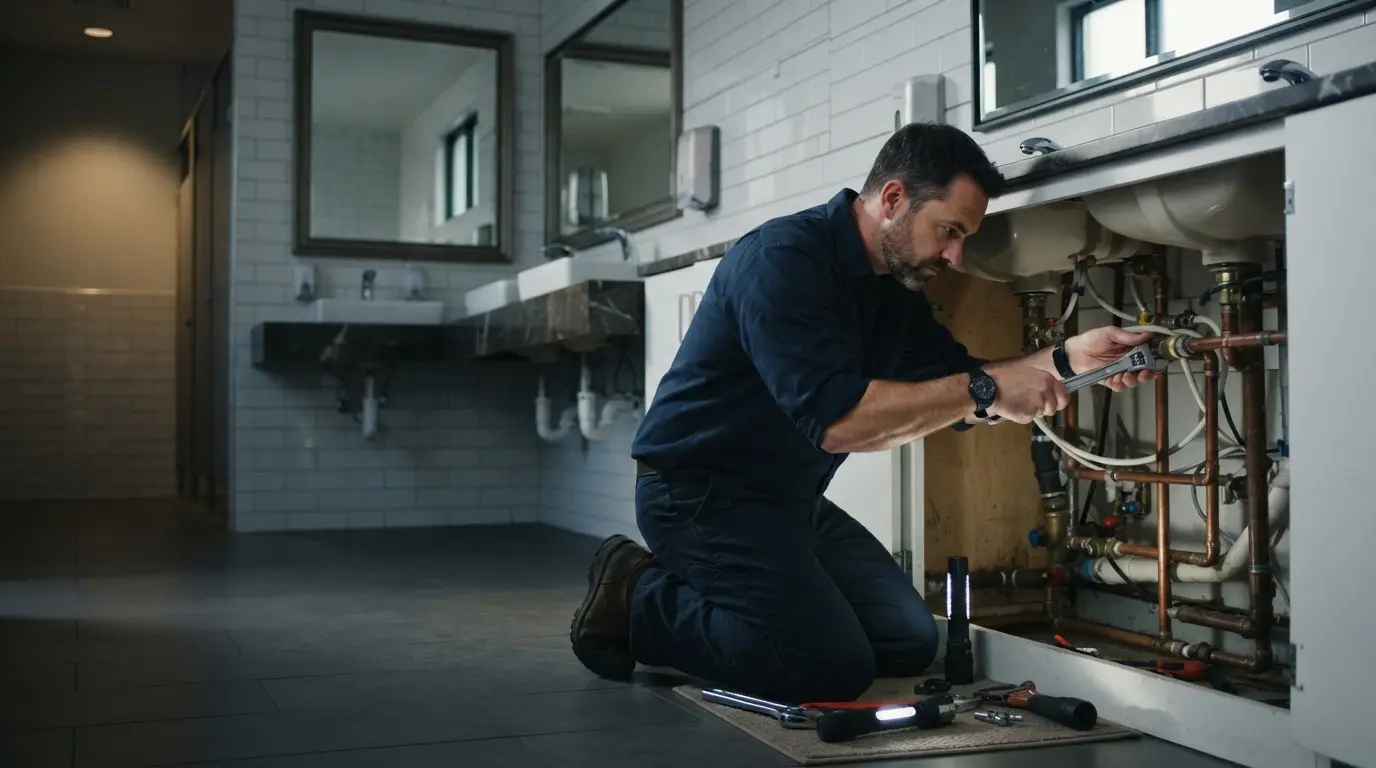
Grease line backing up, or a riser leaking? We provide commercial plumbing in Illinois for restaurants, offices, retail and apartment buildings. Illinois businesses run in some of the oldest building stock in the country, from Chicago walk-ups and storefronts to downstate main streets, alongside suburban office parks and new retail. Cold winters, storm flooding and aging pipe all test commercial systems. We repair, maintain and install them with work planned around your hours, and handle permits.
The service
Commercial work in Illinois centers on Chicago (1,277,054 homes in the city), its suburbs and downstate cities such as Peoria, Springfield, Rockford and Champaign. Multi-unit buildings are a large share: 43% of Chicago homes, 49% of Evanston homes and 47% of Oak Park homes are in buildings with five or more units.
Our commercial services
Typical work: Grease interceptors, kitchen lines, water heaters
What matters most: Passing inspections, no downtime
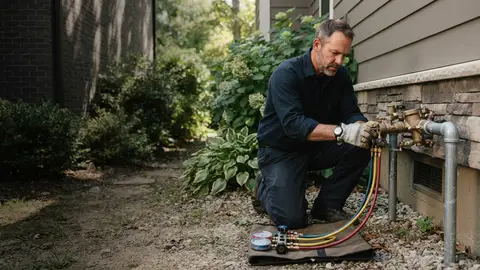
Typical work: Restrooms, water heaters, backflow, leaks
What matters most: After-hours work
Typical work: Risers, stacks, boilers, unit repairs
What matters most: Tenant notice, phased shutoffs
Typical work: Floor drains, process water, backflow
What matters most: Working between shifts
Why Illinois
Busy kitchens fill interceptors fast, and grease hardens in cold winter lines.
Prewar and midcentury buildings carry aging stacks and risers.
Combined sewers surcharge in heavy rain, flooding basements and lower-level businesses.
Pipes near loading docks, vestibules and unheated stairwells freeze.
Warning signs
Our process
We jet kitchen lines, repair and install interceptors and service commercial water heaters and dishwashers.
We repair restrooms, water heaters and leaks and handle tenant build-out plumbing, often after hours.
We repair risers and stacks, service booster pumps and boiler feeds and plan phased repiping.
Typical cost
We give you a written price before work starts.
Get a written price: (833) 733-2357Larger systems take more time.
After-hours work costs more.
Interceptors, heaters and pumps vary widely.
Required for many commercial jobs.
Chicago and other cities have their own requirements.
Benefits
Work planned around your hours.
Grease, backflow and permits current.
Vulnerable lines and pumps checked.
Reports for owners and managers.
Prevention
Regular service costs less than emergencies. We set schedules for drain jetting, water heater flushing, backflow testing, sump and ejector checks and winter inspections, with records for each visit.
Call (833) 733-2357Sewer agencies in Illinois, including the Metropolitan Water Reclamation District in the Chicago area, and many cities downstate require food service businesses to control grease, usually with a properly sized interceptor pumped on schedule and records kept. We install and repair interceptors, jet the lines feeding them and help set a maintenance routine; licensed haulers handle pumping and disposal.
Chicago and inner-suburb commercial strips are full of mixed-use buildings with shops below and apartments above. Plumbing for both runs through shared stacks and basements. We coordinate repairs so a restaurant downstairs and tenants upstairs both keep service, and we plan shutoffs outside business hours.
Renters occupy 56% of homes in Champaign and 63% in Urbana. Apartment buildings near campus see heavy use and empty out over winter break. We handle turnovers, break checks and urgent repairs for owners and managers.
Office parks and shopping centers in Schaumburg (33,346 homes), Naperville and Joliet have restrooms, water heaters and backflow assemblies to maintain, and frequent tenant changes. We work with property managers on scheduled maintenance and build-outs.
Downtowns in Peoria (54,010 homes), Springfield, Rockford and Bloomington mix historic commercial buildings with food processing and manufacturing nearby. We repair old stacks and supply lines in brick buildings and maintain process water, floor drains and backflow protection at industrial sites.
We insulate and heat-trace vulnerable runs, relocate lines out of cold spaces and check heat tape before winter. After a freeze, we repair damage and find the cold spot that caused it.
Restaurants, laundries and apartment buildings need large volumes of hot water. Many Illinois buildings use central boilers with indirect tanks or banks of commercial heaters. We size systems to real peak demand, service recirculation pumps and mixing valves and check the temperatures dishwashers and food prep sinks require.
Restrooms in shopping centers, offices, schools, theaters and restaurants see constant use. We repair flushometer valves, sensor faucets and urinals, clear lines and replace worn fixtures with durable commercial models. Where hard water scales sensor valves and aerators, we recommend fixtures with serviceable parts and a regular cleaning schedule so restrooms stay open.
Clinics, dental offices and salons need dedicated sinks, eyewash stations, equipment drains and backflow protection on connected equipment. We install and repair these systems and work outside client hours so appointments are not disrupted. We also keep backflow test records ready for inspections.
Restaurants, salons and shops in garden-level spaces are the first to flood when a combined sewer surcharges during heavy rain. Backwater valves on the building sewer, ejector pumps for below-grade fixtures and high-water alarms protect inventory and equipment. We review the building drainage, recommend the protection that fits and install it with the permits the city requires.
Hotels need hot water at every shower during the morning rush and drains that keep up at full occupancy. We service central water heating, recirculation pumps and guest room fixtures room by room so rooms stay sellable. Churches, community halls and private schools often have older plumbing, kitchens busy on weekends and restrooms idle through the week. We repair and update these systems, protect lines in unheated areas and schedule work between events and services.
When a retail space becomes a restaurant or clinic, it often needs a grease interceptor, larger water heater, more restrooms or new backflow protection. We review plans early so the plumbing does not hold up the opening. We coordinate with the general contractor, handle rough-in and final inspections and leave records for the landlord, so the next tenant knows exactly what is behind the walls and where every shutoff is.
For a leak, close the nearest shutoff or the building main if staff can do so safely. For a kitchen backup, stop running water to that line.
Notify affected tenants, then call us.
Commercial plumbing usually needs permits and inspections from your city or village. We pull them and coordinate inspections. Our plumbers hold the licenses Illinois requires.
Why choose us
What you can count on every time one of our plumbers comes to your door.
Every job is handled by a plumber who holds the license your state or city requires, backed by liability insurance.
Our plumber explains the problem and the options, and you approve a written price before any work begins.
Burst pipes, sewage backups and failed water heaters get priority scheduling, including nights and weekends.
We pull permits when the job needs one and schedule the inspection, so the work holds up when you sell.
Repairs and installations come with a written warranty on labor, on top of the manufacturer's warranty on parts.
Our pages and plumbers account for your area's water, soil, climate and the age of the homes around you.
Service area
We serve businesses and buildings in 1,461 Illinois communities, from Rockford (67,423 homes) to Springfield. Choose yours:
On the system, access, scheduling and permits. You approve a written price before work starts.
Yes. Night and weekend work costs more, and we price it upfront.
For restaurants and larger buildings, usually. It cuts emergency calls and keeps inspections on track.
Yes. We schedule early mornings, evenings or weekends.
Yes. We coordinate notices, shutoffs and phased projects.
Yes. We work from plans, coordinate with contractors and handle inspections.
Evacuate and call the utility or 911 from outside. We repair the piping once safe.
Yes. Stop food prep in the area and call us; health rules may apply until cleaned.
Often several days, including excavation and inspection.
Usually done in phases, a stack at a time, over days or weeks.
As often as your sewer agency requires and volume demands, often monthly or quarterly.
Backwater valves, ejector checks and sump maintenance before storm season.
Call us. These calls get priority scheduling.
The Metropolitan Water Reclamation District and local municipalities set grease rules.
Yes. Chicago runs its own building code and permit process. We follow it on every job there.