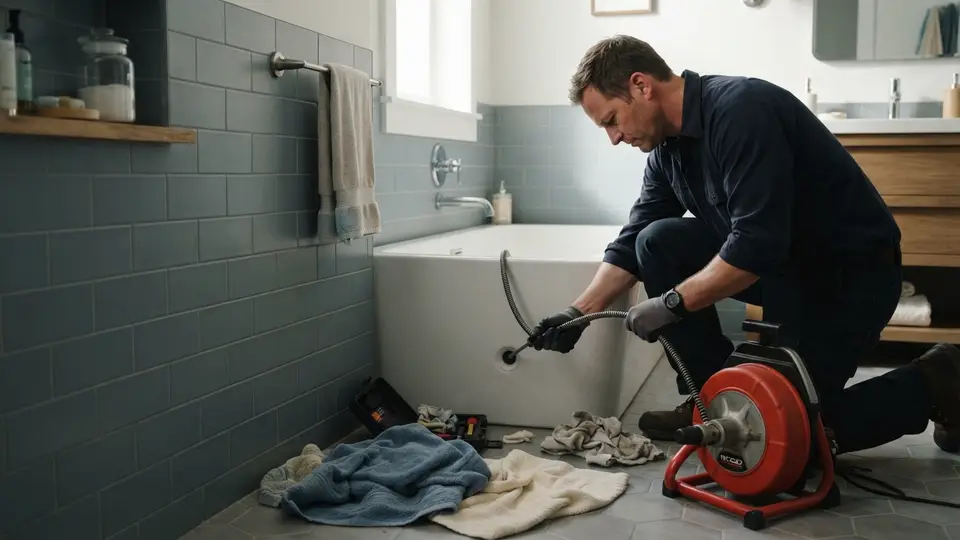
Hand auger
Best for: Sinks, tubs, toilets
What to know: Quick and gentle
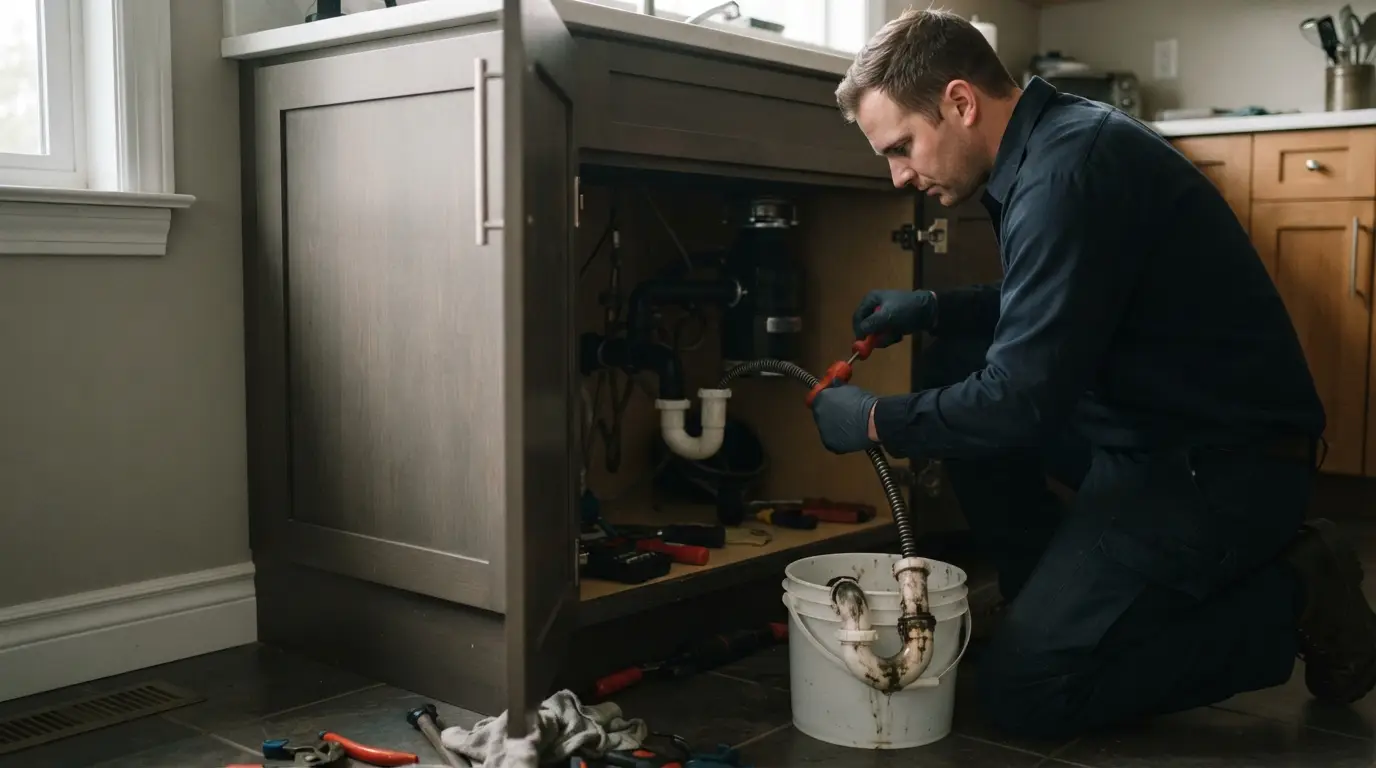
Floor drain backing up, or a kitchen line that clogs every winter? We handle drain cleaning and clog removal in Illinois for homes, apartments and businesses. Illinois drains are old: cast iron stacks in Chicago two-flats, clay laterals under parkway trees, galvanized drain arms in bungalow kitchens. Grease hardens in cold basement pipe, and roots fill cracked joints. We clear the line, show you on camera what caused it and fix the cause so you are not calling again next season.
The service
Illinois has 4,835,978 homes in our Census data, and 64% were built before 1980. In Cicero 92% and in Berwyn 93% of homes are that old. Their drains are mostly cast iron and galvanized steel inside and clay outside, all of which roughen and crack with age. Newer homes in Aurora (median built 1987) have plastic drains that clog less but still back up from grease and wipes.
How we clear drains
Best for: Sinks, tubs, toilets
What to know: Quick and gentle
Best for: Main lines and roots
What to know: Cuts roots at the joints
Best for: Grease, scale, sludge
What to know: Cleans the whole pipe wall
Best for: Repeat clogs, old lines
What to know: Shows breaks, sags and roots
Why Illinois
Decades of rust and scale roughen cast iron and galvanized drains so grease and paper catch.
Maples, elms and honey locusts along parkways send roots into clay laterals that run under them to the street.
Grease cools and hardens quickly in drains running through cold basements and crawl spaces.
Outside Lake Michigan service, hard groundwater adds scale that narrows drains.
Warning signs
Our process
We open the line at the best cleanout with a cable sized to the pipe and run water to confirm full flow.
For repeat clogs, we camera the line and repair the broken joint, belly or rotted section that catches debris.
High-pressure water clears grease and scale. We inspect old cast iron first to make sure it can take it.
Typical cost
We explain the options and you approve a written price before we start.
Get a written price: (833) 733-2357A sink is quick; a main or stack takes longer.
Missing cleanouts may mean pulling a toilet or working from the roof.
Jetting and camera work cost more than a cable.
Broken pipe needs repair.
After-hours visits cost more.
Benefits
A clean pipe wall slows buildup.
A clear main keeps sewage out of floor drains.
Camera footage shows what needs work.
Sludge removed, odor gone.
In most Illinois basements, the floor drain is the lowest opening in the plumbing, so it is the first place a main line clog shows. Water there after laundry or a shower means the main is blocked somewhere downstream. We clear the main from the cleanout, check the floor drain trap and, where code allows, add a backwater valve so sewer surcharges from the street stay out.
Chicago has 1,277,054 homes, and 43% are in buildings with five or more units; many more are in two- and three-flats. Upper units share a stack that runs to the basement, and a clog there floods the garden unit first. We clear stacks from the roof vent or cleanouts and camera them so owners know which sections are failing.
Renters occupy 56% of homes in Champaign and 45% in Normal. Shared kitchens and bathrooms clog often. We clear drains for owners and managers and schedule line cleaning between leases and over breaks.
Rural homes across central and southern Illinois drain to septic systems. If every drain is slow, the tank may be full or the field saturated. We check before cleaning so you pay for the right fix.
Kitchens in Chicago, Evanston (34,095 homes) and Peoria fight grease daily. We jet kitchen lines, clear floor drains and help keep lines open between interceptor pumpings.
In Skokie (25,159 homes), Cicero and other areas with combined sewers, a floor drain can back up during heavy rain even when your own line is clear, because the sewer in the street is full. Cleaning will not fix that. A backwater valve or overhead sewer does. We tell you which problem you have before you pay for a cleaning.
Many Illinois homes have the washer draining into a laundry tub in the basement. Lint, soap residue and small items build up in the tub drain and the line beneath it. A lint trap on the washer hose and an occasional cleaning keep it flowing.
Some Chicago-area basements have been converted to overhead sewers: basement fixtures drain to an ejector pit, and the pump lifts the waste up to a sewer line near the ceiling. If basement fixtures stop draining, the ejector pump or its check valve may have failed rather than the drain itself. We check the pump, float and basin before rodding, and repair whichever part is at fault.
In many bungalows and older houses, the kitchen sink drains through a galvanized pipe inside the wall to the stack. Grease and rust narrow it to a pencil-sized opening over decades. Rodding opens it for a while, but replacing the arm with plastic pipe is the lasting fix, and we price both so you can decide before the next holiday dinner backs it up again.
If the floor drain is rising or several drains are slow, stop running water and doing laundry. Close the toilet supply if the bowl is filling.
Skip chemical openers; they damage old pipe and make our work hazardous. Then call us.
Drain cleaning needs no permit. Pipe replacement usually does, and we pull it from your city or village. Our plumbers hold the licenses Illinois requires.
We clear drains in 1,461 Illinois communities, from Chicago to Peoria (54,010 homes). Choose yours:
Why choose us
What you can count on every time one of our plumbers comes to your door.
Every job is handled by a plumber who holds the license your state or city requires, backed by liability insurance.
Our plumber explains the problem and the options, and you approve a written price before any work begins.
Burst pipes, sewage backups and failed water heaters get priority scheduling, including nights and weekends.
We pull permits when the job needs one and schedule the inspection, so the work holds up when you sell.
Repairs and installations come with a written warranty on labor, on top of the manufacturer's warranty on parts.
Our pages and plumbers account for your area's water, soil, climate and the age of the homes around you.
Service area
Rockford (67,423 homes), Peoria and Decatur, where 79% of homes predate 1980, grew in the early and middle 1900s. Their clay laterals and cast iron stacks are now well past middle age. Repeat clogs in these homes usually mean a structural problem, which our camera finds.
It depends on where the clog is, how we reach it and the method. A sink costs far less than a main or stack. You approve a written price first.
For grease and scale, often yes. It cleans the full pipe wall, so clogs take much longer to return.
It is priced as its own service and often saves money by showing exactly why a line keeps clogging.
Our plumber asks which drains are slow, opens the line at the best cleanout, clears it and confirms flow.
Yes, along with the main it connects to. We also check the trap so sewer gas stays out.
Yes. We clear shared stacks and camera them so owners know which sections need repair.
We advise against them. They damage old pipe and can burn whoever opens the line.
Yes. Keep children and pets away, avoid contact and stop using water.
Most drains take under an hour. Mains, stacks and jetting can take a few hours.
We schedule as soon as we can, with backups given priority, and keep you updated on timing.
Most homes only when problems appear. Lines with roots or restaurants benefit from a schedule.
Replace cracked pipe. Root cutting helps for a while, but roots come back.
Stop using water and call us. Backups get priority scheduling.
Combined sewers fill during storms and push water back toward basements, even when your line is clear.
Outside Lake Michigan service, hard groundwater adds scale that narrows old drains.