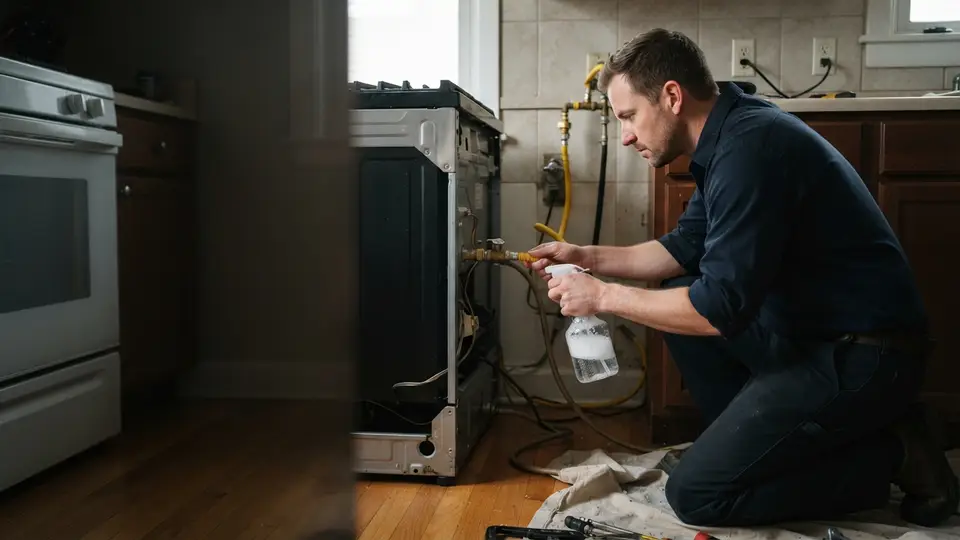
Leak repair
When: Gas odor or failed test
What it involves: Locate, replace, retest
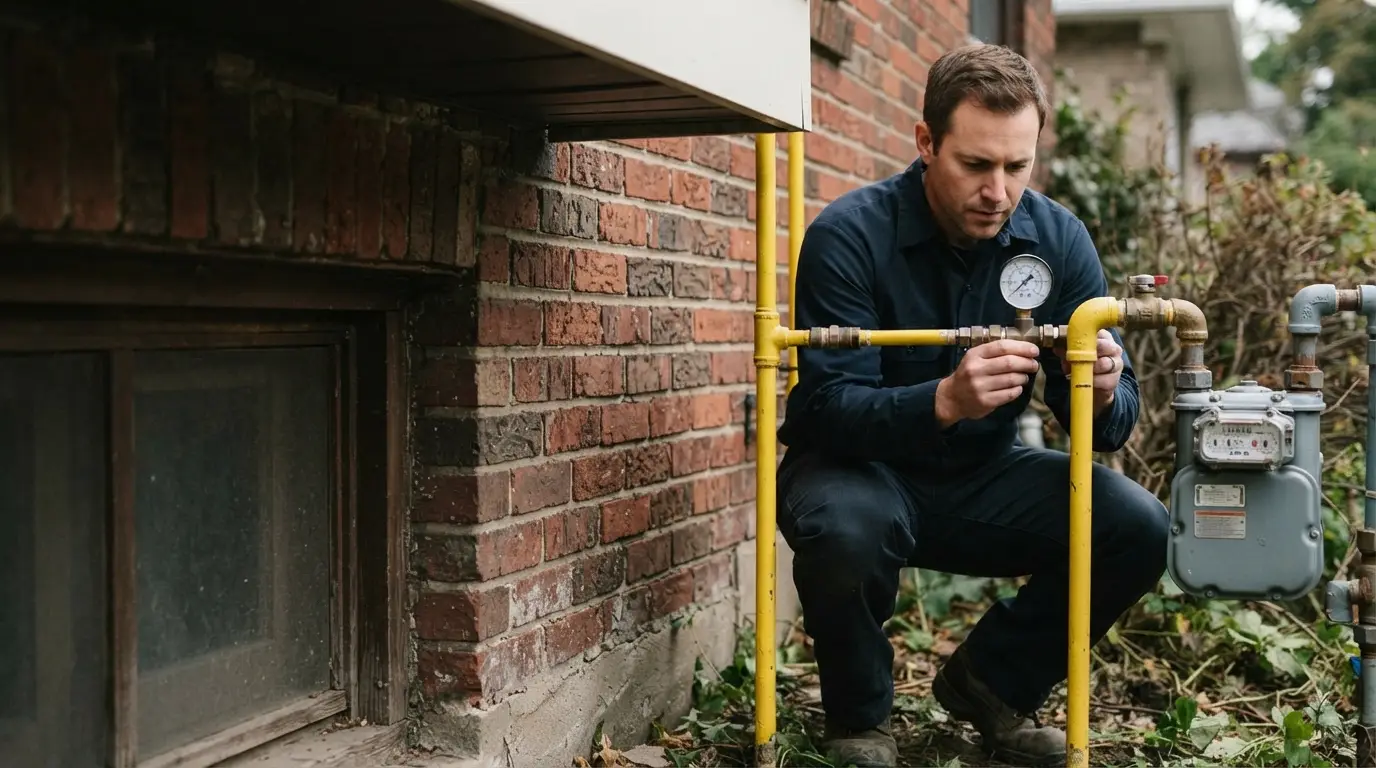
Gas smell in the basement, or adding a range, dryer or grill line? We do gas line repair and installation in Illinois for homes and businesses. Most Illinois homes run on natural gas for heat, hot water and cooking, and much of that piping is old black steel threaded together decades ago in damp basements. We repair leaks, replace corroded piping, run new lines for appliances and outdoor kitchens and connect everything safely, with pressure tests and permits on every job.
The service
In our Census data, 78% of Illinois homes heat with utility gas, among the highest shares of any state. In Cicero 92%, in Berwyn 91% and in Tinley Park 92% of homes use it. Southern Illinois uses less, with 30% in Carbondale and 31% in Marion, and some rural homes rely on propane (4% in Macomb). Gas is delivered by utilities such as Nicor Gas, Peoples Gas in Chicago and Ameren Illinois downstate.
Gas work we do
When: Gas odor or failed test
What it involves: Locate, replace, retest
When: Range, dryer, grill, garage heater, generator
What it involves: Size, run, shutoff, permit
When: Replacing a gas appliance
What it involves: Connector, shutoff, leak test, venting check
When: Corroded or undersized lines
What it involves: New pipe, pressure test, inspection
Why Illinois
Damp and occasionally flooded basements rust steel gas pipe and fittings.
Uncoated brass connectors behind older ranges and dryers crack.
New tankless heaters, generators and grills on old, small lines starve every appliance.
Frost moves outdoor lines, and digging without calling 811 strikes them.
Warning signs
Our process
Once the utility or fire department has made it safe, we pressure test, locate the leak, replace the failed section and retest.
We total the load of every appliance, size the pipe, run the line with shutoffs and test it for inspection.
We connect ranges, dryers, water heaters, fireplaces and grills with new connectors and shutoffs and check venting.
Typical cost
You approve a written price before work begins.
Get a written price: (833) 733-2357Long runs and finished ceilings add labor.
Tankless heaters and generators need larger pipe.
Trenching costs more.
Each adds a branch and shutoff.
Required for new piping.
Benefits
Correct sizing, fittings and testing.
Enough gas for everything at once.
Permits protect you and buyers.
Abandoned lines capped properly.
Tankless water heaters and standby generators both draw large volumes of gas. Many lines in Bolingbrook (24,498 homes), Tinley Park and older suburbs were sized for a furnace, a tank heater and a range only. We calculate the total load, upsize the line where needed and coordinate with the gas utility if the meter must be upgraded.
In Chicago (1,277,054 homes), Cicero, Berwyn and older downstate cities like Danville and Alton, basement gas piping can be 70 years old or more, with rusted sections, abandoned branches and fittings that no longer meet code. Inspectors and buyers notice. We replace corroded runs, cap abandoned lines properly and support the pipe as code requires.
Illinois summers are short, and many owners want a permanent gas line to the grill or fire pit. We run buried or wall-mounted lines with an outdoor shutoff, using materials rated for the purpose, and get them inspected.
Multi-unit buildings often have separate meters for each unit, with lines running through shared basements. We repair and extend them, label them clearly and coordinate shutoffs with owners and tenants.
If floodwater reached a gas water heater, furnace or dryer, do not use it until it has been checked. Water damages gas valves and controls. We inspect and replace what is unsafe.
Farm homes and rural houses beyond the gas mains, around Macomb, Springfield (57,424 homes) outskirts and southern Illinois, use propane. Your supplier owns the tank and first regulator; we handle house piping and appliance connections, and conversions when a gas main reaches the area.
Many older Chicago-area homes have gas meters in the basement. Utilities have been moving meters outside in some neighborhoods, which means new piping from the outdoor meter into the house. If your utility moves your meter, the house side of the work may fall to you. We connect the new meter location to your existing piping, replace corroded sections along the way and test the system before gas is restored. Ask your utility what is planned for your street.
Heated garages and workshops are popular in Illinois, where winter lasts months. A garage heater needs a properly sized branch line, a shutoff, correct clearances and venting. We run these lines, often through the basement ceiling or along the garage wall, with a permit and inspection.
Home inspectors in older Illinois homes often flag rusted pipe, missing shutoffs, old connectors, unsupported runs and abandoned lines left uncapped. We can inspect the gas system before a sale, pressure test it and correct what the inspector noted, with a permit where required. That gives the buyer a clean record and keeps the closing on schedule.
Illinois law requires carbon monoxide alarms in most homes with fuel-burning appliances. Gas leaks and poor venting are different hazards: a leak smells of rotten eggs, while carbon monoxide has no smell at all. We check venting whenever we connect or repair a gas appliance.
Gas fireplaces, inserts and log sets are common in Illinois family rooms. Each needs a sized line, a shutoff within reach and venting that matches the unit. We run the line, connect the appliance and test for leaks, and coordinate with the fireplace installer on venting. Have the fireplace connection checked each fall before the first cold night, including the pilot assembly, glass seal and the shutoff valve.
If you smell gas, leave immediately without using switches, phones or flames inside. From outside, call your gas utility or 911.
Do not look for the leak yourself. Once it is safe, call us for the repair.
Gas piping needs a permit and inspection from your city or village. We pull it, pressure test the line and schedule the inspection. Our plumbers hold the licenses Illinois requires.
Why choose us
What you can count on every time one of our plumbers comes to your door.
Every job is handled by a plumber who holds the license your state or city requires, backed by liability insurance.
Our plumber explains the problem and the options, and you approve a written price before any work begins.
Burst pipes, sewage backups and failed water heaters get priority scheduling, including nights and weekends.
We pull permits when the job needs one and schedule the inspection, so the work holds up when you sell.
Repairs and installations come with a written warranty on labor, on top of the manufacturer's warranty on parts.
Our pages and plumbers account for your area's water, soil, climate and the age of the homes around you.
Service area
We repair and install gas lines in 1,461 Illinois communities, including Waukegan (33,229 homes) and Danville. Choose yours:
It depends on where the leak is, how much pipe needs replacing and access. You approve a written price before we start.
Length, pipe size and any meter upgrade set the price. We measure and give a written price.
It often needs a larger gas line and new venting. We price the whole job upfront.
We pressure test, then check joints and fittings with detection equipment.
Yes. We replace corroded runs, cap abandoned lines and support the pipe to code.
Yes, with an outdoor shutoff and an inspection.
Leave right away and call your gas utility or 911 from outside.
Yes. Illinois homes with gas appliances should have them near sleeping areas.
Most appliance lines take a day or less, plus inspection.
After it passes a pressure test and any required inspection.
Once a year, ideally in fall.
Yes, if it is uncoated brass or older than the range.
Leave and call the utility or 911. Once safe, call us; gas repairs get priority scheduling.
Utilities include Nicor Gas, Peoples Gas in Chicago and Ameren Illinois downstate.
Not until inspected. Floodwater damages gas controls.