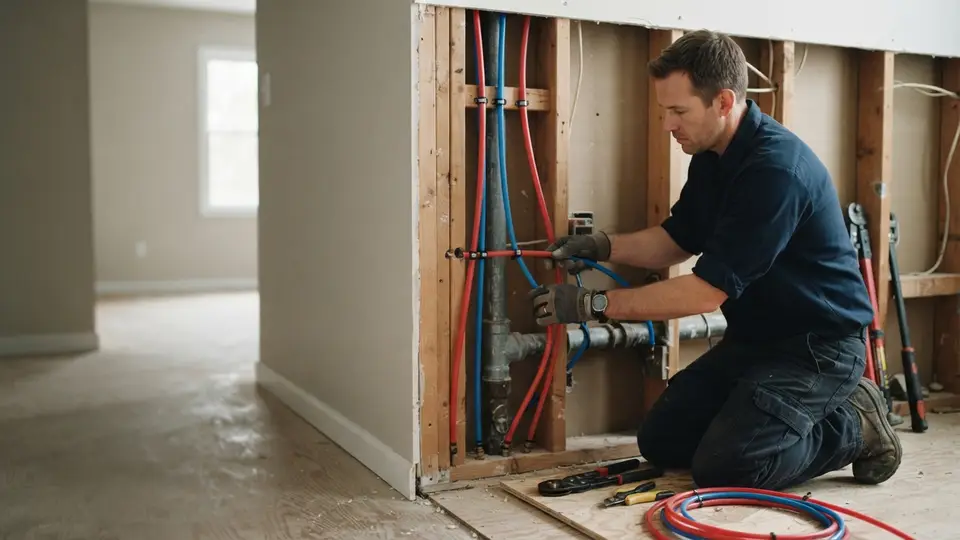
Type L copper
Strengths: Durable, long record, required in some jurisdictions
Points to know: Costs more; soldered joints
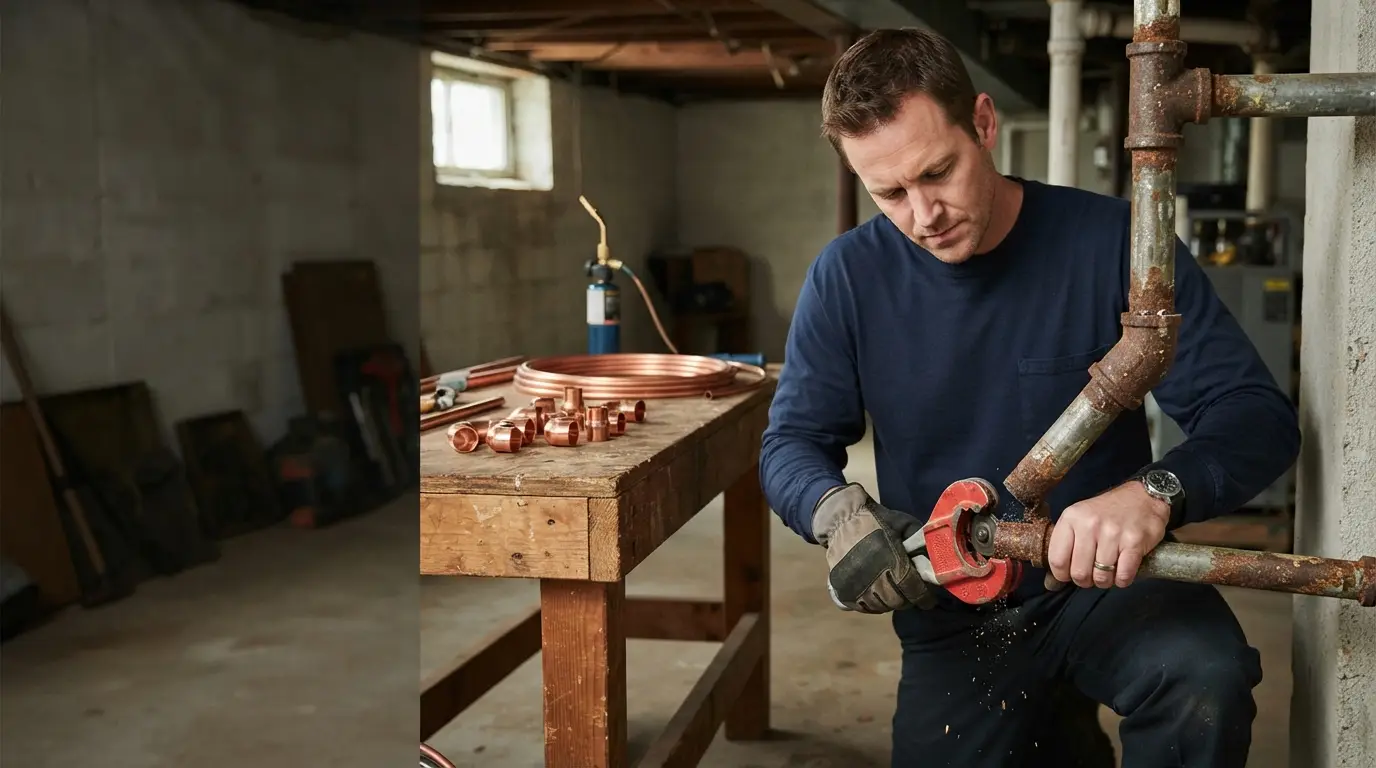
Rusty water from galvanized pipe, or a lead service line? We do repiping and water line replacement in Illinois for houses, two-flats and condo buildings. Illinois has some of the oldest housing in the country, and much of it still runs on galvanized steel supply lines installed generations ago, fed by lead or galvanized service lines from the street. Flow drops, water discolors and leaks start at threaded joints. We replace failing pipe throughout the house or just the service line, with clear pricing.
The service
39% of Illinois homes in our data were built before 1960. In Cicero and Berwyn the median home dates from 1938, in Chicago from 1953 and in Moline from 1956. Many of these homes still have galvanized supply inside the walls, patched with copper over the years. Repiping replaces it with new lines sized for modern fixtures.
Supply pipe options
Strengths: Durable, long record, required in some jurisdictions
Points to know: Costs more; soldered joints
Strengths: Flexible, fewer joints, tolerates freezing better
Points to know: Not allowed everywhere; check local code
Strengths: Resists corrosion
Points to know: Brittle with age and cold
Why Illinois
Galvanized pipe builds rust inside until flow is a trickle and threads leak.
Copper joined to galvanized without dielectric fittings corrodes fast at the joint.
Pipes in outside walls and porches split in cold snaps and get patched again and again.
Outside Lake Michigan service, scale narrows pipe and wears valves.
Warning signs
Our process
For a single failed section, we replace it with matching material and proper transition fittings.
We map every fixture, run new lines with shutoffs, connect and pressure test them, and remove or abandon the old pipe.
We locate leaks in the service line and repair the damaged section.
We replace service lines from the curb stop or meter to the house, below frost depth, by trench or by pulling new pipe through.
Typical cost
You approve a written price before we start.
Get a written price: (833) 733-2357More bathrooms mean more lines.
Copper costs more than PEX where PEX is allowed.
Plaster and finished basements add repair work.
Length, depth and street work affect price.
Required for repiping and service lines.
Benefits
No rust from galvanized or lead from old lines.
Full flow restored on every floor.
New pipe and joints throughout.
Buyers ask about pipe and service lines.
Illinois law now requires water utilities to inventory lead service lines and replace them on a schedule over the coming years. Chicago has more lead service lines than any other U.S. city. Ask your utility whether your line is lead and how its program works, including who pays for which part. We replace the private side of the line and the interior plumbing it connects to, coordinate with the utility on the public side and flush the system before you drink the water.
Illinois communities differ on which pipe materials they allow. The City of Chicago has long required copper for water supply in most buildings, while many suburbs and downstate towns allow PEX. We follow the code where you live and explain the choices it leaves you.
In Chicago, 43% of homes are in buildings with five or more units, and two- and three-flats are everywhere. These share risers from the basement up. We repipe them a riser at a time, add a shutoff for each unit and schedule water outages with the owner so tenants get notice.
Older homes in Oak Park (24,872 homes), Evanston and Berwyn have plaster walls and fine woodwork. We plan routes through basements, closets and chases to limit openings, protect floors and trim, and leave openings ready for a plasterer.
Rockford (67,423 homes), Peoria, Decatur, Quincy and Kankakee, where 92% of homes predate 1980, have large stocks of early twentieth-century houses. Galvanized supply and old service lines are common, and hard groundwater adds scale. We repipe and replace service lines across these cities.
A repipe is the chance to move lines out of outside walls and porches. We run new pipe through interior walls and basement ceilings, insulate any run near a cold space and fit frost-free outdoor faucets with inside shutoffs.
When kitchen or bathroom walls are open, replacing old supply and drain pipe costs far less than opening them again later. Ask us to look before the drywall goes up.
Every repipe includes a new main shutoff that actually turns, a quarter-turn stop at each fixture and, where needed, a pressure-reducing valve and expansion tank. Old gate valves in Illinois basements are often frozen open or leak at the stem when finally closed, which is the last thing you want in an emergency. With new valves, a leak at one fixture no longer means shutting off the whole house.
If your home has a lead service line, lead solder on old copper joints or galvanized pipe that once sat downstream of lead, have the water tested by a certified lab. Many Illinois utilities offer free or low-cost lead testing for customers; ask yours. A test before and after repiping shows what changed. While you wait, run the cold tap for a few minutes after water has sat overnight, use only cold water for drinking and cooking, and consider a filter certified for lead.
Buyers and inspectors in older Illinois neighborhoods look for galvanized supply and lead service lines. Repiping before listing removes those questions, and we provide permit records and a summary of the work for your disclosure.
Larger condo buildings often repipe through an association project, replacing risers floor by floor. We plan the sequence with the board and manager, give residents notice of each shutoff and keep outages as short as the work allows.
If a pipe is leaking, close the main or fixture valve. Find your main shutoff now if you do not know where it is.
Clear access in the basement and under sinks. Then call us.
Repiping and service line work need permits and inspections. We pull them from your city or village. Our plumbers hold the licenses Illinois requires.
Why choose us
What you can count on every time one of our plumbers comes to your door.
Every job is handled by a plumber who holds the license your state or city requires, backed by liability insurance.
Our plumber explains the problem and the options, and you approve a written price before any work begins.
Burst pipes, sewage backups and failed water heaters get priority scheduling, including nights and weekends.
We pull permits when the job needs one and schedule the inspection, so the work holds up when you sell.
Repairs and installations come with a written warranty on labor, on top of the manufacturer's warranty on parts.
Our pages and plumbers account for your area's water, soil, climate and the age of the homes around you.
Service area
We repipe homes and replace service lines in 1,461 Illinois communities, from Chicago (1,277,054 homes) to Peoria (54,010 homes). Choose yours:
It depends on home size, fixtures, material, walls and permits. We price it in writing after a walkthrough.
Length, depth and street work set the price, and utility programs may cover part. We price the private side after a visit.
PEX usually costs less where allowed. Some cities, including Chicago, generally require copper.
We route through basements, closets and chases and make small openings at fixtures.
Where accessible, yes. Pipe sealed in walls is disconnected and left in place.
Yes, riser by riser, with a shutoff for each unit and notice for tenants.
Lead is harmful, especially to children. Ask your utility about your line and consider testing.
Yes. We flush the system, and your utility may give additional instructions.
Most homes take a few days; larger buildings longer.
On many jobs we restore water each evening. We share the schedule first.
Properly installed copper and PEX last many decades.
Keep heat on, insulate cold areas and shut off outdoor faucets in fall.
Close the main shutoff and call us. Burst lines get priority scheduling.
Many older Illinois homes do. Your utility's inventory can tell you.
Much of the housing was built when galvanized steel was the standard supply pipe.