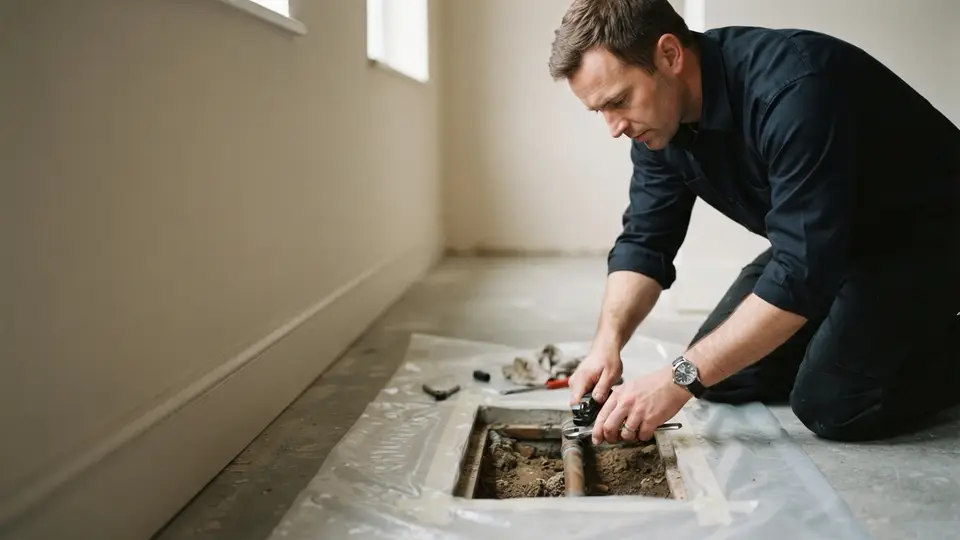
Spot repair through the slab
When it fits: One leak in sound pipe
Trade-offs: Breaks concrete in one spot
Damp spot on the basement floor, or a meter that never stops spinning? We handle slab leak repair in Illinois for homes with pipe under concrete. Most Illinois homes have basements, with drain lines and sometimes the water service under the basement floor. Many suburban ranches, townhomes and additions sit on slabs with supply lines below. When those pipes leak, water soaks the concrete and soil. We locate the leak precisely, then repair it through the floor or reroute the line overhead.
The service
A slab leak is a leak in a pipe under or inside concrete. In Illinois that usually means drain or water lines under a basement floor, or supply lines under the slab of a ranch, townhome or garage. Suburbs that grew in the 1980s and 1990s, such as Bolingbrook (median built 1989), Tinley Park and Orland Park, include many slab-on-grade townhomes and ranches.
Ways to fix a slab leak
When it fits: One leak in sound pipe
Trade-offs: Breaks concrete in one spot
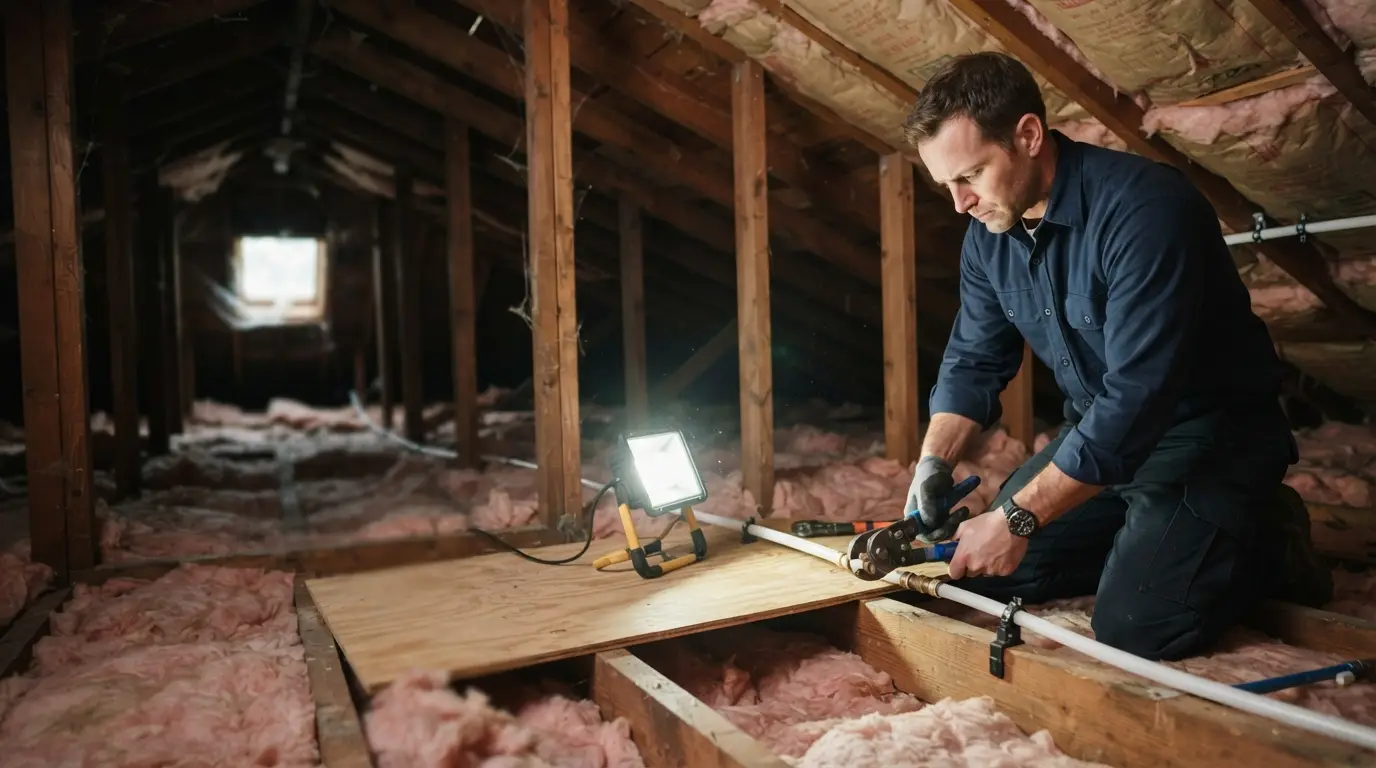
When it fits: Older pipe, repeat leaks
Trade-offs: New pipe overhead; slab untouched
When it fits: Failing pipe throughout
Trade-offs: Largest project; removes the risk
Why Illinois
Cast iron under basement floors rusts through at the bottom, leaking into the soil.
Copper under slabs pits with age, especially where it touches concrete or gravel.
Clay soils swell and shrink with moisture, stressing pipe under slabs.
Ground movement under garages and additions cracks pipe.
Warning signs
Our process
We isolate lines, pressure test and use acoustic and thermal tools to mark the leak on the floor.
We open a small section of concrete, replace the damaged pipe, test and patch the floor.
We abandon the leaking line and run new pipe through walls or the basement ceiling, protected from freezing.
Typical cost
You approve a written price before we cut concrete or open walls.
Get a written price: (833) 733-2357Quiet or multiple leaks take longer.
Spot repair, reroute or repipe.
Tile and finished basements cost more to open.
Finished ceilings and tight attics add labor.
Reroutes generally need one.
Benefits
Constant water softens soil.
Floors and walls dry out.
Hot water leaks waste water and gas.
Reroutes planned for winter.
In older Chicago (1,277,054 homes) and inner-suburb houses, the main drain runs under the basement floor from the stack to the front wall. When it rusts through, the first sign is often a sewer smell or a damp patch, not a flood. We camera and test the drain, then replace the failed section, often adding a backwater valve or new floor drain while the floor is open.
Naperville (57,135 homes), Aurora, Joliet and Schaumburg have many slab townhomes and ranches. Supply lines under those slabs can pinhole or fail at fittings. Rerouting through walls or the attic, kept on the warm side of the insulation, is often the lasting fix.
Moving a line out of the slab helps only if the new route stays warm. Attic and outside-wall runs freeze in an Illinois January. We route through interior walls and basement ceilings where possible and insulate any run near a cold space.
A first leak in sound pipe is usually worth a spot repair. Repeat leaks, pitting or finished floors you do not want broken point to rerouting. We show you the pipe condition and price both.
Many policies cover water damage from a sudden leak and sometimes access, but not the pipe itself. Call your insurer early and keep our findings, photos and invoices.
Some Illinois homes and basements have hot-water radiant tubing in the slab. A leak there shows as pressure loss in the boiler rather than a water bill. We test loops, locate the leak with thermal imaging and repair or isolate it.
Bloomington (37,162 homes), Normal and Springfield mix basement homes with slab ranches built since the 1970s. The repair depends on what we find, and we explain it before any concrete is cut.
A hot water leak under the slab keeps the water heater running to replace lost water, so the gas bill rises with the water bill. If the heater fires when no tap is open, a hot-side leak is a likely cause. Turning off the heater until we arrive limits both damage and cost.
In some homes the water service enters through the basement floor rather than the front wall, so a leak in it shows as water seeping up through a crack in the concrete. The line may be lead, galvanized or old copper. We locate the leak and, rather than repair a short piece of aging pipe, usually recommend replacing the service from the meter or curb stop. In communities with lead line programs, we coordinate with the utility on the public side.
A leak under a finished basement floor damages carpet, laminate and drywall before anyone sees it. Our detection narrows the leak to a small area, so we can lift only the flooring we need. We work with you or your contractor on removing and replacing finishes, and we recommend a leak sensor near the water heater and floor drain afterward, so the next problem is caught in hours rather than weeks.
Water lines run under the slab of an attached garage or addition to reach a hose bib, laundry or bathroom. These slabs move with frost more than the house, and the pipe beneath can crack. We locate the leak and usually reroute the line through the heated house instead, which removes the frost risk for good. Outdoor faucets fed this way get frost-free bibs, and we add a shutoff inside so the line can be drained each fall before the first hard freeze.
For a suspected hot water slab leak, close the cold supply to the water heater and turn it off. If water is pooling, close the main.
Move rugs and furniture, take photos and do not cut the floor yourself. Then call us.
Reroutes and larger repairs need a permit, which we pull and close with an inspection. Our plumbers hold the licenses Illinois requires.
Why choose us
What you can count on every time one of our plumbers comes to your door.
Every job is handled by a plumber who holds the license your state or city requires, backed by liability insurance.
Our plumber explains the problem and the options, and you approve a written price before any work begins.
Burst pipes, sewage backups and failed water heaters get priority scheduling, including nights and weekends.
We pull permits when the job needs one and schedule the inspection, so the work holds up when you sell.
Repairs and installations come with a written warranty on labor, on top of the manufacturer's warranty on parts.
Our pages and plumbers account for your area's water, soil, climate and the age of the homes around you.
Service area
We find and repair slab leaks in 1,461 Illinois communities, including Oak Lawn (22,793 homes) and Tinley Park. Choose yours:
It depends on finding the leak, the method and the flooring we must open. You approve a written price first.
A spot repair costs less upfront; rerouting often wins with repeat leaks or finished floors.
Many policies cover sudden water damage and sometimes access, rarely the pipe. Check your policy.
We isolate lines, pressure test and use acoustic and thermal tools to mark the spot.
No. We open a small area or reroute to avoid the slab.
Yes. We camera the drain, cut a trench, replace the pipe and patch the floor.
Not usually immediately, but it can soften soil and cause mold over time.
For a hot-side leak, yes. Close its cold supply and turn it off.
A spot repair often takes a day; a reroute one to two days.
Usually, yes. Water is off only while we work on the line.
Keep pressure normal and reroute or replace aging pipe early.
Every few years, and whenever you notice odors or damp spots.
Close the main and call us. Active leaks get priority scheduling.
Yes, mostly from cast iron drains and service lines under the floor.
They occur in slab townhomes and ranches, usually at pinholes or fittings.