Pressure test
What it finds: Whether a system is losing water
Where it helps: First step on every call
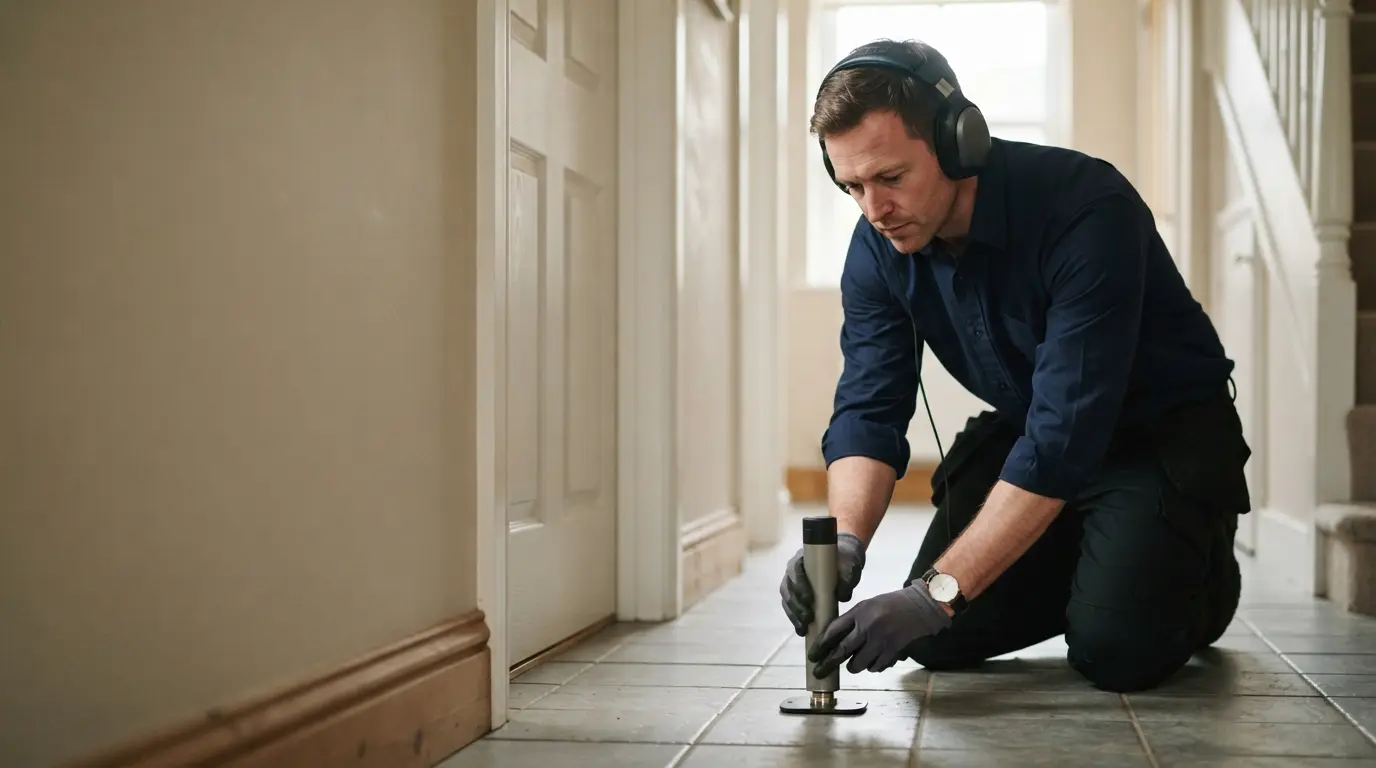
Water bill climbing, or a stain spreading on the ceiling below? We provide leak detection and repair in Illinois for homes, condos and businesses. Many Illinois leaks start in winter, when pipes in outside walls and enclosed porches freeze and crack. Others come from galvanized pipe rusting through, worn fittings in older condo risers, or a water service line failing underground. We find the leak with pressure, acoustic and thermal tools, open only where needed and repair it properly.
The service
64% of Illinois homes in our data predate 1980, and many have galvanized supply lines inside plaster walls. In Evanston 49% and in Oak Park 47% of homes are in larger buildings, where a leak in one unit shows up in another. We use tools that point to the leak before we cut.
Our leak detection tools
What it finds: Whether a system is losing water
Where it helps: First step on every call
What it finds: Sound of escaping water
Where it helps: Walls, floors, buried lines
What it finds: Temperature changes from leaks
Where it helps: Ceilings and walls
What it finds: Wet plaster, drywall and wood
Where it helps: Mapping the damage
What it finds: Path of buried pipe
Where it helps: Water service lines
Why Illinois
Pipes in outside walls, enclosed porches and crawl spaces split in subzero weather and leak after thawing.
Galvanized supply rusts from inside and fails at threads and nipples.
Shared risers in older buildings leak at joints and valves.
Lead, galvanized and older copper service lines fail underground.
Warning signs
Our process
We isolate sections, pressure test and pinpoint the leak with acoustic and thermal tools.
We open the smallest area that gives safe access, replace the damaged section and pressure test.
Burst pipes get priority. We stop the water, replace the split section and check nearby pipe.
We thaw frozen lines safely, repair splits and insulate or reroute pipes that keep freezing.
Typical cost
We explain the findings, and you approve a written price before repairs.
Get a written price: (833) 733-2357Exposed pipe costs less than pipe in walls or underground.
Quiet or multiple leaks take longer.
Plaster, tile and finished basements add work.
Widespread corrosion may make repiping the better choice.
After-hours calls cost more.
Benefits
Pinpointing saves walls and ceilings.
A stopped leak shows on the next bill.
Drying starts sooner.
Written findings help claims.
After a polar vortex or a week below zero, check the house as it warms. A crack sealed by ice can start leaking once it thaws, sometimes days later. Look under kitchen sinks on outside walls, in basements near hose bib lines and at any pipe that runs through an enclosed porch or garage. If pressure drops or the meter spins, call us; we check the most freeze-prone runs first.
Chicago has 1,277,054 homes, 43% in larger buildings and many more in two- and three-flats. A stain may come from the unit above, a shared riser or the roof. We test from both units, trace the source and give owners and the association a written finding, which helps with insurance and deciding who pays.
The service line runs from the street to the basement wall, deep enough to stay below frost. In older homes in Skokie (25,159 homes), Rockford and Springfield it may be lead or galvanized. A leak there can show as a wet basement wall, a sinkhole or ice in the parkway. We locate it and repair or replace the line.
Plaster on lath hides leaks longer than drywall and costs more to repair. Accurate location matters, so we pinpoint the leak before cutting, make a neat opening and leave it ready for a plasterer.
Arlington Heights (33,005 homes), Mount Prospect and Naperville have many homes from the 1960s to 1990s with copper supply. Pinholes, failed fittings and leaking hose bib lines in basement ceilings are common. We trace them and repair or repipe.
Humid Illinois summers and finished basements make mold a quick follow-on to any hidden leak. After the repair, we measure moisture so you know whether drying or remediation is needed.
Rural homes on wells have no meter. A pump that runs when nothing is on, or a pressure tank that cycles constantly, points to a leak or failed check valve. We test the pressure system and track down the loss.
Many Chicago-area bungalows and frame houses have enclosed back porches, sunrooms or kitchen additions built over crawl spaces or on piers. Water lines running to these rooms are often barely insulated, and they are the first to freeze when the temperature drops below zero. A split there may leak into the crawl space for weeks before anyone notices. We trace these lines, repair splits and reroute them inside the heated envelope where we can, or insulate and heat-trace them where we cannot.
Water pressure varies across Illinois systems, and homes near pumping stations or at the low end of a system can receive more than fixtures are designed for. High pressure makes toilets run, faucets drip and supply hoses burst. We test the pressure at a hose bib and install or replace a pressure-reducing valve where needed, with an expansion tank at the water heater.
Basement water heaters and hot-water boilers leak from relief valves, fittings and rusted tanks. A slow drip into the floor drain can go unnoticed for months. If you see rust at the base of the heater, water in the pan or a relief valve that drips, call us before the tank fails outright and floods the basement.
Close the main or unit shutoff if water is leaking. If a pipe is frozen but intact, open its faucet and warm the area gently; never use an open flame.
Turn off power to wet areas from a dry spot, tell neighbors below in a condo, take photos and call us.
Small repairs usually need no permit; larger replacements do, and we pull them. Our plumbers hold the licenses Illinois requires.
Why choose us
What you can count on every time one of our plumbers comes to your door.
Every job is handled by a plumber who holds the license your state or city requires, backed by liability insurance.
Our plumber explains the problem and the options, and you approve a written price before any work begins.
Burst pipes, sewage backups and failed water heaters get priority scheduling, including nights and weekends.
We pull permits when the job needs one and schedule the inspection, so the work holds up when you sell.
Repairs and installations come with a written warranty on labor, on top of the manufacturer's warranty on parts.
Our pages and plumbers account for your area's water, soil, climate and the age of the homes around you.
Service area
We find and fix leaks in 1,461 Illinois communities, from Bolingbrook (24,498 homes) to Springfield. Choose yours:
It depends on how hard the leak is to find and how much we test. You approve a written price first.
Many policies cover sudden freeze damage in heated homes. Our written findings help the claim.
After several leaks in galvanized or old copper, often yes. We price both.
We pressure test, listen for escaping water and use thermal imaging to narrow it down.
Yes. We test both units and shared risers and report the source in writing.
We make a neat opening ready for a plasterer. Finishing is arranged separately.
Gently, with a hair dryer and the faucet open. Never use a torch.
If water reaches outlets and you can reach the breaker from a dry spot, yes.
Most leaks are found within a couple of hours.
Often, once located. Service line or slab leaks may need another visit.
Turn off all water and watch the meter. If it moves, you have a leak.
Insulate exposed pipe, shut off outdoor faucets and keep the heat on.
Close the main and call us. Burst pipes get priority scheduling.
Subzero cold reaches pipes in outside walls, porches and crawl spaces.
Many older Illinois homes have lead lines. Your water utility's inventory can tell you.