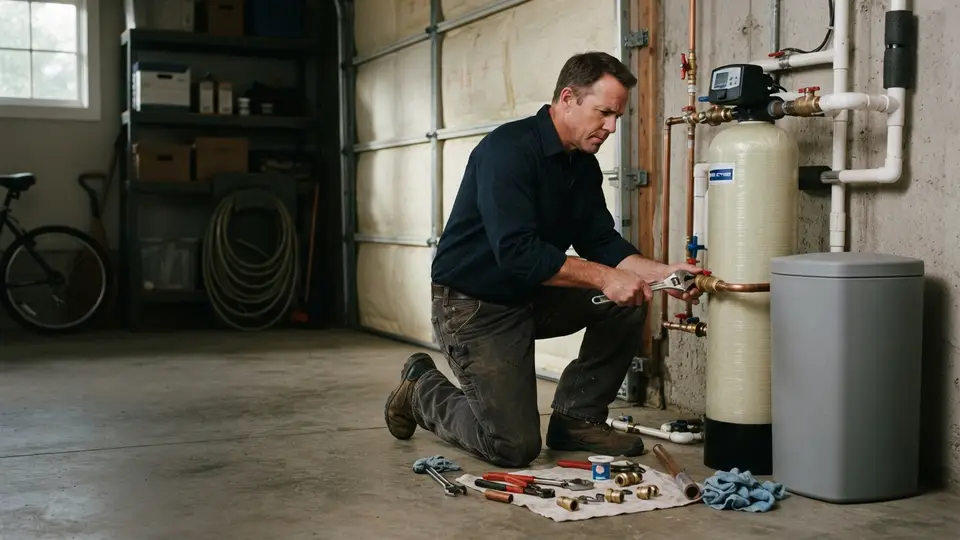
Water softener
What it treats: Hardness minerals that cause scale
Good fit: Well water and most groundwater systems
Scale on every fixture, or orange iron stains from your well? We install water softeners and filtration in Illinois for city water and private wells. Outside the Lake Michigan service area, most Illinois communities rely on groundwater that is hard and often carries iron. Even Lake Michigan water is moderately hard, and older homes add rust and, in some cases, lead from service lines. We test first, then fit the right system: a softener, an iron filter, carbon filtration or reverse osmosis.
The service
Chicago (1,277,054 homes) and many northeastern suburbs drink treated Lake Michigan water. Western and far suburbs such as Aurora, Elgin, Joliet and Naperville historically used deep wells, and some have since switched to river or lake water. Downstate cities draw from aquifers, rivers and reservoirs. Groundwater across northern and central Illinois is typically hard, and private wells may add iron, sulfur or nitrates.
Systems we install
What it treats: Hardness minerals that cause scale
Good fit: Well water and most groundwater systems
What it treats: Iron and manganese stains, some sulfur
Good fit: Private wells
What it treats: Chlorine taste and odor
Good fit: City water
What it treats: Lead, nitrates, dissolved solids
Good fit: Drinking water at the kitchen sink
Why Illinois
Groundwater moving through limestone and glacial deposits picks up calcium and magnesium.
Many wells carry iron that stains fixtures and fouls softeners.
In farm country, shallow wells can pick up nitrates from fertilizer.
Galvanized pipe and lead service lines in older homes add rust and metals.
Warning signs
Our process
We test hardness, size the softener to your household and install it with a bypass, drain and efficient regeneration.
We install iron, sediment and carbon filters at the main line with valves for easy service.
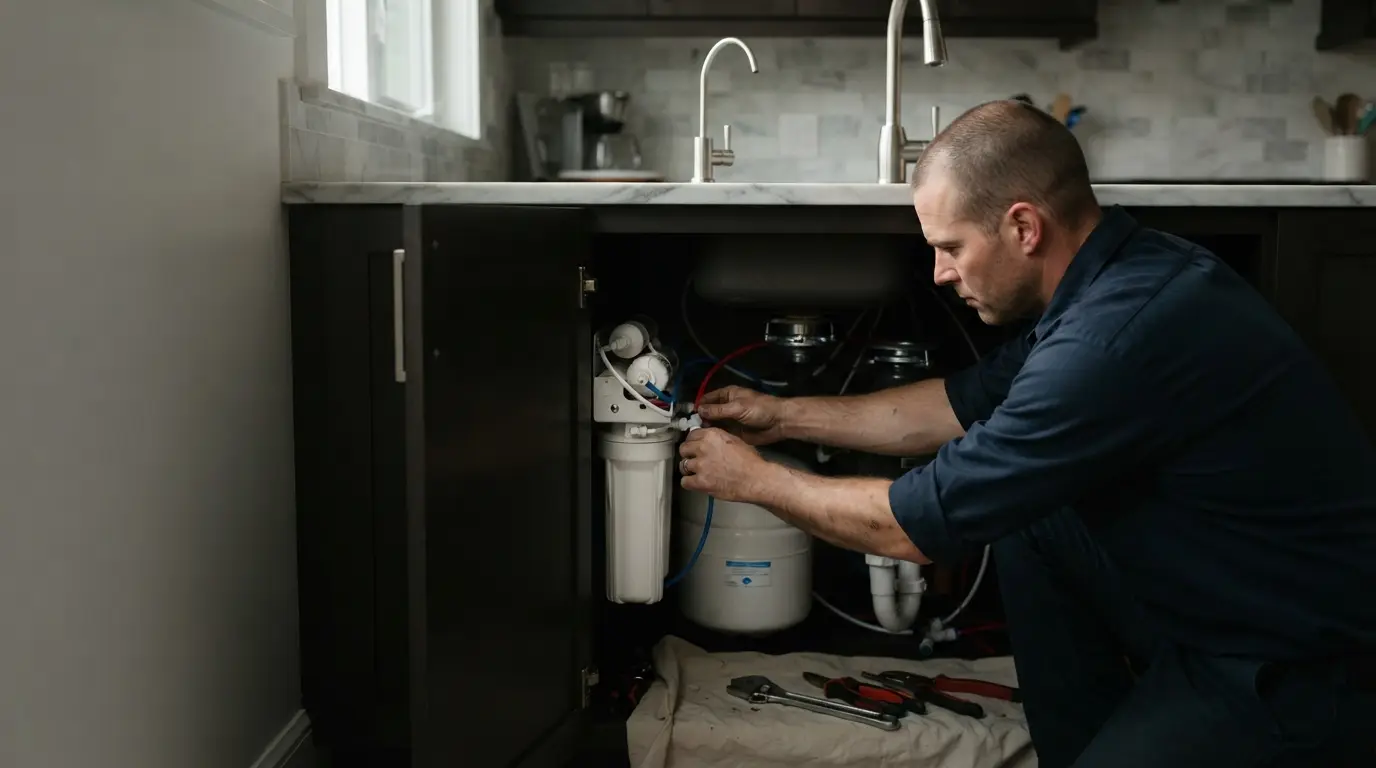
We mount a reverse osmosis system under the kitchen sink with its own faucet to reduce lead, nitrates and dissolved solids in drinking water.
Typical cost
You approve a written price before installation.
Get a written price: (833) 733-2357The problem decides the equipment.
Iron and multi-stage systems cost more.
Larger homes need larger units.
Loop, drain and space affect labor.
Salt, filters and membranes.
Benefits
Heaters and fixtures last longer.
Iron filters stop orange marks.
RO reduces lead and nitrates.
Carbon removes chlorine.
Prevention
Many Illinois homes have softeners 15 or 20 years old. Resin wears out, valves stick and brine tanks form salt bridges. We repair and service existing systems, replace resin and valves and tell you honestly when replacement makes more sense for your home, with a written price for both options so you can compare.
Call (833) 733-2357In Aurora (63,763 homes), Elgin, Joliet and nearby suburbs, many homes have had softeners for decades. Some of these communities have changed water sources, which can change how hard the water is. We test your current water before replacing an old softener, and set it for the hardness you actually have now.
Rural homes across Illinois rely on private wells, which the owner must test. Test at least yearly for bacteria and nitrates, and check iron, hardness and other local concerns. Your county health department can point you to certified labs. We read the results with you and recommend only the treatment that addresses what was found.
Homes with lead service lines or old solder can have lead at the tap. A filter certified for lead at the kitchen sink protects drinking water while you plan line replacement. Many utilities offer lead testing; ask yours. We install certified filters and replace service lines.
Champaign (41,299 homes), Bloomington, Springfield, Peoria and Quincy each have their own water sources and hardness. Owners often want a softener for appliances and better-tasting drinking water. We test at the tap and recommend what fits.
Hard water fills tanks with sediment and coats tankless heat exchangers. A softener ahead of the heater cuts fuel waste and extends its life, and reduces how often the heater needs flushing or descaling.
A softener can remove small amounts of iron, but higher levels foul the resin and leave it unable to soften. On wells with noticeable iron, we install an iron filter ahead of the softener so both work as designed. Rotten-egg odor only in hot water often comes from the water heater anode, and swapping the anode may fix it.
A softener is sized by hardness and household water use. Too small and it regenerates constantly; too large and resin sits idle. In very hard areas around Rockford (67,423 homes) and DeKalb, we size for hardness first, then set the valve to regenerate only when needed.
Dishwashers, washing machines, ice makers, coffee makers and humidifiers all suffer from scale. Softened water lets them work as designed and cuts the soap and detergent you need. Glass shower doors, faucets and tile stay clear longer, and cleaning gets easier. Many owners notice softer towels and brighter laundry within the first week.
Some owners prefer a salt-free conditioner, which changes how minerals behave rather than removing them. These can reduce scale in some situations but do not soften water, and results vary with very hard well water. If you watch your sodium intake, a reverse osmosis faucet for drinking water alongside a standard softener is another choice, or a softener that uses potassium chloride instead of salt. We explain the trade-offs honestly.
Softener regeneration adds water to a septic system. Modern softeners that regenerate on demand keep that volume low. We size and set them with your tank and field in mind, and on wells with iron we add an iron filter so the softener does not regenerate more often than it should.
Every community water system in Illinois publishes a yearly water quality report, often called a Consumer Confidence Report. It lists the source of your water, hardness in some cases, and any contaminants detected. We look at that report with you, then test at your tap, because older pipes inside the house can change what comes out of the faucet. The two together tell us whether you need a softener, a filter or nothing at all.
If a well test shows bacteria or high nitrates, use bottled water for drinking, cooking and infant formula until it is treated.
Gather any recent water tests or your utility's water quality report. Then call us.
Installations that change plumbing may need a permit, which we pull. Our plumbers hold the licenses Illinois requires.
Why choose us
What you can count on every time one of our plumbers comes to your door.
Every job is handled by a plumber who holds the license your state or city requires, backed by liability insurance.
Our plumber explains the problem and the options, and you approve a written price before any work begins.
Burst pipes, sewage backups and failed water heaters get priority scheduling, including nights and weekends.
We pull permits when the job needs one and schedule the inspection, so the work holds up when you sell.
Repairs and installations come with a written warranty on labor, on top of the manufacturer's warranty on parts.
Our pages and plumbers account for your area's water, soil, climate and the age of the homes around you.
Service area
We install and service water treatment in 1,461 Illinois communities, from Naperville (57,135 homes) to Quincy. Choose yours:
It depends on hardness, household size and installation. We test first and give a written price.
Often, yes, because they use different media and controls. Many wells need both.
Mainly filter and membrane changes once or twice a year.
Yes. We test hardness and iron on site and recommend a lab test for wells.
Yes. We test current hardness and size the new unit to match.
Yes, filters certified for lead at the kitchen sink.
High nitrates are a particular risk for infants. Use bottled water for formula until treated.
It can be in homes with lead service lines. Test and ask your utility.
Most softeners and filters take a few hours.
Usually the same day, after the first regeneration and flushing.
Check monthly and keep the tank partly full.
At least yearly for bacteria and nitrates.
Stop drinking it, use bottled water and call us or your supplier.
Much of it is. Lake Michigan water is moderately hard; groundwater is often harder.
Iron in the water. An iron filter removes it.