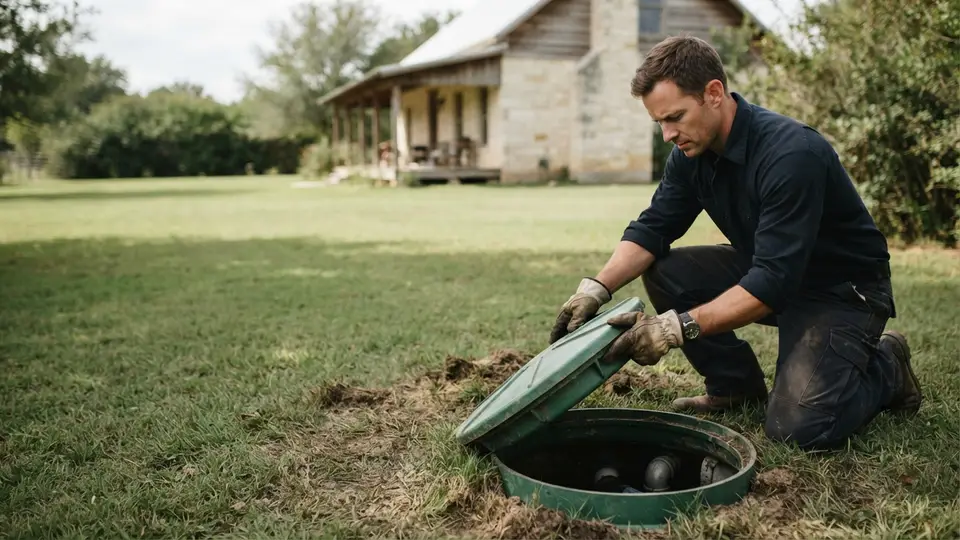
Septic pumping
When: Every few years or when sludge is high
What it includes: Pump all compartments, check baffles and filter
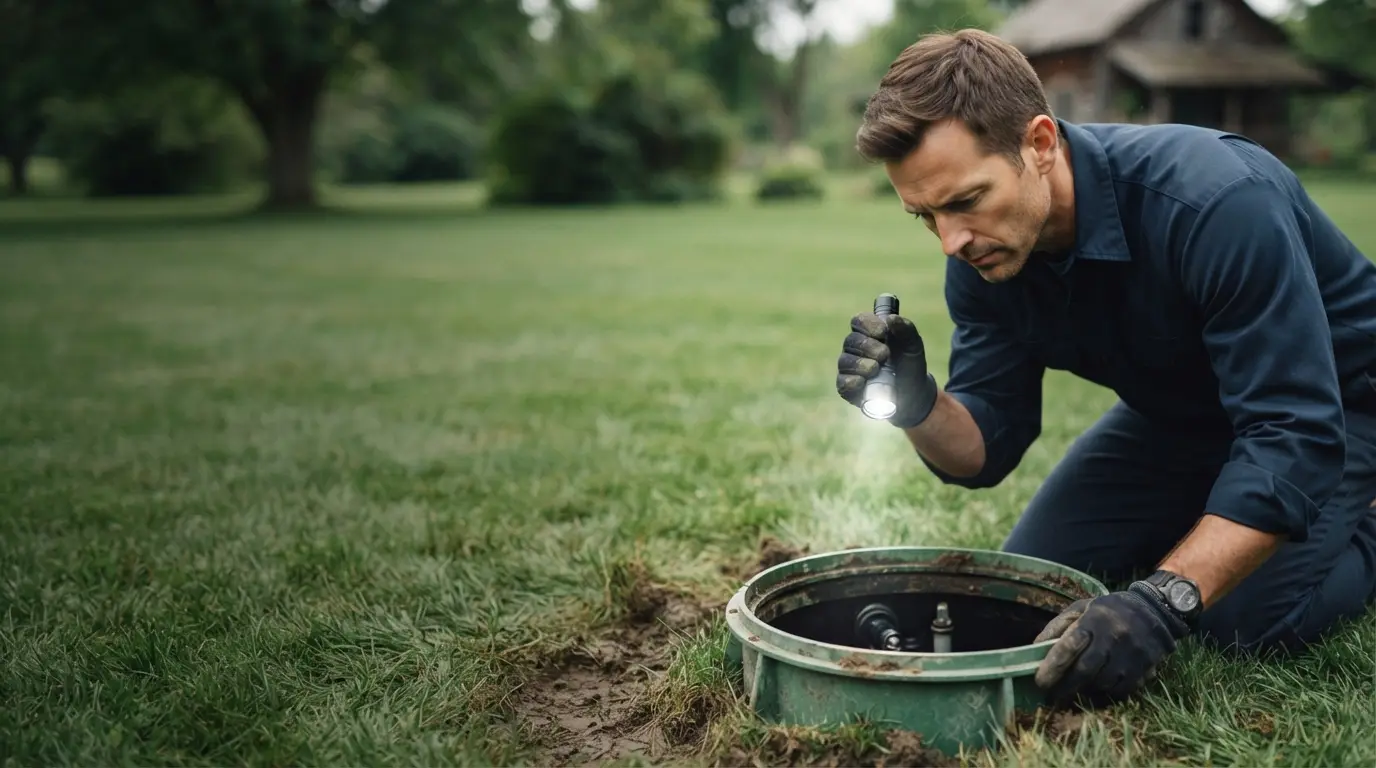
Drains slow after spring rain, or a wet spot over the leach field? We provide septic tank services in Illinois for homes beyond municipal sewer. Septic is common on farms and acreages across central and southern Illinois, in unsewered subdivisions at the edges of the Chicago suburbs and around lakes and river bluffs. Heavy clay soil drains slowly, and wet springs saturate fields. We pump and inspect tanks, repair fields and work with your county health department when a permit is needed.
The service
A septic system settles solids in a tank and sends clarified effluent to a seepage or leach field, where soil treats it. Illinois has 1,461 places in our data, 1003 of them with fewer than 2,500 residents, and many homes in and around them use private sewage systems. Much of Illinois has heavy, slow-draining soils, so systems may need larger fields, sand filters or aerobic units to work.
Our septic services
When: Every few years or when sludge is high
What it includes: Pump all compartments, check baffles and filter
When: Buying, selling or problems
What it includes: Levels, structure, field check, written report
When: Wet spots, odors, backups
What it includes: Locate failure, repair lines or distribution box
When: Homes with aerobic treatment
What it includes: Aerator, alarm and pump checks
Why Illinois
Clay drains slowly, so fields fill up after heavy use or rain.
Spring rains and flat, poorly drained land leave fields saturated for weeks.
Many farm and rural homes have tanks and fields decades old, some never upgraded.
Solids that are never pumped flow into the field and clog it.
Warning signs
Our process
We pump every compartment, clean the effluent filter and check baffles and the tank for cracks.
We measure sludge and scum, check structure, test the field and give you a written report.
We locate the failing section, repair lines or the distribution box and explain when a new field and permit are required.
Typical cost
You get a written price before any work begins.
Get a written price: (833) 733-2357Larger tanks take longer to pump.
Buried lids add time; risers save it.
Remote farms add travel.
A baffle costs far less than a field.
Field replacements need county approval.
Benefits
Pumping keeps solids out of the field.
Clean effluent keeps soil working.
Working systems keep groundwater cleaner.
Records reassure buyers and lenders.
Where soil cannot treat effluent well, many Illinois homes use aerobic treatment units that add air to break down waste before discharge. These have aerators, pumps, alarms and sometimes chlorinators that need regular service. If the alarm sounds, cut water use and call us. We repair aerators, pumps and controls and keep service records your county may ask for.
Around Marion (9,050 homes), Mount Vernon, Carbondale and the Shawnee Hills, rural homes rely on septic and wells. Hilly ground, shallow rock and clay make siting fields tricky. We service systems across the region and plan access on steep or wooded lots.
Farm homes outside Effingham (5,892 homes), Macomb and Quincy often have older systems, some built before current rules. Flat, tiled farmland can have high seasonal water tables. We inspect older systems, point out field tile or drainage issues affecting them and repair what we can.
Some subdivisions on the edges of the Chicago suburbs and Metro East were built on septic before sewer arrived. When sewer becomes available, owners may be required or offered the chance to connect. We connect homes to new sewer and properly abandon the old tank.
Homes around Galena (2,057 homes), Illinois River bluffs and recreational lakes face slopes, setbacks and seasonal use. We pump before busy seasons and check that systems near water are working.
Systems are sized by bedrooms. Before adding bedrooms or a guest suite, ask your county health department what is required and have us inspect the system.
Lenders and buyers often want an inspection on rural homes, from Edwardsville (10,609 homes) outskirts to downstate farms. A recent pumping record and our written report help the sale go smoothly.
Most rural Illinois homes on septic also draw water from a private well on the same property. Setback distances between the well and the tank and field protect the drinking water. When a field fails, effluent can move toward the well, especially in sandy areas or where the well is old and shallow. When we service a system, we note where the well is, and if the field is failing we recommend testing the well water for bacteria and nitrates.
Basement homes on septic often have a sump pump, and sometimes its discharge or the roof gutters drain right onto the field. That extra water floods the soil the field needs to treat effluent. We look for these connections and reroute discharge away from the system. It is one of the cheapest ways to extend a field's life.
Older tanks often have lids buried a foot or more underground, so every pumping starts with digging. We install risers that bring the lids to the surface, which makes service faster, cheaper and easier in winter, and helps you keep track of where the tank is.
Northern Illinois winters can freeze shallow lines and lightly used systems, especially at vacant homes or where snow over the field was packed down by vehicles or plowing. Keep snow over the field loose, use the system regularly and fix running toilets that trickle cold water into the tank. If drains stop in deep cold, do not add antifreeze; call us to find and thaw the freeze. Insulated riser lids and a layer of straw or mulch over the tank also help in the coldest weeks of January and February, when frost runs deepest.
Cut water use: postpone laundry and dishwashing. Keep people, pets and vehicles off the field.
Never enter or lean into a septic tank; the gases can kill. Then call us.
Private sewage systems are regulated under the Illinois Private Sewage Disposal Code, with permits from county health departments. We handle permits for the repairs we perform, and our plumbers hold the licenses Illinois requires.
Why choose us
What you can count on every time one of our plumbers comes to your door.
Every job is handled by a plumber who holds the license your state or city requires, backed by liability insurance.
Our plumber explains the problem and the options, and you approve a written price before any work begins.
Burst pipes, sewage backups and failed water heaters get priority scheduling, including nights and weekends.
We pull permits when the job needs one and schedule the inspection, so the work holds up when you sell.
Repairs and installations come with a written warranty on labor, on top of the manufacturer's warranty on parts.
Our pages and plumbers account for your area's water, soil, climate and the age of the homes around you.
Service area
We serve septic homes in and around 1,461 Illinois communities. Choose yours:
Tank size, lid access and travel set the price. You approve a written price before we start.
It depends on what failed and how much must be repaired or replaced. We price it after an inspection.
Yes. It shows the system's condition and helps you avoid a costly surprise.
We open the tank, measure sludge and scum, check baffles and structure, test the field and write it up.
Yes. We repair aerators, pumps, alarms and controls and keep service records.
Yes. We run the new connection and properly abandon the old tank.
Yes. Gases can overcome a person in seconds. Leave it to us.
Yes. Keep people and pets away and call us.
Usually an hour or two once lids are uncovered.
After permitting and design, installation often takes a few days.
Every three to five years for most homes.
Grease, wipes, harsh chemicals and medicines.
Stop using water and call us. Backups get priority scheduling.
County health departments, under the state Private Sewage Disposal Code.
Heavy clay and wet springs saturate the soil so effluent has nowhere to go.