Frozen supply lines
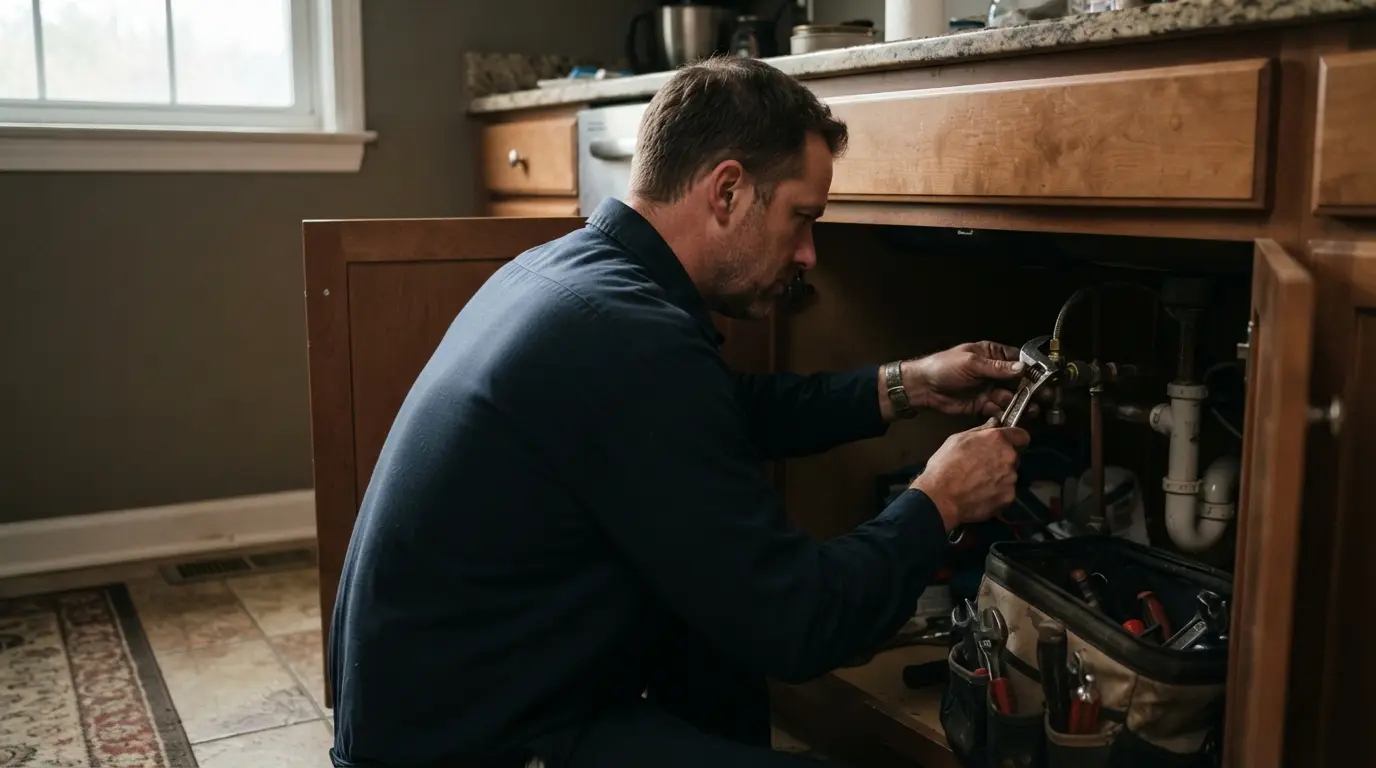
Arctic air can hold below zero for days. Pipes in crawl spaces, porches, outside walls and unheated garages freeze and split. We thaw lines safely, repair the break and reroute or insulate the run that froze.
Frozen pipes, a wet basement or a sewer backup? Our plumbers in Iowa track down the cause and repair it properly. We work in Des Moines and its growing western suburbs, the Cedar Rapids and Iowa City corridor, Mississippi River towns from Dubuque to Keokuk, and Missouri River cities like Council Bluffs and Sioux City. Iowa housing is older than most of the country, winters push frost deep into the ground, and spring rain fills sump pits fast. Below is what we repair here and the places we cover.
Plumbing in Iowa
The Census places in our data hold 2,624,534 Iowans and 1,182,803 homes in 1,026 communities. Iowa's housing is old: 62% of homes went up before 1980 and 38% before 1960. River towns lean older still, with 87% of Fort Madison homes, 82% in Clinton and 81% in Burlington built before 1980. Growth around Des Moines runs the other way: the median home in Waukee dates from 2011 and in Ankeny from 2006.
Natural gas heats 69% of Iowa homes and electricity 26%, so gas piping, water heater venting and furnace-room plumbing come up on many calls. Renters live in 32% of occupied homes statewide, but in 58% in Ames and 53% in Iowa City, two of the state's university towns.
Counts from the U.S. Census Bureau 2024 Gazetteer.
Explore our servicesWhat our plumbers see
Arctic air can hold below zero for days. Pipes in crawl spaces, porches, outside walls and unheated garages freeze and split. We thaw lines safely, repair the break and reroute or insulate the run that froze.
Snowmelt and heavy spring rain raise groundwater under many Iowa basements. We replace worn pumps, add battery backups and fix discharge lines that freeze shut in winter.
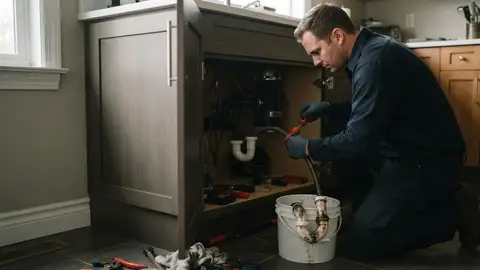
Clay tile and cast iron laterals under older neighborhoods crack, sag and fill with roots from mature street trees. We run a camera, clear the line and repair or replace the damaged section.
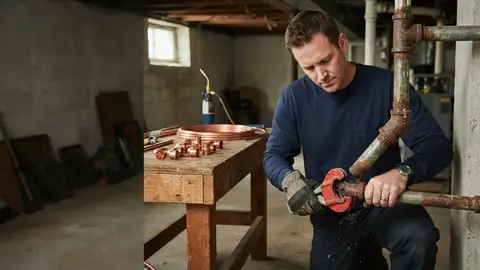
Homes from the first half of the 1900s often still have galvanized pipe that rusts shut from the inside. Low pressure and brown water are the usual signs. We repipe in stages or all at once.
Much of Iowa has hard water, which leaves scale in tanks and fixtures. We flush, repair and replace heaters and install water softeners where testing shows they help.
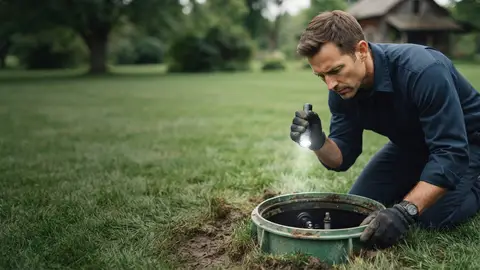
Farm homes and acreages outside town limits use septic tanks and private wells. We pump, inspect and repair systems and service well pressure tanks.
Our services
Each page below explains how we handle that work in Iowa homes and businesses.
Sewer Line Repair & Replacement
Repiping & Water Line Replacement
Gas Line Repair & Installation
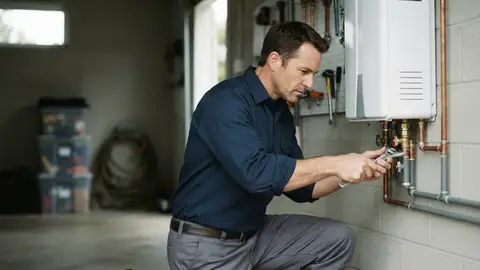
Water Heater Repair & Replacement
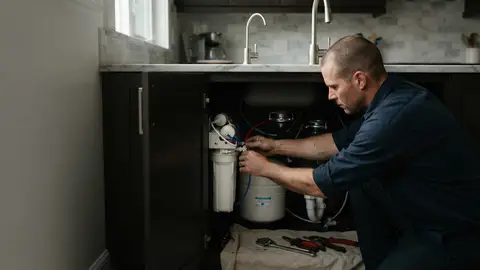
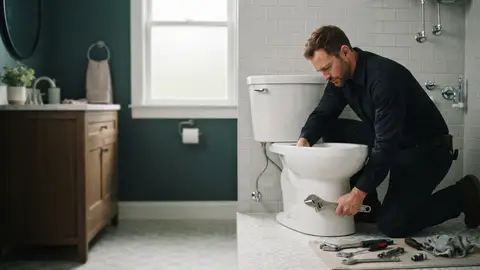
Toilet, Faucet & Fixture Repair
Sump Pump Repair & Installation
Across the state
Homes and main places: Des Moines (97,604 homes), West Des Moines, Ankeny, Urbandale, Waukee
What our plumbers see: Older city cores, brand-new suburbs, river flooding
Homes and main places: Cedar Rapids (64,423 homes), Iowa City, Coralville, Marion
What our plumbers see: Flood-prone river districts, student rentals
Homes and main places: Davenport (46,849 homes), Bettendorf, Dubuque, Clinton, Burlington
What our plumbers see: Very old housing, bluffs, high groundwater
Homes and main places: Waterloo (32,143 homes), Cedar Falls, Mason City, Fort Dodge
What our plumbers see: Deep frost, older laterals, lake cabins
Homes and main places: Sioux City (35,001 homes), Council Bluffs, Le Mars
What our plumbers see: Loess soils, Missouri River lowlands
Homes and main places: Ottumwa (11,395 homes), Oskaloosa, Fairfield, Keokuk
What our plumbers see: Small towns, aging mains, rural septic
Iowa licenses plumbers at the state level through the Plumbing and Mechanical Systems Board, and the state plumbing code is based on the Uniform Plumbing Code. Our Iowa jobs are handled by plumbers who hold the licenses the state requires for the work.
Many cities run their own permit and inspection programs, while in other areas the state handles plumbing inspections. Water heater replacements, repiping, sewer work and gas piping usually need a permit. We pull the permit and book the inspection; rules differ by city, so we confirm them for each job.
Iowa towns draw water from rivers, reservoirs and a range of aquifers, and most of it is moderately hard to very hard. Private wells in farm country can carry nitrate and bacteria, so yearly testing is a sensible habit; your county environmental health office can tell you where to send a sample.
Counties permit septic systems under Iowa Department of Natural Resources rules, and Iowa requires a septic inspection when most homes on septic are sold. We pump tanks, find failed parts and repair or replace them, and we can work alongside the certified inspector on a time-of-transfer report.
With 62% of homes built before 1980, older plumbing is the everyday reality in Iowa. In Windsor Heights 91% of homes predate 1980, in Sioux City 78% and in Mason City 77%. We often find galvanized supply lines, cast iron stacks with rusted hubs, clay sewer tile and basement drains that tie into old floor sumps. We start with a camera and pressure test, then give you a plan that can be done room by room so the house is never without water for long.
Davenport, Dubuque, Clinton, Muscatine, Burlington and Keokuk line the Mississippi, and Council Bluffs and Sioux City sit on the Missouri. High river stages lift groundwater, flood low basements and push water back up floor drains. Keokuk has 13% of its homes standing vacant, and empty houses there and in other river towns often hide frozen or burst pipes. We install backwater valves where allowed, service sump pumps before spring and check drains and water heaters after the water drops.
Buildings with five or more units hold 44% of homes in Ames, 42% in Iowa City and 39% in Coralville. Student apartments put heavy wear on drains, toilets and water heaters during the school year and then sit quiet over breaks, when a slow leak can run for weeks. We handle repairs and unit turnovers for owners and property managers. Tenants should report problems to their landlord, who schedules our visit.
About 69% of Iowa homes heat with natural gas, rising to 81% in Dubuque and 80% in Bettendorf. Older homes often have black iron lines extended many times as appliances were added. In smaller towns like Camanche, 11% of homes heat with propane. We repair leaks, run new lines for ranges, dryers and generators, and pressure test the system before it goes back into service.
Around the Iowa Great Lakes and Clear Lake, many cabins sit empty part of the year; 21% of homes in Clear Lake are vacant in our data. Seasonal houses need careful winterizing, since a single missed low spot in a supply line can split during the first hard freeze. We drain and blow out lines in fall, open systems in spring and check well pumps and septic tanks that sat unused all winter.
Manufactured homes make up 3% of Iowa housing in our data, but 15% in Carter Lake, across the river from Omaha. Their water lines run under the floor behind skirting, where wind and frost reach them easily. We repair those lines, replace failed heat tape and insulation and fix the connections to the park or city main.
Service area
Our largest Iowa service areas by population:
Every Iowa place in our data, grouped by county:
Adair County
Adams County
Allamakee County
Appanoose County
Audubon County
Benton County
Black Hawk County
Boone County
Bremer County
Buchanan County
Buena Vista County
Butler County
Calhoun County
Carroll County
Cass County
Cedar County
Cerro Gordo County
Cherokee County
Chickasaw County
Clarke County
Clay County
Clayton County
Clinton County
Crawford County
Dallas County
Davis County
Decatur County
Delaware County
Des Moines County
Dickinson County
Dubuque County
Emmet County
Fayette County
Floyd County
Franklin County
Fremont County
Greene County
Grundy County
Guthrie County
Hamilton County
Hancock County
Hardin County
Harrison County
Henry County
Howard County
Humboldt County
Ida County
Iowa County
Jackson County
Jasper County
Jefferson County
Johnson County
Jones County
Keokuk County
Kossuth County
Lee County
Linn County
Louisa County
Lucas County
Lyon County
Madison County
Mahaska County
Marion County
Marshall County
Mills County
Mitchell County
Monona County
Monroe County
Montgomery County
Muscatine County
O'Brien County
Osceola County
Page County
Palo Alto County
Plymouth County
Pocahontas County
Polk County
Pottawattamie County
Poweshiek County
Ringgold County
Sac County
Scott County
Shelby County
Sioux County
Story County
Tama County
Taylor County
Union County
Van Buren County
Wapello County
Warren County
Washington County
Wayne County
Webster County
Winnebago County
Winneshiek County
Woodbury County
Worth County
Wright County
How it works
We ask where the water or odor is, how old the house is and whether the main valve or gas should be shut off now.
Burst pipes, sewage in the basement and gas smells are scheduled ahead of routine work.
A camera, pressure test or leak locator shows the cause.
We lay out the options, and nothing starts until you approve one.
Lines are tested, and we arrange the inspection when a permit applies.
Have a plumbing problem in Iowa?
Call Expert Plumber Now and tell us what is happening. We’ll send a licensed plumber.
Pricing
We price every job after we see it. These factors make the biggest difference:
Galvanized, cast iron and clay tile often need replacing rather than patching.
Water and sewer lines sit deep to stay below the frost line, and frozen ground slows digging.
Finished basements mean opening walls or ceilings to reach pipe.
Wells, pressure tanks and septic add parts and labor.
Fees and inspection rules vary by city.
Evening and weekend calls cost more.
You get a written price to approve before we begin.
Season by season
Keep the heat on in every room, open sink cabinets on outside walls and keep the sump discharge clear of ice.
Pour water into the sump pit to test the pump before the rains, and check the floor drain for backups.
After big storms, look for damp spots in the basement and listen for the pump running nonstop.
Shut off and drain outdoor faucets, blow out sprinkler lines and have the water heater flushed.
Why choose us
What you can count on every time one of our plumbers comes to your door.
Every job is handled by a plumber who holds the license your state or city requires, backed by liability insurance.
Our plumber explains the problem and the options, and you approve a written price before any work begins.
Burst pipes, sewage backups and failed water heaters get priority scheduling, including nights and weekends.
We pull permits when the job needs one and schedule the inspection, so the work holds up when you sell.
Repairs and installations come with a written warranty on labor, on top of the manufacturer's warranty on parts.
Our pages and plumbers account for your area's water, soil, climate and the age of the homes around you.
Our plumber looks at the problem, the pipe material, how hard it is to reach and whether a permit is needed. You get a written price and approve it before work begins.
Not always. We test pressure and inspect the pipe first. Some homes need only the worst galvanized runs replaced, while others benefit from a full repipe done in stages.
We find the cause before quoting. That may mean a camera in the sewer, a pressure test on the supply lines or a leak search, followed by a written set of options.
Yes. We pull the permit where the city or state requires one and schedule the inspection, so you do not have to deal with the paperwork yourself.
Get everyone outside without flipping switches or lighting anything, then call your gas utility or 911 from a safe distance. Once the utility says it is safe, we repair the line.
A like-for-like swap usually takes a few hours. Moving the heater, changing fuel type or upgrading the venting can add time, and an inspection may follow.
Test it by pouring water into the pit, keep the discharge line clear and consider a battery backup. Pumps older than about ten years are worth checking.
Shut off the main water valve, switch off power near the water and call us. Burst pipes are scheduled ahead of routine work and we keep you updated on timing.
In most cases, yes. Iowa requires a time-of-transfer inspection by a certified inspector. We can pump the tank and make any repairs the report calls for.
Most Iowa water is moderately hard to very hard, depending on the source. We can test your water and tell you whether a softener would help your heater and fixtures.