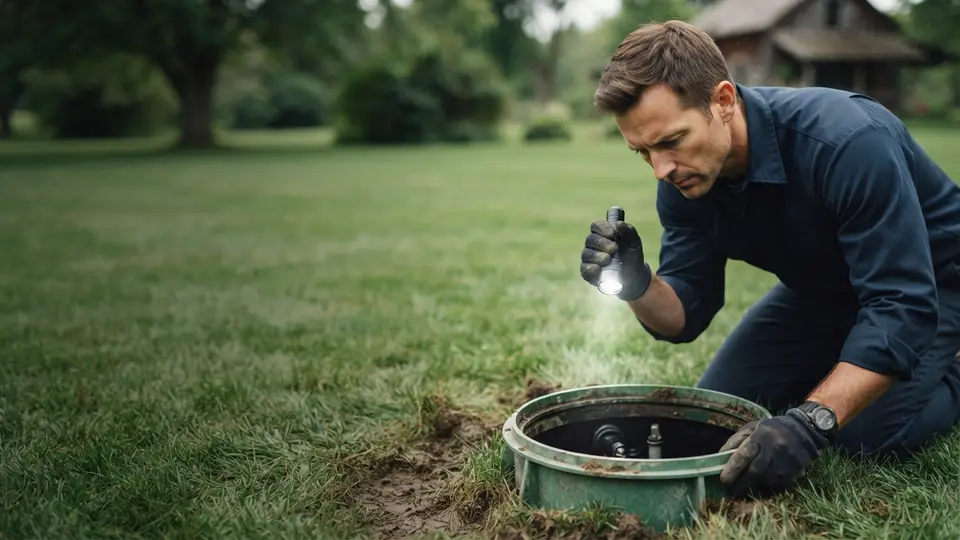
Septic tank
What it does: Settles solids and scum
Common problem: Full tank, cracked lid, failed baffle
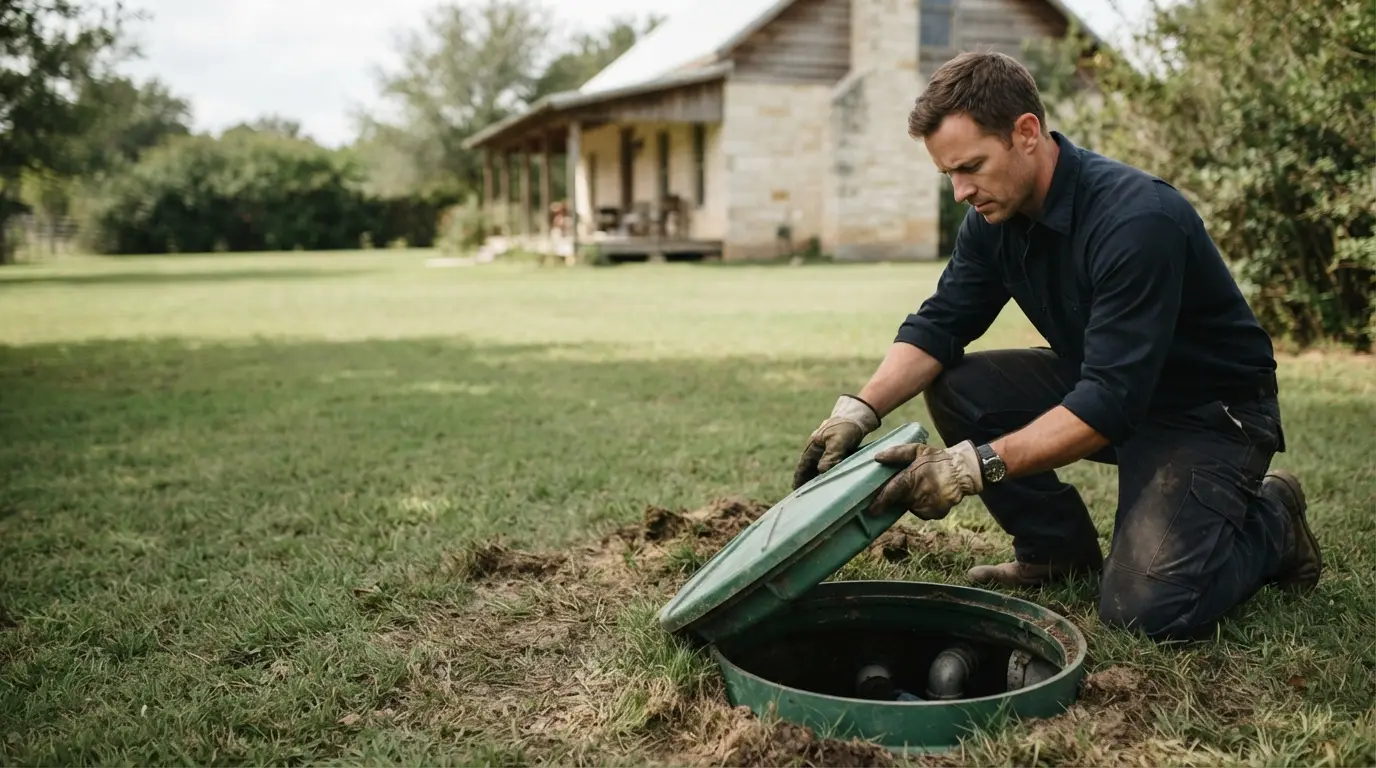
Soggy ground over the field, or drains slowing across the house? We provide septic tank services in Iowa for homes beyond the sewer. We serve farm homes, acreages, lake cabins and small-town lots. Iowa septic systems sit in heavy glacial soils that drain slowly, freeze deep in winter and stay saturated in wet springs. We pump the tank, inspect every part from the inlet to the field, and repair what has failed so the system keeps treating waste and the house keeps draining.
The service
Our Census data covers 1,026 Iowa cities and towns, and many homes just outside their limits rely on septic. A typical system has a settling tank, sometimes with a second compartment or an effluent filter, and a drain field of trenches where treated water soaks into the soil. In some soils, a mound, sand filter or aerobic unit is used instead.
Septic parts we service
What it does: Settles solids and scum
Common problem: Full tank, cracked lid, failed baffle
What it does: Catches solids at the outlet
Common problem: Clogs and backs up the house
What it does: Splits flow to trenches
Common problem: Tilts or settles, overloads one line
What it does: Treats water in soil
Common problem: Saturated or clogged with biomat
What it does: Lifts effluent to a mound or field
Common problem: Float or pump failure
Why Iowa
Much of Iowa sits on clay-rich till that absorbs water slowly, so fields overload easily.
Snowmelt and spring rain saturate the ground and leave no room for effluent.
Shallow lines and tanks with thin cover can freeze in a cold, snowless winter.
Many farmhouse systems predate current rules and may be little more than a tank and a short line.
Warning signs
Our process
We open the tank, pump out sludge and scum, check the baffles and clean the effluent filter before closing it up.
We measure the layers in the tank, check the inlet and outlet, look at the distribution box and probe the field for saturation.
We repair broken lines, level distribution boxes and replace failed trenches. A full field replacement follows the design your county approves.
Typical cost
Any figure before we see the system is an estimate only. Prices depend on:
We explain what we found and you approve a written price first.
Get a written price: (833) 733-2357Large tanks and buried lids take longer to pump.
A clean filter costs nothing extra; a failed baffle does.
Repairs to a few lines cost far less than a new field.
Mounds and pumped systems have more parts.
Frozen ground slows digging.
Benefits
Pumping keeps solids out of the trenches.
A working system drains the way it should.
A maintained system passes inspection more easily.
Proper treatment protects wells and lakes.
Iowa requires most homes on septic to be inspected by a certified inspector before the property changes hands. If the report shows a failed tank, a missing filter or a field that no longer works, the repairs usually have to be completed or arranged before closing. We pump tanks for inspections and make the repairs the report calls for, working with your county environmental health office.
Around Clear Lake and Spirit Lake, many homes are used only part of the year; 21% of Clear Lake homes and 6% of Spirit Lake homes are vacant in our data. Systems near the water need extra care because effluent that is not treated can reach the lake. Weekend crowds also overload small tanks. We pump before the busy season, check filters and advise on tank size for full houses.
Fast-growing places like North Liberty and Tiffin, where the median home dates from 2012, sit among acreages and older rural homes that still use septic. Some of those houses will eventually connect to city sewer. Until then, we keep their systems working, and when a connection becomes available we can abandon the old tank properly and run the new lateral.
A cold winter with little snow cover lets frost drive deep into the ground, and septic lines with shallow cover can freeze. Keep snow on the field as insulation, do not drive or plow over it, and use water normally so warm flow keeps moving. If the system freezes, we locate the frozen section and thaw it without damaging the pipe.
In small towns like Eldora and West Union, and on farms between them, a private well often sits on the same lot as the septic system. A failing field can affect groundwater, so we look at the distance between them when we inspect. Yearly well testing for bacteria and nitrate is wise; your county environmental health office can help with testing.
If drains are backing up or the alarm is on, cut water use to a minimum: skip laundry, long showers and the dishwasher.
Keep people, pets and vehicles off wet areas over the field. Never open or enter a septic tank; the gases are deadly. Then call us.
Counties issue permits for new and replacement septic systems under Iowa DNR rules, and some repairs need a permit too. We work with the county and schedule required inspections. Our plumbers hold the licenses Iowa requires for the plumbing we perform.
Why choose us
What you can count on every time one of our plumbers comes to your door.
Every job is handled by a plumber who holds the license your state or city requires, backed by liability insurance.
Our plumber explains the problem and the options, and you approve a written price before any work begins.
Burst pipes, sewage backups and failed water heaters get priority scheduling, including nights and weekends.
We pull permits when the job needs one and schedule the inspection, so the work holds up when you sell.
Repairs and installations come with a written warranty on labor, on top of the manufacturer's warranty on parts.
Our pages and plumbers account for your area's water, soil, climate and the age of the homes around you.
Service area
We serve septic systems in rural areas around these Iowa communities. Choose the one nearest you:
It depends on tank size, how deep the lids are and how far the truck must reach. We give you a written price before we start pumping.
The price depends on the system type and how much of it we need to open and probe. A time-of-transfer inspection follows state requirements.
It is one of the larger septic costs, and it depends on soil, field size and the design the county approves. We try repairs first when they will last.
We locate and uncover the lids, pump the tank, check baffles and the outlet filter and tell you what we saw. We note when the next pumping is due.
Yes. We pump tanks for the certified inspector and complete the repairs the report requires, so the sale can move forward.
Yes. We trace the line from the house with a locator or probe the yard. Old county records sometimes help too.
Yes. Tank gases can kill within minutes, and old lids can collapse. Leave opening and pumping to us and keep children away from lids.
It can, especially if the well is close or shallow. Test the well for bacteria and nitrate, and have the septic checked if results change.
Most tanks take about an hour or two once the lids are open. Digging to buried lids adds time.
Usually a few days of work once the county approves the design, depending on weather and soil conditions.
Many households need pumping every three to five years. Tank size, people in the home and a garbage disposal all change that.
Most systems do not need them. Regular pumping and keeping harmful items out of the drains do far more for the system.
Stop using water and call us. Backups get priority, and we pump the tank and find out whether the tank, filter or field caused it.
Snowmelt and spring rain saturate tight clay soils, and a saturated field cannot accept more effluent. Fields that struggle every spring often need repair.
Yes, in cold winters with little snow. Snow cover, normal water use and keeping traffic off the field all help prevent freezing.