Clay tile
Typical era: Before the 1970s
Usual trouble: Root intrusion at joints, cracks
Roots in the clay tile, or sewage in the basement again? We handle sewer line repair and replacement in Iowa. We cover everything from the first camera inspection to the final backfill. Iowa sewer laterals are often clay tile or cast iron laid generations ago, and they sit deep to stay below the frost. Roots, shifting soil and plain age break them down. We show you the problem on video, explain the repair options and restore a line that drains the way it should.
The service
Your lateral is the pipe that carries waste from the house to the city main, and in most Iowa cities the owner is responsible for it. With 62% of Iowa homes built before 1980, and 38% before 1960, a large share of those laterals are clay tile or cast iron. In Burlington 81% of homes predate 1980, in Clinton 82% and in Fort Madison 87%.
Common sewer pipe in Iowa homes
Typical era: Before the 1970s
Usual trouble: Root intrusion at joints, cracks
Typical era: Through the 1970s
Usual trouble: Rust, scale, split bottoms
Typical era: Mid 1900s
Usual trouble: Collapses and deforms
Typical era: Newer homes
Usual trouble: Sags from poor bedding
Why Iowa
Mature trees along older streets reach the clay joints, widen them and fill the pipe.
Deep frost and wet clay soils swell and shrink each year, pulling joints apart over time.
In western Iowa the windblown loess soil can settle when wet, letting lines sag or crack.
Cast iron rusts from the inside and fiber pipe from the middle 1900s flattens with time.
Warning signs
Our process
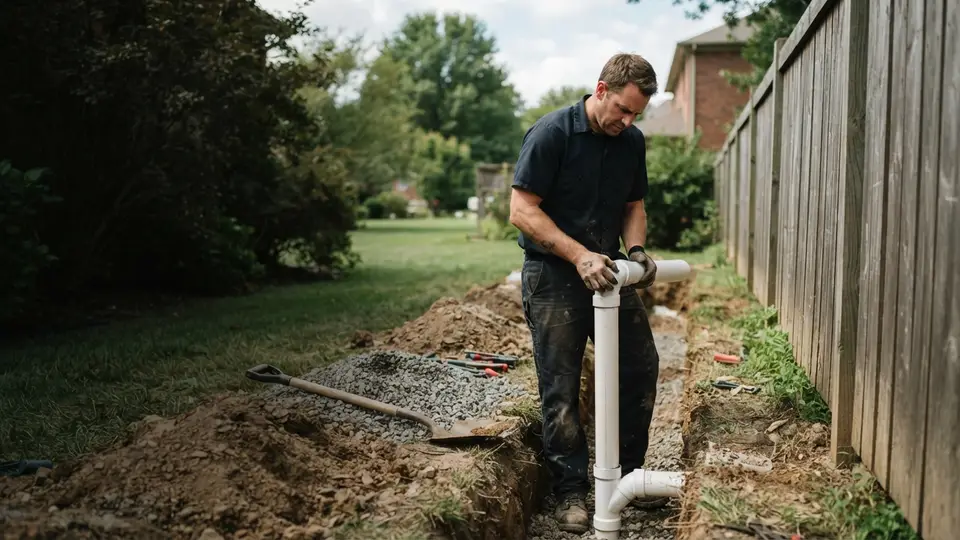
When the damage is in one place, we dig at the marked spot and replace that section with new pipe and proper couplings, then bed it in sand.
For lines broken in many places, we replace the whole lateral by open trench or, where the ground allows, by trenchless pipe bursting or lining.
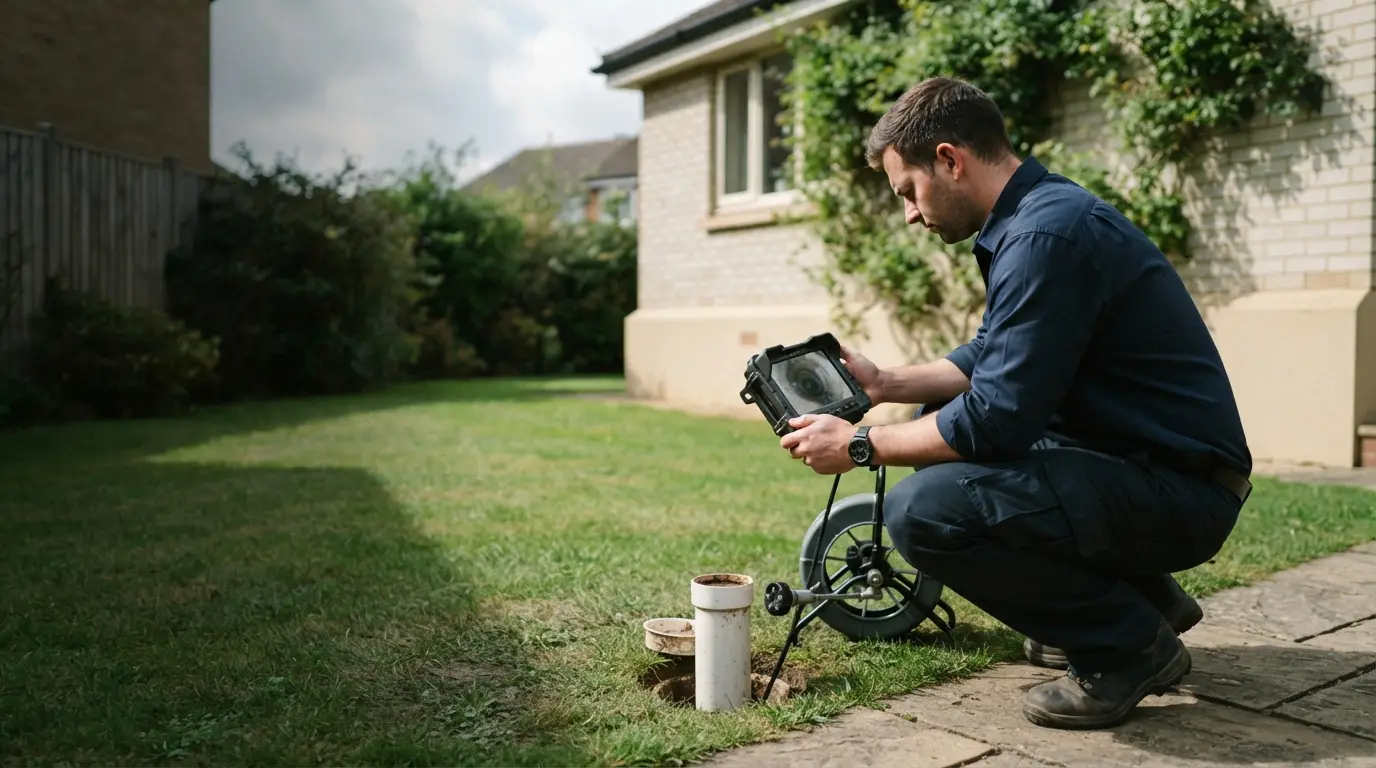
A camera on a push cable shows roots, cracks and sags, and a locator marks the exact depth and position above ground.
Typical cost
Any price before we inspect is an estimate only. These factors decide the final cost:
We walk you through the options and you approve a written price first.
Get a written price: (833) 733-2357Iowa laterals are buried deep to avoid frost, which means more digging.
Long runs to the street or steep lots add time.
Driveways, trees and landscaping affect the method.
A single break costs far less than a full new line.
Some cities require permits for work near the main or right of way.
Benefits
A sound pipe stops the cycle of root removal.
Sewage stays in the pipe instead of on the floor.
Buyers like seeing a newer lateral and the camera report.
Sealed joints keep rodents out of the line.
Digging a deep Iowa trench under a driveway, a mature tree or a finished yard is costly to restore. Lining places a resin sleeve inside the old pipe that hardens into a new one, and pipe bursting pulls a new line through while breaking the old one apart. Both need the line to be cleaned and inspected first, and not every lateral qualifies. We tell you plainly when open digging is the better answer.
Sioux City (35,001 homes) and Council Bluffs (27,616 homes) sit beside the Loess Hills, and many homes climb steep lots. Laterals there can run long and deep, and soft loess soil can settle around them. We plan excavation carefully on slopes and use trenchless methods where they fit to avoid disturbing hillside yards.
A home inspection usually does not look inside the sewer. On an older Iowa house, a camera inspection before closing can reveal a cracked or rooted lateral that would cost thousands to fix. We provide the footage and a written summary you can share with your agent, so repairs can be part of the conversation before you sign.
When neighbors on the same street are backing up at once, the city main may be the cause. Our camera shows where the problem sits. If it is in the public main, we tell you to call the city public works department. If it is in your lateral, we explain the fix and give you a written price.
Waukee, where the median home was built in 2011, and other fast-growing suburbs have PVC laterals that should last for decades. Problems there usually come from poor bedding that lets the pipe sag, or from debris left in the line during construction. A camera finds both, and the footage helps if the builder warranty still applies.
After an open-trench repair we compact the backfill in layers so it does not sink later. We set aside sod where possible and can coordinate with your concrete contractor for a driveway or sidewalk patch. Trenchless work leaves only small pits at each end.
If sewage is backing up, stop using water in the house, including toilets, laundry and the dishwasher. Keep people and pets away from any spill.
If you know where the outdoor cleanout is, make sure we can reach it. Do not try to dig near the line yourself, then call us.
Sewer replacement in Iowa usually needs a permit and inspection, and work in the street can need city approval. We pull the permits and schedule inspections. Our plumbers hold the licenses Iowa requires.
We repair sewer lines in 1,026 Iowa communities. Find your city:
Why choose us
What you can count on every time one of our plumbers comes to your door.
Every job is handled by a plumber who holds the license your state or city requires, backed by liability insurance.
Our plumber explains the problem and the options, and you approve a written price before any work begins.
Burst pipes, sewage backups and failed water heaters get priority scheduling, including nights and weekends.
We pull permits when the job needs one and schedule the inspection, so the work holds up when you sell.
Repairs and installations come with a written warranty on labor, on top of the manufacturer's warranty on parts.
Our pages and plumbers account for your area's water, soil, climate and the age of the homes around you.
Service area
Windsor Heights, where 91% of homes predate 1980, Mason City (77%) and Fort Dodge (78%) all have streets of houses with laterals that have never been replaced. In Des Moines alone there are 97,604 homes, many from before World War II. We regularly find laterals with several root-filled joints, so a camera before buying or after repeat clogs is money well spent.
It depends on depth, length, what sits on top of the line and whether one section or the whole lateral needs work. You approve a written price before we dig.
Sometimes. It costs more per foot but avoids tearing up driveways and trees. When the line runs under open lawn, digging can be the better value.
Yes, it is priced as its own service. The footage shows exactly where the damage is, so you only pay to fix what needs fixing.
We run a camera through the pipe and use a locator to mark the spot and depth above ground, so we dig in the right place.
We mark utilities, open the ground or set up for trenchless work, replace the damaged pipe, test the flow and arrange inspection before backfilling.
If the pipe still holds its shape and can be cleaned, lining often works. Collapsed or badly sagging lines usually need replacement.
Yes. Raw sewage carries bacteria. Keep people and pets away, avoid touching it and have the area cleaned and disinfected after the line is fixed.
No. Gas, electric and water lines may run nearby, and deep trenches can collapse. We call for utility locates and shore trenches when needed.
Many lateral replacements take one to two days, plus inspection. Long, deep lines or work under driveways can take longer.
Usually only while the old pipe is out and the new one is connected. We tell you when to stop using water and when it is safe again.
Plant trees away from the line, clean rooted lines before they block and consider lining or replacing clay sections with sealed pipe.
For clay or cast iron laterals, a camera check every few years, or whenever clogs start repeating, catches problems early.
Stop using all water and call us. Sewage backups are scheduled ahead of routine work, and we keep you updated on timing.
Lines must stay below the frost, which can reach several feet in an Iowa winter. That depth adds digging time to open-trench repairs.
In most Iowa cities the homeowner is responsible for the lateral, sometimes up to the main. Check with your city, and we can help find where your part ends.