Water softener
What it treats: Hardness, some iron
Notes: Uses salt to regenerate
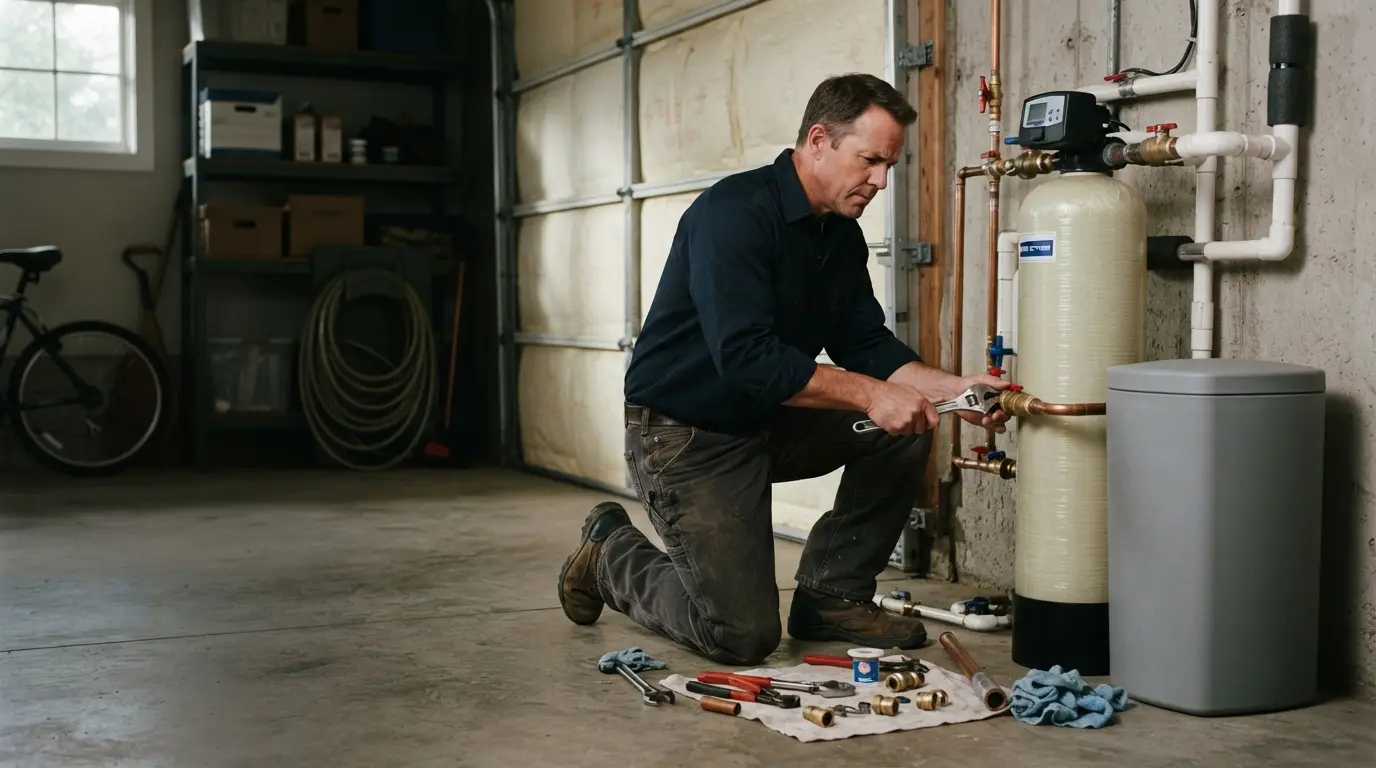
White crust on every faucet, or well water with an odd smell? We install water softeners and filtration in Iowa for city and well water. Most Iowa water is hard, and many private wells add iron, sulfur or nitrate to the mix. Scale shortens the life of water heaters and fixtures, while iron stains sinks and laundry. We test your water first, then size and install the softener, filter or reverse osmosis system that matches what the test shows.
The service
Iowa cities draw from rivers, reservoirs and aquifers, and most of that water ranges from moderately hard to very hard. Our Census data counts 1,182,803 Iowa homes, and in growing suburbs like Waukee (median built 2011) and Ankeny (median built 2006), many new homes were built with a softener loop ready for a unit.
Treatment options we install
What it treats: Hardness, some iron
Notes: Uses salt to regenerate
What it treats: Iron, manganese, sulfur odor
Notes: Common on private wells
What it treats: Chlorine taste and odor
Notes: Treats all water in the home
What it treats: Nitrate, dissolved solids
Notes: Drinking water at one tap
What it treats: Bacteria in well water
Notes: Works with a sediment filter
Why Iowa
Calcium and magnesium dissolve from bedrock and glacial deposits, making most Iowa water hard.
Many private wells have iron that stains and sulfur that smells.
Shallow wells in agricultural areas can pick up nitrate from fertilizer and manure.
City water is treated and safe, but some households want less chlorine taste.
Warning signs
Our process
We test hardness and iron, size the softener for your household, install a bypass valve and connect the drain and brine lines.
We install sediment, carbon or iron filters on the main line so every tap gets treated water.
We install under-sink reverse osmosis systems for drinking and cooking water, with a dedicated faucet.
Typical cost
Any figure before we test your water is an estimate only. These factors decide the cost:
You approve a written price before we start.
Get a written price: (833) 733-2357Iron, sulfur or nitrate need more equipment.
Larger families need larger systems.
Adding a loop or drain line adds work.
Reverse osmosis and UV add cost.
Salt and filter changes are part of ownership.
Benefits
Less scale in heaters and machines.
No white crust or orange stains.
Reverse osmosis reduces many contaminants.
Less soap needed.
Iowa has many private wells on farms and acreages. Nitrate is a concern in shallow wells in agricultural areas, especially for infants. A softener does not remove nitrate; a reverse osmosis system can reduce it at the drinking tap, and some homes need more. Test your well every year for bacteria and nitrate; your county environmental health office can help. We install treatment based on the results.
Large utilities serving Des Moines (97,604 homes) and Cedar Rapids (64,423 homes) treat water to meet safety standards, but it can still be hard. Your utility's annual water quality report lists hardness, often in grains per gallon or milligrams per liter. We use that report and our own test to set the softener correctly.
Scale builds fastest where water is heated. Tank heaters collect it at the bottom, tankless heaters clog their heat exchangers, and dishwashers and washers lose efficiency. Softened water slows that buildup, which helps appliances last longer and work as intended. We often install a softener at the same time as a new water heater.
Renters occupy 58% of homes in Ames and 53% in Iowa City, and buildings with five or more units hold 42% of Iowa City homes. Owners can protect heaters and fixtures across units with a central softener. We install and service systems for landlords, including salt delivery reminders.
Many new homes in North Liberty (median built 2004) and other growing towns have a softener loop: plumbing set up so a softener can be connected near the water heater. Outdoor faucets are often left unsoftened. We connect the softener, set it up and show you how to add salt.
In older homes, such as the 78% of Sioux City homes built before 1980, basements may have little room near the main line and no floor drain close by. We find a spot, run a drain line or install a small condensate pump if needed, and add a bypass so you can shut the softener off for service.
There is no need to soften the water that goes to lawn sprinklers and outdoor faucets. Keeping those lines on hard water saves salt and keeps softened water off plants. When we install a softener, we separate outdoor lines where the plumbing allows, and we leave one cold tap unsoftened in the kitchen if you prefer it for drinking.
If you have a well, collect a recent water test or arrange one through your county. If you are on city water, check your utility's water quality report.
Clear space near the main water line and water heater. Then call us to schedule the test and installation.
Some Iowa cities require a permit for softener installation, especially when new drain connections are added. We pull permits where required. Our plumbers hold the licenses Iowa requires.
Why choose us
What you can count on every time one of our plumbers comes to your door.
Every job is handled by a plumber who holds the license your state or city requires, backed by liability insurance.
Our plumber explains the problem and the options, and you approve a written price before any work begins.
Burst pipes, sewage backups and failed water heaters get priority scheduling, including nights and weekends.
We pull permits when the job needs one and schedule the inspection, so the work holds up when you sell.
Repairs and installations come with a written warranty on labor, on top of the manufacturer's warranty on parts.
Our pages and plumbers account for your area's water, soil, climate and the age of the homes around you.
Service area
We install softeners and filters in 1,026 Iowa communities. Find your city:
It depends on the size of the softener, what is in your water and how much plumbing work the installation needs. You approve a written price before we start.
An under-sink system costs less than whole-house treatment. The price depends on the unit and whether we add a dedicated faucet or a connection to your refrigerator.
Yes. Softeners use salt, and filters and RO cartridges need replacing on schedule. We explain these costs so you know what to expect each year.
We test your water for hardness, iron and other issues, then size the system for your household and water use before recommending anything.
We shut off the water, cut into the main line, install the bypass and system, connect the drain and brine lines, set up the controls and test everything.
Yes. Well water often needs iron filtration along with softening. We test first so the equipment handles everything the water contains.
For most people, yes. It adds a small amount of sodium. If you are on a low-sodium diet, use a reverse osmosis tap for drinking water.
No. Nitrate needs reverse osmosis or another approved treatment. Test your well and talk to your doctor if infants live in the home.
Most installations take a few hours. Homes without a softener loop or drain nearby may take longer.
Many softeners last ten to fifteen years or more with proper care. The resin and valves may need service over time.
It depends on water hardness and household use, often every month or two. Keep the salt level above the water in the brine tank.
Pre-filters usually yearly and membranes every few years, depending on water quality and the manufacturer's schedule.
Put the softener in bypass, close the inlet valve and call us. Leaks that will not stop are scheduled ahead of routine work.
Most Iowa water is moderately hard to very hard, depending on the source. Your water utility's report or our test will tell you how hard yours is.
Hydrogen sulfide in groundwater or a reaction in the water heater can cause it. Testing tells us whether filtration or a heater change will fix it.