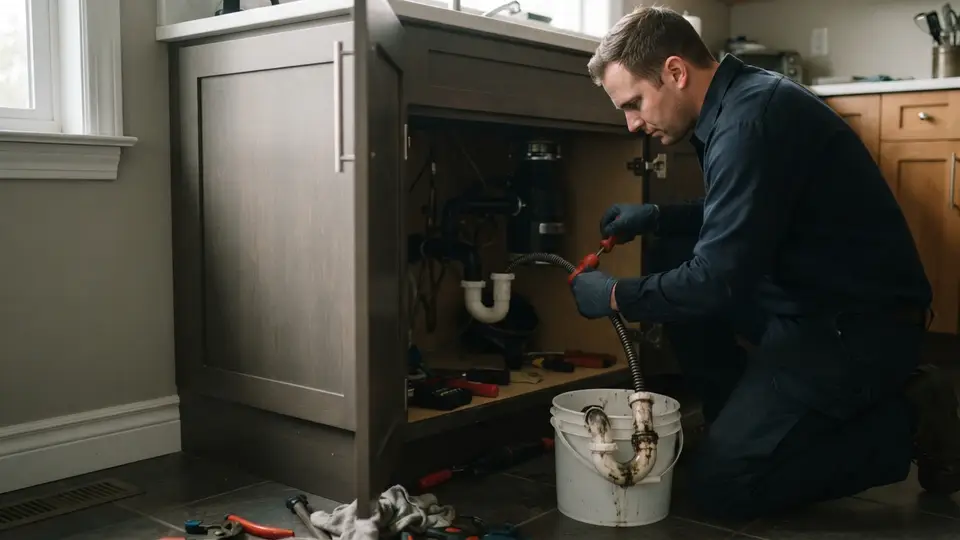
Hand snake
Where it fits: Bathroom sinks, tubs, toilets
Good to know: Small, careful, quick
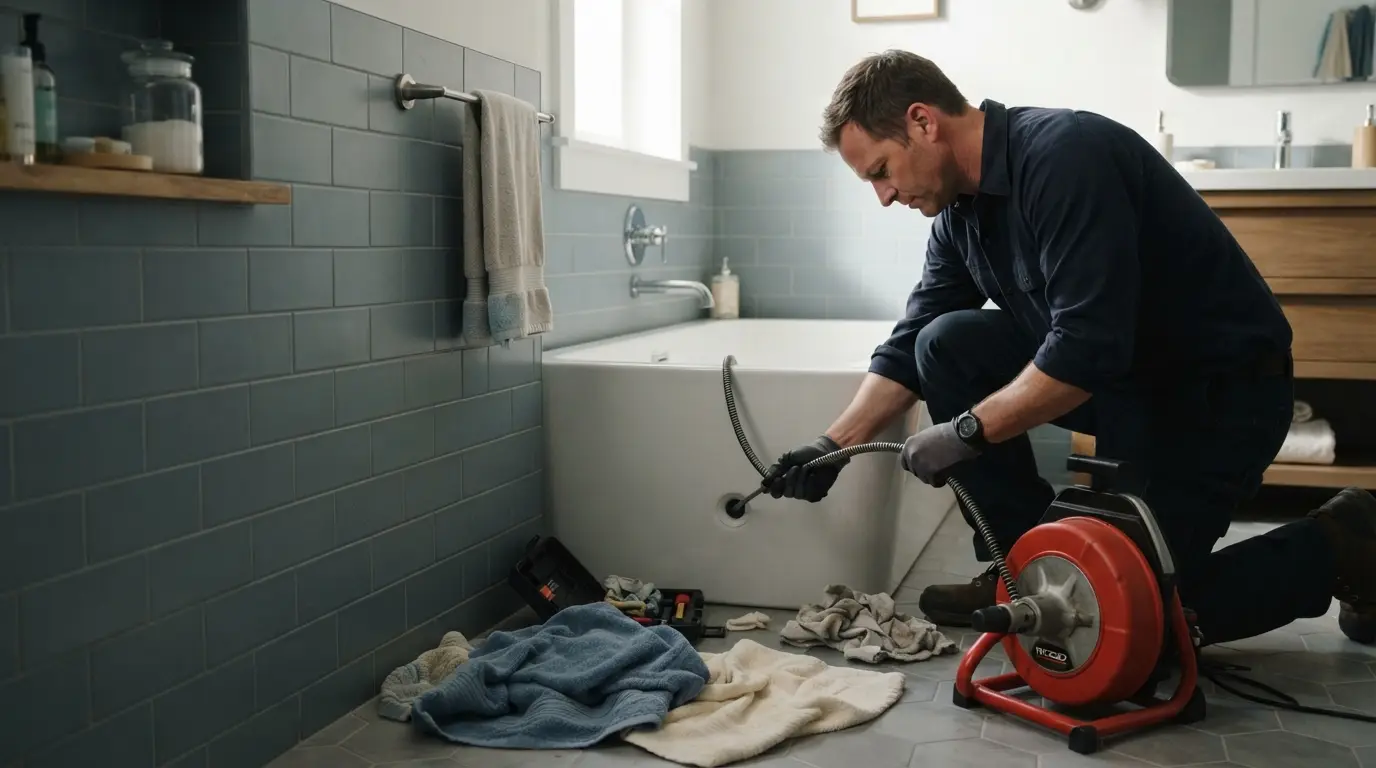
Floor drain bubbling, or a sink that will not empty? We handle drain cleaning and clog removal in Iowa for houses, apartments and businesses. Many Iowa drains are cast iron and clay tile laid decades ago, and they collect roots from old street trees, scale from hard water and grease that sets up in cold basement pipe. We open the line, put a camera in it so you can see what caused the backup, and repair the weak spot so it stays open.
The service
Our Census data counts 1,182,803 Iowa homes, and 62% of them were built before 1980. In Sioux City that share is 78%, in Waterloo 76% and in Dubuque 73%, so most basements we work in have iron stacks and tile laterals. Suburbs like Ankeny, where the median home dates from 2006, have PVC drains that still clog from wipes, grease and construction leftovers.
Tools we use to open drains
Where it fits: Bathroom sinks, tubs, toilets
Good to know: Small, careful, quick
Where it fits: Main lines with roots
Good to know: Cutting heads sized to the pipe
Where it fits: Grease, scale and silt
Good to know: Scours the full pipe wall
Where it fits: Clogs that keep returning
Good to know: Shows cracks, sags and offsets
Why Iowa
Silver maples, elms and cottonwoods planted along older streets push roots into the joints of clay sewer tile, where they catch paper and grease.
Basement drains stay cold most of the year, so cooking fat stiffens quickly and builds into a plug.
Hard water leaves a rough crust inside iron drains that narrows them and snags hair and food.
Years of freezing and thawing can shift laterals, leaving low spots where waste settles.
Warning signs
Our process
We work from the closest cleanout, choose a cable and head that match the pipe size, and flush the line afterward to prove it runs freely.
When a line keeps plugging, our camera locates the root intrusion, broken hub or sag, and we fix that section by spot repair, lining or replacement.
Pressurized water strips grease, scale and silt from the pipe wall. On old cast iron we check the pipe on camera first so the jetting does no harm.
Typical cost
Drain cleaning prices are estimates only until we see the line. These factors set the final cost:
We explain the choices, and you approve a written price before we begin.
Get a written price: (833) 733-2357A bathroom sink takes less time than a main under the yard.
Without a cleanout we may need to pull a toilet or work through the roof vent.
Jetting and camera work cost more than a single cable run.
A broken or sagging line needs repair beyond cleaning.
Evening and weekend visits cost more.
Benefits
An open main keeps sewage from coming up the floor drain.
Removing roots and scale restores the full pipe size.
Camera footage shows the condition of the line.
Washing out sludge removes the smell with it.
In most Iowa houses the basement floor drain is the lowest opening on the sewer, so it is the first place a main line blockage shows up. We clear the main, check that the trap still holds water to block sewer gas and look for an old floor sump or clay tile connection tied into the system. Where the city allows, we can add a backwater valve so a full street sewer cannot push water into the basement.
Des Moines (97,604 homes) and Davenport (46,849 homes) both have large neighborhoods of early 1900s houses, with 70% and 70% of homes built before 1980. Their laterals are often original clay tile running under mature trees to the street. A main line that backs up every spring or fall is usually rooted or cracked, and a camera inspection tells you which.
Renters occupy 58% of homes in Ames and 53% in Iowa City, and buildings with five or more units hold 44% of Ames housing. Shared kitchens and busy bathrooms in student housing clog often, and stacks in older buildings collect years of buildup. We clear lines for landlords and managers and can jet main stacks between leases.
Kitchens in Cedar Rapids (64,423 homes in the city), Des Moines and Sioux City send grease down their lines every day. We jet kitchen drains, clear floor drains and work with your grease interceptor schedule so the line between pumpings stays open.
On acreages and farm homes, every drain running slow at once can point to a full septic tank or a soaked drain field instead of a clog. We check the tank level and the outlet before snaking, so you pay for the fix that actually solves the problem.
Iowa winters bring their own drain calls. Vent pipes can frost over on the roof during long cold spells, which makes fixtures gurgle and drain slowly. Drain lines in unheated crawl spaces and garages can freeze solid where they sag. Sump discharge lines freeze outside and send water back into the pit. We sort out which of these is causing the trouble before reaching for a cable.
In Ottumwa, where 80% of homes predate 1980, and in Mississippi River towns, high water can fill the city sewer during heavy rain. Floor drains back up even though the home's own line is clear. Cleaning cannot stop that, but a backwater valve can, and we tell you which problem you have before any work starts.
Many Iowa basements have a washer emptying into a laundry tub or standpipe that ties into an old iron line. Lint, soap and scale build up inside, and the tub begins to overflow during the spin cycle. A lint catcher on the discharge hose helps, and a cleaning every few years keeps the line flowing.
If the floor drain is rising or several fixtures are slow, stop using water, including the washer and dishwasher. Turn off the toilet supply valve if the bowl keeps filling.
Do not pour chemical drain openers into a backed-up line; they eat old pipe and can burn whoever opens it. Keep children and pets away from any sewage, then call us.
Cleaning a drain does not need a permit. Replacing pipe usually does, and we pull it. Our plumbers hold the licenses Iowa requires.
Why choose us
What you can count on every time one of our plumbers comes to your door.
Every job is handled by a plumber who holds the license your state or city requires, backed by liability insurance.
Our plumber explains the problem and the options, and you approve a written price before any work begins.
Burst pipes, sewage backups and failed water heaters get priority scheduling, including nights and weekends.
We pull permits when the job needs one and schedule the inspection, so the work holds up when you sell.
Repairs and installations come with a written warranty on labor, on top of the manufacturer's warranty on parts.
Our pages and plumbers account for your area's water, soil, climate and the age of the homes around you.
Service area
We clear drains in 1,026 Iowa communities, from Sioux City (35,001 homes) to Dubuque. Find your city:
The cost depends on where the clog sits, how we reach it and which method it needs. A sink is far less work than a main line, and you approve a written price first.
Yes, jetting usually costs more because it takes more equipment and time. It also removes grease and scale that a cable leaves, so the line stays open much longer.
It is listed as its own item on the written price. On older lines it often saves money, because it shows exactly why the drain keeps backing up.
Our plumber asks which drains are slow, finds the best cleanout, clears the line and runs water to confirm it drains. Then we tell you what we found.
Yes. We can go through a toilet flange or roof vent. If cleanouts are missing, we may suggest adding one so future cleanings are easier.
Yes. We show you the video on site and explain any roots, cracks or sags, so you can decide on repairs with the facts in front of you.
We advise against them. They can damage old iron and rubber joints and leave caustic water in the line that can burn whoever opens it next.
Yes, it can carry bacteria. Keep children and pets out, avoid touching it, stop using water and call us to clear the line.
Most fixture drains take under an hour. A main line with roots, or jetting a long run, can take a few hours, including the camera inspection.
We schedule as soon as we can, with sewage backups ahead of routine work, and we keep you updated on timing while our plumber is on the way.
Many rooted clay laterals need cleaning every year or two. A camera inspection tells us whether a repair would end the cycle instead.
It slows new scale inside drains and fixtures. Scale already in the pipe still needs to be cleaned out, often with a water jetter.
Stop using all water and call us. Backups are scheduled ahead of routine calls, and we will tell you what to shut off until our plumber arrives.
Many are clay tile with joints every few feet. Roots from mature trees grow into those joints, and freeze-thaw cycles can shift the sections out of line.
They can. When high water fills the city sewer, it can push into low floor drains. A backwater valve, where allowed, helps keep it out.