Tank, atmospheric vent
Fuel: Gas or propane
Good for: Basements with a chimney flue
Lukewarm showers, or a tank dripping in the basement? We handle water heater repair and replacement in Iowa for gas, electric and tankless systems. Iowa heaters work hard: incoming water is very cold in winter, and hard water lays scale in the bottom of the tank. Both shorten heater life. We diagnose the problem, repair it when a repair makes sense, and replace the heater with a properly sized and vented unit when it does not.
The service
Natural gas heats 69% of Iowa homes in our data, and most of those homes also use a gas water heater in the basement. Electric heat is used in 26% of homes, and in small towns propane is common: 11% of Camanche homes and 10% of Audubon homes heat with it. In Dubuque 81% of homes heat with gas and in Bettendorf 80%.
Water heater types we install
Fuel: Gas or propane
Good for: Basements with a chimney flue
Fuel: Gas or propane
Good for: Homes without a usable chimney
Fuel: Electricity
Good for: Homes without gas service
Fuel: Gas, propane or electric
Good for: Steady hot water, small footprint
Fuel: Electricity
Good for: Lower running cost in warm basements
Why Iowa
Minerals settle at the bottom of the tank and on electric elements, cutting efficiency and causing noise.
In winter, the heater has to raise water from near freezing, so it runs longer and harder.
Older homes may have flues that are too large or damaged for a modern heater.
Once the anode is used up, the steel tank begins to rust.
Warning signs
Our process
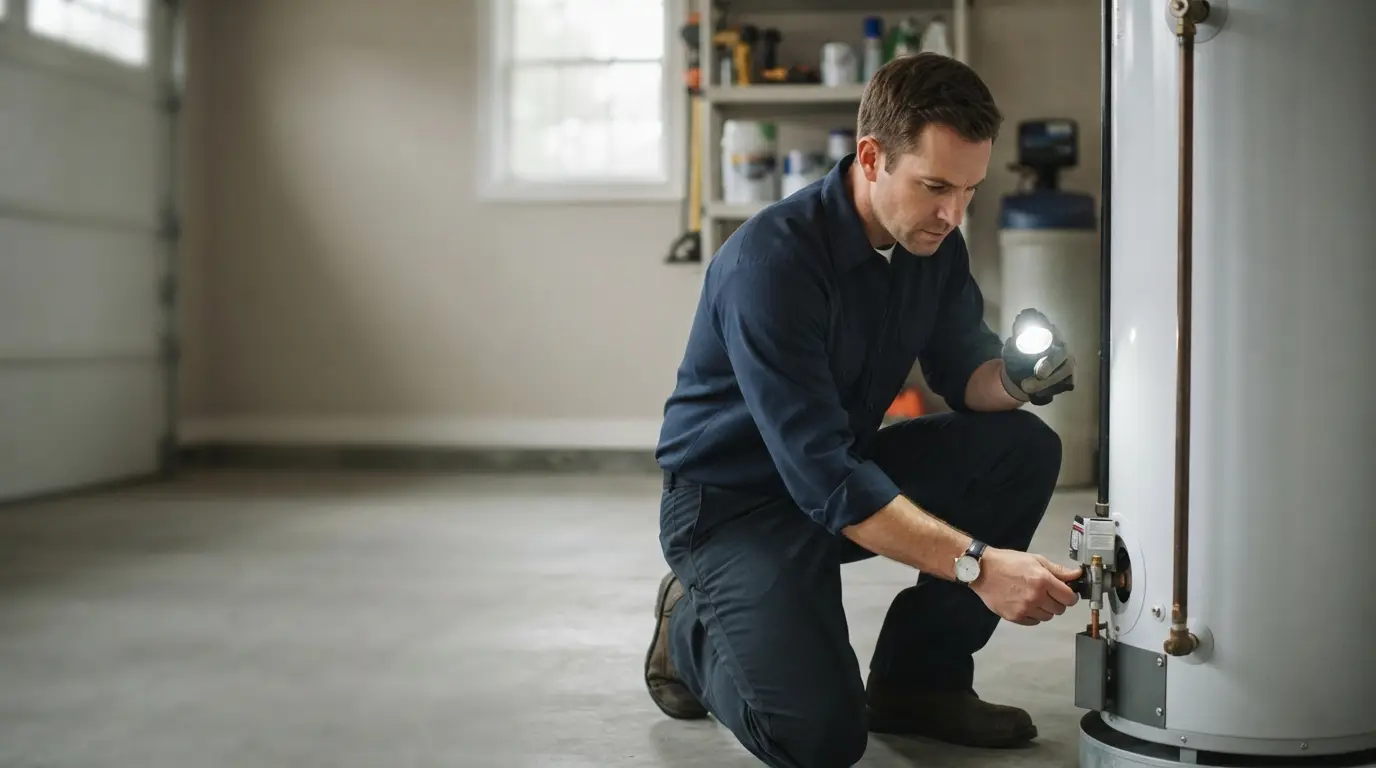
We test thermocouples, gas valves, igniters, elements and thermostats, replace failed parts and check the relief valve and venting.
We size the new heater to your household, connect gas or power, set up venting and expansion tanks and haul away the old unit.
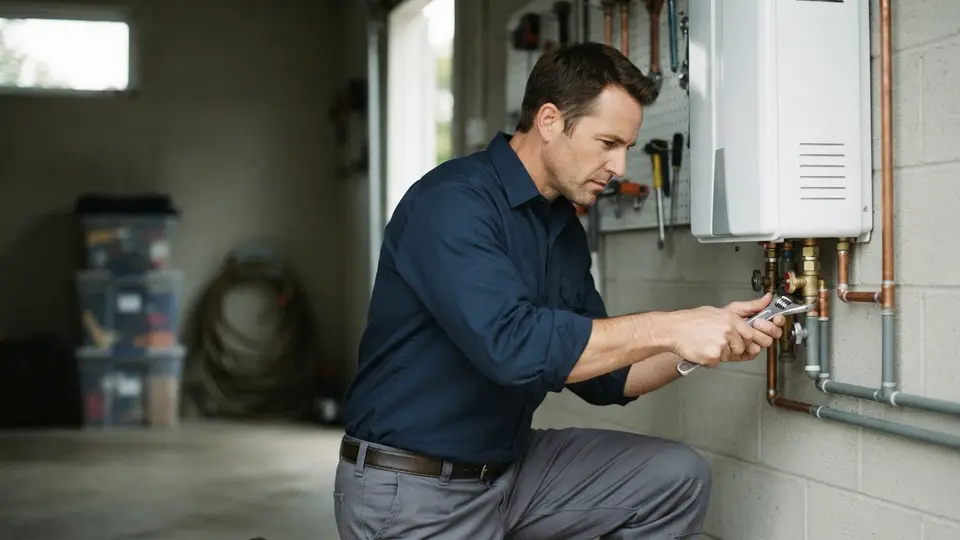
We install wall-mounted tankless units with proper gas sizing and venting, and flush them to remove scale.
Typical cost
Any figure before we see the heater is an estimate only. These factors set the cost:
You approve a written price before we start.
Get a written price: (833) 733-2357A part costs far less than a new heater.
Tankless and heat pump units cost more up front.
Liners or power vents add cost.
Larger lines or circuits may be needed.
Tight basements slow removal.
Replacements usually need a permit.
Benefits
Sized for your household.
Exhaust leaves the home as it should.
Scale-free tanks heat faster.
Expansion tanks and anodes protect the heater.
Many older Iowa homes vent the water heater into a masonry chimney shared with the furnace. When a high-efficiency furnace is installed, the old chimney can become oversized for the heater alone, which affects draft. We check venting on every gas heater, liner the flue or switch to a power vent when needed, and recommend carbon monoxide alarms near sleeping areas.
Tankless heaters give steady hot water and free up basement space, but Iowa winter water is very cold, so the unit must be sized for the flow you need at that temperature. Gas lines and venting often need upgrades, and hard water means flushing the unit regularly. We explain whether tankless makes sense for your home and usage.
Renters occupy 58% of homes in Ames and 53% in Iowa City. Heaters in student rentals run hard during the school year. We repair and replace them for owners and managers, and can stock the right model for buildings with several identical units.
In Sioux City, where 78% of homes predate 1980, and in older parts of Des Moines (97,604 homes), heaters often sit in tight basements with narrow stairs and old gas lines. We plan the swap, update gas connections and add drain pans and expansion tanks where the space allows.
Many Iowa homes have a check valve or pressure regulator on the incoming line. When water heats and expands, it has nowhere to go, and pressure spikes inside the plumbing. That strain shows up as a dripping relief valve, leaking toilet fill valves and a tank that wears out early. A small thermal expansion tank on the cold line absorbs the extra volume. We check pressure on every installation and add an expansion tank where the system needs one, which many local codes now require.
A heat pump water heater pulls warmth from the surrounding air, so it uses much less electricity than a standard electric tank. It works best in a basement that stays reasonably warm and has room around the unit, and it cools and dries the air as it runs, which many Iowa basements welcome in summer. It also needs a drain for condensate. For homes without gas, it is often the most efficient option, and we can tell you whether your basement suits one.
Farm homes and acreages beyond the gas mains often run propane water heaters. They need burners and orifices set up for propane, and the supply line from the tank has to be sized for every appliance it feeds. We service and install propane units and check the regulator and piping connections at the heater.
If the tank is leaking, close the cold water valve above the heater and turn the gas control to off or switch off the breaker.
If you smell gas, leave the home and call your gas utility from outside. Do not touch the relief valve. Then call us.
Water heater replacement usually needs a permit and inspection in Iowa. We pull it and schedule the inspection. Our plumbers hold the licenses Iowa requires.
Why choose us
What you can count on every time one of our plumbers comes to your door.
Every job is handled by a plumber who holds the license your state or city requires, backed by liability insurance.
Our plumber explains the problem and the options, and you approve a written price before any work begins.
Burst pipes, sewage backups and failed water heaters get priority scheduling, including nights and weekends.
We pull permits when the job needs one and schedule the inspection, so the work holds up when you sell.
Repairs and installations come with a written warranty on labor, on top of the manufacturer's warranty on parts.
Our pages and plumbers account for your area's water, soil, climate and the age of the homes around you.
Service area
We repair and replace water heaters in 1,026 Iowa communities, including Cedar Rapids (64,423 homes). Find your city:
It depends on the type and size of heater, venting, gas or electrical updates and access. We give you a written price before work starts.
For a younger heater with a failed part, repair usually wins. For an old, leaking tank, replacement is the better value. We explain both.
Tankless units cost more to buy and install, especially with gas line or venting upgrades, but they last longer and use energy only when needed.
We shut off the gas or power, drain and remove the old heater, set the new one, connect lines and venting, fill it and test it.
We consider household size, bathrooms, appliances and Iowa winter water temperature to choose a tank or tankless unit that keeps up.
Yes. We remove the old unit and dispose of it as part of the installation.
Leave the home without using switches and call your gas utility or 911 from outside. We repair the issue once it is safe.
It can mean high pressure, high temperature or a worn valve. Do not cap it; call us to find the cause.
A like-for-like tank swap usually takes a few hours. Tankless or relocated heaters take longer.
Many tanks last about eight to twelve years. Hard water and skipped maintenance shorten that.
Once a year is a good habit in Iowa, where hard water leaves scale in the tank.
Yes. Softened water leaves less scale, which helps the heater work efficiently and last longer.
Close the cold supply valve, shut off gas or power and call us. Leaking heaters are scheduled ahead of routine work.
Incoming water is much colder in winter, so the heater runs longer to reach the same temperature and you may run out sooner.
Sometimes. Older masonry chimneys may need a liner or a power vent instead. We check venting on every gas installation.