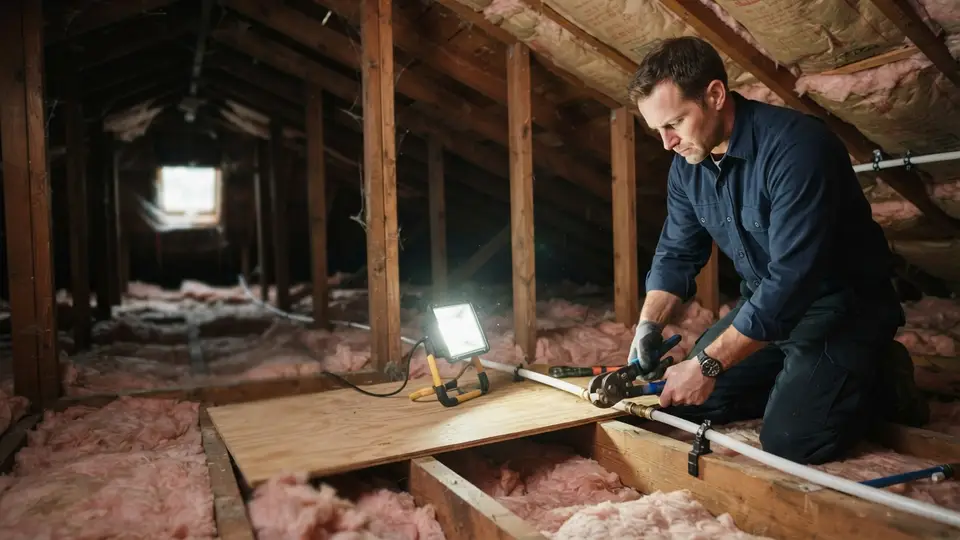
Spot repair
How it works: Open the floor at the leak and replace the pipe
Best when: One leak, easy access
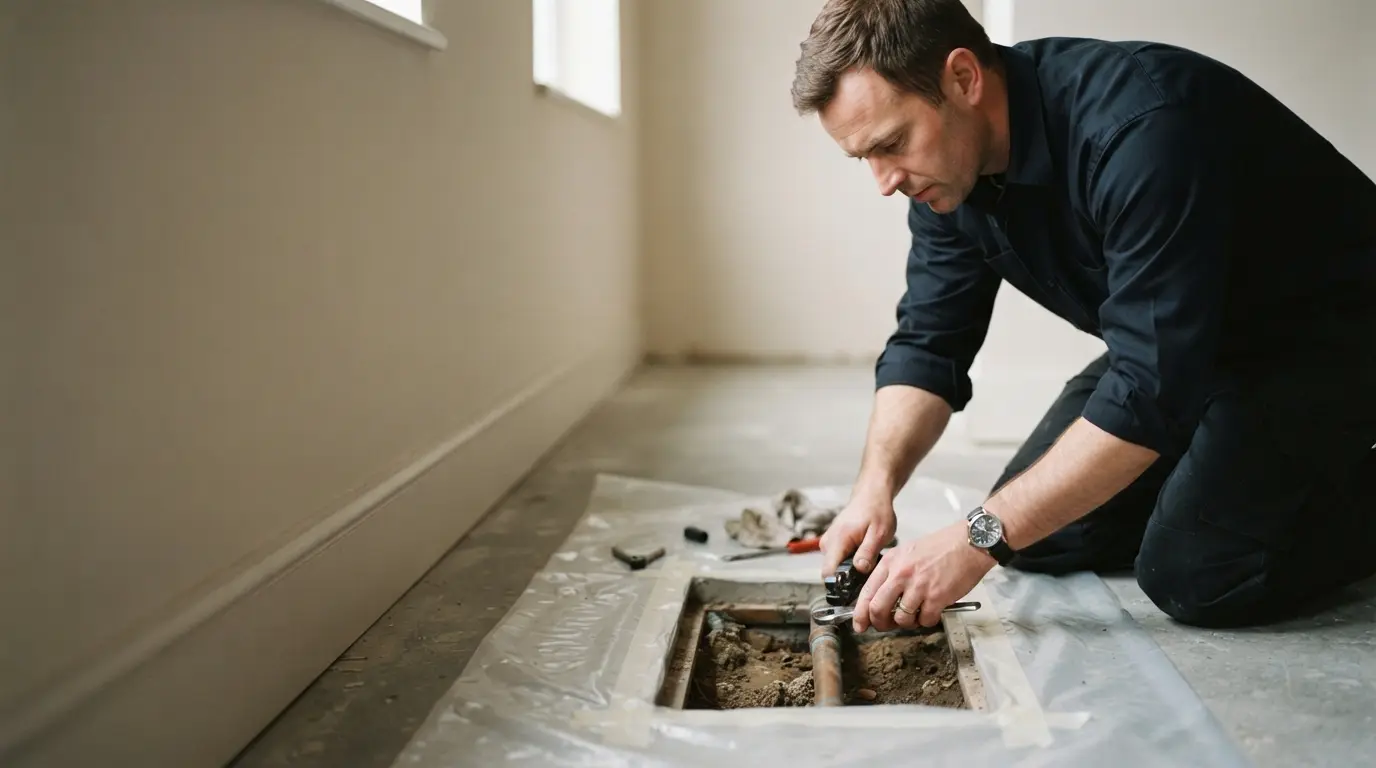
Warm spot on the floor, or water seeping through concrete? We handle slab leak repair in Iowa for homes and businesses. Most Iowa houses have basements, but water and drain lines still run under basement floors, slab-on-grade ranches, garages and newer townhomes. When one of those lines leaks, water spreads under the concrete and appears far from the source. We pinpoint the leak, then repair it through the floor or reroute the line through walls and ceilings, whichever does less harm.
The service
A slab leak is a leak in a pipe buried in or below concrete. In Iowa that usually means a supply or drain line under a basement floor, or under the slab of a ranch, townhome or commercial building. Growing suburbs like Ankeny, where the median home dates from 2006, Grimes (2009) and Bondurant (2011) include many townhomes and slab-built units.
Slab leak repair methods
How it works: Open the floor at the leak and replace the pipe
Best when: One leak, easy access
How it works: Run new pipe through walls or ceilings
Best when: Old pipe likely to leak again
How it works: Resin liner seals a broken drain
Best when: Cracked drain under the slab
How it works: Replace all supply lines
Best when: Several leaks in aging pipe
Why Iowa
Wet clay soils swell and shrink, and settling backfill can stress pipes under a slab.
Copper rubs against concrete or gravel as it expands with hot water, and it eventually wears through.
Mineral-heavy water and age can thin copper from the inside.
Old cast iron under basement floors rusts and splits along the bottom.
Warning signs
Our process
We isolate hot, cold and drain lines with pressure tests, then pinpoint the leak with acoustic listening and thermal imaging.
We cut a small opening in the concrete, replace the damaged pipe, test it and patch the floor.
When the old line is worn throughout, we abandon it and run new pipe overhead or through walls, leaving the slab untouched.
Typical cost
Any figure before we locate the leak is an estimate only. The final cost depends on:
You approve a written price before we start.
Get a written price: (833) 733-2357Some spots are easy to reach; others sit under cabinets or tile.
Rerouting can cost more but avoids floor work.
Tile and hardwood cost more to restore.
Several leaks may call for repiping.
Some reroutes and repipes need one.
Benefits
Water under the slab can wash out soil.
Hot water slab leaks waste water and energy.
Dry floors prevent mold under flooring.
We explain repair versus reroute honestly.
In older Des Moines homes, where 70% of houses predate 1980, the main drain and sometimes the water service run under the basement floor. Cast iron drains there rust through, and water can seep up through cracks or around the floor drain. A camera shows the drain's condition, and we repair it by opening the floor or lining the pipe.
Newer suburbs such as Waukee (12,216 homes) and North Liberty (8,739 homes) include townhome rows and ranch homes built on slabs. Their PEX or copper lines can still leak at fittings below the concrete. In shared buildings, a leak may affect neighbors, so we work with your association when the line serves more than one unit.
Some Iowa homes, garages and shops have hydronic heat tubing in the concrete. A leak there shows as a boiler losing pressure or a damp floor. We test the loops one at a time to find the leaking circuit and can repair it or take it out of service.
Manufactured homes, which make up 15% of homes in Carter Lake, are not on slabs, but their lines run under the floor where leaks are just as hard to see. We find those leaks with the same tools and repair them through the belly wrap or skirting.
Opening concrete is the part most owners worry about. Pinpointing the leak keeps the opening small, often less than two feet across. Where a floor is tiled or has costly flooring, rerouting can avoid breaking it at all. We talk through both before cutting anything.
Machine sheds, detached garages, restaurants and small offices across Iowa sit on slabs with water lines running to floor sinks, hose bibs and restrooms. A leak under a shop floor can go unnoticed for a long time because nobody watches that meter. We isolate the line, find the leak and choose between a floor repair and an overhead reroute based on how the building is used, and we schedule work around business hours where we can.
A damp spot on a basement floor or an unexplained meter reading can come up during a home inspection. We can test the lines, confirm whether there is a leak and put the repair in writing so buyers and sellers know exactly what was found and fixed.
If you suspect a slab leak, check the water meter with all fixtures off. If it moves and water is pooling, close the main shutoff.
If the leak is on the hot side, turn off the water heater. Move rugs and furniture off damp floors and take photos. Then call us.
Many policies cover access to the leak and resulting water damage but not the pipe itself. Coverage varies widely, so check your policy. We provide photos and notes to support a claim.
Spot repairs often need no permit, while rerouting or repiping may. We pull permits where required. Our plumbers hold the licenses Iowa requires.
Why choose us
What you can count on every time one of our plumbers comes to your door.
Every job is handled by a plumber who holds the license your state or city requires, backed by liability insurance.
Our plumber explains the problem and the options, and you approve a written price before any work begins.
Burst pipes, sewage backups and failed water heaters get priority scheduling, including nights and weekends.
We pull permits when the job needs one and schedule the inspection, so the work holds up when you sell.
Repairs and installations come with a written warranty on labor, on top of the manufacturer's warranty on parts.
Our pages and plumbers account for your area's water, soil, climate and the age of the homes around you.
Service area
We repair slab leaks in 1,026 Iowa communities. Find your city:
It depends on where the leak is, the repair method and the flooring above it. We give you a written price after locating the leak and before any concrete is cut.
Sometimes, but it can save money when the old pipe is likely to leak again or the floor is costly to restore. We price both options.
Many policies cover access and water damage but not the pipe. Check your policy; we provide documentation for your claim.
We pressure test each line to isolate it, then use acoustic listening and thermal imaging to mark the leak on the floor.
No. Pinpointing the leak keeps the opening small. If you prefer not to open the floor, we can reroute the line instead.
Yes. Old cast iron drains rust through. A camera inspection shows the damage, and we repair or line the pipe.
It can damage the foundation over time and cause mold. Hot water leaks can also make floors uncomfortably hot. Shut off the water and call us.
If the leak is on the hot side, yes. It saves energy and keeps the heater from running constantly while water escapes.
Most spot repairs take a day, plus time for the concrete patch to cure. Reroutes may take one to two days.
Often the same day. We restore water as soon as the repair is tested, even if the floor patch still needs to cure.
Keep water pressure in a normal range, consider a softener for very hard water and watch your bill for sudden changes.
If the pipe is old and worn, more leaks are likely. In that case, rerouting or repiping is often the better long-term choice.
Close the main shutoff and call us. Active leaks are scheduled ahead of routine work, and we keep you updated on timing.
Yes. Water and drain lines run under basement floors too, and leaks there show as damp concrete or water near the floor drain.
Clay soils that swell and shrink with moisture can stress buried pipes, especially in newer homes where backfill is still settling.