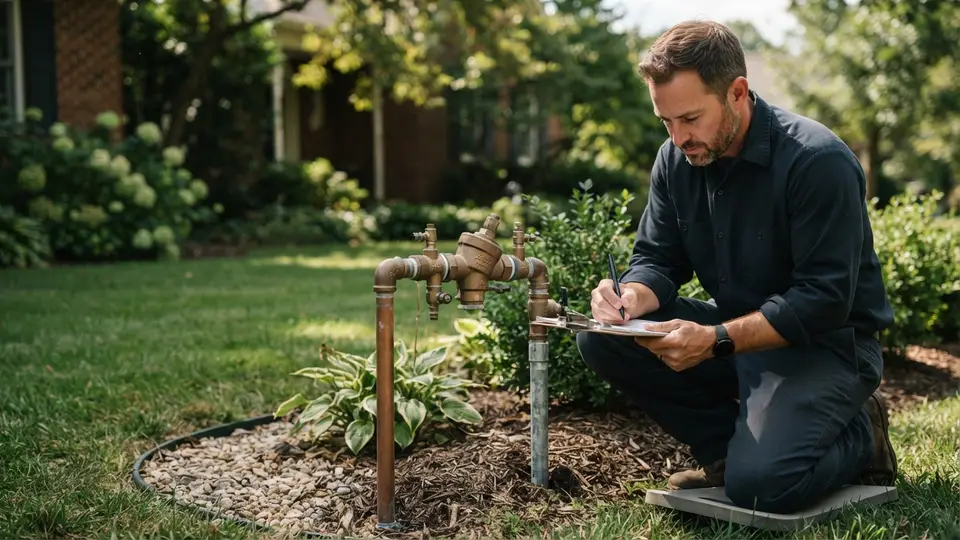
Pressure vacuum breaker (PVB)
Where used: Lawn irrigation
Testing: Testable each year
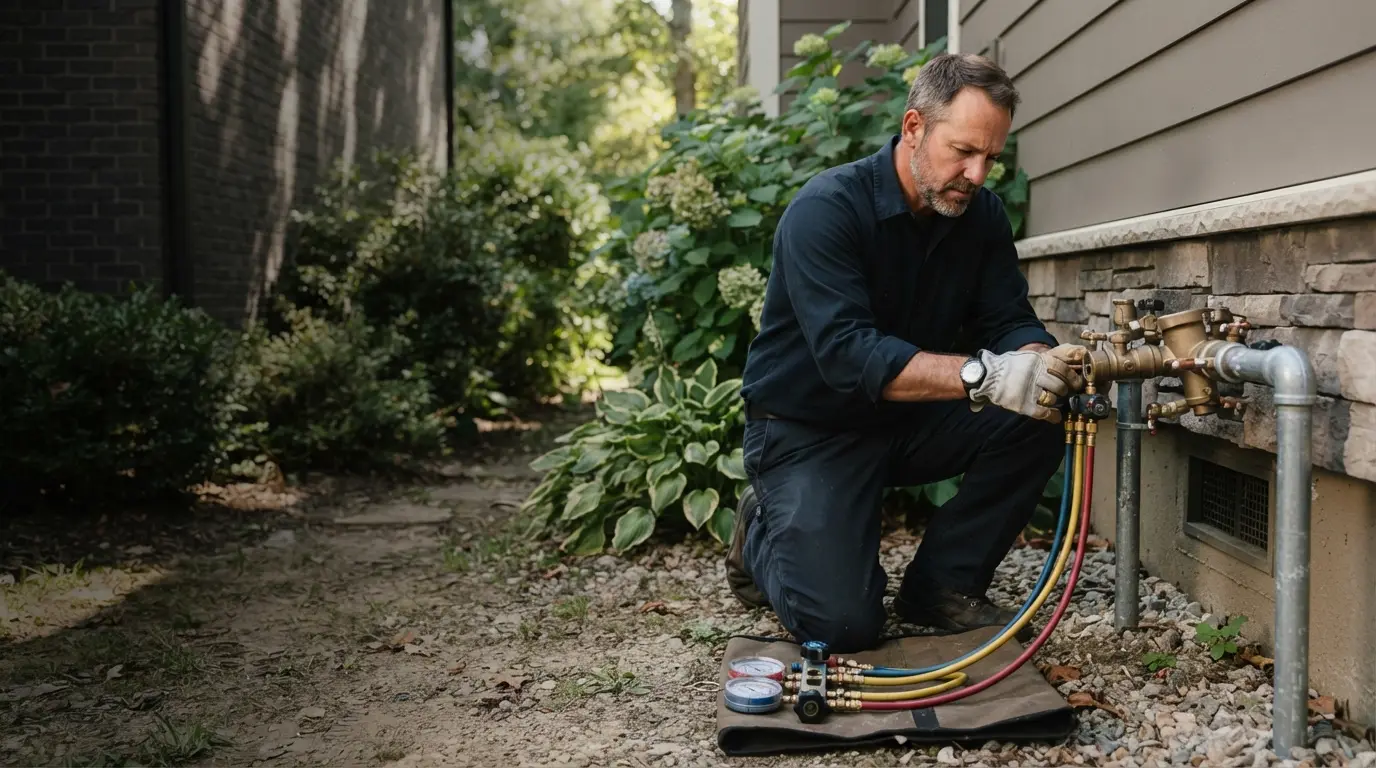
Test notice from the utility, or a sprinkler valve spraying? We handle backflow testing and prevention in Iowa. We serve homes, businesses and irrigation systems. A backflow preventer stops water from lawn sprinklers, boilers, fire lines and equipment from flowing back into the public water supply. Many Iowa water utilities require these devices to be tested every year. We test them, file the results where required, and repair or install devices that fail.
The service
Backflow happens when water pressure drops, for example during a main break or fire hydrant use, and water from inside a building is pulled back into the public supply. A backflow preventer is a valve assembly that stops that reverse flow. Lawn sprinkler systems are common in newer suburbs like Ankeny (median built 2006) and Waukee (median built 2011), and each one usually needs a device.
Common backflow devices
Where used: Lawn irrigation
Testing: Testable each year
Where used: Fire lines, lower-risk uses
Testing: Testable each year
Where used: High-hazard connections
Testing: Testable each year
Where used: Outdoor faucets
Testing: Not testable, replaced if failed
Why Iowa
Outdoor devices left full of water over winter crack their bodies and bonnets.
Sand and hard water scale keep check valves from sealing.
Seals and diaphragms age and stop holding pressure.
Water hammer and main breaks stress internal parts.
Warning signs
Our process
A certified tester connects a gauge kit to the device, checks each valve and relief point and records the results on the form your utility requires.
We install the type of device your water utility requires for the hazard, at the right height and location, and pull the permit.
We rebuild failed devices with new checks, seals and springs, or replace them when the body is cracked, then retest.
Typical cost
Any figure before we see the device is an estimate only. These factors decide the cost:
You approve a written price before we start.
Get a written price: (833) 733-2357RPZ testing takes longer than a PVB.
Multiple devices on one site can be tested together.
Rebuild kits cost less than replacing the device.
Devices in pits or tight spaces take more time.
Some utilities charge filing fees.
Benefits
Contaminated water stays out of the supply.
You meet your utility's testing deadline.
Small problems are fixed before failure.
Maintained devices last longer.
West Des Moines (34,006 homes), Urbandale, Clive and Ankeny have many homes with underground sprinklers. Their backflow devices usually sit outside near the foundation, where they freeze if not drained in fall. We test devices in spring when the system is turned on, and we can blow out the lines and drain the device in fall so it survives the winter.
Restaurants, medical offices, car washes, apartment buildings and factories in Cedar Rapids (64,423 homes), Des Moines (97,604 homes) and other cities often have several backflow devices on fire sprinklers, boilers, soda machines and process equipment. We keep a schedule of test dates, coordinate testing to limit shutdowns and handle repairs on the same visit when parts are on hand.
Iowa winters are hard on outdoor backflow devices. If the device stays full of water, ice can crack the brass body or bonnet. Before the first hard freeze, shut off the irrigation supply inside, open the test cocks and drain the device, or have us do it along with a sprinkler blowout. Insulated covers help but do not replace draining.
Iowa water utilities run cross-connection control programs under state drinking water rules, and each sets its own testing and reporting process. Some want results mailed or uploaded within a set time. We submit test results the way your utility asks and give you a copy for your records.
New homes in Clive (median built 1995) and other suburbs, as well as remodels that add irrigation, boilers or commercial equipment, may need a new backflow device. We install it to code and arrange the first test.
Iowa farms that are connected to a rural water system or a city main often fill livestock waterers, wash equipment and mix sprayer chemicals from the same supply. A hose left in a chemical tank or stock tank is a direct path back into the water system if pressure drops. Rural water systems commonly require a backflow device or an air gap at these connections. We install the right device for each use, set up air gaps at fill stations and test the assemblies on the schedule your water system sets.
Many older Iowa homes and churches heat with hot water boilers, and the boiler fill line usually has its own backflow device because boiler water often contains treatment chemicals. These small devices are easy to forget. We check them during boiler work, replace failed ones and make sure the fill valve and pressure relief work together correctly.
Property managers, school districts and business owners with several Iowa sites often have test deadlines spread across the year and across different utilities. We keep a list of each device, its location and its due date, and we group tests by area so one visit covers several buildings.
If the device is spraying water, close the irrigation or equipment shutoff valve upstream of it. Keep the area clear so we can reach it.
Have your utility's test notice handy. Do not try to adjust the device yourself. Then call us.
New backflow devices usually need a permit, and testing must be done by a certified tester. We pull permits and file test reports. Our plumbers hold the licenses Iowa requires.
Why choose us
What you can count on every time one of our plumbers comes to your door.
Every job is handled by a plumber who holds the license your state or city requires, backed by liability insurance.
Our plumber explains the problem and the options, and you approve a written price before any work begins.
Burst pipes, sewage backups and failed water heaters get priority scheduling, including nights and weekends.
We pull permits when the job needs one and schedule the inspection, so the work holds up when you sell.
Repairs and installations come with a written warranty on labor, on top of the manufacturer's warranty on parts.
Our pages and plumbers account for your area's water, soil, climate and the age of the homes around you.
Service area
We test and repair backflow devices in 1,026 Iowa communities. Find your city:
It depends on the type and number of devices and your utility's reporting process. We give you a written price before testing.
Rebuilding with new checks and seals is usually cheaper. If the body is cracked from freezing, replacement is the only option.
Filing is part of the test service. Some utilities charge their own fee for records, which we explain upfront.
Our tester shuts off water briefly, connects a gauge kit, checks each valve and records the results. Most tests take under an hour.
Yes. We submit results in the format your water utility requires and give you a copy.
We explain the problem, give you a written price for repair or replacement and retest once the work is done.
Without it, fertilizers, chemicals or dirty water can flow back into drinking water during a pressure drop.
It means the device is doing its job or failing. Call us to test and repair it so it protects the supply properly.
Most tests take under an hour per device. Repairs may add an hour or two.
Spring, when the system is turned on, is the usual time. Your utility may set a specific deadline.
Shut off the irrigation supply, open the test cocks and drain the device before the first hard freeze.
Most Iowa utilities require yearly testing for testable devices. Check your notice for the exact rules.
Close the shutoff valve upstream of the device and call us. We schedule burst devices ahead of routine testing.
Yes, in most Iowa cities, irrigation systems need an approved backflow device. We confirm the requirement with your utility.
Outdoor devices left full of water freeze, and the ice cracks the brass body. Draining before winter prevents it.