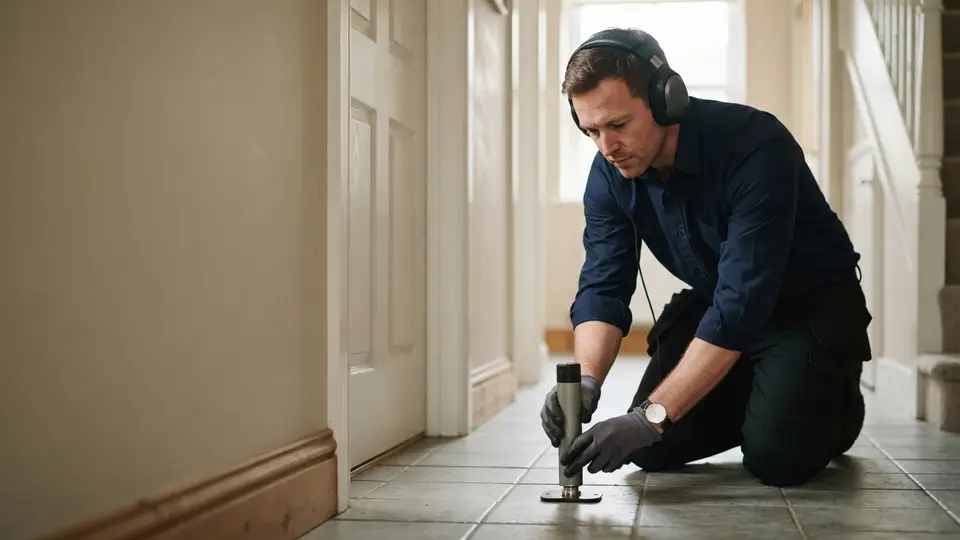
Meter and pressure test
What it finds: Whether a leak exists at all
Where it helps: First step on every call

Water bill climbing, or a pipe split by the cold? We handle leak detection and repair in Iowa for homes and businesses. Iowa leaks tend to come from two directions: old galvanized and copper lines wearing out after decades of hard water, and pipes that freeze and burst when arctic air settles in. We find the leak with acoustic and thermal tools instead of guesswork, repair it with as little damage to walls and floors as we can, and show you what caused it.
The service
About 62% of the 1,182,803 homes in our Iowa data were built before 1980, so many supply lines are galvanized steel or early copper that has thinned over the years. In Clinton 82% of homes predate 1980 and in Mason City 77%. Hidden leaks in basements, crawl spaces and outside walls can run for months before a stain or a high bill gives them away.
How we locate leaks
What it finds: Whether a leak exists at all
Where it helps: First step on every call
What it finds: The sound of water escaping
Where it helps: Lines in walls, floors and yards
What it finds: Cool or warm wet areas
Where it helps: Ceilings and finished walls
What it finds: Damp drywall and wood
Where it helps: Mapping how far water spread
Why Iowa
Water expands as it freezes, and a pipe in an outside wall or crawl space can split during a cold night.
Galvanized steel rusts from the inside and starts leaking at threaded joints.
Water chemistry and age can wear tiny holes in copper lines, often where they bend.
Old supply hoses on toilets, washers and water heaters crack and burst.
Warning signs
Our process
We confirm the leak on the meter, isolate the branch with pressure tests and pinpoint the spot with listening and thermal tools.
We open the smallest area we can, replace the damaged length with new pipe and pressure test the line before closing up.
We shut off and drain the line, cut out the split section, repair it and check nearby pipe that froze at the same time.
We thaw frozen lines with safe heat, check them for cracks, and insulate or reroute pipes that sit in cold spots.
Typical cost
Any figure before we find the leak is an estimate only. The final cost depends on:
We show you the options and you approve a written price before we start.
Get a written price: (833) 733-2357A leak under a sink is faster than one in a finished ceiling.
Galvanized lines often need a longer section replaced.
Opening tile, drywall or concrete adds time.
A freeze can split pipe in several places.
Evening and weekend calls cost more.
Benefits
We open only where the leak is.
Hidden leaks waste water every hour.
Wet framing dries before mold takes hold.
Photos and notes help with a claim.
A burst pipe often stays quiet while it is frozen and starts spraying only when it thaws. After a long stretch below zero, check basements, crawl spaces and rooms over the garage as temperatures climb. If a faucet gives no water during a freeze, leave it open, keep the heat on and call us; we thaw the line and look for cracks before water flows again.
Many Iowa homes have finished basements, with supply lines hidden in ceilings and walls. In Des Moines (97,604 homes) and Cedar Rapids (64,423 homes) we often trace leaks above drop ceilings or behind paneling. Thermal imaging and moisture readings let us open one panel instead of an entire wall.
Keokuk has 13% of homes vacant in our data, and Ottumwa 12%. Empty houses and seasonal cabins can lose heat without anyone noticing, and a burst pipe may run for days. If a home will sit empty in winter, we can drain and winterize it, or install a shutoff valve and leak sensor that warns you by phone.
Buildings with five or more units hold 42% of homes in Iowa City and 39% in West Des Moines. In stacked units, a leak upstairs shows up as a stain downstairs, and the source can be one or two floors away. We trace it to the right unit and repair it, working with owners and managers to limit disruption to tenants.
The service line from the curb stop to your house runs deep in Iowa to stay below frost. A leak there may show as a wet spot in the yard, a soggy area near the foundation or just a rising bill. We listen along the line to pinpoint it, then repair the section or replace the line if it is old galvanized or worn copper.
Find the main shutoff, usually where the water line enters the basement, and close it if water is spraying. Turn off power to any outlets or appliances near the water.
Move belongings out of the way and take photos for insurance. Do not use open flame to thaw pipes. Then call us.
Many homeowner policies cover sudden water damage from a burst pipe but not slow leaks or repairs to the pipe itself. We document what we find with photos and a written description so you have the details your insurer asks for. Check your own policy for what it covers.
Small leak repairs rarely need a permit, while replacing larger sections of pipe may. We pull permits where required. Our plumbers hold the licenses Iowa requires.
Why choose us
What you can count on every time one of our plumbers comes to your door.
Every job is handled by a plumber who holds the license your state or city requires, backed by liability insurance.
Our plumber explains the problem and the options, and you approve a written price before any work begins.
Burst pipes, sewage backups and failed water heaters get priority scheduling, including nights and weekends.
We pull permits when the job needs one and schedule the inspection, so the work holds up when you sell.
Repairs and installations come with a written warranty on labor, on top of the manufacturer's warranty on parts.
Our pages and plumbers account for your area's water, soil, climate and the age of the homes around you.
Service area
We find and fix leaks in 1,026 Iowa communities. Find your city:
It depends on how hidden the leak is and which tools we need. We give you a written price for the search and then for the repair before either begins.
Usually, yes. Pinpointing the leak means we open one small spot instead of tearing out walls, which saves on repair and finish work.
Some policies cover finding the source of covered water damage. Check with your insurer; we provide photos and notes to support a claim.
We use meter and pressure tests to narrow the area, then listen for the leak and scan with thermal imaging to mark the exact spot.
We explain the cause, give you a written price for the repair and fix it once you approve. Then we pressure test the line.
Often, yes, when the break is reachable and parts are on hand. We tell you before starting if the job will run longer.
Usually, once the water is off and power is shut off near wet areas. Avoid standing water near outlets and watch for sagging ceilings.
No. Open flames start fires and can crack pipe. Leave the faucet open, keep the heat on and call us to thaw it safely.
Most searches take an hour or two. Leaks in long service lines or several frozen breaks can take longer.
Many repairs are finished the same visit. Replacing a long run or a service line can take a day or more.
Keep the heat on, open cabinets on outside walls, seal drafts near pipes and drip faucets on the coldest nights.
They are a good idea in basements, laundry rooms and seasonal homes. Some can shut off the water automatically when they detect a leak.
Close the main shutoff and call us. Burst pipes are scheduled ahead of routine work, and we keep you updated on timing.
Long cold spells push frost into crawl spaces, garages and outside walls. Pipes there freeze, the ice expands and the pipe splits.
Yes. Galvanized steel and aging copper are common in older homes and develop leaks at joints and bends as they wear.