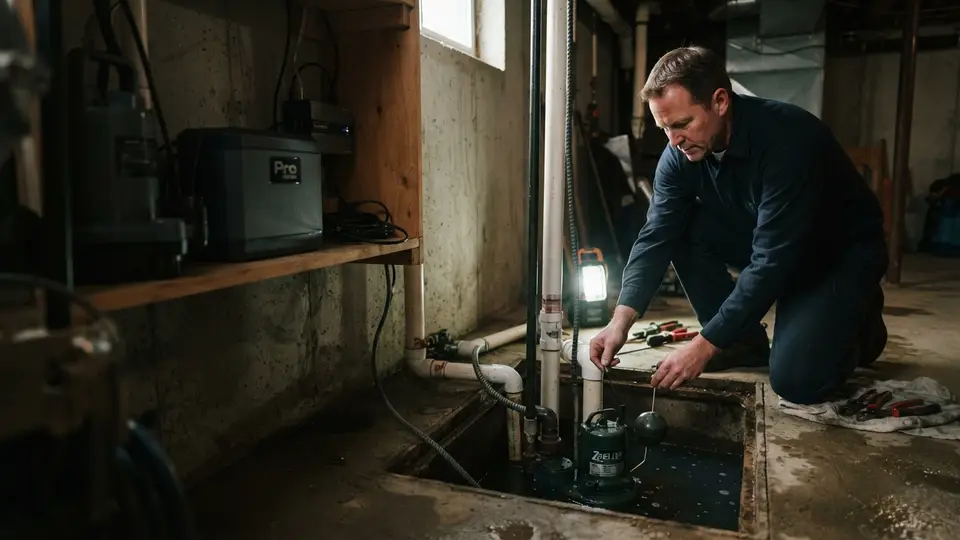
Submersible
How it works: Sits in the pit under water
Good to know: Quiet, common in finished basements
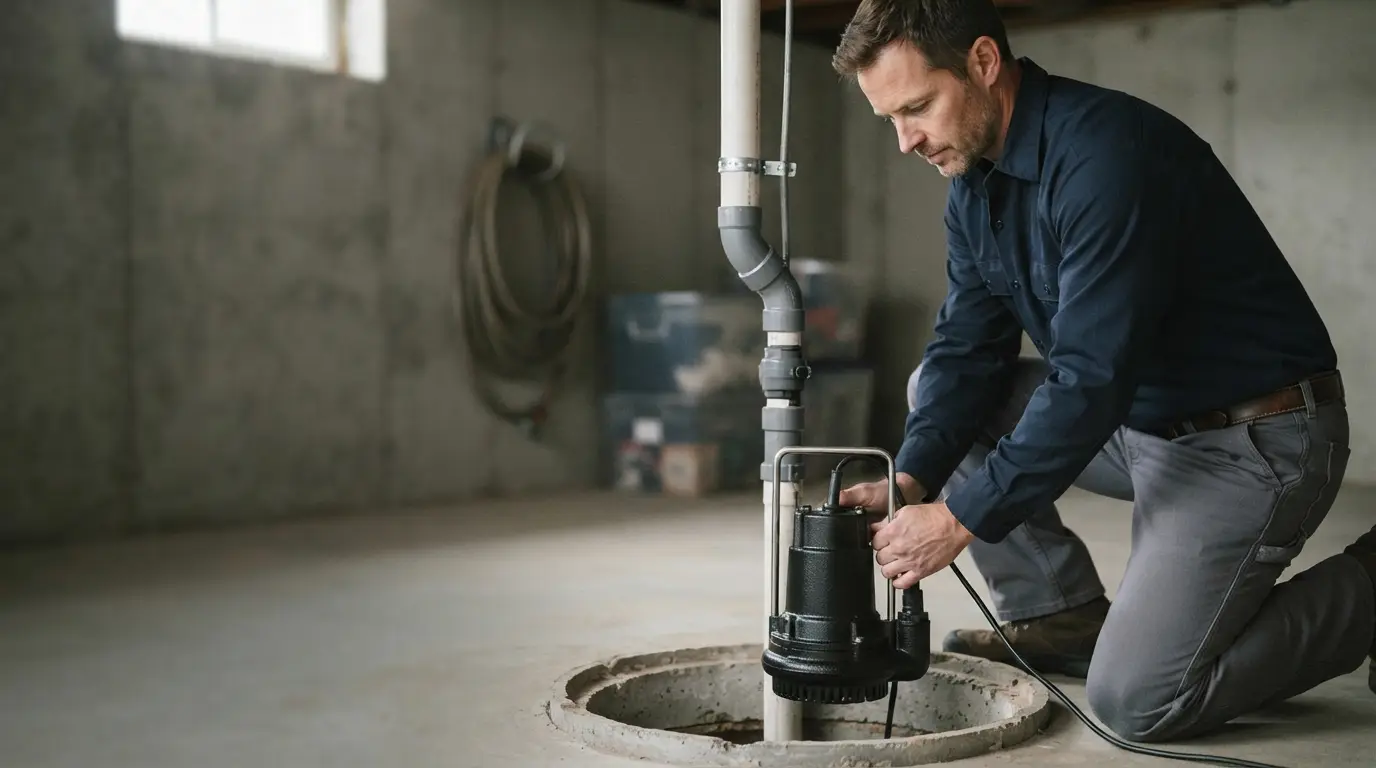
Water on the basement floor, or a pump that will not stop running? We handle sump pump repair and installation in Iowa. We fix everything from a stuck float to a new pit and a battery backup pump. Iowa basements sit in heavy soils that hold water, and snowmelt, spring storms and high rivers push groundwater up against the floor. A sump pump is often the only thing keeping that water out. We repair or replace your pump, fix the discharge line and add backup protection for storms and power outages.
The service
Most of Iowa's 1,182,803 homes have basements, and a large share of them have a sump pit fed by drain tile around the footings. Older homes may have a shallow crock, or no pit at all, while new homes in Ankeny (median built 2006) and Johnston (median built 2004) were built with pits and drain tile from the start.
Sump pump options
How it works: Sits in the pit under water
Good to know: Quiet, common in finished basements
How it works: Motor above the pit
Good to know: Easy to service, louder
How it works: Second pump on a battery
Good to know: Runs when power fails
How it works: Uses city water pressure
Good to know: Needs no battery, uses water
Why Iowa
Melting snow and thawing ground send a surge of water into drain tile for weeks.
Thunderstorms drop inches of rain in hours, and pumps may cycle every minute.
Near the Mississippi, Missouri, Cedar and Des Moines rivers, high water raises the water table.
Outdoor lines freeze in winter, sending water back into the pit.
Warning signs
Our process
We test the pump, float switch and check valve, clean debris from the pit and replace worn parts.
We install new pumps sized for your inflow, dig new pits where needed and run discharge lines away from the foundation.
We add a second pump with its own battery and alarm so the basement stays dry when storms cut power.
Typical cost
Any price before we see the pit is an estimate only. These factors decide the cost:
You approve a written price before we start.
Get a written price: (833) 733-2357A float switch costs less than a new pump.
Higher capacity pumps cost more.
Battery or water-powered backups add cost.
Breaking concrete takes more time.
Long or buried lines add work.
Benefits
Groundwater leaves before it reaches the floor.
Backups keep running without power.
Dry basements stay healthier.
Alarms warn you before water rises.
The heaviest rain often arrives with thunderstorms that knock out power, which is exactly when the pump is needed most. The 2020 derecho left parts of Cedar Rapids (64,423 homes) without power for days. A battery backup keeps pumping during short outages, and a generator inlet or a water-powered backup covers longer ones. We help you pick the option that fits your basement and budget.
An Iowa winter can freeze a discharge line solid where it leaves the house or where it runs underground to the yard. When that happens, water backs into the pit and the pump burns out. We add a freeze-resistant outlet so water can escape near the house if the main line freezes, slope lines to drain fully and keep discharge away from the foundation, sidewalks and neighbors.
In Waterloo, where 76% of homes predate 1980, and in older parts of Des Moines (97,604 homes), some basements have a shallow crock or old floor drain that ties into the sewer. Many cities do not allow sump water into the sanitary sewer. We can install a proper pit and pump, connect drain tile where possible and route discharge outside.
A finished basement turns a sump failure into flooring, drywall and furniture damage. We recommend a backup pump, a high-water alarm and a yearly check for any finished space. Some homeowner policies offer optional water backup coverage; it is worth asking your insurer about it.
A simple alarm in the pit sounds when water rises above the normal level, giving you time to act before the floor gets wet. Wi-Fi monitors go further and send a phone alert, which helps if you travel or own a rental. We install both types and test them with the pump.
If water is rising, check that the pump is plugged in and the breaker is on. Lift the float gently with a stick to see if the pump starts.
Do not stand in water near outlets or cords. Move belongings off the floor and take photos for insurance. Then call us.
New pits, drain tile and discharge changes may need a permit, and some cities have rules about where sump water may go. We follow local rules and pull permits where required. Our plumbers hold the licenses Iowa requires.
We repair and install sump pumps in 1,026 Iowa communities. Find your city:
Why choose us
What you can count on every time one of our plumbers comes to your door.
Every job is handled by a plumber who holds the license your state or city requires, backed by liability insurance.
Our plumber explains the problem and the options, and you approve a written price before any work begins.
Burst pipes, sewage backups and failed water heaters get priority scheduling, including nights and weekends.
We pull permits when the job needs one and schedule the inspection, so the work holds up when you sell.
Repairs and installations come with a written warranty on labor, on top of the manufacturer's warranty on parts.
Our pages and plumbers account for your area's water, soil, climate and the age of the homes around you.
Service area
In Davenport (46,849 homes), Muscatine and Council Bluffs (27,616 homes), river levels affect groundwater under nearby neighborhoods. When rivers are high, pumps may run for weeks. We size pumps for heavy inflow, add check valves to stop backflow into the pit and recommend backup pumps for basements that have flooded before.
It depends on the pump type and capacity, the pit, the discharge line and whether you add a backup. You approve a written price before we begin.
For basements that have flooded before, or any finished basement, a backup is usually worth it. Storms that bring heavy rain often cut power too.
Yes. Cutting concrete, digging the pit and connecting drain tile takes more time than swapping a pump. We price it separately so you see the difference.
We test the pump and float, check the check valve and discharge, clean the pit and explain whether a repair or replacement makes more sense.
We look at how fast water enters the pit, how high it has to lift and how far it travels. That tells us the capacity the pump needs.
Yes. We cut and dig a new pit, connect drain tile where possible and route discharge outside the home.
Not if water may reach outlets or cords. Shut off power to the basement from a dry location, or wait for help.
Many Iowa cities do not allow sump water into the sanitary sewer. We route discharge outdoors according to local rules.
A swap in an existing pit usually takes a few hours. A new pit or backup system takes longer.
Many last around seven to ten years, less if they run often. Replacing an old pump before storm season helps prevent failure.
At least each spring and fall. Pour water into the pit until the pump starts and confirm it shuts off.
Slope it to drain fully, keep the outlet clear of snow and ice and add a freeze-resistant outlet near the house.
Call us right away. Failed pumps during storms are scheduled ahead of routine work, and we keep you updated on timing.
Heavy soils hold water, and snowmelt, spring rain and high rivers raise groundwater around foundations. A pump removes it before it seeps in.
Often, yes. Near rivers, groundwater can stay high for weeks, so pumps run more. We size pumps and backups for that load.