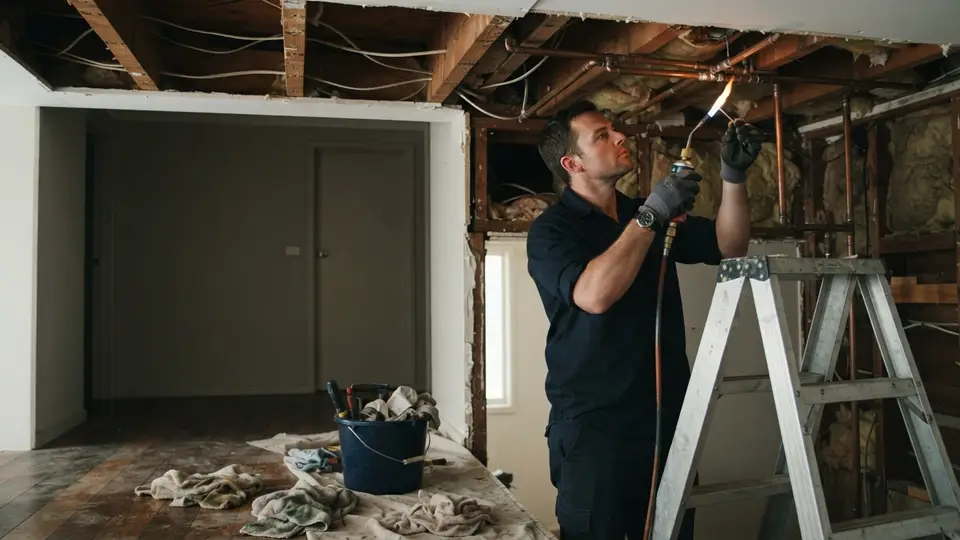
Burst pipe
First step: Close the main shutoff
What we do: Repair the break and check for others
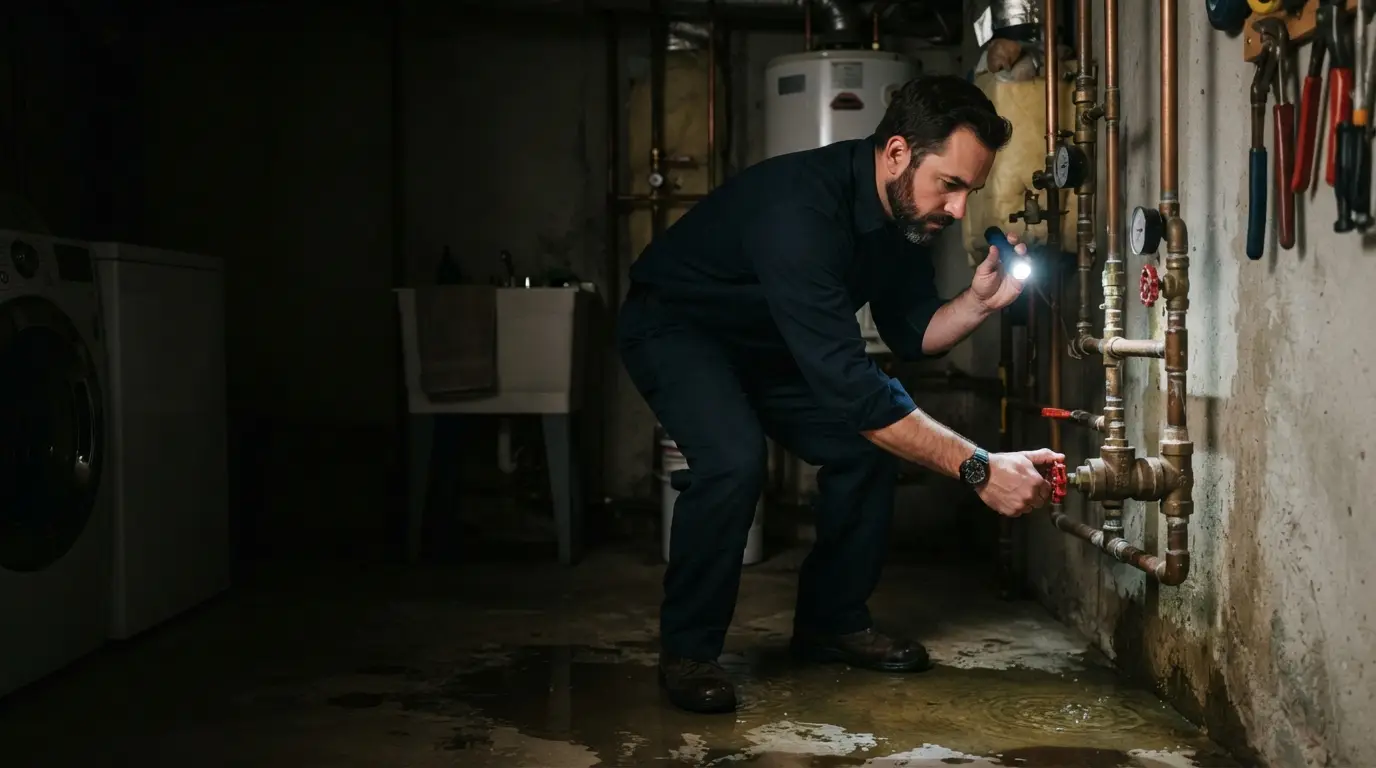
Burst pipe, sewage on the floor or no water at all? We handle emergency plumbing in Iowa and schedule urgent problems ahead of routine work. Iowa plumbing emergencies follow the weather: pipes split during deep cold, sump pumps fail during spring storms, and old sewer lines back up when rivers run high. We tell you what to shut off while our plumber is on the way, stop the damage, and then fix the cause so it does not happen again.
The service
Our Iowa data covers 1,182,803 homes, and 62% of them were built before 1980. Older pipes, laterals and water heaters fail more often, and an Iowa winter puts extra strain on all of them. In Clinton, 82% of homes predate 1980, and in Waterloo 76%.
Common Iowa emergencies and first steps
First step: Close the main shutoff
What we do: Repair the break and check for others
First step: Stop using water
What we do: Clear the line and find the cause
First step: Check other taps and the utility
What we do: Thaw lines or repair the service
First step: Leave and call the utility
What we do: Repair piping once safe
First step: Close the cold supply
What we do: Repair or replace the heater
Warning signs
Typical cost
Any figure before we see the problem is an estimate only. These factors decide the cost:
You approve a written price before we start the repair.
Get a written price: (833) 733-2357Evening, weekend and holiday calls cost more.
A burst pipe differs from a sewer line.
Finished walls and frozen ground add time.
Water heaters and pumps cost more than fittings.
Permanent fixes may need a second visit.
Benefits
Stopping leaks quickly limits repairs.
Gas and sewage problems are handled properly.
We explain temporary and permanent fixes.
Photos and notes support claims.
Most burst pipes we see in Iowa happen during or just after a cold spell, when water in an exposed pipe freezes and splits it. Close the main shutoff, turn off power near the water and call us. We repair the split, thaw and check the rest of the line and suggest changes so it does not freeze again.
Old clay laterals in Des Moines (97,604 homes), Sioux City and Davenport fill with roots and back up into basements, and heavy rain can surcharge city sewers. Stop using water and keep away from the sewage. We clear the main, find out whether the cause is your lateral or the city sewer and recommend a lasting fix.
If no tap in the house has water during a cold snap, the service line or a pipe near where it enters the house may be frozen. If neighbors have no water either, call your water utility. Otherwise, call us. We find the frozen section and thaw it safely, then check for damage.
A gas smell is always an emergency. Leave the building without using switches or phones inside and call your gas utility or 911 from outside. After the utility has shut off the gas and made the area safe, we find and repair the leak, pressure test the piping and arrange inspection so service can be restored.
Spring storms, river flooding and the 2020 derecho all brought surges of emergency calls in Iowa. In Cedar Rapids (64,423 homes) and Davenport (46,849 homes), flooded basements and failed sump pumps are common after severe weather. We pump out pits, replace failed pumps and check water heaters and furnaces exposed to water.
In Keokuk, 13% of homes are vacant in our data, and in Clear Lake 21%. When no one is home, a failed furnace or a burst pipe can run for days. If you manage an empty property, have someone check it regularly in winter, or let us drain and winterize it before the cold arrives.
We ask what is happening and tell you what to shut off. We schedule our plumber as soon as we can, with the most urgent calls first, and keep you updated on timing. On site, we stop the damage, explain the cause and give you a written price for the repair before we start.
A tank that splits open can empty forty gallons or more onto the basement floor and keep refilling until the cold supply is shut off. Close the valve on the cold line above the heater, turn the gas control to off or switch off the breaker, and keep clear of hot water. We drain what is left, remove the failed tank and install a replacement, often on the same visit when the right size is available.
Find and close the main water shutoff, usually where the water line enters the basement. Turn off the water heater if hot water is leaking. Shut off power to wet areas only if you can do it safely.
Move valuables away from the water and take photos for insurance. Keep children and pets away from sewage. Then call us.
Emergency repairs may still need a permit, especially for water heaters, gas lines and sewer work. We pull permits after the emergency is under control. Our plumbers hold the licenses Iowa requires.
Why choose us
What you can count on every time one of our plumbers comes to your door.
Every job is handled by a plumber who holds the license your state or city requires, backed by liability insurance.
Our plumber explains the problem and the options, and you approve a written price before any work begins.
Burst pipes, sewage backups and failed water heaters get priority scheduling, including nights and weekends.
We pull permits when the job needs one and schedule the inspection, so the work holds up when you sell.
Repairs and installations come with a written warranty on labor, on top of the manufacturer's warranty on parts.
Our pages and plumbers account for your area's water, soil, climate and the age of the homes around you.
Service area
We handle plumbing emergencies in 1,026 Iowa communities, including Sioux City (35,001 homes). Find your city:
It depends on the problem, the time of day and the repair needed. We explain the price in writing before starting the repair, after stopping any active damage.
Evening, weekend and holiday calls usually cost more than scheduled work. We tell you before we come so there are no surprises.
Many policies cover sudden water damage but not the plumbing repair itself. Check your policy; we provide photos and notes for your claim.
We ask what is happening, tell you what to shut off and schedule our plumber, with the most urgent calls first. We keep you updated on timing.
Sometimes a temporary repair stops the damage until a permanent fix can be done. We explain both options and their costs.
Yes. After stopping the damage, we find out why it happened and recommend a lasting fix, such as rerouting a pipe or replacing a lateral.
Leave the building without using switches or phones inside and call your gas utility or 911 from outside. Call us once it is safe.
Not if water may reach outlets, cords or the electrical panel. Stay out and shut power off only if you can do it safely.
We schedule as soon as we can, with the most urgent problems first, and keep you updated while our plumber is on the way.
Many burst pipes and backups are handled in one visit. Larger repairs, like sewer or water heater replacement, may need more time.
Keep the heat on, open cabinets on outside walls, insulate exposed pipes and disconnect hoses before winter.
Test the sump pump, add a battery backup, clear the discharge line and know where your main water and gas shutoffs are.
Check with neighbors and your utility. If only your home is affected, a pipe may be frozen. Keep the heat on and call us.
Long stretches below zero freeze pipes in crawl spaces, garages and outside walls, and those pipes split when the ice expands.
They can. High rivers raise groundwater and fill city sewers, which can push water into low basements. Backwater valves and sump pumps help.