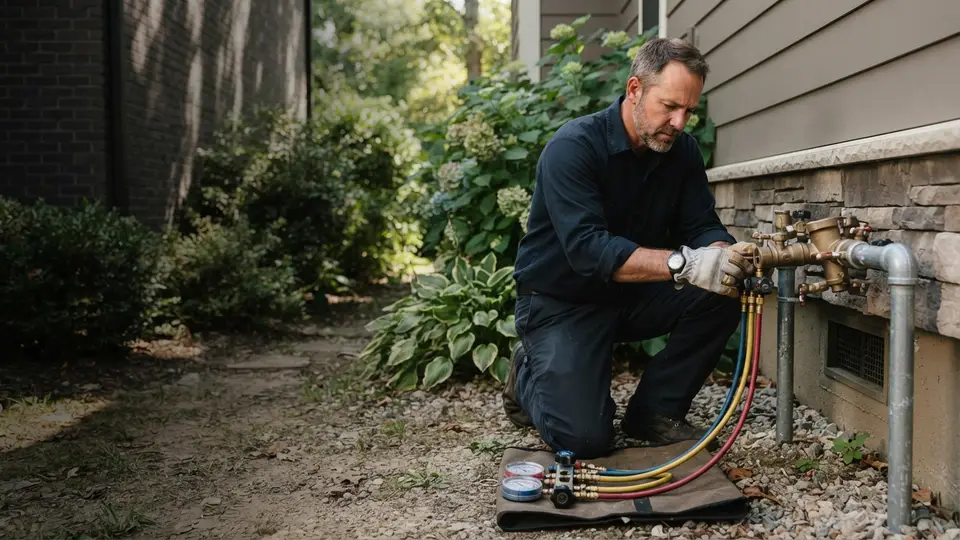
Reduced pressure zone (RPZ)
Typical use: Boilers, medical, commercial kitchens
Hazard level: High hazard
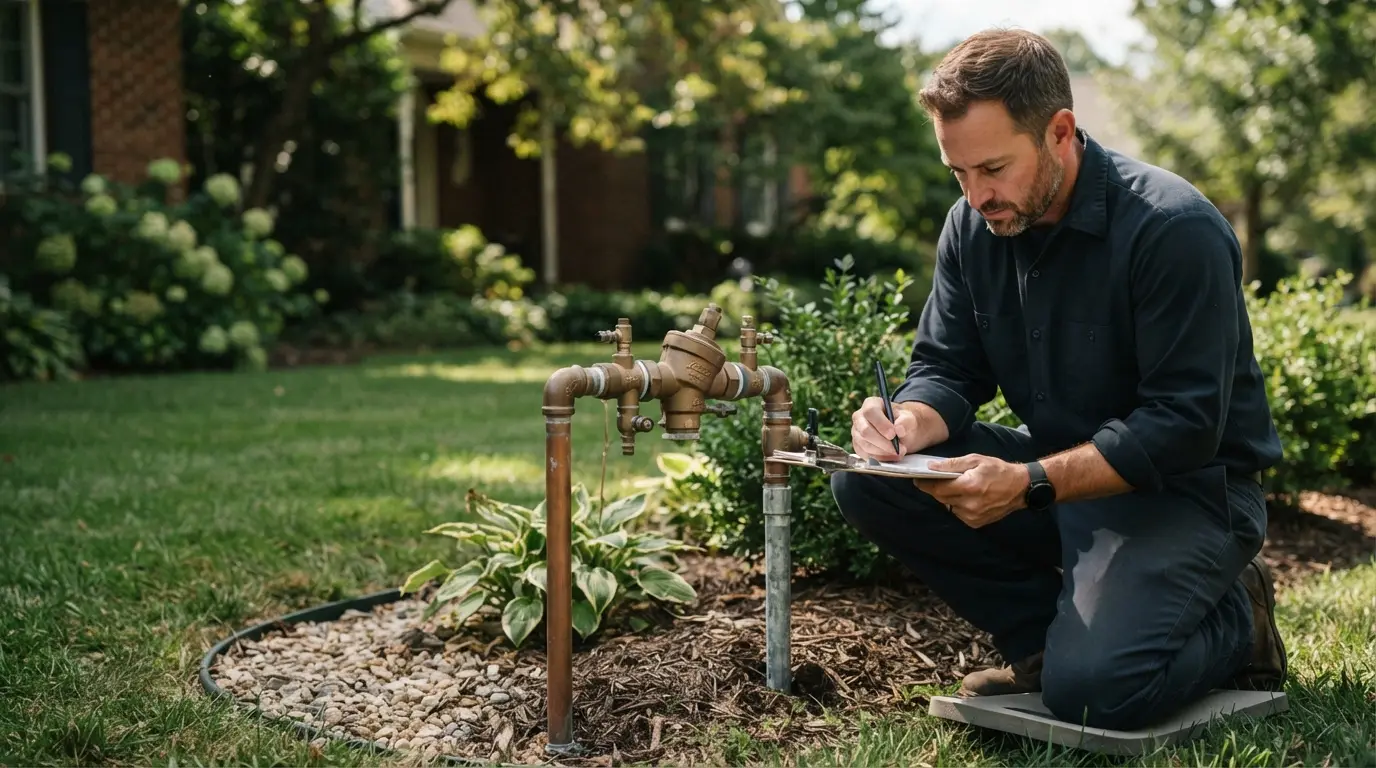
A test notice from your water company, or a new sprinkler system? We handle backflow testing and prevention in New Jersey. Our plumbers test backflow preventers, install new assemblies and repair or rebuild devices that fail their test. Backflow devices protect the public water supply from water that could flow back from lawn sprinklers, boilers, fire lines, commercial kitchens and medical and industrial equipment. New Jersey water purveyors require testable devices to be checked on a schedule and the results reported, and we handle the paperwork so you stay in good standing.
The service
Backflow happens when water flows the wrong way through a pipe, pulled back by a drop in street pressure or pushed back by higher pressure inside a building. Without a device to stop it, fertilizer from an irrigation system or treated water from a boiler can enter drinking water. New Jersey has 2,546,166 homes in our data and thousands of businesses, and every connection that could contaminate the supply needs the right protection.
Backflow devices we test and install
Typical use: Boilers, medical, commercial kitchens
Hazard level: High hazard
Typical use: Fire sprinkler lines, some irrigation
Hazard level: Lower hazard
Typical use: Lawn irrigation systems
Hazard level: Back-siphonage
Typical use: Outdoor faucets
Hazard level: Small residential risk
Why New Jersey
Outdoor irrigation devices crack when they are not drained before winter.
Sand and scale from water mains lodge in check valves and keep them from sealing.
Seals and diaphragms harden and tear with age.
Main breaks and hydrant use cause sudden pressure changes that stress devices.
Warning signs
Our process
We connect a calibrated test kit to the device, check each valve and relief point against its required values, record the results and submit the report to your water purveyor.
We choose the device that matches the hazard, install it where it can be tested and protected from freezing, and test it before it goes into service.
When a device fails, we clean or replace the check valves, seals and springs, retest it and file the passing report. If it cannot be rebuilt, we replace it.
Typical cost
Prices vary with the device and site, and any figure before we see it is an estimate only. The main factors:
We give you a written price before we start.
Get a written price: (833) 733-2357Large RPZs cost more to test and rebuild.
Several devices on one visit save time.
Parts and retesting add to a failed test.
Pits, vaults and high mounts take longer.
New devices need piping, protection and a permit.
Benefits
Your building and your neighbors stay protected.
Reports filed on time avoid notices and service issues.
Small repairs happen before a device fails completely.
Health and fire inspectors see current reports.
New Jersey rules require testable backflow devices to be checked at least once a year, and some high-hazard devices more often. Your water purveyor sets the exact schedule, sends notices and keeps the records. We keep track of your test dates, book the visit before your deadline and send the report directly to the purveyor so you are not chasing paperwork.
Buildings with five or more units hold 68% of homes in Fort Lee, 54% in Jersey City and 64% in Hackensack. These buildings have fire sprinkler lines, booster pumps, boilers and sometimes cooling towers, each needing its own device. We test every assembly in the building on one visit where possible and coordinate with the super and the fire alarm company when fire lines are involved.
In Paramus (8,813 homes), Toms River and other suburbs, many homes have in-ground sprinklers. Irrigation lines carry fertilizer and standing water, so each system needs a backflow device. Outdoor devices must be drained in the fall and opened and tested in spring. We test, winterize and repair them and replace devices cracked by frost.
Restaurants in New Brunswick, Princeton, Atlantic City and every downtown in New Jersey connect soda machines, coffee brewers, ice makers and dishwashers to the water supply. 73% of Ocean City homes are vacant on a typical day, and Shore restaurants often reopen after a winter closure. We test devices before reopening, replace failed ones and make sure each connection has the right protection for the health inspection.
Vineland (22,768 homes), Hammonton and the farms of Cumberland, Atlantic and Gloucester counties use water for irrigation, greenhouses and chemical injection. Where a farm connects to a public supply, a high-hazard device is usually required. We install and test these devices and advise when an air gap or separate supply makes more sense.
Keep your test notice handy and make sure we can reach the device. Clear storage away from it and unlock any enclosure or vault.
Do not adjust or take apart the device yourself. If the relief port is pouring water, close the shutoff valves on either side if it is safe, then call us.
Installing a new backflow preventer usually needs a plumbing permit and approval from the water purveyor. We file both and submit the first test report. Our installation work is done by or under New Jersey licensed master plumbers.
Why choose us
What you can count on every time one of our plumbers comes to your door.
Every job is handled by a plumber who holds the license your state or city requires, backed by liability insurance.
Our plumber explains the problem and the options, and you approve a written price before any work begins.
Burst pipes, sewage backups and failed water heaters get priority scheduling, including nights and weekends.
We pull permits when the job needs one and schedule the inspection, so the work holds up when you sell.
Repairs and installations come with a written warranty on labor, on top of the manufacturer's warranty on parts.
Our pages and plumbers account for your area's water, soil, climate and the age of the homes around you.
Service area
We test and install backflow devices in 700 New Jersey communities, including Newark (121,546 homes) and Jersey City (135,231 homes). Find yours:
It depends on the device type, size and how many devices we test on one visit. You get a written price before we start.
Rebuild kits and labour vary by device. If a rebuild costs close to a new device, we show you both prices so you can choose.
Filing the report is part of our testing service. We send it to your water purveyor and give you a copy for your records.
We connect a test kit to the device ports, close and open valves in a set order and record the pressure readings for each check valve.
We explain what failed, repair or replace it and retest it. Then we file the passing report with your water purveyor.
Yes. We install the right device, protect it from freezing, test it and file the first report with your purveyor.
Yes. Without protection, fertilizer, boiler chemicals or dirty water can flow into drinking water. Working devices prevent that.
Stop drinking it, use bottled water and contact your water company. We can test your backflow devices to rule out a failure.
Usually under an hour per device. Large buildings with several devices take longer.
At least once a year for testable devices, and some high-hazard devices more often. Your water purveyor sets the schedule.
Drain and winterize it each fall and insulate or remove it if your purveyor allows. Frozen devices crack and must be replaced.
Yes. Inspectors, insurers and buyers may ask for them, and we keep a record of your test dates too.
State rules require it, and your local water purveyor enforces it through notices and reporting. We work with all New Jersey purveyors.
It is wise. Devices sitting idle all winter can stick or freeze. We test before you reopen so the health inspection goes smoothly.
Close the shutoffs on both sides if it is safe. We put active leaks ahead of routine tests and keep you updated on timing.