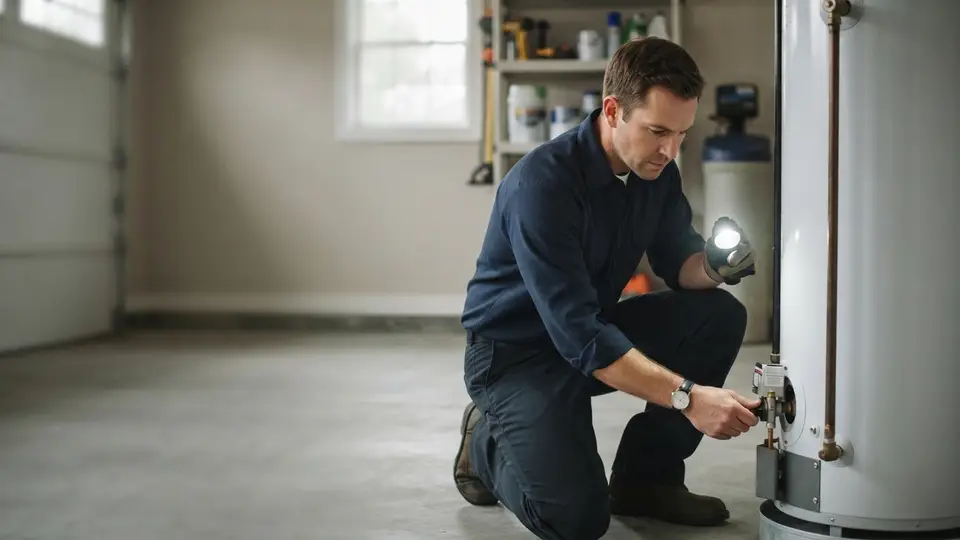
Gas tank
Where we see it: Most houses and two-families
Typical concern: Venting, burners, sediment
No hot water, or a tank leaking in the basement? We handle water heater repair and replacement in New Jersey. Our plumbers repair gas, electric and oil-fired tank heaters, install new tanks and set up tankless units, from basement heaters in two-family homes to closet units in high-rise condos. Most New Jersey homes heat water with natural gas, so venting, gas piping and combustion air matter on almost every job. A water heater replacement also needs a permit and inspection in New Jersey, and we handle both.
The service
Utility gas heats 73% of New Jersey homes, and most of those homes also heat water with gas. Electricity heats 18% of homes statewide, rising to 39% in Hoboken and 40% in Hackensack, where many apartments have electric tanks or building systems. In the northwest hills, fuel oil heats 61% of homes around Lake Hopatcong, and some of those homes make hot water from the oil boiler. We work on all three.
Water heater types we service in New Jersey
Where we see it: Most houses and two-families
Typical concern: Venting, burners, sediment
Where we see it: Apartments, condos, some Shore homes
Typical concern: Elements, thermostats
Where we see it: Oil and gas boiler homes
Typical concern: Boiler controls, coil scale
Where we see it: Space-saving upgrades
Typical concern: Gas line size, descaling
Why New Jersey
Minerals settle in the tank and overheat the bottom, especially where water is moderately hard.
Basement floods soak burners and controls; many heaters were lost after Sandy and Ida.
Old chimneys and shared flues in older homes cause poor draft and corrosion.
Tanks simply corrode through after a decade or more of service.
Warning signs
Our process
We test the thermocouple or flame sensor, gas valve, elements, thermostats and relief valve, check the draft and replace the failed part when the tank itself is sound.
We drain and remove the old tank, set the new one on a proper stand or pan, connect gas or power, install an expansion tank where required, check venting and pull the permit.
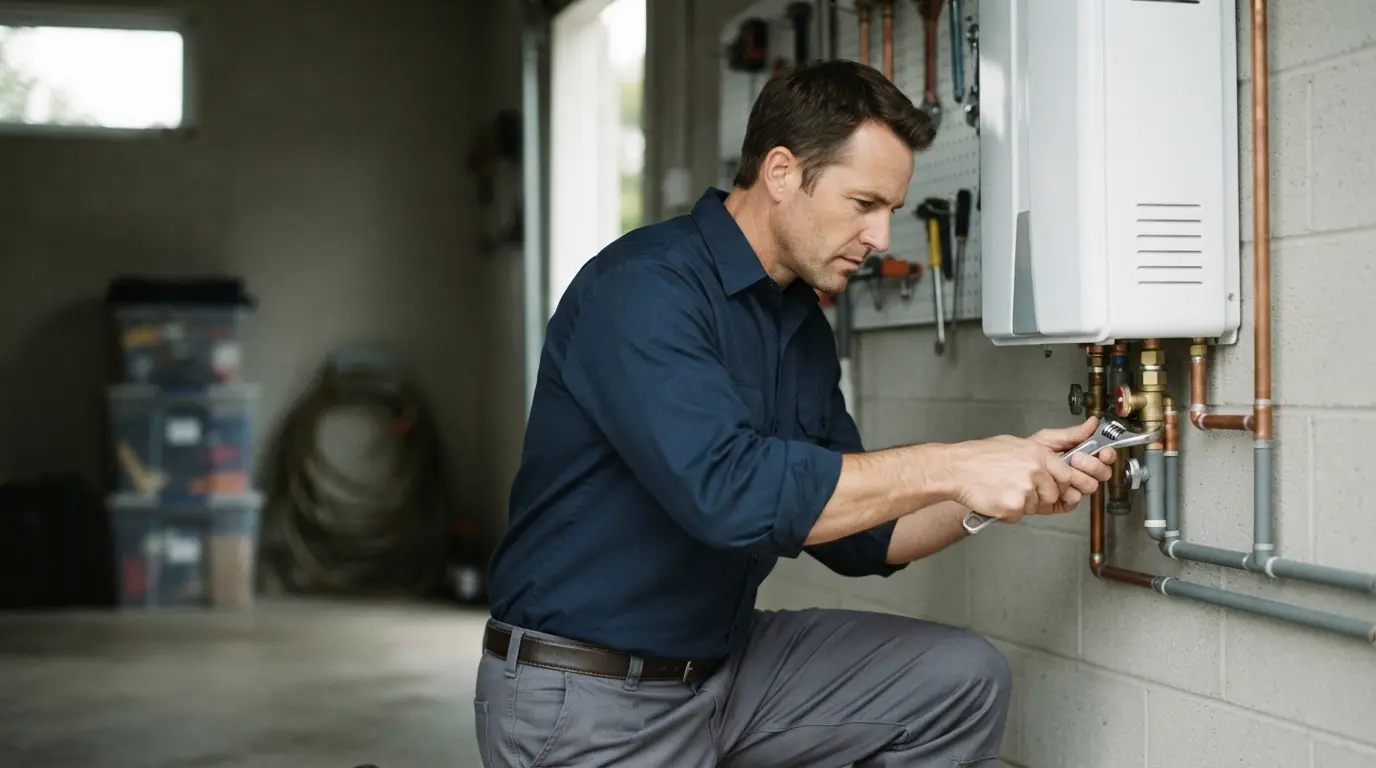
We size the unit for your household, confirm the gas line can supply it, run new venting and set up the unit so it is easy to descale.
Typical cost
Prices vary with the job, and any figure before we see your setup is an estimate only. The main factors:
You approve a written price before we remove anything.
Get a written price: (833) 733-2357Gas, electric, indirect or tankless.
Chimney liners or new power venting add cost.
Expansion tanks, pans and gas connectors.
Tight closets and narrow basement stairs.
Municipal fees vary across New Jersey.
Benefits
Exhaust leaves the house as it should.
A heater sized to your household.
Efficient units and proper settings.
Permit and subcode approval on file.
Buildings with five or more units hold 54% of Jersey City homes and 64% of Hackensack homes. Many condos have a small electric tank in a closet, and many rental buildings share a central boiler or large commercial heater. We replace closet tanks with units that fit the space and the electrical circuit, and we service central systems for building owners and managers.
In Elizabeth (48,976 homes) and Paterson, many two-family houses have a separate heater for each unit, often side by side in the basement and vented into one old chimney. When one is replaced, the chimney liner and the other heater's venting must still work safely. We check both, correct the venting and make sure the new heater meets the subcode.
Fuel oil heats 23% of homes in Bridgeton and 12% in Millville, and many lake homes in Sussex and Morris counties. Some of these homes heat water with a coil in the boiler or an indirect tank. When hot water fails, the cause may be the boiler control rather than the tank. We find which it is, and we can add a standalone gas, propane or electric heater if you want hot water independent of the boiler.
In Toms River (39,886 homes), Atlantic City and other flood-prone towns, a heater on a basement floor can be lost in one storm. 73% of Ocean City homes are vacant on a typical day, and many have been elevated since Sandy. When we replace a heater in a flood zone, we can move it to a higher floor or set it on a raised platform, following local flood rules.
A heat pump water heater pulls warmth from the surrounding air to heat the tank and uses much less electricity than a standard electric unit. It works best in a basement or utility room with enough space and air around it, which many New Jersey homes have. It also cools and dries the air, which some owners welcome in a damp basement. We check the room size, drain access for the condensate line and the electrical circuit before recommending one, and we install and set it up so the efficient mode does most of the work.
If the tank is leaking, close the cold water valve above it. For a gas heater, turn the control to pilot or off; for electric, switch off the breaker.
Keep children away from hot water and the relief valve pipe. Move stored items off the floor near the tank and call us.
In New Jersey, replacing a water heater normally needs a permit from your municipal construction office and an inspection. We file it and schedule the inspection. Our work is done by or under New Jersey licensed master plumbers.
Why choose us
What you can count on every time one of our plumbers comes to your door.
Every job is handled by a plumber who holds the license your state or city requires, backed by liability insurance.
Our plumber explains the problem and the options, and you approve a written price before any work begins.
Burst pipes, sewage backups and failed water heaters get priority scheduling, including nights and weekends.
We pull permits when the job needs one and schedule the inspection, so the work holds up when you sell.
Repairs and installations come with a written warranty on labor, on top of the manufacturer's warranty on parts.
Our pages and plumbers account for your area's water, soil, climate and the age of the homes around you.
Service area
We repair and replace water heaters in 700 New Jersey communities, including Princeton (9,906 homes) and Atlantic City (19,927 homes). Find yours:
It depends on the type, size, venting and code updates needed, plus the permit. You get a written price before we remove the old heater.
If the tank is sound and only a part failed, yes. If the tank leaks or is past twelve years, replacement is usually the better value.
Usually, because of new venting and often a larger gas line. They last longer and save energy, which offsets some of the cost.
We drain and remove the old tank, set the new one, connect water and gas or power, check venting and test it. We then book the inspection.
Yes. We haul away the old tank and packaging as part of the job.
We ask how many people live in the home, count bathrooms and look at your peak use, then recommend a size that fits.
Leave the building, then call your gas utility or 911 from outside. Do not use switches or phones inside. We repair it once it is safe.
It means pressure or temperature is too high, or the valve is worn. Do not plug it. Turn the heater down and call us.
A straight tank swap takes a few hours. Tankless installs and relocations can take most of a day.
Usually within an hour after a new tank is installed and filled. Tankless units supply hot water as soon as they are running.
Once a year for most New Jersey homes. Homes with harder water or private wells may benefit from flushing more often.
Tank heaters usually last eight to twelve years. Tankless units can last much longer with regular descaling.
Yes, in most cases. We pull the permit from your municipal construction office and schedule the inspection.
Often, yes. We can relocate it to a higher floor or raise it on a platform, following local flood rules.
We book the earliest time we can and keep common sizes in mind when we plan the visit. We keep you updated on timing.