Root intrusion
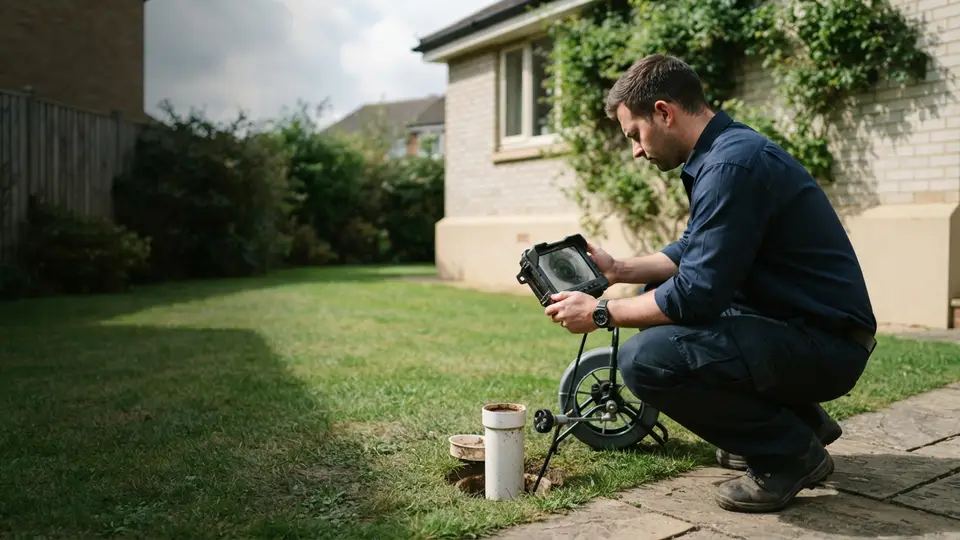
What the camera shows: Roots at clay joints
Usual fix: Cleaning, then a liner or section repair
Roots in the lateral, or sewage at the floor drain again? We handle sewer line repair and replacement in New Jersey. Our plumbers inspect, repair and replace the private lateral that runs from your house to the street sewer, including house traps, cleanouts and the connection at the main. New Jersey laterals are often clay or cast iron laid generations ago, under sidewalks, driveways and tree roots, in towns where every street opening needs a permit. We start with a camera inspection, show you the footage and recommend the least disruptive fix that will last.
The service
In most New Jersey towns the property owner is responsible for the lateral from the house to the street sewer, and in many towns that includes the part under the sidewalk. With 42% of the state's 2,546,166 homes built before 1960, a large share of laterals are vitrified clay or cast iron. The median home in Paterson dates from 1954 and in Kearny from 1951. Clay cracks and lets roots in at the joints, and cast iron rusts through along the bottom.
Sewer line problems and the usual fix
What the camera shows: Roots at clay joints
Usual fix: Cleaning, then a liner or section repair
What the camera shows: Standing water in the pipe
Usual fix: Excavate and relay the section
What the camera shows: Missing pipe wall or soil
Usual fix: Section or full replacement
What the camera shows: Scale and holes along the bottom
Usual fix: Replacement with PVC
Why New Jersey
Short clay sections joined with mortar or early gaskets give roots an easy way in.
Many older neighborhoods and Shore towns sit on filled land that settles and lets pipes sag.
Driveways, delivery trucks and street work stress laterals buried close to the surface.
Pipes laid before the Second World War have simply reached the end of their life.
Warning signs
Our process
We push a camera from the cleanout or house trap to the street, measure the distance to every defect and locate it from above so you know exactly where the problem sits.
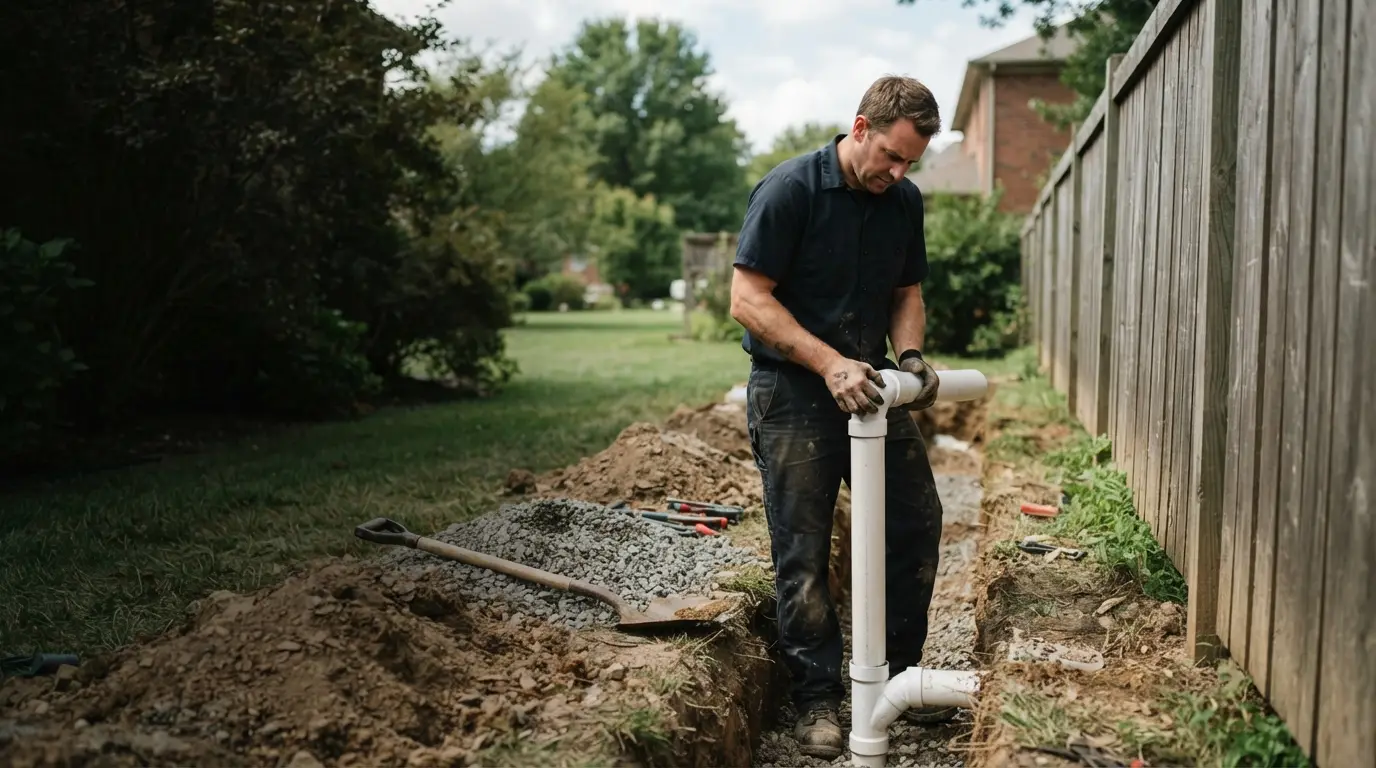
For one broken joint or a short sag, we open a small excavation, cut out the bad section and connect new PVC with shielded couplings. Where digging is hard, we may line the pipe instead.
When the whole lateral has failed, we replace it by open trench or by pipe bursting, which pulls new pipe through the old path with pits at each end. We handle the street or sidewalk opening permits your town requires.
Typical cost
Sewer work varies widely, and any number before a camera inspection is an estimate only. The main factors:
We give you a written price after the inspection and before any digging.
Get a written price: (833) 733-2357Longer, deeper laterals take more digging.
Sidewalks, driveways, porches and trees add work.
Spot repair, lining, bursting or open trench.
Some towns charge for permits and road restoration.
Wet ground near the Shore may need dewatering.
Benefits
A new or lined pipe ends the cycle of root calls.
No sewage at the floor drain after heavy use.
Buyers often ask for a sewer camera report.
The camera locates the defect so we open only what is needed.
In Newark (121,546 homes), Bayonne, Kearny and Trenton, houses sit close to the sidewalk and laterals often run under it to a sewer in the middle of the street. Many towns make the owner responsible for that whole run, and opening a sidewalk or street needs a separate permit and restoration. Buildings with five or more units hold 34% of Bayonne homes, so one failed lateral can affect many households. We coordinate the openings, keep the work short and restore the surface to town standards.
Many older New Jersey homes, including much of Westfield, where 79% of homes predate 1980, and Collingswood, where the median home dates from 1941, have a house trap on the main near the front foundation wall. The trap has two cleanout plugs and a fresh-air vent outside. Traps catch debris, crack with age and clog more often than straight pipe. During a repair we can remove the trap, add a modern two-way cleanout and leave you with a line that is easier to clean.
Toms River, Point Pleasant and Seaside Heights sit on sandy coastal soil with a high water table, and storm surges have soaked the ground more than once. 58% of homes in Seaside Heights are vacant on a typical day, so a broken lateral can go unnoticed until renters arrive. Sand washes into cracked pipe and the line settles. We camera laterals before the season, dewater trenches when we dig and use bedding that holds the new pipe steady.
A cured-in-place liner forms a new pipe inside the old one through the cleanout, without trenching the yard or driveway. It works well when the old pipe still holds its shape and does not sag. It is a poor fit for collapsed sections, deep bellies or lines with many offsets. We show you the camera video and tell you plainly whether lining or excavation suits your lateral.
Use as little water as you can. Do not run the washer or dishwasher, and ask everyone in the building to hold off on showers.
If you know where the cleanout or house trap is, clear boxes away from it so we can reach it. Do not remove the plugs yourself while the line is full, because the contents will spill out. Then call us.
Replacing or repairing a lateral usually needs a plumbing permit and often a road or sidewalk opening permit. We file both, coordinate with the sewer authority and schedule the inspection. Our work is done by or under New Jersey licensed master plumbers.
Why choose us
What you can count on every time one of our plumbers comes to your door.
Every job is handled by a plumber who holds the license your state or city requires, backed by liability insurance.
Our plumber explains the problem and the options, and you approve a written price before any work begins.
Burst pipes, sewage backups and failed water heaters get priority scheduling, including nights and weekends.
We pull permits when the job needs one and schedule the inspection, so the work holds up when you sell.
Repairs and installations come with a written warranty on labor, on top of the manufacturer's warranty on parts.
Our pages and plumbers account for your area's water, soil, climate and the age of the homes around you.
Service area
We repair laterals in 700 New Jersey communities, including Clifton (34,611 homes) and Camden (27,292 homes). Find yours:
It depends on the length, depth, method and what sits above the pipe. After a camera inspection, we give you a written price before anyone digs.
Often, when the old pipe still holds its shape and a driveway or porch sits above it. Lining cannot fix a collapsed or badly sagging line.
In many New Jersey towns, the owner is responsible for the lateral up to the street sewer. Rules vary, so we check with your municipality before quoting.
We feed a camera through the cleanout, record the whole line, measure the distance to each defect and locate it from the surface.
We mark utilities, open the trench or bursting pits, install and test the new pipe, then backfill and restore the surface as the permit requires.
Often, yes. We replace it with a two-way cleanout where your town allows, which makes future cleaning easier and removes a common clog point.
Leaking sewage can soak soil near the foundation, attract pests and back up into living space. Keep people away from any spill and call us.
Yes. We request a utility markout through New Jersey One Call before we excavate, as the law requires.
A typical residential lateral takes one to two days of work, plus time for permits, markouts and the inspection.
A properly bedded PVC lateral should last for many decades. Liners also have long expected lives when installed in sound host pipe.
Modern PVC joints resist roots well. Keep new trees away from the line and have it checked if drains ever start to slow.
For an older New Jersey house, yes. A camera inspection costs little compared with replacing a failed lateral after closing.
Sandy soil and a high water table let pipes settle, and storm surge can push sand into cracks. We dewater and bed new pipe to suit those conditions.
Yes. We clear the line first to stop the backup, then camera it to plan any repair. We keep you updated on timing.
We backfill and compact the trench, and we restore sidewalks and driveways as the permit requires. We tell you up front what is included.