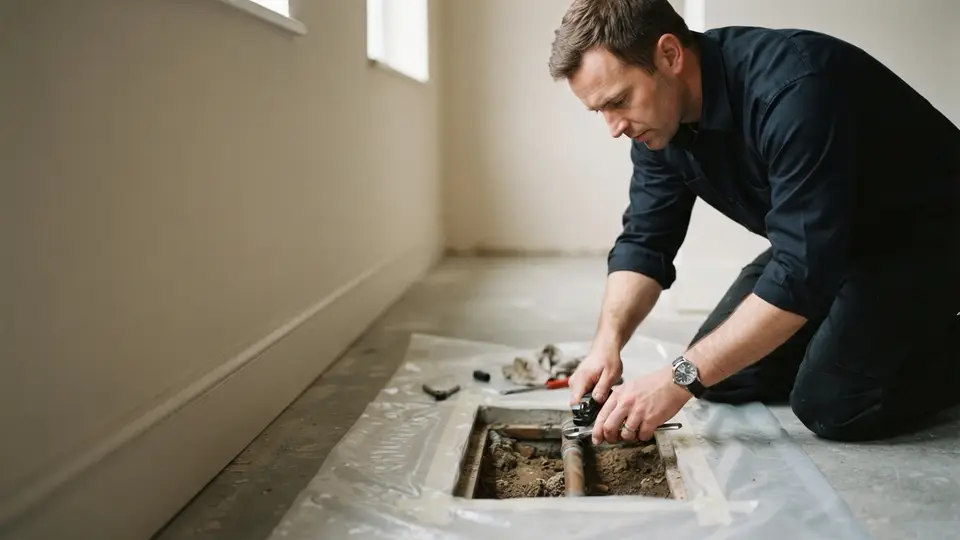
Spot repair
When we use it: One leak in otherwise sound pipe
Trade-off: Opens the floor in one small area
Warm spot on the floor, or water running with every tap closed? We handle slab leak repair in New Jersey. Our plumbers locate leaks in water lines buried in or under concrete floors, repair them through a small opening or reroute the line overhead, and check the rest of the system for the next weak spot. Most New Jersey homes have basements, but slab foundations are common in South Jersey subdivisions, Shore houses, garden apartments, townhouses and manufactured home communities. A slab leak hides well, so we find it with instruments before we break any concrete.
The service
A slab leak is a leak in a water line that runs under or inside a concrete floor. In New Jersey we see them most in homes built without basements: newer neighborhoods in Sicklerville, where the median home dates from 1990, and Glassboro, from 1986, Shore ranches and Cape Cods near the water table, and garden apartment complexes from the 1950s through the 1970s. Copper under concrete can wear through where it rubs against stone or rebar, and water slowly soaks the ground beneath.
Slab leak repair options
When we use it: One leak in otherwise sound pipe
Trade-off: Opens the floor in one small area
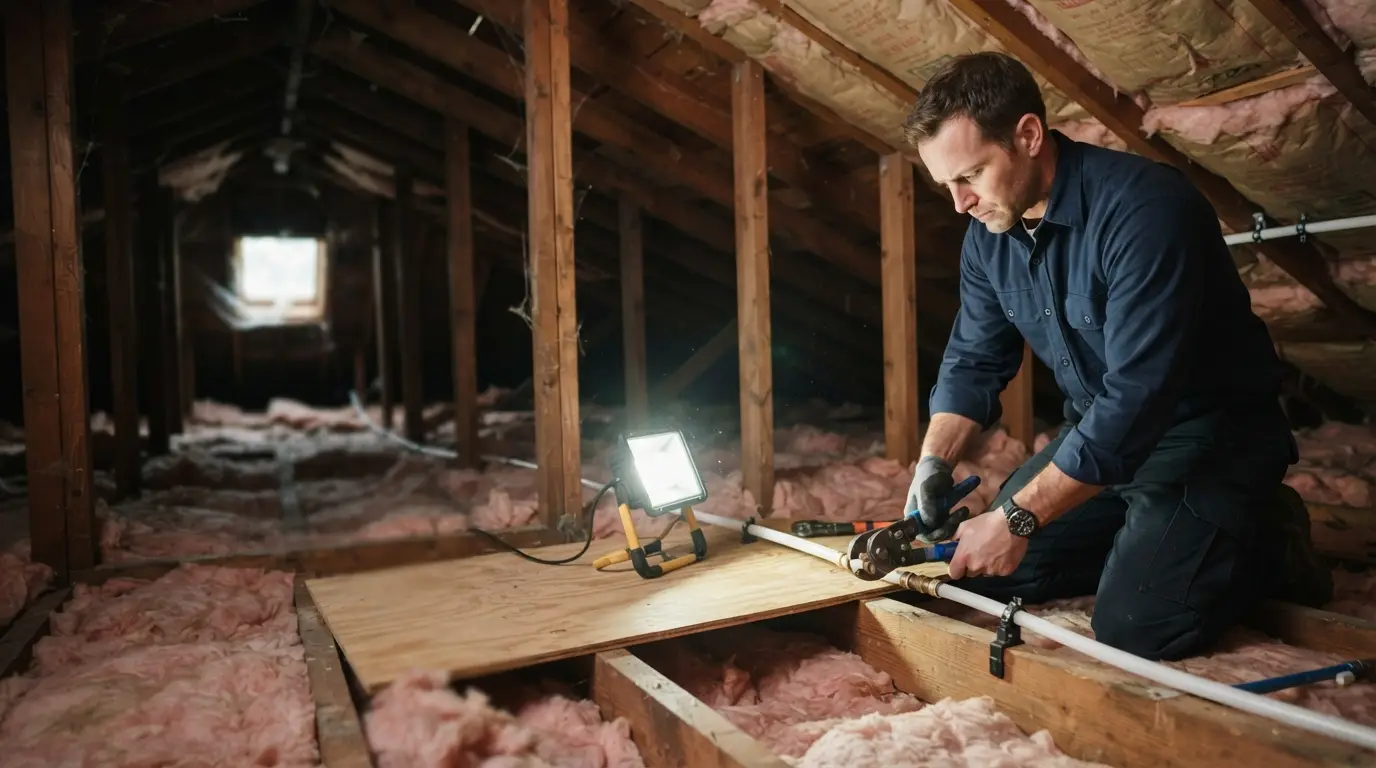
When we use it: Old pipe likely to leak again
Trade-off: New line through walls or ceiling
When we use it: Several leaks on one branch
Trade-off: Replaces a whole run under the slab
When we use it: Rarely, for specific pipe conditions
Trade-off: Limited use; we explain when it fits
Why New Jersey
Pipe that expands and contracts with hot water rubs against gravel and concrete until it wears thin.
Coastal plain sand settles and moves with groundwater, stressing pipes under the slab.
Acidic water from some South Jersey wells can thin copper from the inside.
Kinked pipe or joints buried under the slab fail years later.
Warning signs
Our process
We separate the hot and cold sides with pressure tests, then trace the line with electronic locators, listen through the floor with acoustic equipment and use a thermal camera on hot lines to pinpoint the spot.
For a single leak, we cut a small opening in the floor, expose the pipe, replace the damaged section with new pipe and fittings, pressure test it and patch the concrete.
When the pipe under the slab is likely to fail again, we abandon it and run a new line through walls, attic or ceiling, leaving the floor intact.
Typical cost
Every slab leak is different, and any figure before we locate it is an estimate only. The cost depends on:
We give you a written price for the plumbing before work starts.
Get a written price: (833) 733-2357Under a kitchen island costs more than under a closet.
Tile and hardwood take more care to open and match.
Spot repair versus reroute versus repipe.
Older pipe often has more than one.
Flooring replacement is separate from the plumbing.
Benefits
Water under a slab washes out supporting soil.
A hot water leak also wastes energy.
Wet flooring and pads breed mold quickly.
Early leaks are smaller and easier to reach.
Sicklerville (16,635 homes), Glassboro and much of Gloucester and Camden counties grew with slab and crawl-space homes from the 1970s onward. Only 27% of Sicklerville homes predate 1980. Water lines there are usually copper or early plastic under the slab. When a leak appears in a home of that age, we check the whole system, because other runs of the same pipe were laid at the same time and face the same conditions.
Toms River (39,886 homes), Ocean City and the barrier islands have many slab homes on sand, with groundwater close below. Storm surge and flooding have shifted soil under some of them. 73% of Ocean City homes are vacant on a typical day, so a slow slab leak can run for weeks unnoticed. We test seasonal homes before the season and recommend overhead rerouting where flood rebuilds raised the house.
Lakewood, where the median home dates from 1993, has many townhouses and attached homes on slabs, and manufactured homes make up 47% of housing in Pine Ridge at Crestwood. In attached housing, the line under one unit's floor may serve another. We work with associations to confirm which pipe belongs to whom, and we reroute lines in a way that respects shared walls and fire separations.
Woodbridge, Sayreville and many Middlesex and Union county towns have two- and three-story garden apartment complexes built on slabs. Buildings with five or more units hold 41% of Woodbridge homes. Their original copper is now decades old. When one unit's floor leaks, others often follow. We help owners plan building-wide reroutes in stages, one stack or wing at a time.
If you see water or hear it running, close the main shutoff. If the leak is on the hot side, turn the water heater to vacation or off.
Move rugs and furniture off the damp area and take photos for your insurer. Do not break into the slab yourself. Call us.
Rerouting or replacing water lines often needs a plumbing permit from your municipal construction office. We file it and schedule the inspection. Our work is done by or under New Jersey licensed master plumbers.
Why choose us
What you can count on every time one of our plumbers comes to your door.
Every job is handled by a plumber who holds the license your state or city requires, backed by liability insurance.
Our plumber explains the problem and the options, and you approve a written price before any work begins.
Burst pipes, sewage backups and failed water heaters get priority scheduling, including nights and weekends.
We pull permits when the job needs one and schedule the inspection, so the work holds up when you sell.
Repairs and installations come with a written warranty on labor, on top of the manufacturer's warranty on parts.
Our pages and plumbers account for your area's water, soil, climate and the age of the homes around you.
Service area
We find and fix slab leaks in 700 New Jersey communities, including Vineland (22,768 homes) and Millville (12,195 homes). Find yours:
It depends on where the leak sits, the floor covering and whether we repair or reroute. You approve a written price before work starts.
Often at first, but it can save money if the old pipe is likely to leak again. We explain both options with prices.
Many policies cover access and resulting water damage but not the pipe itself. Check your policy, and we provide notes and photos for the claim.
We isolate lines with pressure tests, trace their path with locators and listen for the leak through the floor, adding thermal imaging on hot lines.
No. We locate the leak first so the opening is small. If the pipe is in bad shape, rerouting avoids opening the floor at all.
We pressure test the line, patch the concrete and leave the area ready for flooring. We also check the meter to confirm no other leaks remain.
Over time, yes. Running water can wash away the soil supporting the slab and cause settling and cracks.
It can scald if it surfaces, wastes energy and keeps floors wet near electrical outlets. Turn off the water heater and the main valve.
A spot repair usually takes most of a day, including detection. A reroute can take one to three days depending on the house.
Usually one to three hours in a typical home. Multiple leaks or long runs under large floors can take longer.
Keep pressure normal, treat acidic water and fix water hammer. In older homes, rerouting lines out of the slab removes the risk.
Yes. Once a year, turn off every fixture and watch the meter for a few minutes. Any movement means water is escaping somewhere.
Less than in states without basements, but we see them in South Jersey subdivisions, Shore homes, townhouses and garden apartments built on slabs.
Acidic water can thin copper from the inside. Some South Jersey wells are acidic, so testing and treating the water protects pipes.
Shut off the main valve and power to the wet area, then call us. We put active leaks ahead of routine work and keep you updated on timing.