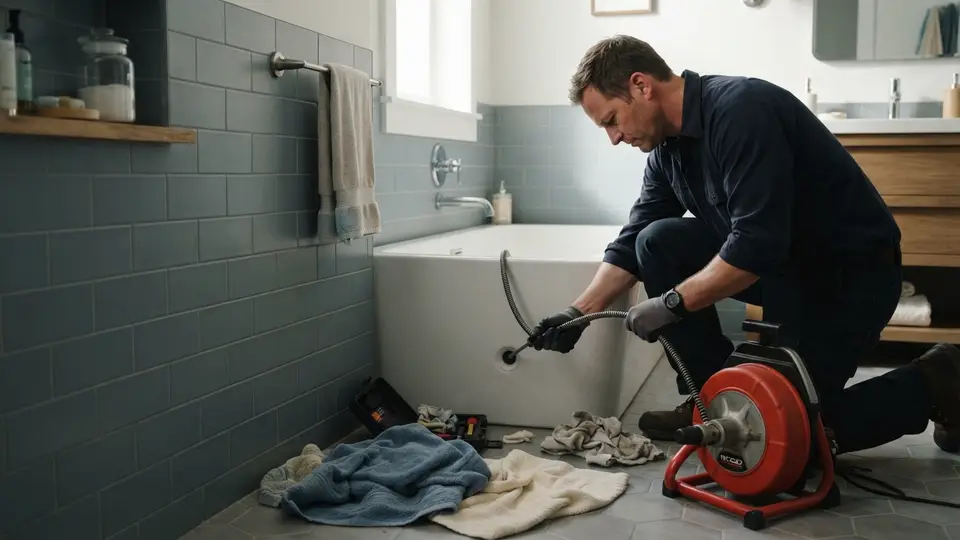
Small drum machine
Typical use: Kitchen, bath and laundry lines
Result: Opens fixture branch clogs
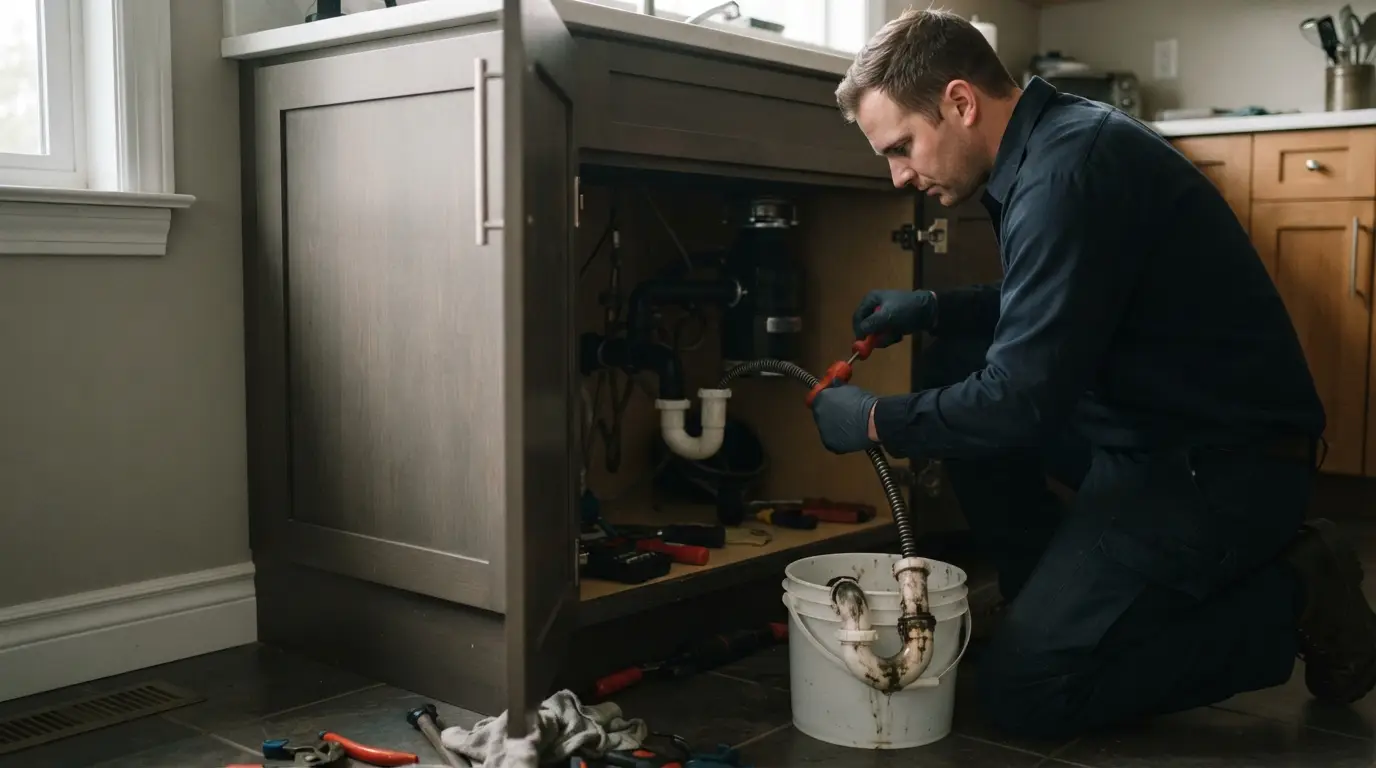
Kitchen sink backing up, or water at the basement drain? We handle drain cleaning and clog removal in New Jersey. Our plumbers clear kitchen and bathroom drains, toilets, laundry standpipes, floor drains and main sewer laterals in houses, two-family homes, brick walk-ups, condo towers, restaurants and summer rentals. New Jersey drains fight old cast iron, clay laterals full of roots from street trees, grease from busy kitchens and city sewers that back up in heavy rain. We clear the line, run a camera through it and show you what caused the clog before we talk about anything bigger.
The service
New Jersey has 2,546,166 homes in our Census data, and 42% were built before 1960. In Camden the median home dates from 1950, in Trenton from 1953 and in Ridgewood from 1950. Houses of that age usually drain through cast iron inside and a clay or cast iron lateral to the street. Rough pipe walls catch grease and paper, and joints let roots in. Most of our New Jersey drain calls trace back to one of those two things.
How our plumbers clear New Jersey drains
Typical use: Kitchen, bath and laundry lines
Result: Opens fixture branch clogs
Typical use: Laterals and basement mains
Result: Cuts roots and packed waste
Typical use: Grease and sludge buildup
Result: Scours the full pipe diameter
Typical use: Clogs that keep returning
Result: Shows breaks, roots and low spots
Why New Jersey
London planes, oaks and maples along older streets push roots into clay joints between the house and the street sewer.
In two-family homes and walk-ups, waste from several kitchens and bathrooms meets in one stack and main.
Scale and rust inside old cast iron narrow the pipe and snag wipes, hair and paper.
Where storm water and sewage share pipes, heavy rain can push water back toward low basements.
Warning signs
Our process
We protect the floor, find the nearest cleanout or trap, run a cable with a head sized for the pipe and test the line with a steady flow of water before we pack up.
When a clog keeps coming back, our camera shows whether a hub has cracked, the lateral has settled or roots fill a joint. We repair that section or quote a liner.
High-pressure water strips grease from restaurant lines and root hairs from laterals. We look at old cast iron with the camera first so we choose a safe pressure.
Typical cost
Any figure before we see the line is an estimate only. The price depends on:
You see a written price and approve it before we start.
Get a written price: (833) 733-2357A single sink costs less than a lateral to the street.
Without one, we may pull a toilet or go through the roof vent.
Jetting and camera work add to the cost of cabling.
A broken or sagging pipe needs repair beyond cleaning.
Evenings and weekends cost more.
Benefits
Not a small hole punched through the clog.
You see the cause for yourself.
Whether the line needs cleaning, repair or a liner.
Roots and grease cut back to the pipe wall.
Newark, Jersey City, Hoboken, Paterson and Camden have combined sewers, where rain and sewage share the same pipes. In a downpour the street sewer fills, and water can push back up a lateral into the lowest drain in the house. Buildings with five or more units hold 79% of Hoboken homes, and many have basement drains below street level. We clear the line, check that the lateral is sound and install a backwater valve so water from the street cannot flow back into the building.
Renters occupy 74% of homes in Elizabeth, 73% in Paterson and 76% in Newark. Much of that housing is two- and three-family houses and brick walk-ups where upper apartments drain into a shared stack. A clog in the main shows up in the lowest unit first, even when the cause is upstairs. We clear the main, camera the stack and give owners a short report they can share with tenants about what went down the drain.
89% of homes in Ridgewood and 88% in Fair Lawn were built before 1980, mostly on lots with mature street trees. Their clay laterals have joints every few feet, and roots find each one. Cabling cuts the roots back but does not stop them. We camera the lateral after cleaning, mark where the roots enter and explain whether a spot repair, a liner or a scheduled cleaning makes more sense for your line.
Renters occupy 79% of homes in New Brunswick, many of them older houses near Rutgers split into apartments. Shared kitchens and bathrooms clog often with grease, hair and things that should never be flushed. We work with landlords to clear lines quickly, jet mains between semesters and add strainers and cleanouts that make the next visit shorter.
73% of homes in Ocean City are vacant on a typical day, and 13% in Long Branch. Summer homes sit empty for months and then host full houses of guests every week. Traps dry out, sand washes into floor drains from outdoor showers and lines see heavy use all at once. We clear and camera drains before Memorial Day and handle mid-season clogs between check-out and check-in.
Stop running water, including the dishwasher and washing machine. If a toilet is about to overflow, turn the valve behind it clockwise until it stops.
Skip chemical drain openers. They rarely clear a main line, they can damage old pipe and they make the work dangerous for whoever opens the drain next. In an apartment, tell the super or owner and call us.
Clearing a drain does not need a permit. Replacing a lateral, stack or section of drain pipe usually does, and we file it with your municipal construction office. Our work is done by or under New Jersey licensed master plumbers.
Why choose us
What you can count on every time one of our plumbers comes to your door.
Every job is handled by a plumber who holds the license your state or city requires, backed by liability insurance.
Our plumber explains the problem and the options, and you approve a written price before any work begins.
Burst pipes, sewage backups and failed water heaters get priority scheduling, including nights and weekends.
We pull permits when the job needs one and schedule the inspection, so the work holds up when you sell.
Repairs and installations come with a written warranty on labor, on top of the manufacturer's warranty on parts.
Our pages and plumbers account for your area's water, soil, climate and the age of the homes around you.
Service area
We clear drains in 700 New Jersey communities, including Jersey City (135,231 homes) and Newark (121,546 homes). Find yours:
It depends on which line is blocked, how we reach it and whether jetting or a camera is needed. You get a written price and approve it before we start.
For grease or roots that keep coming back, usually yes. Jetting cleans the whole pipe wall, so the line stays open longer than after cabling alone.
Yes. On older clay and cast iron lines it is worth it, because it shows exactly where a lateral is broken or rooted before anyone digs.
We open the cleanout on the main or house trap, run a cable toward the street, flush the line and camera it if the clog has happened before.
Many older New Jersey homes have a U-shaped trap on the main near the front wall. It catches debris and clogs often, and we clean or replace it.
Yes. We show you the camera video of roots, cracks, sags or buildup and explain what each option would fix.
We do not recommend them. They seldom reach a main clog, can harm old pipe and leave caustic water for whoever opens the drain next.
Keep people and pets out of the affected area, avoid touching the water and stop using fixtures. Sewage carries bacteria, so we clear it promptly.
A fixture clog often takes under an hour. A rooted lateral with jetting and a camera inspection can take a few hours.
We book the earliest time we can and put sewage backups ahead of slow drains. We keep you updated on timing.
Many need it every year or two. If roots come back sooner, a liner or section repair often costs less than repeated cleanings.
In towns with combined sewers, rain fills the street sewer and water pushes back toward low drains. A backwater valve stops that flow into your basement.
Many homes built before the 1960s do. Clay joints let roots in and can shift over time, so we camera them before recommending repairs.
That depends on your lease and local rules. We can show owners and tenants the camera video so everyone sees where and why the line blocked.
Yes. Dry traps, sand and roots show up when the house reopens. A spring check prevents backups during weeks when guests are staying.