Hardness
Where we see it: Piedmont wells and some city water
Treatment: Water softener
Scale on the faucets, or a well test that came back with a problem? We handle water softeners and filtration in New Jersey. Our plumbers install water softeners, whole-house filters and reverse osmosis drinking water systems for homes on public water and private wells. New Jersey water varies a lot: hard water in parts of the north and central Piedmont, acidic water with iron in much of the coastal plain, radon and arsenic in some northern wells and chlorine taste in city water. We start with a water test and recommend only the treatment your water needs.
The service
Most of New Jersey's 2,546,166 homes in our data are on public water, which the utility treats to meet state and federal standards. That water can still be hard or taste of chlorine. Homes on private wells, common in Hunterdon, Sussex, Warren and much of South Jersey, are responsible for their own treatment. New Jersey requires wells to be tested when a home is sold, but water can change between sales, so we recommend regular testing.
Water problems and treatment options
Where we see it: Piedmont wells and some city water
Treatment: Water softener
Where we see it: Coastal plain wells
Treatment: Neutralizer and iron filter
Where we see it: Public water systems
Treatment: Carbon filtration
Where we see it: Some wells
Treatment: Reverse osmosis or specialized media
Why New Jersey
Shale and sandstone in the Piedmont add hardness and, in some areas, arsenic.
Coastal plain aquifers often produce soft but acidic water with iron.
Radon occurs in some northern bedrock and can enter well water.
City water from reservoirs is disinfected, which leaves a chlorine taste.
Warning signs
Our process
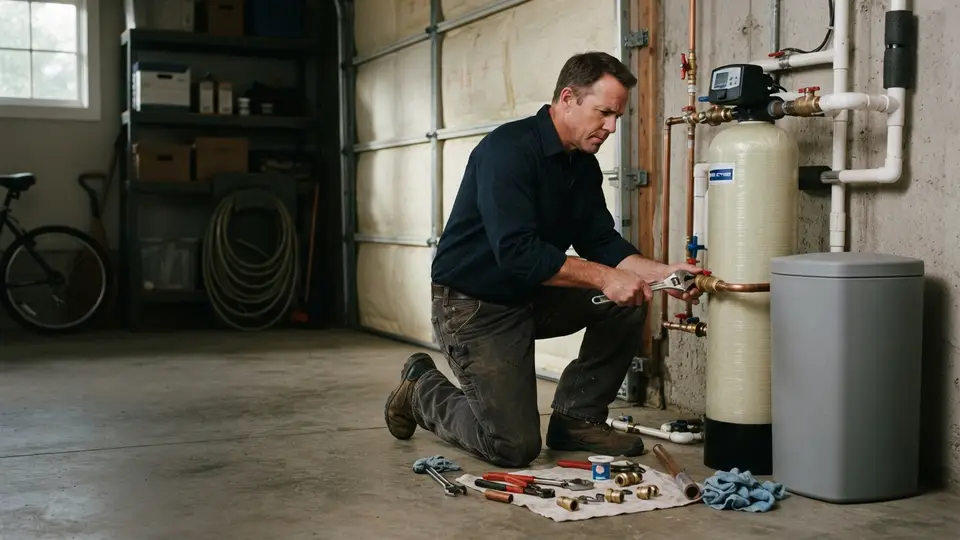
We size the softener from your hardness and household use, install a bypass valve, connect the drain with an air gap and set the regeneration so it uses as little salt and water as possible.
We install sediment, carbon, iron or acid-neutralizing filters where water enters the house, in the order your test results call for.
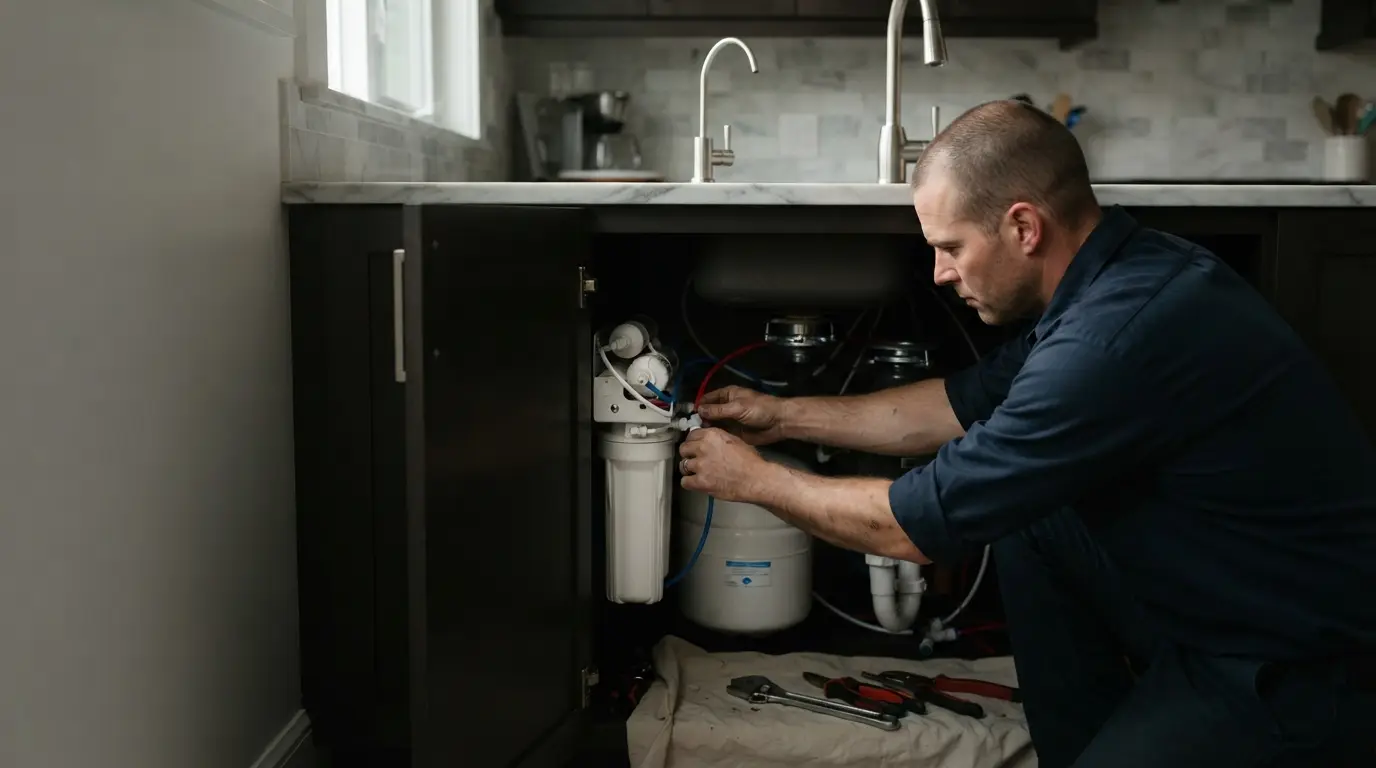
We install an under-sink system with a dedicated faucet for drinking and cooking water, and connect it to the refrigerator if you want filtered ice.
Typical cost
Treatment prices vary, and any figure before we test your water is an estimate only. The main factors:
You approve a written price before we install.
Get a written price: (833) 733-2357Each contaminant needs its own treatment.
Larger homes need larger systems.
Several problems may need several units.
Tight basements and closets take more work.
Salt, filters and membranes are ongoing costs.
Benefits
Less scale in water heaters and dishwashers.
Fewer stains and spots.
No chlorine or metallic flavor.
Treatment matched to a real water test.
Wells around Flemington (2,191 homes), Princeton and the Piedmont hills often draw hard water from shale and sandstone, and naturally occurring arsenic has been found in some of these wells. New Jersey's drinking water limit for arsenic is stricter than the federal one. If your test shows arsenic, we install treatment designed for it and recommend a follow-up test to confirm it works.
Around Hammonton (6,107 homes), Vineland, Millville and the Pinelands, well water from sandy aquifers is often acidic and carries iron. Acidic water eats copper pipe and leaves blue-green stains, and iron stains fixtures and laundry. Fuel oil still heats 12% of Millville homes, a sign of how many homes sit beyond the utility lines. We install neutralizers and iron filters that protect your plumbing and fixtures.
Around Lake Hopatcong (4,457 homes), Highland Lakes and Newton, wells drilled into the Highlands rock can carry hardness, iron, manganese and radon. Older lake cottages may have shallow wells close to septic systems. We test for the contaminants common in your area, recommend treatment and set up the system so it is easy to maintain.
In Newark (121,546 homes) and other cities, the water meets standards but some households want better taste or extra protection, especially in older homes with lead or galvanized pipe. New Jersey was among the first states to set limits for some PFAS chemicals, and utilities are working to meet them. Carbon filters remove chlorine taste, and reverse osmosis or certified lead filters at the kitchen tap give peace of mind while pipes are being replaced.
Sicklerville, where the median home dates from 1990, and Glassboro, from 1986, have many homes on public water from wells in the coastal plain. Some owners still notice spotting or want filtered drinking water. We test your tap water first, so you do not pay for a softener your water does not need, and we suggest a simpler filter where that does the job.
Parts of northern New Jersey have high radon levels in soil and rock, and radon can dissolve into well water and escape into the air when you shower or run the washer. Most radon exposure in a home comes from soil gas, but well water can add to it. If your well water test shows high radon, we can install an aeration system or a carbon tank designed for it, and we recommend testing the air in the house as well.
Gather any recent well test or utility water quality report. If a test shows a health risk, switch to bottled water for drinking and cooking.
Clear space near where the main water line enters the house and near a drain. Then call us to schedule a water test and visit.
Some municipalities require a plumbing permit for treatment systems that connect to the water supply and drain. We check with your construction office and file what is needed. Our work is done by or under New Jersey licensed master plumbers.
Why choose us
What you can count on every time one of our plumbers comes to your door.
Every job is handled by a plumber who holds the license your state or city requires, backed by liability insurance.
Our plumber explains the problem and the options, and you approve a written price before any work begins.
Burst pipes, sewage backups and failed water heaters get priority scheduling, including nights and weekends.
We pull permits when the job needs one and schedule the inspection, so the work holds up when you sell.
Repairs and installations come with a written warranty on labor, on top of the manufacturer's warranty on parts.
Our pages and plumbers account for your area's water, soil, climate and the age of the homes around you.
Service area
We install softeners and filters in 700 New Jersey communities, including Vineland (22,768 homes) and Toms River (39,886 homes). Find yours:
It depends on your water hardness, household size and the unit you choose. You get a written price after we test your water.
Usually, because it treats all the water entering the house. Reverse osmosis treats only drinking water at one sink.
Salt, occasional resin cleaning and some water for regeneration. Filters and reverse osmosis membranes also need regular replacement.
We test your water for hardness, iron, pH and other concerns, review any lab results and recommend only the treatment that addresses them.
We shut off the water, cut in a bypass, install the units in the right order, connect the drain, set the controls and test the water.
Yes. We can connect the system to your refrigerator for filtered water and ice.
Only a lab test can say. New Jersey wells can contain bacteria, nitrate, arsenic or radon, so test and treat as results require.
Use bottled water for drinking and cooking, call us to install the right treatment and retest after installation.
Most take a few hours. Multi-stage well treatment systems can take most of a day.
Right away after installation and the first regeneration. Existing scale in pipes and fixtures fades over time.
Check monthly. Most households add salt every month or two, depending on hardness and water use.
At least every year or two, and after flooding, nearby construction or changes in taste, smell or color.
Often. Coastal plain aquifers commonly produce acidic water with iron, which corrodes copper. A neutralizer raises the pH.
Not always. Some systems deliver moderately hard water and others soft water. We test first so you buy only what you need.
We schedule as soon as we can and help you choose treatment quickly. We keep you updated on timing.