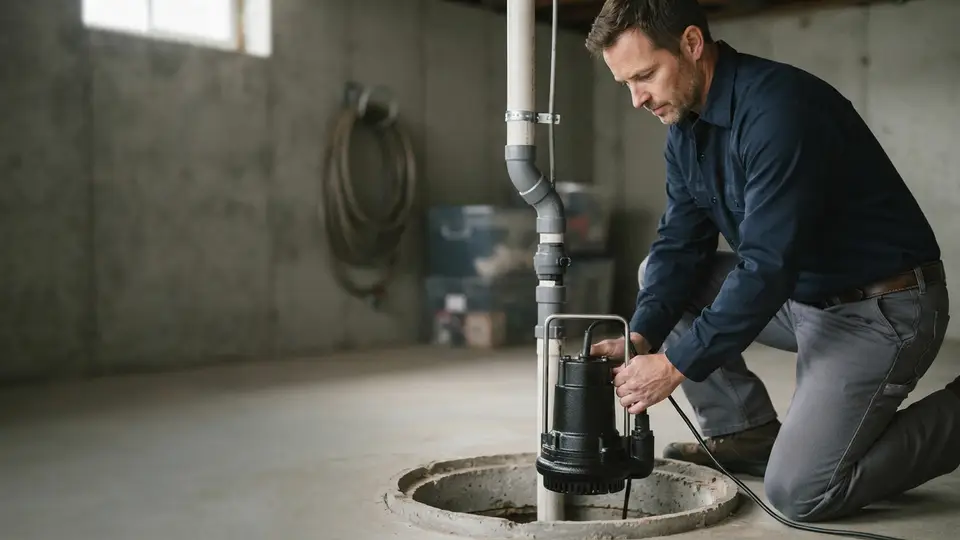
Submersible pump
What it does: Sits in the pit, quiet and powerful
Best for: Most finished basements
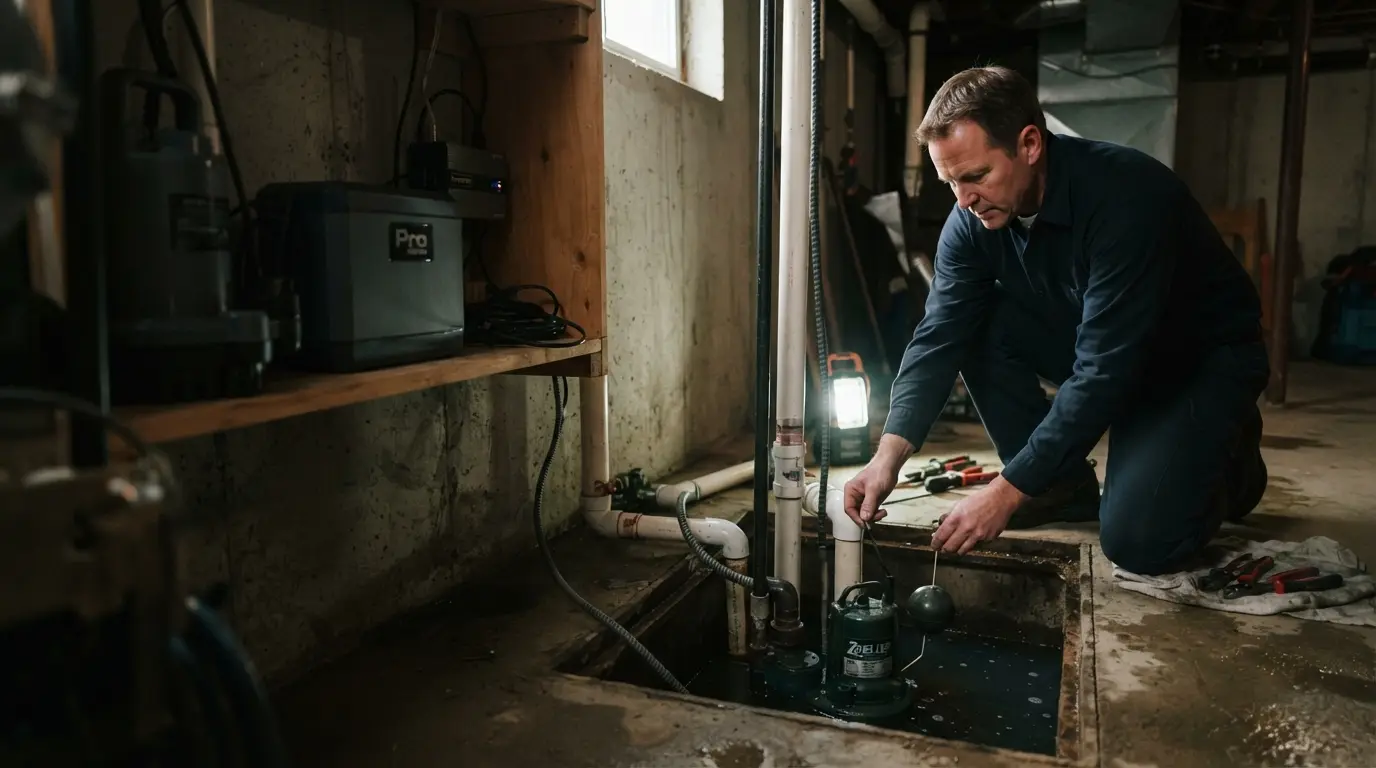
Water on the basement floor after a storm, or a pump that will not start? We handle sump pump repair and installation in New Jersey. Our plumbers repair failed pumps, install new sump pits and pumps, add battery backup pumps and route discharge lines away from the house. New Jersey basements face heavy summer storms, nor'easters, river flooding in the Passaic basin and a high water table near the coast, and the storms of 2012 and 2021 showed how fast a dry basement can fill. A working pump, a backup and an alarm are the best protection most homes can buy.
The service
Most older New Jersey houses have basements, and 42% of the state's 2,546,166 homes were built before 1960, before perimeter drains and sump pits were standard. Groundwater rises through floor cracks and the joint between wall and floor. A sump system collects that water in a pit and pumps it out of the house. Many homes added a pump after a flood, and those pumps are now aging too.
Sump pump options for New Jersey homes
What it does: Sits in the pit, quiet and powerful
Best for: Most finished basements
What it does: Motor above the pit
Best for: Small or shallow pits
What it does: Second pump on a battery
Best for: Storms with power loss
What it does: Runs on city water pressure
Best for: Homes on public water
Why New Jersey
The storms that bring the most water also knock out power, and a primary pump stops with it.
Homes near rivers and the coast run pumps for weeks in wet seasons.
Debris, silt and cords tangle the float in the pit.
A pump that kept up before 2021 may not handle the flows of a bigger storm.
Warning signs
Our process
We test the pump by filling the pit, check the float switch, check valve and outlet, clear silt and replace the switch or the pump when it cannot be trusted.
We cut and dig a pit at the low point of the basement, set a lined basin, connect it to any perimeter drain and run the discharge outside well clear of the foundation.
We add a second pump with its own float and a sealed battery, plus a high-water alarm, so the pit keeps draining when the power is out or the main pump fails.
Typical cost
Prices vary with the job, and any figure before we see the basement is an estimate only. The main factors:
You get a written price before we begin.
Get a written price: (833) 733-2357A new switch costs less than a new pump.
Cutting concrete and digging take time.
Battery and water-powered units differ in price.
Long or buried lines add work.
Working in finished basements takes care.
Benefits
Groundwater leaves before it spreads.
A backup keeps working when the power fails.
An alarm tells you before water rises.
A dry basement stays healthier.
Paterson (52,519 homes) and the towns along the Passaic, Pompton and Ramapo rivers have flooded many times. When river levels stay high, groundwater pushes into basements for days. 77% of Paterson homes were built before 1980. We size pumps for long run times, install backups and check valves and make sure the discharge goes far enough from the house that it does not cycle back into the pit.
The remnants of Ida in September 2021 dropped record rain on central and northern New Jersey, and basements in Elizabeth, Linden, Rahway and many other towns filled in hours. Elizabeth has 48,976 homes and 73% were built before 1980. Many homeowners learned that their pump was too small or had no backup. We review your pit, pump capacity and discharge, add a backup and alarm and pair the system with a backwater valve where sewer backup is also a risk.
In Toms River (39,886 homes), Point Pleasant and Old Bridge, groundwater sits close to the surface, and many homes rely on pumps that run through spring and after every storm. 8% of Point Pleasant homes are vacant on a typical day, so a silent pump failure can go unnoticed. We install alarms that send alerts to your phone and check pumps at seasonal homes before and after the summer.
89% of Ridgewood homes, 88% of Fair Lawn homes and 85% of Bergenfield homes were built before 1980, and many basements have since been finished as family rooms. A pump failure there damages carpet, drywall and furniture. We recommend a submersible pump with a sealed lid, a battery backup and an alarm, and we place the pit where it can be serviced without tearing into finished walls.
Around Lake Hopatcong (4,457 homes) and the other northern lakes, houses sit on hillsides where spring runoff and snowmelt flow toward the foundation. Many are on wells, so water-powered backup pumps are not an option. We use battery backups, route discharge lines downhill away from septic fields and protect discharge pipes from freezing in winter.
If it is safe to reach, check that the pump is plugged in and the breaker is on. Lift the float gently to see if the pump starts.
Move valuables up off the floor and stay out of water near electrical outlets or appliances. Then call us.
Replacing a pump usually needs no permit, but new pits, new discharge lines or electrical work may, and many towns forbid connecting a sump pump to the sanitary sewer. We follow local rules and file any permit needed. Our work is done by or under New Jersey licensed master plumbers.
Why choose us
What you can count on every time one of our plumbers comes to your door.
Every job is handled by a plumber who holds the license your state or city requires, backed by liability insurance.
Our plumber explains the problem and the options, and you approve a written price before any work begins.
Burst pipes, sewage backups and failed water heaters get priority scheduling, including nights and weekends.
We pull permits when the job needs one and schedule the inspection, so the work holds up when you sell.
Repairs and installations come with a written warranty on labor, on top of the manufacturer's warranty on parts.
Our pages and plumbers account for your area's water, soil, climate and the age of the homes around you.
Service area
We install and repair sump pumps in 700 New Jersey communities, including Linden (16,149 homes) and Rahway (13,002 homes). Find yours:
It depends on the pump type, the pit and the discharge route. You get a written price before we start any work.
In New Jersey, usually yes. The biggest storms often cut power, and a backup keeps the pit draining when the main pump stops.
Yes. Cutting the concrete floor, digging and setting a basin take more labour than swapping a pump in an existing pit.
We fill the pit with water, watch the float trigger the pump, check the flow out of the discharge and listen for worn bearings.
At the lowest point of the basement or where water comes in, and where it can be reached for service without opening finished walls.
We check for a stuck float, a failed check valve or a high water table. Then we fix the switch, valve or size the pump correctly.
Not if water is near outlets, appliances or the electrical panel. Stay out and have the power shut off before anyone enters.
Most New Jersey towns do not allow it. We route the discharge outdoors, away from the foundation, following local rules.
Replacing a pump in an existing pit usually takes a couple of hours. A new pit can take most of a day.
The battery usually lasts a few years and should be replaced on schedule. Run time during an outage depends on how often the pump cycles.
Every few months, and before spring rains and hurricane season. Pour water into the pit and make sure it starts and drains.
Most last seven to ten years. Pumps that run often in wet areas may need replacing sooner.
Many Shore homes with basements or crawl spaces do, because the water table sits close to the surface and rises after storms.
No. A sump pump handles groundwater. A backwater valve stops sewer water from flowing back, and many homes need both.
We put flooding basements ahead of routine work and keep you updated on timing. Move valuables up and stay clear of electrical hazards.