Black steel
Where it is used: Most older house piping
What we watch for: Leaking threads, rust in damp basements
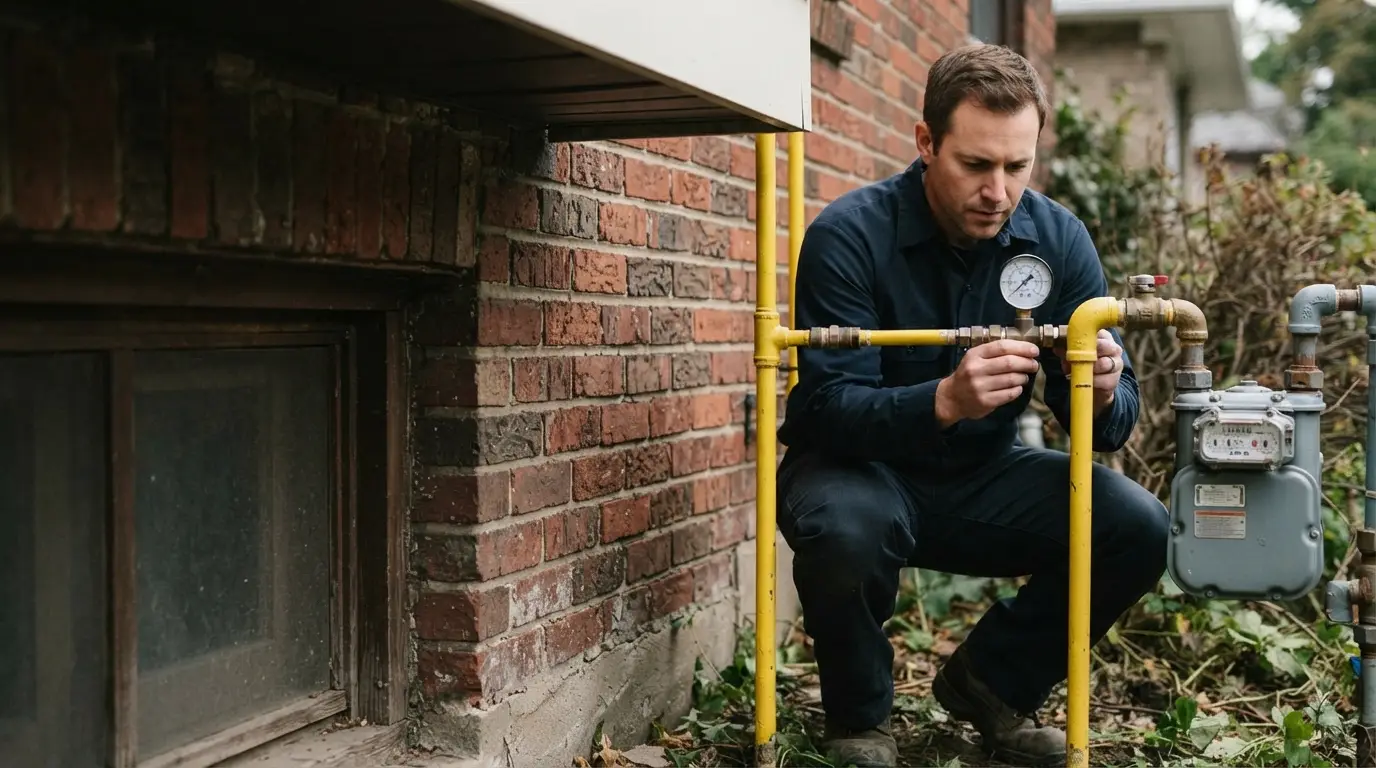
A faint gas smell near the stove, or a new range that needs a line? We handle gas line repair and installation in New Jersey. Our plumbers find and repair leaks in house gas piping, run new lines for ranges, dryers, water heaters, generators, grills and pool heaters and connect appliances safely. Gas heats most New Jersey homes, much of the piping is decades old, and every new line or major repair needs a permit and an inspection. We pressure test our work, check every connection and coordinate with the gas utility when the meter needs to be turned off or on.
The service
Utility gas heats 73% of New Jersey homes, 86% in Elizabeth, 88% in Paramus and 87% in Westfield. The gas utility owns the line up to the meter, and the piping after the meter belongs to the owner. In older homes that piping is usually black steel with threaded joints, sometimes extended over the years with flexible tubing. We repair and extend all of it, and we work with propane systems in homes beyond the gas mains.
Gas piping materials we work with
Where it is used: Most older house piping
What we watch for: Leaking threads, rust in damp basements
Where it is used: Newer installs and extensions
What we watch for: Proper bonding and protection
Where it is used: Some propane systems
What we watch for: Flare fittings and kinks
Where it is used: Buried outdoor runs
What we watch for: Tracer wire and safe depth
Why New Jersey
Pipe dope dries out and threads loosen after decades of temperature swings.
Humid and flood-prone basements rust steel pipe from the outside.
Old connectors reused on new appliances crack or leak.
Renovation and digging damage piping that no one marked.
Warning signs
Our process
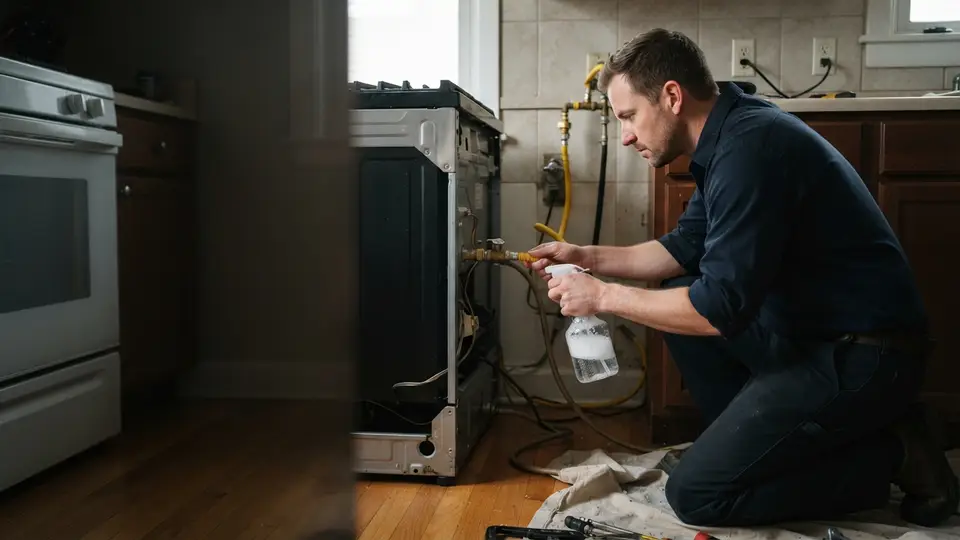
We find the leak with an electronic detector and bubble solution, shut off the affected section, replace the failed fittings or pipe and pressure test the system before restoring gas.
We size the new line for every appliance on the system, run steel or CSST with proper bonding, add shutoff valves and sediment traps and schedule the inspection.
We connect ranges, dryers, water heaters, fireplaces and generators with new connectors, check for leaks and confirm the burner flame and venting.
Typical cost
Prices vary with the job, and any figure before we see the site is an estimate only. The main factors:
You approve a written price before we begin.
Get a written price: (833) 733-2357Long runs through finished spaces take more work.
Large appliances and generators need bigger lines.
Steel and CSST differ in labour.
Trenching and markouts add cost.
Municipal fees vary.
Benefits
Tested, leak-free piping protects your household.
Every appliance gets the gas it needs.
Permits and inspections on record.
Licensed, inspected work avoids claim disputes.
In Newark (121,546 homes), Paterson and Clifton, much of the house gas piping was installed generations ago, and 84% of Clifton homes predate 1980. Two- and three-family houses often have several meters and long runs to each unit. Over time, owners added appliances without upsizing the lines. We check that each line can carry the load, fix leaking joints and replace corroded sections before adding anything new.
Many New Jersey kitchen remodels move the range to an island or add a larger professional-style unit. 71% of South Plainfield homes and 86% of North Plainfield homes were built before 1980, and their original lines were sized for a small range. We size and run the new line, install an accessible shutoff and make the connection so the range can slide in and out for cleaning.
After Sandy left many homes without power for days, standby generators became common across New Jersey, especially near the Shore in Toms River (39,886 homes) and Point Pleasant. A generator draws a lot of gas when it runs. We size the gas line for the generator and everything else on the meter, run it to the pad and coordinate with the electrician and the utility, which may need to upgrade the meter.
Beyond the gas mains, propane heats 28% of homes in Upper Greenwood Lake and 20% in Highland Lakes, and fuel oil heats 61% around Lake Hopatcong. Many owners add propane for cooking, a generator or a new water heater. We run the piping from the regulator to each appliance and test it, and your propane supplier sets the tank and first regulator.
Outdoor gas lines are popular for patios and pools. Buried lines must be the right material, at the right depth and marked with tracer wire so they can be found later. We request a utility markout before we dig, install the line with a shutoff at the house and test it before you light the first burner.
If you smell gas, get everyone out and call the utility or 911 from outside. Do not try to find the leak yourself.
For a planned hookup, clear space around the appliance and the meter and have the appliance manual ready. Then call us.
New gas piping and most gas repairs need a permit from your municipal construction office and an inspection before the gas is turned on. We file the permit, schedule the inspection and coordinate with the utility. Our work is done by or under New Jersey licensed master plumbers.
Why choose us
What you can count on every time one of our plumbers comes to your door.
Every job is handled by a plumber who holds the license your state or city requires, backed by liability insurance.
Our plumber explains the problem and the options, and you approve a written price before any work begins.
Burst pipes, sewage backups and failed water heaters get priority scheduling, including nights and weekends.
We pull permits when the job needs one and schedule the inspection, so the work holds up when you sell.
Repairs and installations come with a written warranty on labor, on top of the manufacturer's warranty on parts.
Our pages and plumbers account for your area's water, soil, climate and the age of the homes around you.
Service area
We repair and install gas lines in 700 New Jersey communities, including Paterson (52,519 homes) and Elizabeth (48,976 homes). Find yours:
It depends on the length, pipe size, route and permit. We give you a written price after we see where the line needs to go.
Yes. A leak repair depends on finding and fixing the failed joint or section. New lines depend on length and size. Both come with a written price.
Often, because generators need a larger line and sometimes a meter upgrade from the utility. We size the line for your whole system.
We use an electronic gas detector along the piping, then confirm with bubble solution at fittings and pressure test the system.
We shut off gas, run and connect the new line, pressure test it, then restore gas once the inspection is passed or allowed.
Yes. We coordinate meter shutoffs, turn-ons and meter upgrades with your gas utility when the job requires it.
Leave right away without using switches or phones. Call your gas utility or 911 from outside, and call us once the area is safe.
Yes. New Jersey homes with gas appliances should have carbon monoxide alarms near sleeping areas and on each floor.
A short line for a range or dryer takes a few hours. Generator and outdoor lines can take a day, plus the inspection.
Usually the same day, once the line passes a pressure test and any required inspection or utility turn-on.
Have it checked when appliances are serviced, when you smell gas or before adding a new appliance to the system.
No. Old flexible connectors can crack. We install a new connector with every appliance hookup.
Yes, for new piping and most repairs. We file it with your municipal construction office and schedule the inspection.
Yes. We pipe from the regulator to each appliance and test it, while your propane supplier handles the tank and first regulator.
First get out and call the utility or 911. Once the area is safe, we put gas repairs ahead of routine work and keep you updated on timing.