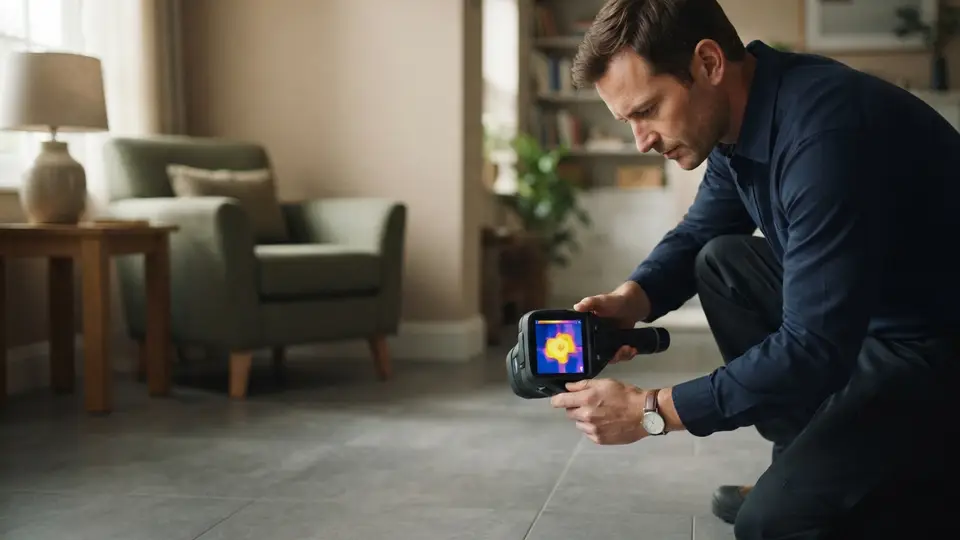
Pressure test
Best for: Confirming a leak exists
How it works: Isolates lines and watches for pressure loss
Water bill climbing, or a stain on the ceiling below? We handle leak detection and repair in New Jersey. Our plumbers find hidden leaks in walls, floors, ceilings and underground lines, repair them, and deal with burst and frozen pipes when winter hits. In New Jersey a leak often shows up in someone else's apartment first, comes from a pipe that has been in the wall for seventy years or starts in a Shore house that nobody has visited since Labor Day. We use acoustic, thermal and pressure testing to find the source before we open anything.
The service
Leak detection means locating water that is escaping where you cannot see it. In New Jersey, 24% of homes are in buildings with five or more units, and 68% of homes in Fort Lee and 79% in Hoboken. In those buildings a supply line inside one unit's wall can soak the ceiling two floors down. Older houses add galvanized pipe that rusts through and copper with pinholes. We narrow the search with instruments so the repair opening is small.
Leak detection methods our plumbers use
Best for: Confirming a leak exists
How it works: Isolates lines and watches for pressure loss
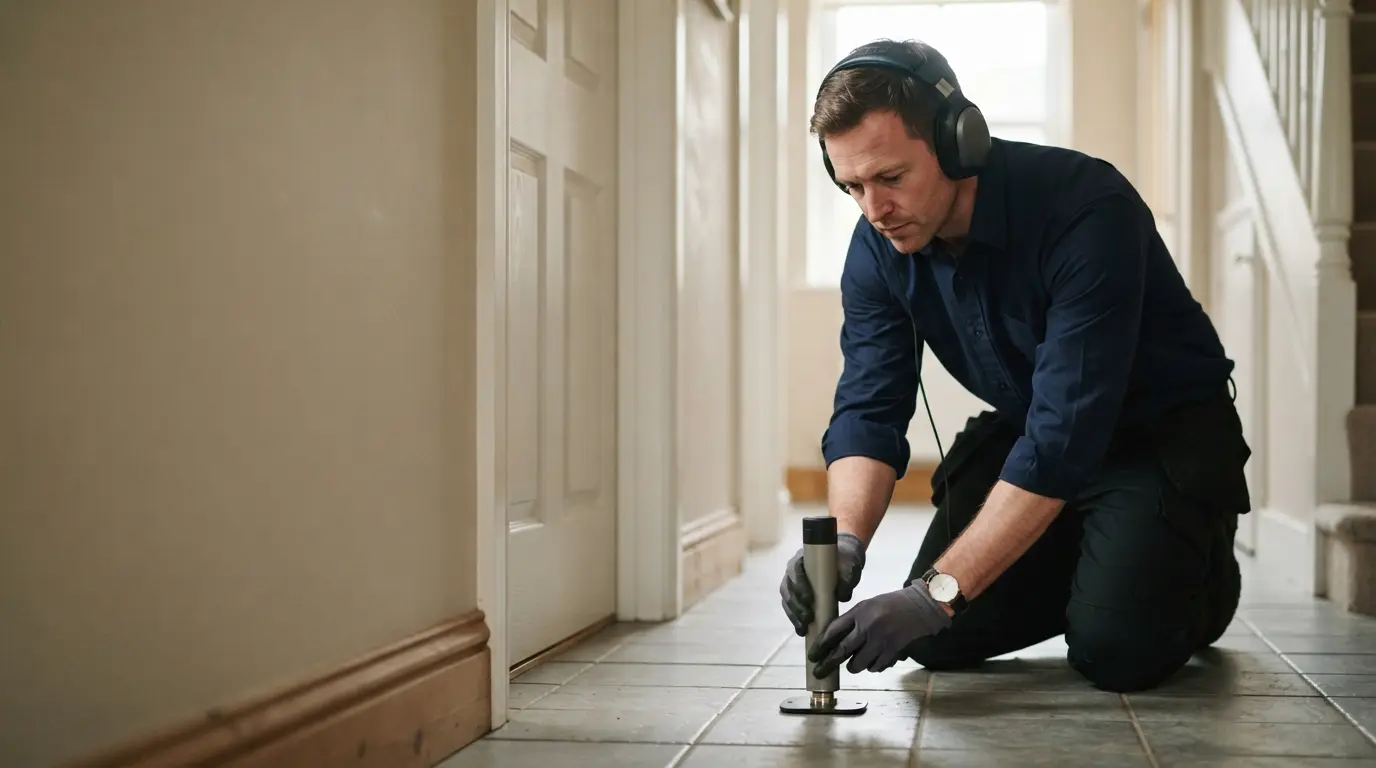
Best for: Leaks under floors and yards
How it works: Picks up the sound of escaping water
Best for: Hot water and in-wall leaks
How it works: Shows temperature differences in surfaces
Best for: Tracing the wet area
How it works: Measures moisture in drywall and wood
Why New Jersey
Galvanized pipe rusts from inside, and some older copper develops pinholes after decades of use.
Pipes in exterior walls, garages and crawl spaces freeze and split in hard freezes.
Without a working pressure regulator, high street pressure strains joints and valves.
Washer hoses, toilet supplies and valve packing wear out and drip into floors.
Warning signs
Our process
We confirm the leak at the meter, isolate hot, cold and outdoor lines, then use listening equipment and a thermal camera to mark the spot before cutting.
We open the smallest practical section, repair or replace the damaged pipe and fittings, pressure test the line and leave the opening ready for drywall repair.
We stop the water, cut out the split section, install new pipe and look at nearby lines that took the same stress.
We thaw the line gently, check it for cracks under pressure and reroute or insulate pipe that sits against a cold wall.
Typical cost
Every leak is different, so any figure before we test is an estimate only. Costs depend on:
We give you a written price before we start repairs.
Get a written price: (833) 733-2357Testing several units takes longer.
Old galvanized may need more than a patch.
Tile, plaster and finished ceilings take more care.
Digging adds labour and permits.
After-hours calls cost more.
Benefits
We cut where the leak is, not where we guess.
Hidden leaks waste water every hour.
Wet framing dries before mold takes hold.
Notes and photos help with insurance claims.
In Jersey City (135,231 homes), Union City and Hackensack, where 64% of homes are in buildings with five or more units, a leak rarely stays in one place. Water travels along floor joists and pipe chases, so the stain below may be several feet from the source. We test the units above, trace the path with moisture readings and work with the super, owners and condo board so the right party fixes the right pipe.
81% of homes in Beach Haven and 77% in North Wildwood are vacant on a typical day. When the heat fails in an empty house in January, a burst pipe can run for days before anyone notices. We winterize Shore homes, install leak sensors and automatic shutoff valves, and repair freeze damage when owners return. A shutoff valve that closes when it senses water can save a lot of flooring.
79% of homes in Trenton and 77% in Paterson were built before 1980, many before the Second World War. Their galvanized supply lines rust from the inside until they start to weep at threads and elbows. Fixing one leak often reveals the next. When we find a pattern of failures, we show you and price a section or whole-house repipe alongside the spot repair, so you can decide.
A leak in the water service between the meter and the house can soften the lawn, crack a basement wall or show only as a high bill. Some older services are lead or galvanized. We locate the leak with listening equipment, repair the line or replace it with copper or approved plastic and coordinate with the water utility when the curb stop needs to be shut.
Close the main shutoff valve, usually near the meter in the basement or utility room. In an apartment, alert the super and the neighbors below.
Turn off power to wet areas at the breaker panel if you can reach it safely. Move valuables, take photos for insurance and call us.
Small leak repairs usually do not need a permit. Replacing a water service or repiping a section often does, and we file it with your municipal construction office. Our work is done by or under New Jersey licensed master plumbers.
Why choose us
What you can count on every time one of our plumbers comes to your door.
Every job is handled by a plumber who holds the license your state or city requires, backed by liability insurance.
Our plumber explains the problem and the options, and you approve a written price before any work begins.
Burst pipes, sewage backups and failed water heaters get priority scheduling, including nights and weekends.
We pull permits when the job needs one and schedule the inspection, so the work holds up when you sell.
Repairs and installations come with a written warranty on labor, on top of the manufacturer's warranty on parts.
Our pages and plumbers account for your area's water, soil, climate and the age of the homes around you.
Service area
We find and fix leaks in 700 New Jersey communities, including Elizabeth (48,976 homes) and Princeton (9,906 homes). Find yours:
It depends on how hidden the leak is, how many units we test and the equipment needed. You get a written price before we start.
Yes. Once we find the source, we explain the repair and give you a written price for it before opening the wall or floor.
Some policies cover finding and repairing sudden leaks, but not slow ones. We provide notes and photos you can send to your insurer.
We isolate lines with pressure tests, then use listening equipment, thermal imaging and moisture meters to mark the source before cutting.
We check the meter to confirm water is escaping, ask when the signs started and isolate parts of the system to narrow the search.
Yes, with access to that unit. We work with the building manager or owner to test the units above and trace the water path.
It can be. Wet ceilings can sag and fall, and water near wiring is a shock risk. Shut off the water and power to the area.
Close the main shutoff valve right away, turn off power to wet areas and call us. Then move belongings out of the water.
A single-family home usually takes one to two hours. Multi-unit buildings and underground lines can take longer.
Most repairs take a few hours once the water is off. Larger freeze damage across several lines can take a day.
Keep heat on, open cabinet doors on outside walls during hard freezes and drain outdoor faucets in the fall.
Yes, especially in second homes. Sensors alert your phone, and an automatic shutoff valve can stop the water before damage spreads.
Empty Shore homes with no heat should be drained and winterized. If you keep heat on, add sensors and have someone check the house.
Galvanized pipe rusts from the inside and fails in many places over time. Repiping often costs less than repeated repairs.
We put burst pipes and active leaks ahead of routine work. Shut off the main, call us and we keep you updated on timing.