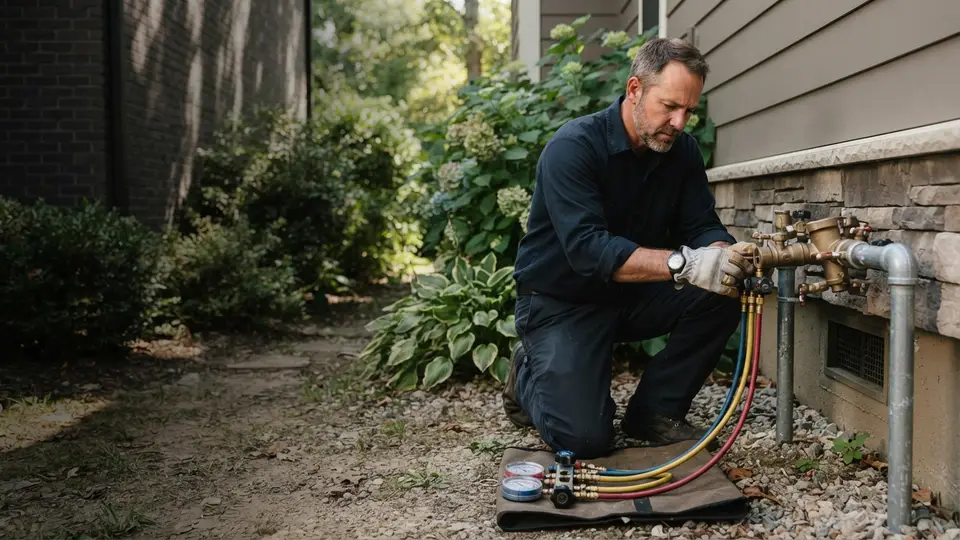
Reduced pressure zone (RPZ)
Typical use: High hazard: hospitals, labs, car washes, chemical feeds
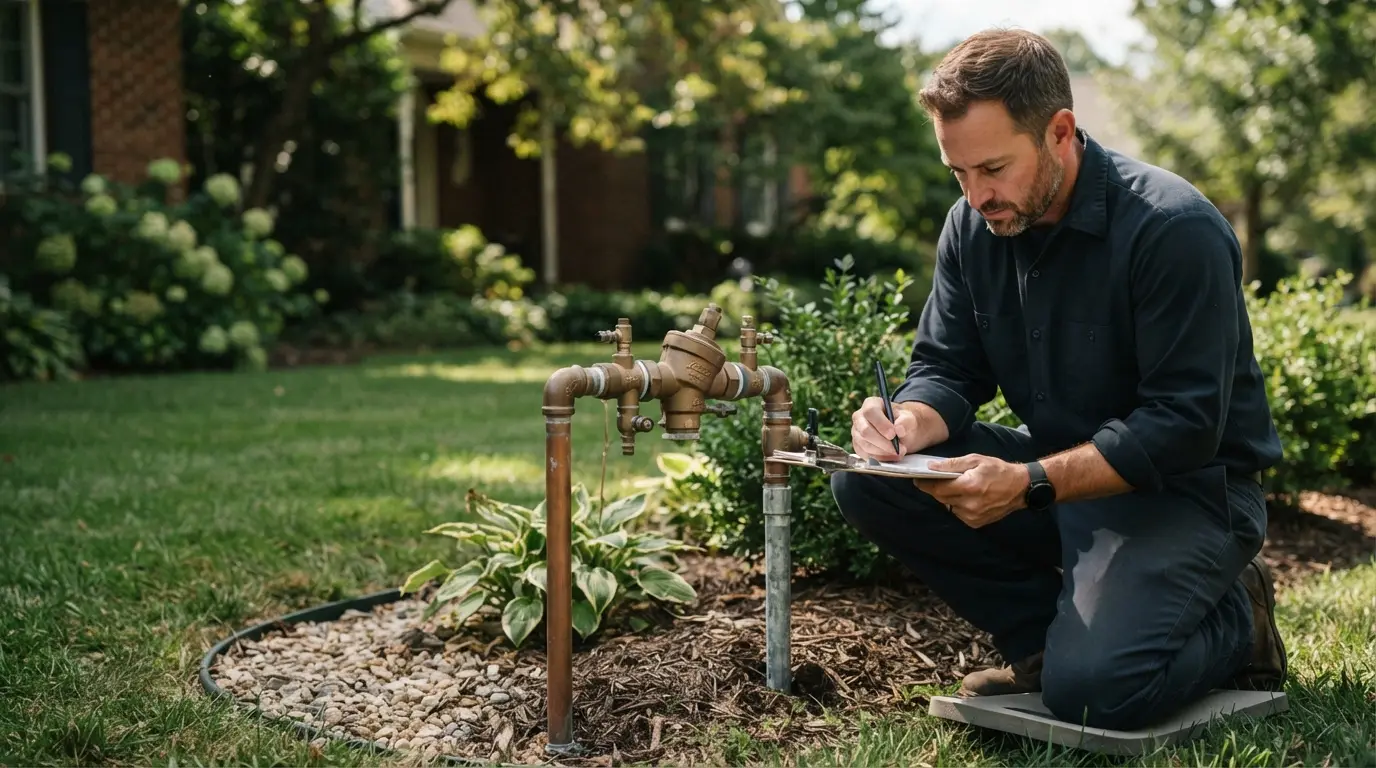
Water system asking for your annual backflow test? Backflow testing and prevention in Alabama is done by our certified testers, with the report filed for you. A backflow preventer keeps water from sprinklers, boilers, fire lines and commercial equipment from being drawn back into the public supply. Alabama water systems keep track of these devices and require testing on a schedule. This page explains who needs one, how testing, installation and repair work, and how to protect the device through freezes and storms.
The service
Clean water is supposed to move one way, from the water system into your building. Backflow is any reversal of that flow. It happens two ways. Back-siphonage occurs when pressure in the public main drops, for example during a main break or heavy firefighting, and the main pulls water out of connected buildings. Back-pressure occurs when equipment on your side, such as a pump or boiler, pushes water at a higher pressure than the main. Either way, water that has touched fertilizer, chemicals or stagnant pipe could end up in the drinking supply.
Backflow prevention assemblies use spring-loaded check valves, and in some designs a relief valve, to block that reverse flow. Their parts wear, so they must be tested regularly to prove they still work.
Assemblies and where they are used
Typical use: High hazard: hospitals, labs, car washes, chemical feeds
Typical use: Fire sprinkler systems, lower-hazard lines
Typical use: Lawn irrigation systems
Typical use: Indoor uses where spillage is a concern
Why Alabama
Alabama public water systems run cross-connection control programs under state drinking water rules. Each system sets its own list of required devices and test schedule, but these properties are the usual ones:
In-ground sprinklers are the most common residential cross-connection.
Restaurants, medical and dental offices, salons, car washes and factories often need RPZs.
Most fire lines have a double check or RPZ assembly.
A private well connected anywhere near public water calls for protection.
Shared irrigation, pools and fire lines carry devices the owner must test.
In our Alabama Census data, 17% of homes are in buildings with five or more units, where devices on shared systems are the property owner's responsibility. Your water system's letter names the device and the deadline.
Warning signs
Our process
Our certified tester connects a calibrated gauge to the assembly's test cocks and checks each valve: whether each check holds tight and, on an RPZ, whether the relief valve opens at the right point. We record the readings on the form your water system requires, submit it and give you a copy.
We install the type of assembly your water system requires, at the correct height and with clearance for testing, plus isolation valves. On RPZs we plan for the water the relief valve may discharge. A new device is tested at installation and reported.
When a device fails, we clean or replace check valves, springs, seats and seals using repair kits for that model, or replace the assembly if the body is cracked or parts are no longer made. We retest and file the passing report.
Typical cost
Testing and any repair are priced in writing before we do the work.
Get a written price: (833) 733-2357Multiple assemblies on one visit cost more in total but often less per device.
Large RPZs on commercial and fire lines take longer than residential vacuum breakers.
A rebuild kit costs far less than a new assembly.
Cracked bodies after a hard freeze usually mean replacement.
Benefits
We test, file and track your next due date.
A working device keeps your irrigation or process water out of the public supply.
Our testers carry common parts and can often rebuild a failed device the same visit.
Property managers and business owners can group their devices with us.
Find the device, usually near the water meter, at the irrigation tie-in beside the house, or in a mechanical room for fire lines. Clear shrubs or boxes around it and keep your water system's notice handy.
If an RPZ is dumping water heavily, you can close the isolation valves on each side if you can reach them and can do without that line for now. Do not open or adjust the device; call us.
Many Alabama homeowners turn irrigation off in winter and back on in spring. That startup is a good time for the annual test, since the device has sat through freezes and any cracked parts will show up as leaks. When you add zones, move sprinkler heads uphill or tie a well into the system, the type or height of the backflow device may need to change. We check that whenever we work on an irrigation connection.
Commercial owners with several locations can schedule all their tests in one season. We keep a list of each device, its serial number, location and due date, so nothing slips through when a notice goes to the wrong address or a new manager takes over. The list is yours to keep.
Backflow tests must be performed by a certified tester accepted by your water system, and many systems keep a list of approved testers. Installing or replacing an assembly typically requires a plumbing permit from the city or county. Our plumbers are licensed through the Alabama Plumbers and Gas Fitters Examining Board, and our testers hold the certification needed to file reports. Check your water system's notice for its exact requirements.
Why choose us
What you can count on every time one of our plumbers comes to your door.
Every job is handled by a plumber who holds the license your state or city requires, backed by liability insurance.
Our plumber explains the problem and the options, and you approve a written price before any work begins.
Burst pipes, sewage backups and failed water heaters get priority scheduling, including nights and weekends.
We pull permits when the job needs one and schedule the inspection, so the work holds up when you sell.
Repairs and installations come with a written warranty on labor, on top of the manufacturer's warranty on parts.
Our pages and plumbers account for your area's water, soil, climate and the age of the homes around you.
Service area
We test backflow devices across 594 Alabama communities:
It depends on how many devices you have and their type and size. Testing and any repair are quoted in writing before we start.
Most can be rebuilt with a repair kit for much less than a new assembly. Freeze-cracked bodies need replacement.
Yes. We file it in the format your system requires and give you a copy for your records.
A certified tester attaches a calibrated gauge to the test cocks and checks that each valve holds and opens at the right pressure.
Only the line through the device, usually for 20 to 30 minutes per assembly.
Often, yes. Our testers carry common repair kits, then retest and file the passing result.
Reversed flow can pull fertilizer, chemicals or contaminated water from your property into the drinking water others use.
It means the relief valve is working or a part is worn. Call us to test it and find out which.
About 20 to 30 minutes per device, plus a few minutes to complete the paperwork.
Water systems can send further notices and may shut off service. Call us as soon as you get a notice.
Usually once a year, and again after installation or repair. Some high-hazard devices may need more frequent tests.
Use an insulated cover on cold nights, leave the RPZ relief port open, and drain irrigation devices in winter if allowed.
Close the isolation valves or the main and call us. Burst devices get priority scheduling.
If you have in-ground irrigation, a well or a pool fill line, your water system may require one. Its notice will say.
A certified tester accepted by your water system. Our testers are certified and file reports for you.