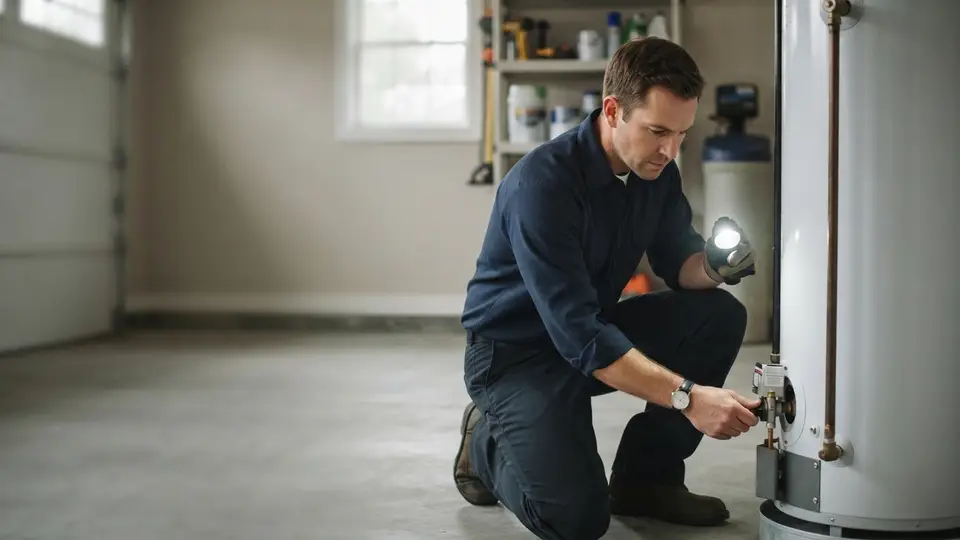
Electric tank
Pros: Simple, no venting
Things to know: Element and thermostat failures are common repairs
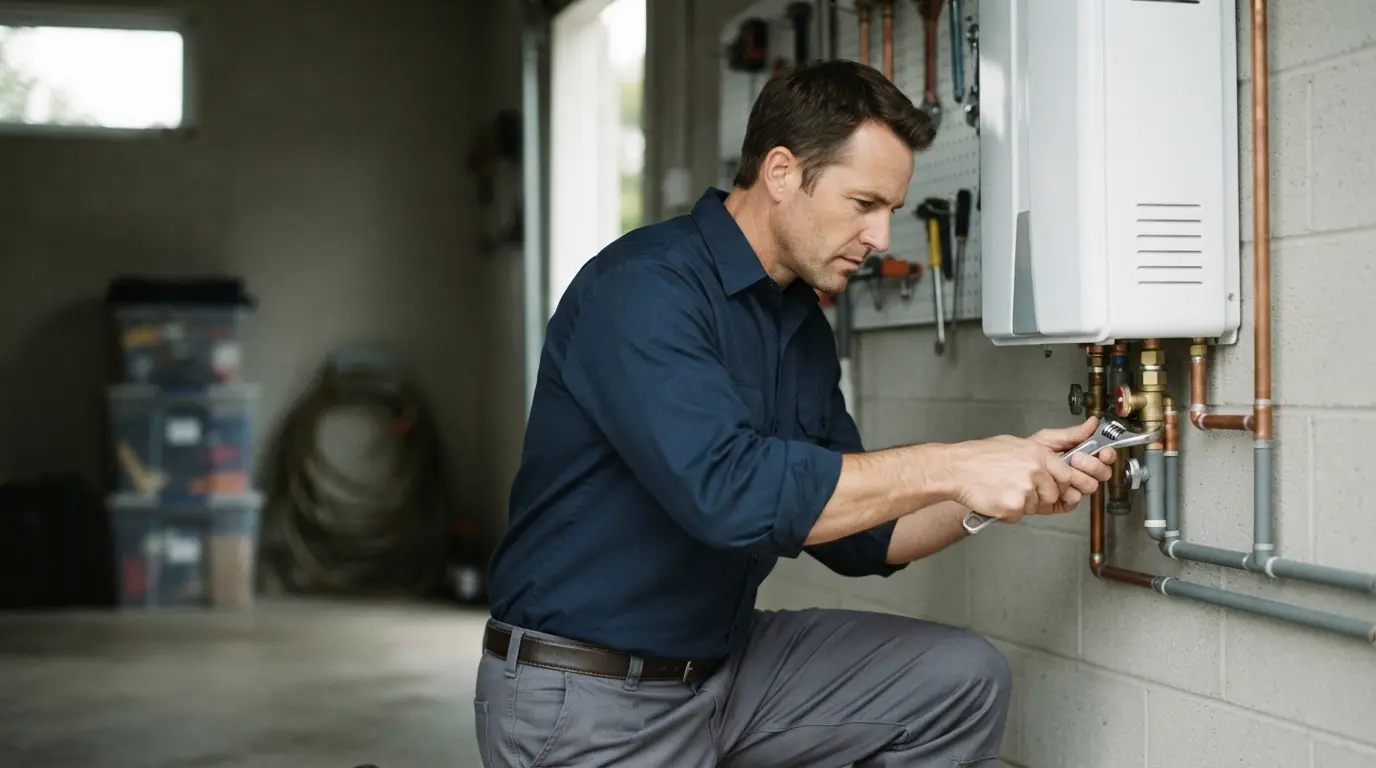
Cold showers or a puddle by the tank? Water heater repair and replacement in Alabama is something our plumbers do every day. Alabama homes put water heaters in garages, closets, attics and crawl spaces, and each spot brings its own risks, from freezing to a leak that soaks a ceiling. Most homes here heat with electricity, though gas is common in some cities. Here we cover what wears heaters out, how we repair them, when to replace, and what tankless units need.
The service
We repair and replace electric and gas tank water heaters and install and service tankless units, including the parts around them: relief valves and discharge lines, drain pans, expansion tanks, venting and the gas or electrical connection.
Water heater types
Pros: Simple, no venting
Things to know: Element and thermostat failures are common repairs
Pros: Fast recovery, works in outages
Things to know: Needs venting and combustion air
Pros: Endless hot water, small footprint
Things to know: May need gas line or electrical upgrades
Pros: Low electric use
Things to know: Needs space and a condensate drain
Why Alabama
64% of homes in our Alabama Census data heat with electricity and 32% with natural gas. It varies by city: 56% of Hoover homes heat with gas and 47% in Montgomery, against 7% in Dothan and 23% in Huntsville. In all-electric homes, burned-out elements and failed thermostats are the most common repairs we make.
Even moderately hard water leaves sediment in the bottom of a tank, and well water in parts of north Alabama can be quite hard. Sediment buries the lower element in electric tanks and makes gas tanks rumble and overheat.
Heaters in attics risk ceiling damage when they leak and can freeze on rare cold nights; heaters in crawl spaces face damp air that rusts fittings and controls.
Thunderstorms and tropical systems bring surges and outages that can damage controls on electric and tankless units.
Warning signs
Our process
We diagnose the fault with meters and a check of each part: elements, thermostats, gas valve, thermocouple or flame sensor, igniter, dip tube, anode rod and relief valve. Many fixes are made on the first visit, and we flush the tank when sediment is part of the problem.
When replacement is the better choice, we size the new heater for your household, remove the old one, install the new unit with a new relief valve, drain pan, connectors and expansion tank as code requires, and test it. The old heater leaves with us, and we walk you through the new controls before we go.
We install and service gas and electric tankless heaters. Before quoting, we check gas line size, venting routes and electrical capacity, since many homes need an upgrade for a whole-house unit. We also descale existing tankless heaters.
Typical cost
Our plumber explains the options, and you approve a written price before any work.
Get a written price: (833) 733-2357Parts cost far less than a full replacement.
Larger tanks, tankless and heat pump models cost more.
Attic and crawl space installs take more labor than a garage.
Drain pans, expansion tanks and venting updates may be required.
Switching from electric to gas, or tank to tankless, adds work.
Benefits
A clean, correctly sized heater keeps up with your household.
Sediment-free tanks and good elements heat faster.
Drain pans and sound tanks protect floors and ceilings.
Proper venting and a working relief valve protect your family.
If the tank is leaking, close the cold water valve at the top of the heater and turn off its power at the breaker, or set a gas unit's control to off. Move anything that could get wet.
With no hot water and no leak, check whether the heater's breaker has tripped or the pilot on a gas unit has gone out, following the instructions on the label. Leave the relief valve, gas valve and wiring to us.
A heater that is too small runs out mid-shower; one that is too big wastes energy keeping water hot that nobody uses. For tanks, we look at how many people live in the house, how many bathrooms are used at the same time in the morning, and whether you have a large soaking tub. For tankless units, the question is flow: how many fixtures you want running at once and how cold the incoming water gets in winter, which in north Alabama is noticeably colder than on the coast.
We write down the numbers we used so you can see why we recommend a given size, and we tell you if your current heater was sized wrong in the first place.
Alabama storms knock out power often enough that it is worth planning for. A gas tank heater with a standing pilot keeps making hot water during an outage; electric tanks, heat pump units and most tankless models do not. After a surge, an electric heater that will not heat often has a tripped high-limit switch or a damaged thermostat, both quick repairs. If a heater sat in floodwater, do not use it until we have checked it, since controls, burners and wiring can be ruined.
Water heater replacement usually needs a permit from the city or county in Alabama, especially for gas units. Our plumbers are licensed through the Alabama Plumbers and Gas Fitters Examining Board, which covers both plumbing and gas fitting, and we pull the permit and schedule the inspection.
Why choose us
What you can count on every time one of our plumbers comes to your door.
Every job is handled by a plumber who holds the license your state or city requires, backed by liability insurance.
Our plumber explains the problem and the options, and you approve a written price before any work begins.
Burst pipes, sewage backups and failed water heaters get priority scheduling, including nights and weekends.
We pull permits when the job needs one and schedule the inspection, so the work holds up when you sell.
Repairs and installations come with a written warranty on labor, on top of the manufacturer's warranty on parts.
Our pages and plumbers account for your area's water, soil, climate and the age of the homes around you.
Service area
We repair and replace water heaters across 594 Alabama communities:
Type, size, fuel, location and code items such as pans and expansion tanks set the price. You see it in writing before we begin.
Repair a newer unit with a failed part. Replace a leaking tank or one past about 10 years, since more failures are likely.
For many households, yes: it lasts longer and never runs out. Gas or electrical upgrades can add to the cost, which we check first.
Replacing a burned-out heating element or a failed thermostat. Both are usually done in one visit.
Yes. Removal and disposal are part of our replacement work.
Often, yes, to a garage or closet, depending on space and piping. We look at options during the estimate.
It can signal too much pressure or heat, or a worn valve. Turn the heater off and call us; never cap the valve.
Leave the house, then call the gas company or 911 from outside. Do not use switches or flames.
A like-for-like swap takes a few hours. Attic installs and tankless conversions can take most of a day.
Tanks commonly last 8 to 12 years. Yearly flushing and anode checks help them reach the upper end.
Once a year for most homes, more often on hard well water.
Heaters in attics and over finished floors generally need one with a drain line. We add it with a new install.
Close the cold supply, turn off the power or gas and call us. Failed water heaters get priority scheduling.
Electric is most common statewide, but gas is widespread in cities such as Hoover and Montgomery.
Usually, yes, especially for gas. We pull it and arrange the inspection.