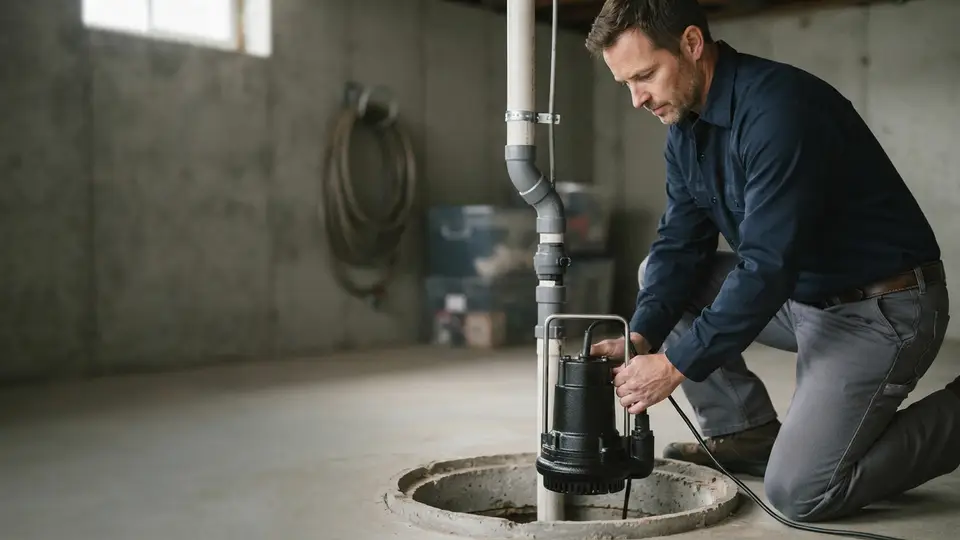
Submersible pump
Job: Main pump in basements and crawl spaces
Common failure: Worn motor, clogged intake
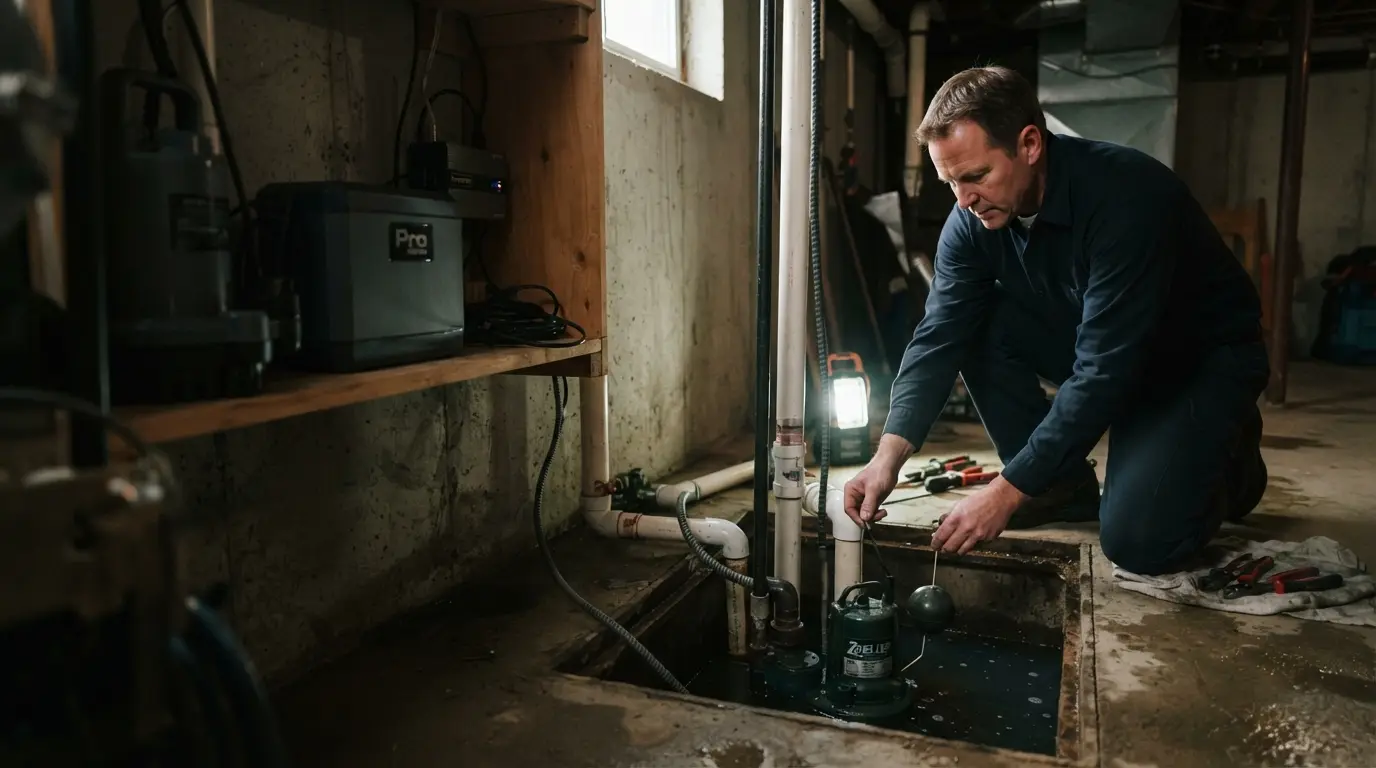
Water creeping into the basement every time it pours? Sump pump repair and installation in Alabama is how our plumbers keep it out. Alabama is one of the rainiest states in the country, and homes on hillsides around Birmingham and Huntsville, in low spots near rivers and along the coast take on water through basements and crawl spaces. A sump pump that fails in the middle of a storm can mean ruined floors, mold and a wet foundation. Here is how we repair, install and back up those pumps.
The service
Water that collects under and around a house drains through perimeter drains or gravel into a pit, the sump, set at the lowest point of a basement or crawl space. When the water rises, a float switch starts the pump, which pushes the water up through a discharge pipe and out away from the foundation. A check valve keeps it from flowing back. In crawl spaces, a smaller pump often pairs with a vapor barrier to keep standing water from building up under the floor.
Pumps and parts we service
Job: Main pump in basements and crawl spaces
Common failure: Worn motor, clogged intake
Job: Turns the pump on and off
Common failure: Stuck or tangled float
Job: Stops water flowing back
Common failure: Stuck open, causing rapid cycling
Job: Pumps during outages
Common failure: Dead battery
Job: Lifts waste from basement baths
Common failure: Clogged impeller, failed float
Why Alabama
Much of Alabama gets more than 50 inches of rain in a typical year, with spring storm systems and tropical rain in late summer and fall. Clay soil holds that water against foundations instead of letting it drain away.
Basements are more common in the hilly north and central parts of the state. Birmingham has 109,349 homes in our Census data, Hoover 39,594 and Huntsville 104,388, and many hillside houses there have daylight or partial basements where water from uphill collects against the back wall.
With 47% of the homes in our Alabama data built before 1980, many sit on crawl spaces. Standing water under those houses leads to rot, mold and pests, and a crawl space sump is often the fix.
Thunderstorms, tornado outbreaks and tropical systems knock out power right when pumps are needed most. Without a backup, the pit simply fills.
Warning signs
Our process
We test the pump through a full cycle, check the float, check valve and discharge line, clean the pit and intake and replace failed parts. If the pump cannot keep up with your water, we say so and size a replacement.
We size the pump to the pit and the water volume, set it on a stable base, install a check valve and route the discharge far enough from the house that it does not cycle right back. Where there is no pit, we dig and line one at the low point, often tied to a perimeter drain or crawl space drainage.
We install a second, battery-powered pump with its own float and an alarm. It takes over when the power fails or the main pump stops, and the alarm lets you know.
For basement bathrooms and laundry rooms below the sewer line, we repair and replace ejector pumps and sealed basins with proper venting.
Typical cost
We look at your setup and give you a written price before we begin.
Get a written price: (833) 733-2357A float or check valve costs less than a replacement pump.
Homes with heavy water need larger pumps.
Digging through a basement slab or crawl space floor adds labor.
Long runs or buried lines to daylight take more work.
Battery backups add equipment and installation time.
Benefits
Storage, finished rooms and mechanical equipment stay dry.
Dry crawl spaces protect floor framing and air quality.
A battery backup keeps pumping when the power fails.
Less water pressure against basement walls means fewer leaks and cracks.
Make sure the pump is plugged in and its breaker or GFCI outlet has not tripped. Unplug the pump before reaching into the pit, then check whether the float is stuck against the side or tangled in its cord.
If water is rising, lift stored items off the floor and keep away from water near electrical equipment. If you have an ejector pump, stop using the fixtures that drain to it. Then call us.
A sump pump removes water that reaches the pit; it does not stop water from reaching the house. If a pump runs constantly every time it rains, the bigger fix may be outside: clogged gutters, short downspouts, soil sloping toward the house or a missing perimeter drain. We look at where the water comes from during the visit and tell you plainly which fixes would cut the load on the pump, including ones outside our plumbing work.
Replacing a sump pump usually does not need a permit, but new pits, ejector systems and discharge connections can, depending on the city or county. Discharging sump water into a sanitary sewer is generally not allowed. Our plumbers are licensed through the Alabama Plumbers and Gas Fitters Examining Board, and we pull any permit required.
Why choose us
What you can count on every time one of our plumbers comes to your door.
Every job is handled by a plumber who holds the license your state or city requires, backed by liability insurance.
Our plumber explains the problem and the options, and you approve a written price before any work begins.
Burst pipes, sewage backups and failed water heaters get priority scheduling, including nights and weekends.
We pull permits when the job needs one and schedule the inspection, so the work holds up when you sell.
Repairs and installations come with a written warranty on labor, on top of the manufacturer's warranty on parts.
Our pages and plumbers account for your area's water, soil, climate and the age of the homes around you.
Service area
We service sump pumps in 594 Alabama communities:
It depends on the pump size, the pit and the discharge route. We give you a written price after looking at your setup.
For most basement homes, yes. Storms that bring heavy rain often cut power too, and a backup keeps water out.
Cutting a slab or digging a crawl space floor adds labor and materials. We quote it separately so you can compare.
We measure how fast the pit fills in wet weather and how high and far the water must travel to leave the house.
Yes. A crawl space sump with proper drainage keeps standing water from collecting under the house.
Out to daylight or a drainage area well away from the foundation, never into the sanitary sewer.
Not if water may reach outlets or appliances. Cut power to that area first or wait for us.
It can. Moisture under the house feeds mold, and air from the crawl space rises into living areas.
A replacement takes a few hours. A new pit or backup system can take most of a day.
Many last 7 to 10 years. Pumps that run often in wet years may wear out sooner.
Every spring and before hurricane season, and after any long dry spell.
A high water table, a stuck float, a failed check valve or water entering from outside. We find which.
Check the breaker, move belongings up and call us. Flooding calls get priority scheduling.
Many basement and crawl space homes do, given heavy rain, clay soil and hillside lots that send water toward foundations.
A replacement usually does not; new pits and ejector systems may. We handle the permit when needed.