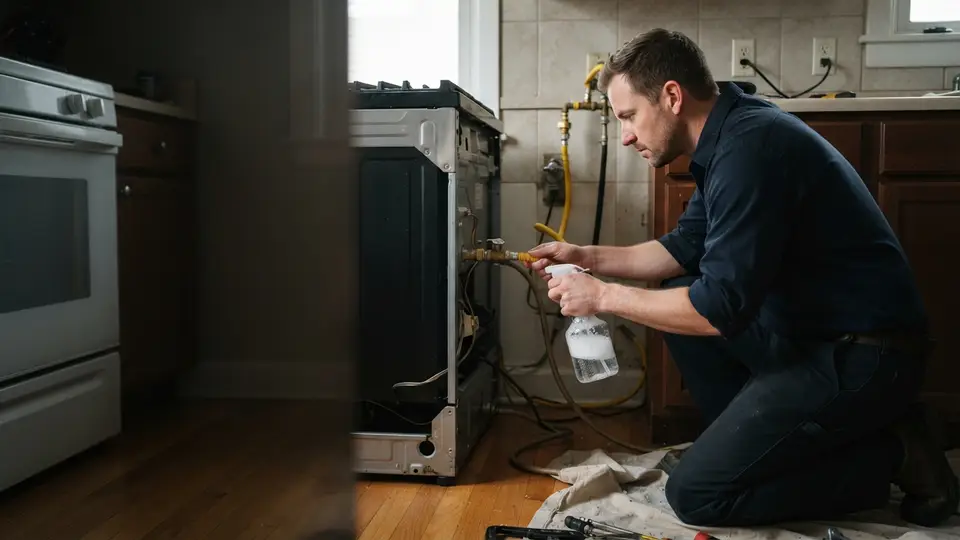
Leak repair
Typical reason: Corroded pipe, loose fittings, failed connectors or valves
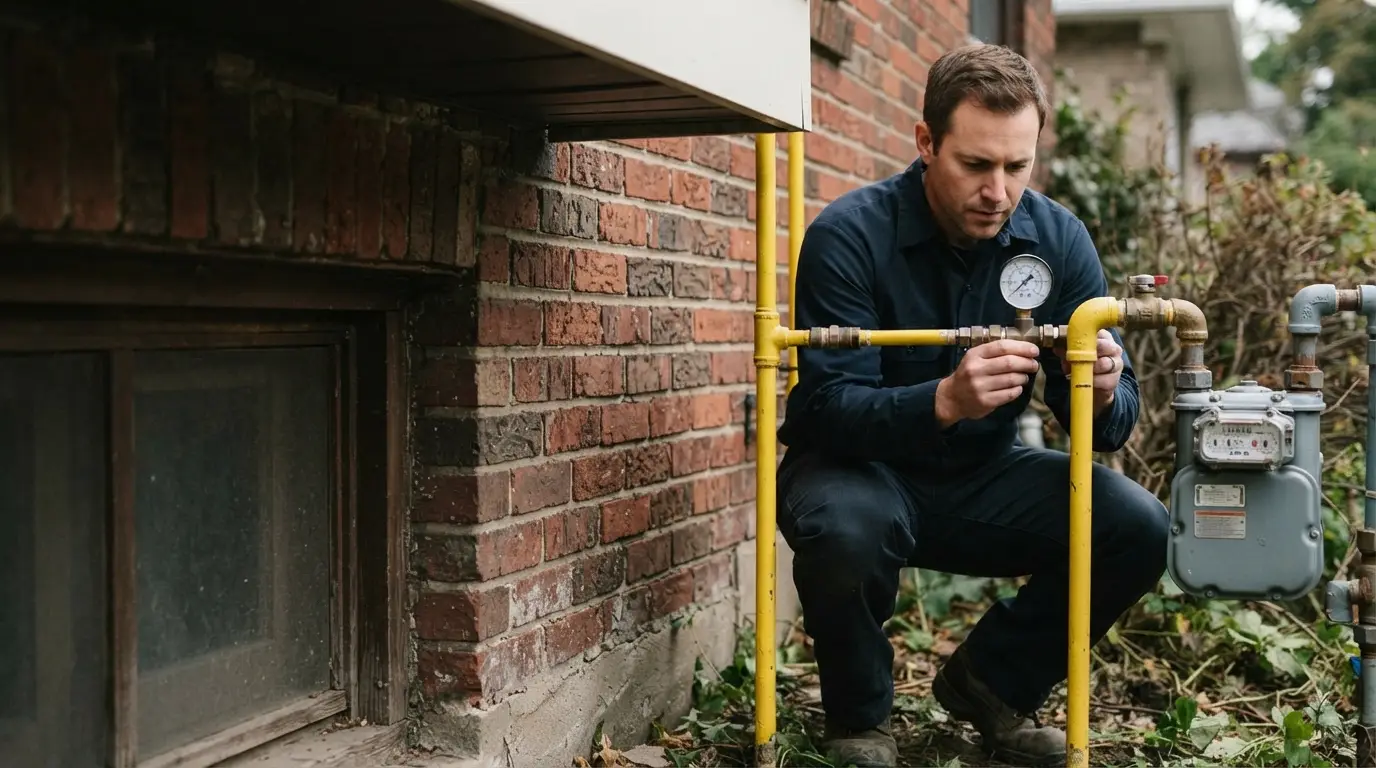
Gas smell by the furnace, or a new stove waiting on a line? Gas line repair and installation in Alabama is handled by our licensed gas fitters. Alabama homes run gas to furnaces, water heaters, ranges, dryers, fireplaces, generators and outdoor grills, through utility gas in the cities and propane in the countryside. Old steel pipe in crawl spaces, buried yard lines and new appliances that need more gas than the original piping can deliver are the jobs we see most. Here is what we do and how.
The service
Your gas supplier, whether a regional gas company, a city gas board or a propane dealer, is responsible for its meter or tank and regulator. The piping from there to each appliance belongs to the property owner. In Alabama, work on that piping must be done by a licensed gas fitter, which is the license our gas technicians hold.
Gas jobs we handle
Typical reason: Corroded pipe, loose fittings, failed connectors or valves
Typical reason: Range, dryer, fireplace, water heater or furnace
Typical reason: Whole-house generator for storm outages
Typical reason: Grills, fire pits, patio heaters, pool heaters
Typical reason: Tankless water heater or added appliances
Why Alabama
32% of homes in our Alabama Census data heat with utility gas and 2% with propane. Gas heat is common in Hoover (56%), Prattville (49%), Montgomery (47%) and Mobile (41%), and rare in Dothan (7%). Many electric-heat homes still use gas for cooking, hot water or a fireplace, and rural homes often run propane.
Black steel gas pipe under older houses sits in humid air for decades. Rust forms at threads and where pipe rests on soil or masonry, and eventually a joint starts to leak.
Yard lines to detached garages, pool heaters and generators run through clay that moves with wet and dry seasons. Older buried steel loses its coating and corrodes; shallow lines get struck during digging.
Standby generators have become common in Alabama because of tornado and hurricane outages. A generator can draw a lot of gas, and the existing meter and piping must be checked to see whether they can carry the added load.
Warning signs
Our process
After the supplier has made the area safe, we test the system to confirm the leak, trace it with electronic detectors and bubble solution, and replace the failed pipe, fitting, valve or connector. The whole system is pressure tested before gas is restored and appliances relit.
We size new piping for the combined load of every appliance, choose the route, install shutoff valves and sediment traps at each appliance, support and protect the pipe and pressure test it for the inspector. Buried lines get the right pipe for underground use and a call to Alabama 811 first.
We connect ranges, dryers, water heaters, furnaces, fireplaces, generators and outdoor appliances with approved connectors, leak test each joint and confirm the burners light and burn cleanly.
Typical cost
You get a written price for the full job, permit included, before work starts.
Get a written price: (833) 733-2357Short runs in an open crawl space cost less than runs through finished walls or underground.
Generators and tankless heaters may require larger pipe or a meter upgrade from the supplier.
Trenching through clay, roots and landscaping adds labor.
Most gas work needs a permit and pressure test inspection.
Shutoffs, relights and meter changes are scheduled with your gas company.
Benefits
Tested joints and correct venting keep gas and carbon monoxide out of the living space.
Correctly sized pipe delivers full pressure to every burner.
Permitted, inspected gas work satisfies insurers and buyers.
A properly sized generator line keeps the lights on when storms hit.
If you smell gas, leave first and call from outside. If your supplier tells you to shut the gas off and you can reach the meter safely, turn the valve a quarter turn so the handle is crosswise to the pipe. For propane, close the valve on top of the tank. Leave it off until the system has been checked.
For a planned installation, clear access to the crawl space, the appliance location and the path to the meter. Do not connect or tighten gas fittings yourself.
A whole-house generator needs a dedicated line sized for its full fuel draw while other gas appliances run. We calculate that load, confirm with your supplier whether the meter can deliver it, run the line to the generator pad with a shutoff and sediment trap and pressure test it. We also make sure the gas connection and the generator placement meet the clearance rules in the installation manual. On propane, we size the line for the tank and regulator setup the supplier provides.
Alabama licenses gas fitters through the Alabama Plumbers and Gas Fitters Examining Board, and our gas work is done by fitters holding that license. New gas piping and most repairs need a permit and a pressure test inspection from the city or county before the supplier will turn gas on. We pull the permit, schedule the inspection and coordinate with your supplier.
Why choose us
What you can count on every time one of our plumbers comes to your door.
Every job is handled by a plumber who holds the license your state or city requires, backed by liability insurance.
Our plumber explains the problem and the options, and you approve a written price before any work begins.
Burst pipes, sewage backups and failed water heaters get priority scheduling, including nights and weekends.
We pull permits when the job needs one and schedule the inspection, so the work holds up when you sell.
Repairs and installations come with a written warranty on labor, on top of the manufacturer's warranty on parts.
Our pages and plumbers account for your area's water, soil, climate and the age of the homes around you.
Related services
Service area
We repair and install gas lines across 594 Alabama communities:
Distance, route, pipe size, digging and permit fees set the price. We give you a written figure for the whole job first.
It depends on the generator's fuel draw, distance from the meter or tank, and whether the meter needs upgrading. We quote after measuring.
By how hard the leak is to find and reach and what has to be replaced. You get the repair price in writing once it is located.
Yes. We connect them with approved connectors and shutoff valves and leak test every joint.
Often not without upsizing. We add up the load of every appliance and tell you what the line needs.
Yes, from the supplier's regulator to your appliances. The propane company handles the tank itself.
Leave immediately, avoid switches and flames, and call your gas supplier or 911 from outside. Call us for the repair.
Near sleeping areas and on each level of the home. Test them monthly and replace them as the maker recommends.
A simple appliance line often takes a few hours. Generator and buried lines can take a day or more, plus inspection.
Once the line passes its pressure test and, where required, inspection. Then the supplier or our fitter restores service.
Keep the crawl space dry with a vapor barrier and good drainage, and have rusted sections replaced before they leak.
Once a year for furnaces and water heaters is a good habit, and any time you notice odd flames or smells.
Yes. Get out, call from outside and keep everyone away until the supplier or fire department says it is safe.
Tornadoes, thunderstorms and hurricanes cause long outages, so many owners add standby generators fed by gas or propane.
A gas fitter licensed by the Alabama Plumbers and Gas Fitters Examining Board. Our fitters hold that license and pull the permits.