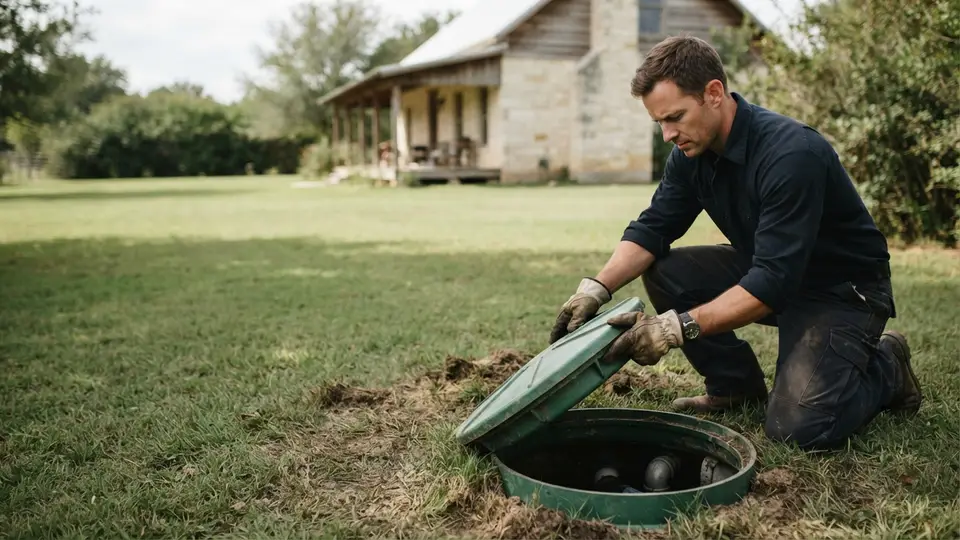
Pumping
What we do: Empty sludge and scum, check baffles and filter
Typical timing: Every three to five years for most homes
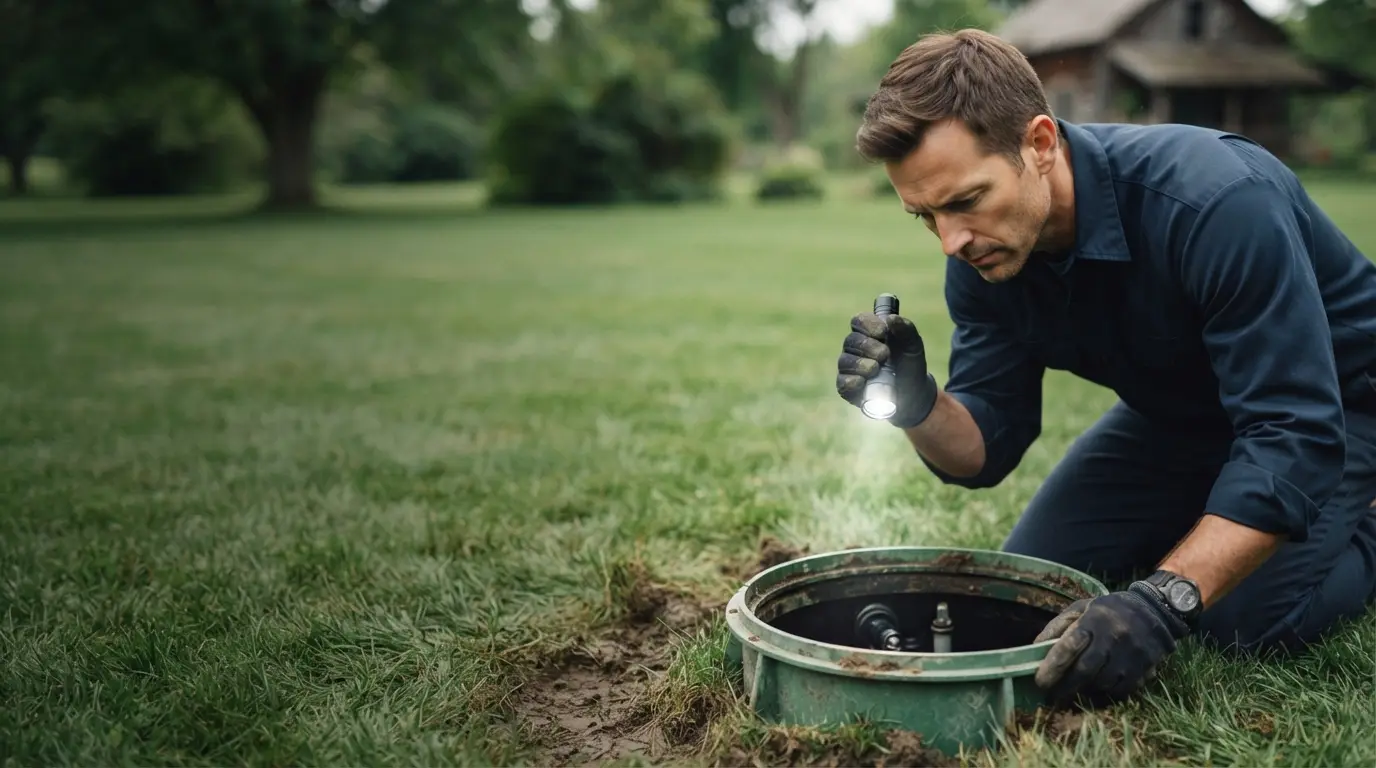
Every drain slow, or a wet spot over the field? Septic tank services in Alabama from our plumbers include pumping, inspection and field repair. A large share of Alabama homes, especially in rural counties and on the edges of growing towns, rely on a septic system instead of a city sewer. Red clay, heavy rain and high water tables near the coast and rivers all test those systems. Here is how they work, what makes them fail, how we service them and what the state health rules say.
The service
Wastewater from the house flows into a buried tank, where heavy solids sink and form sludge while grease and light material float as scum. Bacteria break down part of the solids. The liquid in between, called effluent, flows out to the drain field, a network of perforated pipe or chambers in gravel trenches, and soaks into the soil, which filters and treats it.
Where the soil is too tight, too wet or too shallow, Alabama properties may use engineered systems: low-pressure pipe fields, mound systems or aerobic treatment units with pumps, timers and alarms.
Septic services we provide
What we do: Empty sludge and scum, check baffles and filter
Typical timing: Every three to five years for most homes
What we do: Check the tank, components and field condition
Typical timing: Before buying or selling, or when trouble starts
What we do: Locate failures, repair lines, replace trenches
Typical timing: When the field is pooling or backing up
What we do: Repair pumps, floats, timers, alarms
Typical timing: When an alarm sounds or a pump stops
Why Alabama
Our Census data counts 397 Alabama towns and communities with fewer than 2,500 residents, together home to 312,102 people, and many of those homes are on septic. So are a great many houses in the countryside between towns, outside any Census place.
Alabama's red clay and the dense prairie soils of the Black Belt absorb water slowly. A drain field in that ground has less room for error, and an overloaded system shows it fast.
Alabama gets a lot of rain, and long wet spells or tropical storms can saturate a drain field until it cannot take more water. Drains slow or back up until the ground dries.
Near the Gulf Coast and along river bottoms, groundwater sits close to the surface. Fields there need careful design, and tanks can even shift if pumped out when the ground is saturated.
The most common cause of a failed field is a tank that went too long without pumping, letting sludge escape into the trenches.
Warning signs
Our process
We find and uncover the lids, measure the sludge and scum, pump out the tank and look over the inlet and outlet baffles and any effluent filter. We tell you if anything needs repair and, if lids are buried deep, offer to install risers.
An inspection covers the tank structure and levels, baffles, filters, distribution box, pumps and alarms, plus a walk of the drain field for wet spots or surfacing effluent. You get a written report you can share with a buyer, lender or your county health department.
We find out why the field is failing before proposing a fix. Broken lines, a tilted distribution box or roots can often be repaired. A field ruined by solids or undersized for the house needs replacing, which requires a permit through the county health department.
Typical cost
You see a written price before any repair, and we explain what each part of the work is for.
Get a written price: (833) 733-2357Bigger tanks and buried lids take longer; risers save time on every future visit.
Engineered and aerobic systems have more parts to check than a gravity field.
Remote rural properties may carry a trip charge.
Repairing a line costs far less than building a new field with permit and design.
Benefits
Keeping solids out of the trenches protects the costliest part of the system.
A tank with room to spare handles rainy weeks and full houses.
A working system keeps sewage out of the groundwater many rural homes drink.
A recent inspection report answers buyer and lender questions.
Cut back on water: postpone laundry, run the dishwasher only when needed and keep showers short. If an alarm is going off, silence it at the panel but leave the pump breaker on unless we say otherwise.
Keep vehicles and people off a wet drain field and never open or lean into a septic tank, since the gases inside can be deadly. Call us and let us know when the tank was last pumped, if you know.
Onsite sewage systems in Alabama are regulated by the Alabama Department of Public Health, and permits for new systems, repairs and replacements are issued through the county health department. Systems are installed and serviced by people licensed under those rules. Requirements vary with soil and site, so the county may require a soil evaluation before approving a new field.
Our plumbers are licensed through the Alabama Plumbers and Gas Fitters Examining Board for the house plumbing side, and we coordinate the septic permit and inspection with your county health department. Confirm current local requirements with the county before any purchase or major repair.
Why choose us
What you can count on every time one of our plumbers comes to your door.
Every job is handled by a plumber who holds the license your state or city requires, backed by liability insurance.
Our plumber explains the problem and the options, and you approve a written price before any work begins.
Burst pipes, sewage backups and failed water heaters get priority scheduling, including nights and weekends.
We pull permits when the job needs one and schedule the inspection, so the work holds up when you sell.
Repairs and installations come with a written warranty on labor, on top of the manufacturer's warranty on parts.
Our pages and plumbers account for your area's water, soil, climate and the age of the homes around you.
Service area
Smaller Alabama towns where we provide septic service:
Tank size, how deep the lids are and the distance to your home set the price. We give you a written figure before the truck starts.
It depends on the system type and access. Aerobic and engineered systems take longer. The price includes a written report.
It needs a site evaluation, permit, design and new trenches or an engineered system. Regular pumping is the cheapest way to avoid one.
Tank condition and levels, baffles, filters, distribution box, pumps and alarms, and the drain field for wet spots or surfacing effluent.
Yes. Risers bring access up to ground level so the tank can be pumped and inspected without digging each time.
Sometimes. Broken pipe, a tilted distribution box or roots can be repaired. A field clogged with solids usually has to be replaced.
No. The gases can kill quickly and an open tank is a fall hazard. Leave the lids closed and let our crew handle it.
Yes. A failing system can contaminate nearby wells. If your field is failing, have your well water tested.
Usually an hour or two for a home tank, longer when the lids are buried or the tank is large.
Repairs can take a day. A new field takes a few days of work, after the county approves the permit and design.
Most homes every three to five years. Bigger households, small tanks and garbage disposals shorten that interval.
A system in normal use does not need them, and some can push solids into the field. Pumping on schedule works better.
Stop using water, keep people and pets away and call us. We pump or clear the line first, then find the cause.
Alabama clay soils absorb slowly, and long rains saturate the field until it cannot accept more water from the tank.
The county health department, under Alabama Department of Public Health rules. We coordinate the permit and inspection with them.