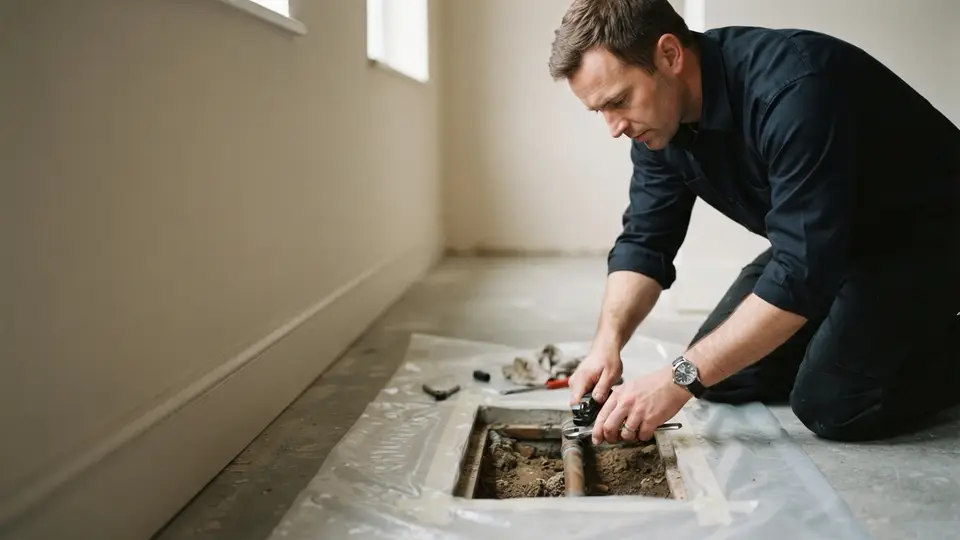
Spot repair through the slab
What happens: Cut a small opening, fix the pipe, patch the concrete
When we suggest it: One leak in pipe that is otherwise sound
Warm tile, damp carpet or a hiss under the floor? Slab leak repair in Alabama is work our plumbers handle with care for your floors. Older Alabama houses often sit over crawl spaces, but most homes built in the last few decades are on concrete slabs, with water lines below or inside the concrete. When one of those lines leaks, the water spreads under the floor and into the soil. Here we explain why slab leaks happen in Alabama, how we find them, the repair options and what affects cost.
The service
A slab leak is any leak in pipe buried under or within a concrete foundation. Supply lines carry water under pressure, so even a pinhole pushes out a steady stream that can soak the soil and work up through cracks and seams in the floor. Drain lines under the slab can leak too, more slowly, often noticed as odor or settling.
Repair options for slab leaks
What happens: Cut a small opening, fix the pipe, patch the concrete
When we suggest it: One leak in pipe that is otherwise sound
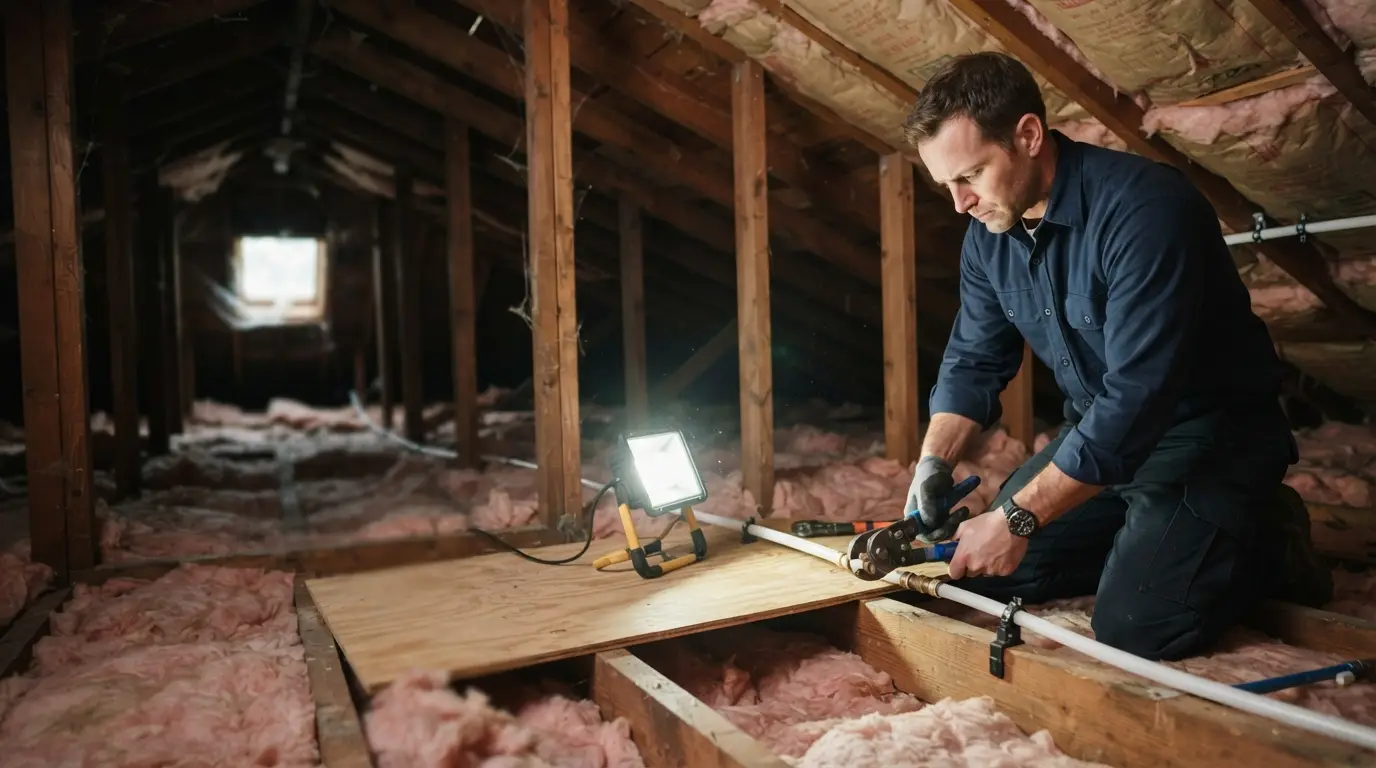
What happens: Run a new line through walls or attic, abandon the old one
When we suggest it: Leaks under tile or cabinets, or a second leak
What happens: Replace all supply lines above the slab
When we suggest it: Several leaks or failing pipe throughout
Why Alabama
27% of homes in our Alabama Census data were built since 2000, and many more date from the 1980s and 90s. Fast-growing cities are full of them: the median home in Madison was built in 2001, in Hoover in 1994, in Prattville in 1995 and in Auburn in 2001. Many of these homes sit on slabs with copper or plastic supply lines underneath.
Alabama clay swells in wet months and shrinks in late-summer droughts. The slab and the soil under it move a little each cycle, and pipes rub against gravel, rebar or the concrete itself until they wear through.
Hot lines expand and contract every time they are used. That motion against concrete, combined with heat, makes them the most common source of slab leaks.
Pipe nicked during the pour, fittings buried under the slab and lines without protective sleeves at the concrete edge all leave weak spots that fail years later.
Warning signs
Our process
We verify the leak at the meter, then test hot and cold lines separately to see which is losing water. Electronic listening equipment picks up the sound of water escaping under the concrete, and a thermal camera often traces a hot line's path. We mark the floor where the leak is so any opening is small and in the right place.
For a direct repair we protect the room, cut a neat opening, dig to the pipe and replace the damaged piece. After a pressure test, we backfill, compact and patch the concrete. Floor coverings over the opening have to come up, and we talk through that with you first.
Rerouting takes the leaking line out of service and replaces it with new pipe run through walls or the attic. It avoids breaking tile or moving cabinets and ends the risk of another leak in that buried pipe. In Alabama attics, we insulate new lines against winter freezes.
Typical cost
Once the leak is located, we give you written prices for each option that fits your home.
Get a written price: (833) 733-2357Spot repair, reroute and repipe are priced very differently.
Tile and hardwood cost more to lift and replace than carpet.
Under cabinets, tubs or interior walls takes extra work.
Single-story homes with attic access are usually simpler to reroute.
Reroutes and repipes often need one; the fee is in your quote.
Benefits
Water under a slab softens clay and can lead to settling.
Early repair limits mold and rot in humid weather.
Hot water slab leaks waste both water and the energy to heat it.
A reroute removes the old buried pipe from use entirely.
Check the meter with everything off. If it moves, close the cold water valve on top of the water heater for a few minutes; if the meter stops, the leak is probably on a hot water line, which is useful for us to know.
If water is coming through the floor, close the main valve, turn off breakers for outlets near the water and move furniture and rugs. Take photos for insurance, then call us.
Many older Alabama houses, especially in cities where most homes predate 1980, sit on raised floors over a crawl space instead of a slab. Their supply lines run under the house where we can see and reach them, so a leak there is a crawl space repair rather than a slab job. Some homes mix both: an original house on piers with a later addition on a slab. When we test for a leak, we check which part of the house each line serves so we look in the right place.
Coverage differs from policy to policy. Many pay to tear out and replace the floor to reach the leak, and some cover resulting water damage, while the pipe itself is often excluded. We provide photos, readings and a written description of the leak to support your claim.
Spot repairs may not need a permit, but reroutes and repipes generally do, from the city or county. Our plumbers are licensed through the Alabama Plumbers and Gas Fitters Examining Board, and we pull permits and schedule inspections.
Why choose us
What you can count on every time one of our plumbers comes to your door.
Every job is handled by a plumber who holds the license your state or city requires, backed by liability insurance.
Our plumber explains the problem and the options, and you approve a written price before any work begins.
Burst pipes, sewage backups and failed water heaters get priority scheduling, including nights and weekends.
We pull permits when the job needs one and schedule the inspection, so the work holds up when you sell.
Repairs and installations come with a written warranty on labor, on top of the manufacturer's warranty on parts.
Our pages and plumbers account for your area's water, soil, climate and the age of the homes around you.
Related services
Service area
We fix slab leaks across 594 Alabama communities:
The method, the floor covering and the leak location decide it. After we locate the leak, you get written prices for each workable option.
It can be, particularly under tile, cabinets or tubs. It also retires the old buried line, so that pipe cannot leak again.
Often for access and water damage, less often for the pipe. Policies vary, so we document everything for your claim.
We test hot and cold lines separately, then use acoustic listening and thermal imaging to mark the exact spot before cutting.
Usually PEX or copper, depending on the route. Attic runs are insulated against Alabama winter freezes.
Only over the repair spot for a direct repair. Reroutes usually avoid the floor entirely.
It can damage the foundation, feed mold and put water near outlets. Shut off the water and power to wet areas.
Yes. Water softens and moves the clay under the slab, which can lead to settling and cracks if the leak runs long.
Spot repairs are often done in a day. Reroutes usually take one to two days, and repipes several.
No. We shut it off while working on the line and restore it at the end of the day where possible.
Close the cold supply valve at the water heater. If the meter stops moving, the leak is likely on the hot side.
Keep pressure moderate, manage drainage around the foundation and reroute old under-slab lines after a first leak.
If water is coming up through the floor, yes. Shut off the main and call us. A slow leak should still be fixed soon.
Moving clay soils, hot water lines rubbing against concrete and weak spots from construction wear pipes over time.
Reroutes and repipes usually do. We pull the permit from your city or county and arrange the inspection.