Galvanized steel
Era: Before about 1970
Why it fails: Rusts inside, chokes flow, stains water
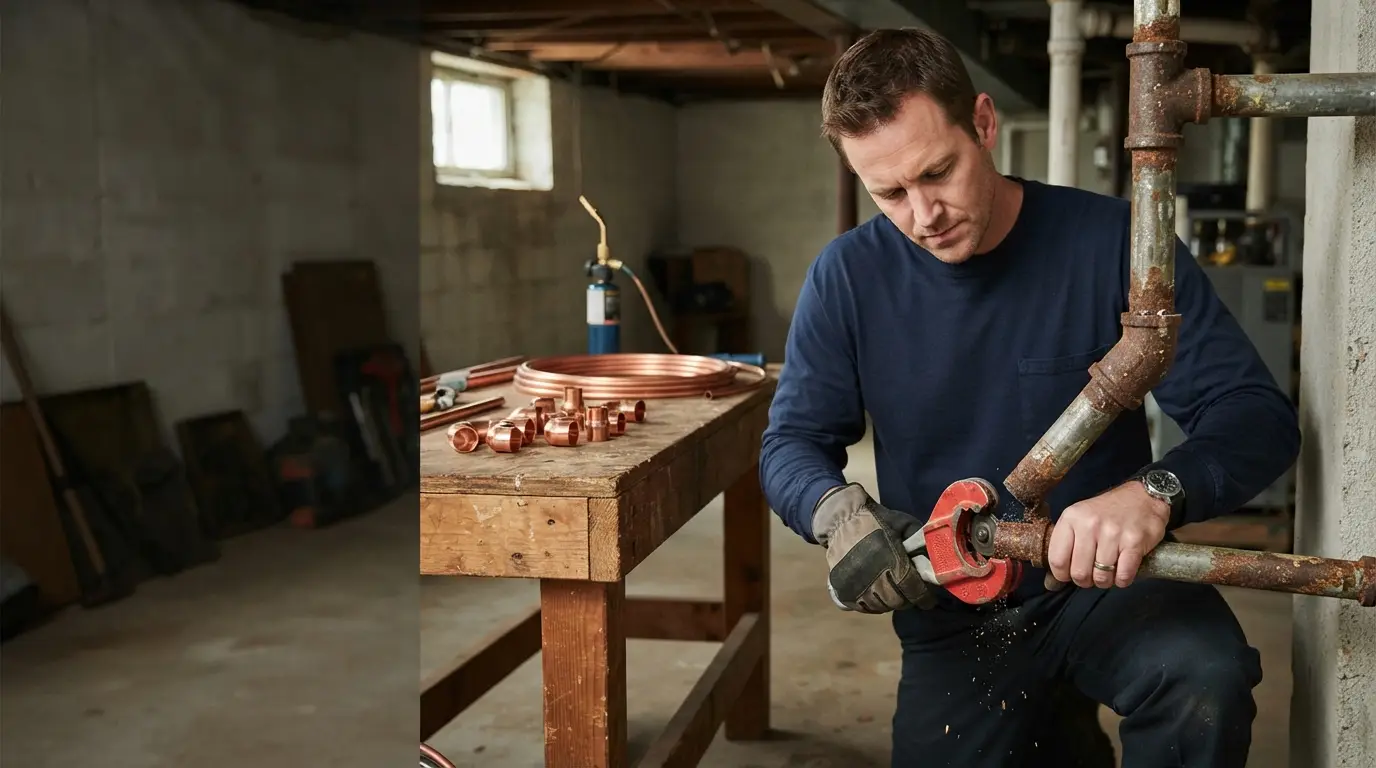
Brown water from the tap, or leaks that keep coming? Repiping and water line replacement in Alabama from our plumbers puts new pipe where the old pipe failed. Alabama has a lot of homes from the 1940s through the 1970s with galvanized steel that is rusting shut, and a lot from the 1980s and 90s with polybutylene that can split without warning. When repairs pile up, new pipe is usually the cheaper path. This page covers when to repipe, how we do it, the yard line, and the costs.
The service
Repiping replaces the water supply piping inside a house, from where the line enters to every faucet, toilet and appliance. Water line replacement deals with the buried service line between the meter and the house. Drains and sewers are separate systems; this page is about the pipes that carry clean water under pressure.
Pipe we commonly replace in Alabama
Era: Before about 1970
Why it fails: Rusts inside, chokes flow, stains water
Era: About 1978 to 1995
Why it fails: Pipe and fittings crack and split
Era: 1960s onward
Why it fails: Pinholes and worn joints
Era: Varies
Why it fails: Leaks, root damage, breaks from settling
Why Alabama
19% of the homes in our Alabama Census data were built before 1960 and 47% before 1980. In Birmingham 72% of homes predate 1980, in Mobile 61% and in Tuscaloosa 42%. Galvanized lines in houses that age are often down to a fraction of their original opening, which is why the shower trickles when someone runs the kitchen sink.
Alabama suburbs grew quickly in the years polybutylene was popular. That gray plastic pipe is no longer allowed in new work under current codes, and many insurers and buyers want it gone.
Supply lines that run through vented crawl spaces take a beating in hard freezes. Lines that have split and been patched several times are good candidates for replacement, run where they are better protected.
Most Alabama water is moderately soft to moderately hard, but well water in limestone areas of north Alabama can be hard, and some supplies are corrosive to older metal pipe. We look at what your water is doing to your pipes when we inspect.
Warning signs
Our process
If the problem is one section, we replace it and test the system. We give you a straight answer on the condition of the rest so you can plan.
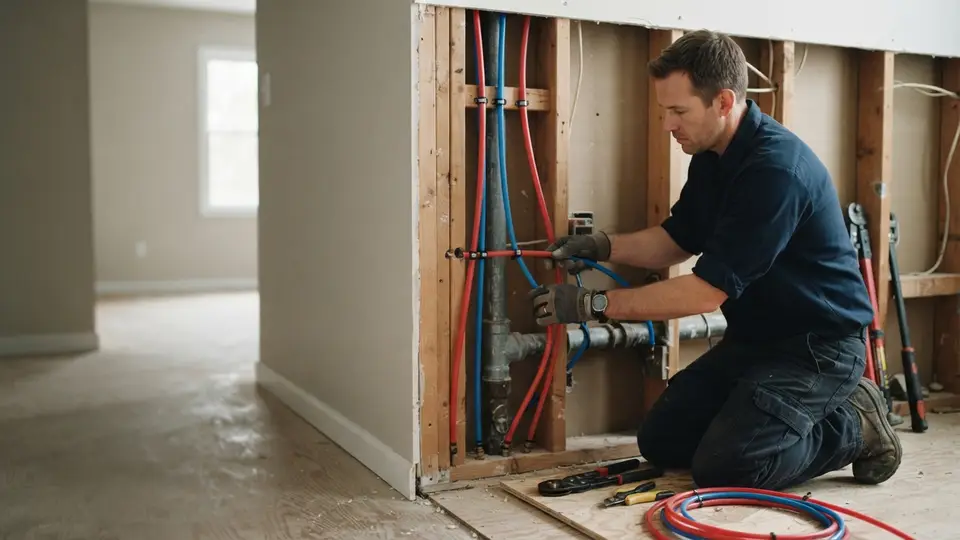
In crawl space homes, most of the new pipe goes under the house, which keeps wall openings to a minimum. In slab homes, we route lines through the attic and walls. We use PEX or copper, add shutoff valves at fixtures, insulate lines in cold spaces, pressure test the system and patch the openings.
For a leak in the service line, we locate it, dig to it and replace the failed section. If the line has leaked before or is old galvanized, replacing it usually makes more sense.
We install a new service line from the meter to the house, by trench or by boring where trees, walks and driveways are in the way. Alabama 811 marks buried utilities before we dig.
Typical cost
We inspect the existing pipe and give you a written price before any work starts.
Get a written price: (833) 733-2357More bathrooms and floors mean more pipe and more openings.
Crawl space homes are often simpler to repipe than slab homes.
PEX usually costs less to install than copper.
Length, depth and what sits over it set the price of a service line.
Drywall and plaster repair and permit fees are listed in your quote.
Benefits
New pipe delivers full flow to every fixture at once.
No more rust from corroded galvanized lines.
One planned project replaces a string of emergency repairs.
Polybutylene and failing galvanized are common red flags.
If a pipe is leaking, shut off the main water and open a low faucet to drain the lines. Keep power away from wet areas and catch drips in a bucket.
For a planned repipe, clear access to the crawl space door, the attic hatch and the cabinets under sinks. Let us know about plaster walls or finishes you want handled carefully.
On the first day we protect floors and furniture, open the crawl space or attic and lay out the new runs. Over the next days we install the new lines in sections, connecting one bathroom or the kitchen at a time while the rest of the house keeps its old supply. Water goes off only for the hours it takes to tie a section in, and it comes back on before we leave each afternoon.
When everything is connected, we pressure test the whole system, flush the lines, check every fixture for flow and leaks and call for the inspection. Patching follows once the inspector has signed off on any open walls.
Homes built before 1986 may have lead solder on copper joints, and some very old houses were connected with lead service lines. If your house is that age, a water test can tell you whether lead is present. Replacing old supply pipe and the service line removes those sources inside your property. Your water utility can tell you what its own records show about the line on the street side.
Repiping a house and replacing a water service line usually require a permit and inspection from the city or county in Alabama. Our plumbers are licensed through the Alabama Plumbers and Gas Fitters Examining Board, and we pull the permit, call 811 before digging and schedule each inspection.
Why choose us
What you can count on every time one of our plumbers comes to your door.
Every job is handled by a plumber who holds the license your state or city requires, backed by liability insurance.
Our plumber explains the problem and the options, and you approve a written price before any work begins.
Burst pipes, sewage backups and failed water heaters get priority scheduling, including nights and weekends.
We pull permits when the job needs one and schedule the inspection, so the work holds up when you sell.
Repairs and installations come with a written warranty on labor, on top of the manufacturer's warranty on parts.
Our pages and plumbers account for your area's water, soil, climate and the age of the homes around you.
Related services
Service area
We repipe homes in 594 Alabama communities. Pick yours:
It depends on the size of the house, the number of bathrooms, crawl space or slab, and the pipe material. We give a written price after a walk-through.
Length, depth, soil and what sits over the line set the price. Boring under driveways costs more than trenching open ground.
Usually, yes, to install. Both last a long time; we explain which fits your house and budget.
Most new pipe runs under the house, with short runs up into walls to each fixture, so openings stay small.
Often, yes. We disconnect and cap it where removing it would mean opening more walls than needed.
We can include patching in the quote, so you know what condition walls will be in when we finish.
It does not affect water quality, but it can fail suddenly and flood a home. Many owners replace it before it fails.
Rust is mostly a taste and stain issue, but old galvanized can hold lead from past service lines or solder. Testing is wise.
Most homes take two to five working days, plus the inspection. Crawl space homes often go faster.
Yes. Water is off only while we tie in sections, and we restore it at the end of each day.
Close crawl space vents, keep insulation in place and let faucets drip on very cold nights.
If it is hard or corrosive, yes. Treatment protects the new pipe, fixtures and water heater.
Shut off the main and call us. We fix the break right away so you have water until the project starts.
Many date from the galvanized era before 1970 or the polybutylene years of the 1980s and 90s, and both materials wear out.
Usually, yes. We pull the permit from the city or county and arrange the inspection.