White scale on fixtures, spotty dishes
Likely cause: Hard water
What fixes it: Water softener
Rotten-egg smell, orange stains or scale on the faucets? Water softeners and filtration in Alabama from our plumbers fix the water problem you actually have. Alabama water is not one thing. Many city systems draw from rivers and lakes and deliver fairly soft water treated with chlorine or chloramine, while wells in limestone areas of north Alabama can be hard, and wells elsewhere may carry iron, sediment or a sulfur odor. This page explains how we test, which systems solve which problems, and what installation and upkeep involve.
The service
These are three different tools. A water softener removes the calcium and magnesium that cause scale, using resin that is recharged with salt. A whole-house filter removes things like chlorine taste, sediment, iron or sulfur, depending on the media inside. A reverse osmosis unit, usually under the kitchen sink, pushes water through a fine membrane to remove most dissolved substances for drinking and cooking. Many Alabama homes need only one of these; some need two.
Matching the problem to the system
Likely cause: Hard water
What fixes it: Water softener
Likely cause: City water disinfectant
What fixes it: Whole-house carbon filter
Likely cause: Iron in well water
What fixes it: Iron filter, sometimes with a softener
Likely cause: Hydrogen sulfide in well water
What fixes it: Oxidizing filter or aeration system
Likely cause: Sediment
What fixes it: Sediment filter
Likely cause: Dissolved solids
What fixes it: Reverse osmosis at the sink
Why Alabama
Many larger Alabama systems take water from rivers and reservoirs, which tends to be softer than groundwater. The common complaint on city water is the taste and smell of chlorine or chloramine, which a carbon filter handles well.
Limestone underlies much of north Alabama, and wells drilled into it pick up calcium and magnesium. Homes on those wells often see heavy scale in water heaters, fixtures and dishwashers.
Our Census data counts 397 Alabama towns and communities with fewer than 2,500 people, and many homes in and around them rely on private wells. Depending on the aquifer, well water can carry dissolved iron, which stains fixtures and laundry orange, or hydrogen sulfide, which smells like rotten eggs.
With 47% of homes in our Alabama data built before 1980, some discolored water comes from inside the house, from rusting galvanized pipe, not the source. A water test helps tell the two apart.
Warning signs
Our process
We test for hardness, iron, pH and chlorine on site, and note smells and stains. For wells, we may recommend a certified lab test for bacteria and other contaminants that a field kit cannot measure.
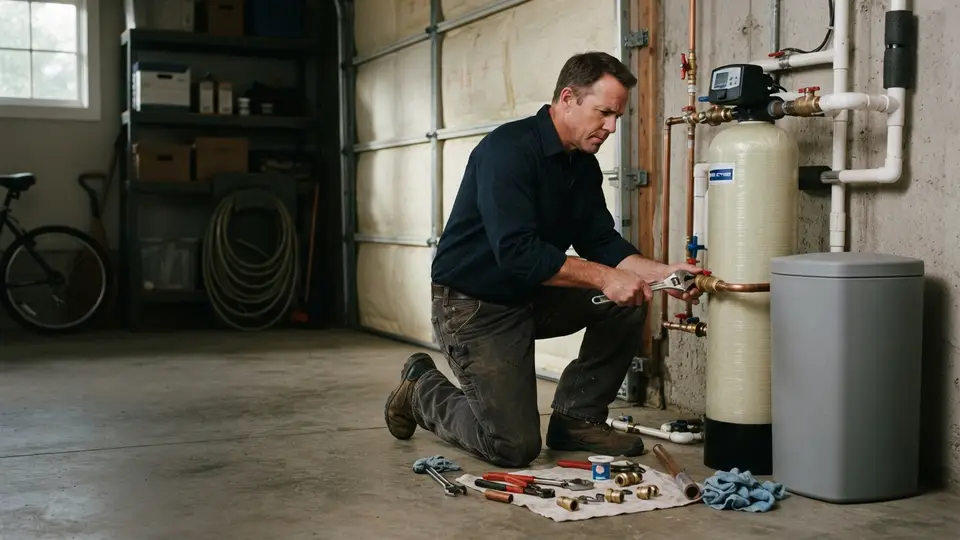
We size the softener to your hardness and water use, install it on the main line with a bypass, connect the drain line with an air gap and program regeneration. On homes without an obvious spot, we find a protected location in a garage, utility room or insulated enclosure.
We install carbon filters for chlorine taste, sediment filters for grit, and iron and sulfur systems for well water, in the right order so each one protects the next. Bypass valves make cartridge changes simple.
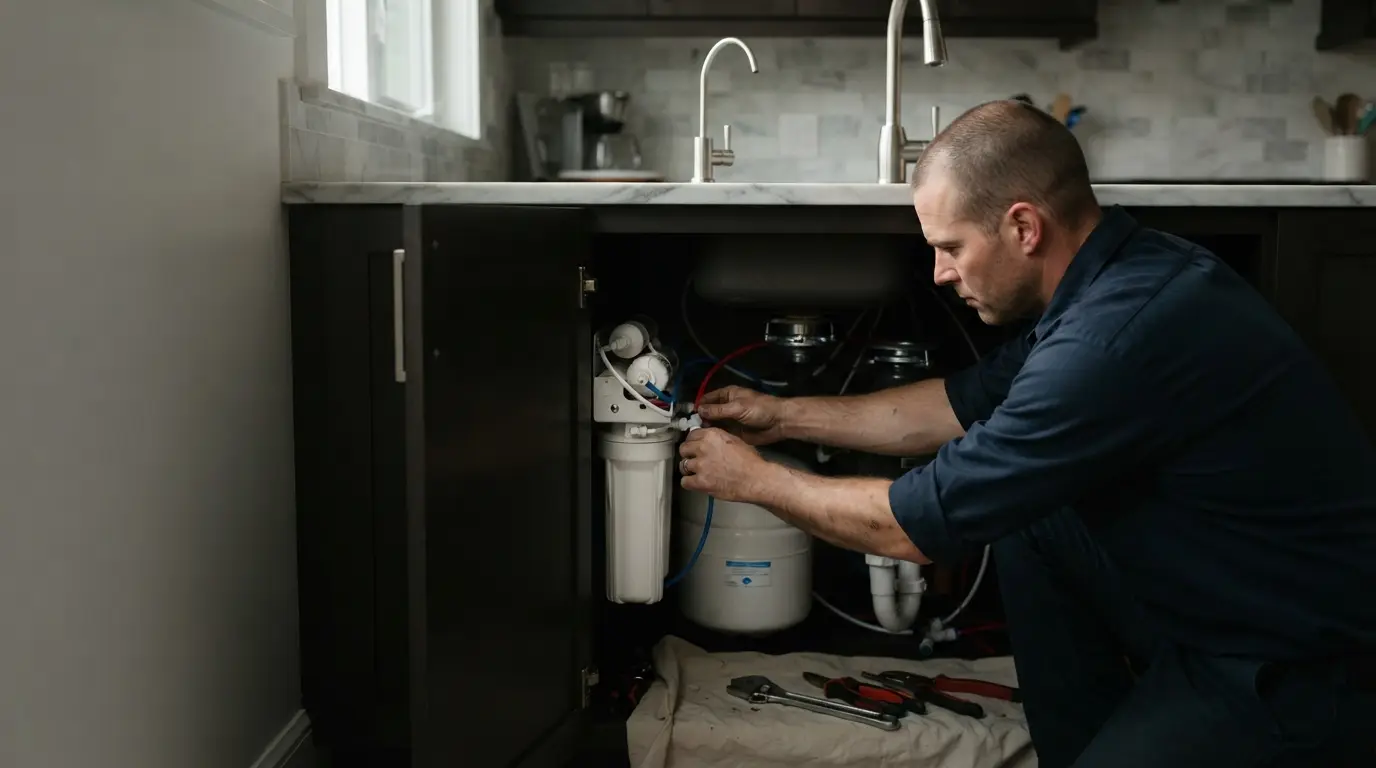
We install under-sink reverse osmosis units with their own faucet and can run a line to the refrigerator's water and ice maker.
Typical cost
After testing, you get a written price for the equipment that solves your problem and nothing more.
Get a written price: (833) 733-2357Iron and sulfur systems cost more than a simple carbon filter.
More people and bathrooms need more capacity.
Adding a loop, drain or enclosure takes more work.
Filtration plus softening plus reverse osmosis adds equipment.
Salt, cartridges and membranes are ongoing costs we explain up front.
Benefits
Iron filtration ends orange rings in toilets and on laundry.
Carbon and reverse osmosis remove chlorine taste and off flavors.
Less scale and sediment in water heaters and dishwashers.
Sulfur treatment removes the rotten-egg odor from showers and sinks.
If a softener or filter is leaking, turn its bypass valve so water goes around it, and unplug the control head. If the brine tank is overflowing, unplug the unit and close the bypass.
If a sulfur smell appears only on the hot side, the water heater's anode rod may be reacting with the water; mention it when you call. For wells, gather any past lab results so we can review them.
Many Alabama homes with well water also have septic systems. Softener and filter backwash adds water to the tank, and very frequent regeneration can add up. We set regeneration by actual water use instead of a fixed timer, choose efficient models, and can route iron filter backwash away from the septic system where local rules allow. If your drain field is already struggling, tell us so we can plan around it.
When floodwater covers a wellhead or a storm damages the well cap, surface water can get into the well. Do not drink the water until it has been disinfected and a lab test comes back clean; your county health department can explain how to get a sample tested. Filters and softeners that sat in floodwater should be checked before use, since their control heads and media can be ruined. We inspect and replace damaged treatment equipment and can install a cartridge stage that is easy to change after storms.
Installing water treatment on existing piping often needs no permit, while new drain connections or rerouted piping may, depending on the city or county. Our plumbers are licensed through the Alabama Plumbers and Gas Fitters Examining Board and pull permits whenever the work calls for one.
Why choose us
What you can count on every time one of our plumbers comes to your door.
Every job is handled by a plumber who holds the license your state or city requires, backed by liability insurance.
Our plumber explains the problem and the options, and you approve a written price before any work begins.
Burst pipes, sewage backups and failed water heaters get priority scheduling, including nights and weekends.
We pull permits when the job needs one and schedule the inspection, so the work holds up when you sell.
Repairs and installations come with a written warranty on labor, on top of the manufacturer's warranty on parts.
Our pages and plumbers account for your area's water, soil, climate and the age of the homes around you.
Service area
Water quality differs between city systems and wells. Choose your community:
It depends on your hardness, household size and installation spot. We test first, then give you a written price.
More than a basic carbon filter, since these systems oxidize and backwash. The price follows what your well test shows.
If you buy bottled water because of taste, an RO unit at the kitchen sink usually pays for itself and takes up little space.
Yes. We test hardness, iron, pH and chlorine on site, and recommend a lab test for wells when needed.
Often not, since many Alabama city systems deliver fairly soft water. A carbon filter for taste may be all you need.
Sometimes a softener handles low iron, but heavier iron needs its own filter ahead of the softener.
Iron is mostly a stain and taste issue, but wells should be lab tested yearly for bacteria and other contaminants.
At household levels it is mainly a nuisance, but a strong or sudden smell should be checked, and never confused with a gas leak.
A softener or single filter takes a few hours. Combined systems with RO can take most of a day.
Softeners often last 10 to 15 years. Cartridges and membranes are replaced on schedule along the way.
Sediment and carbon cartridges every few months to a year, RO membranes every few years, depending on use.
At least once a year, and after flooding or any change in taste, color or smell.
Put it in bypass, unplug it and call us. A stuck valve or float is the usual cause.
It varies. Many city systems are fairly soft; wells in north Alabama limestone areas are often hard.
Usually, with an efficient demand-based model. We look at your septic setup before recommending one.