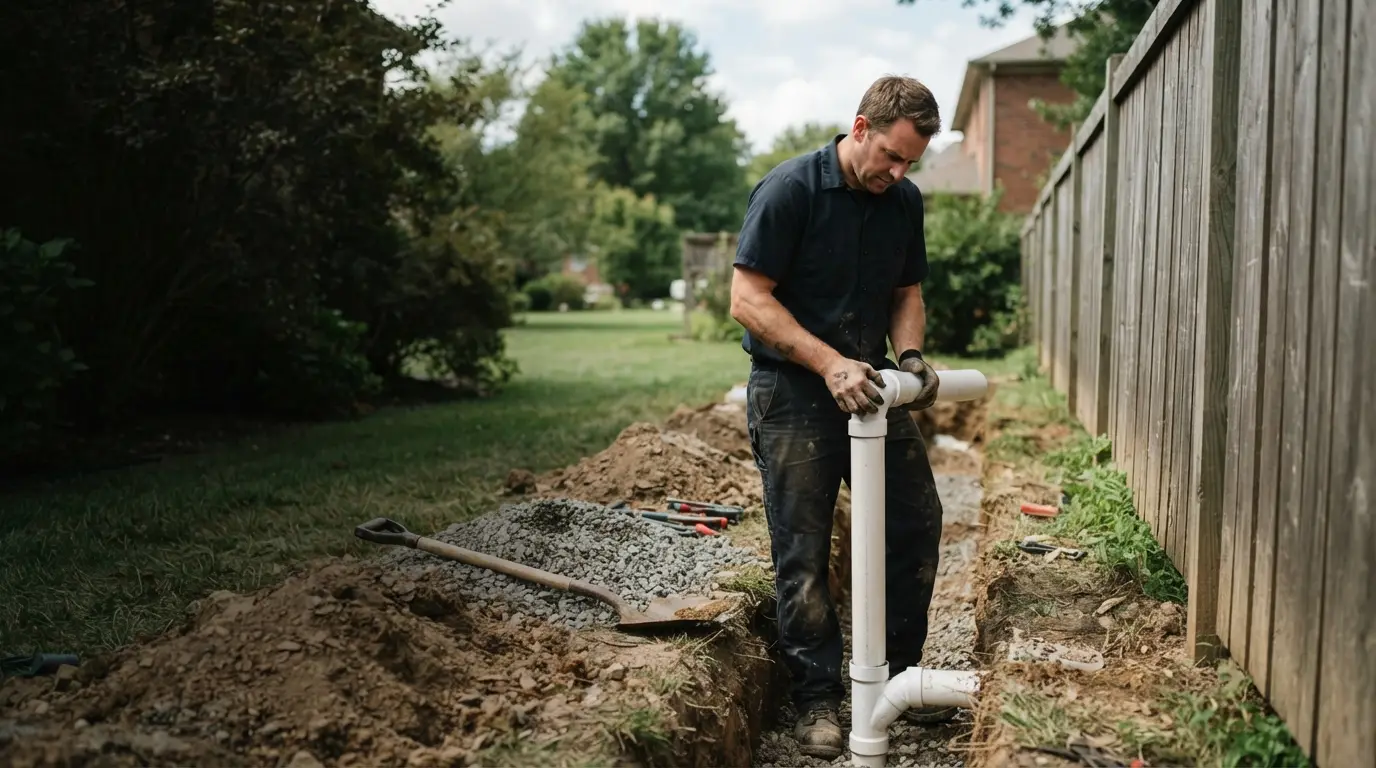
Point repair
What it fixes: One crushed or separated section
Yard disruption: A single hole
Sewer backing up every time it storms? Sewer line repair and replacement in Alabama starts with a camera, so you see what failed. Across the state we find the same culprits again and again: clay and cast iron pipe from the middle of the last century, oak and pine roots, red clay that holds water, and storm water that floods cracked lines. Below, our plumbers explain how we inspect a sewer, the repairs we offer, what drives the price and how permits work in Alabama.
The service
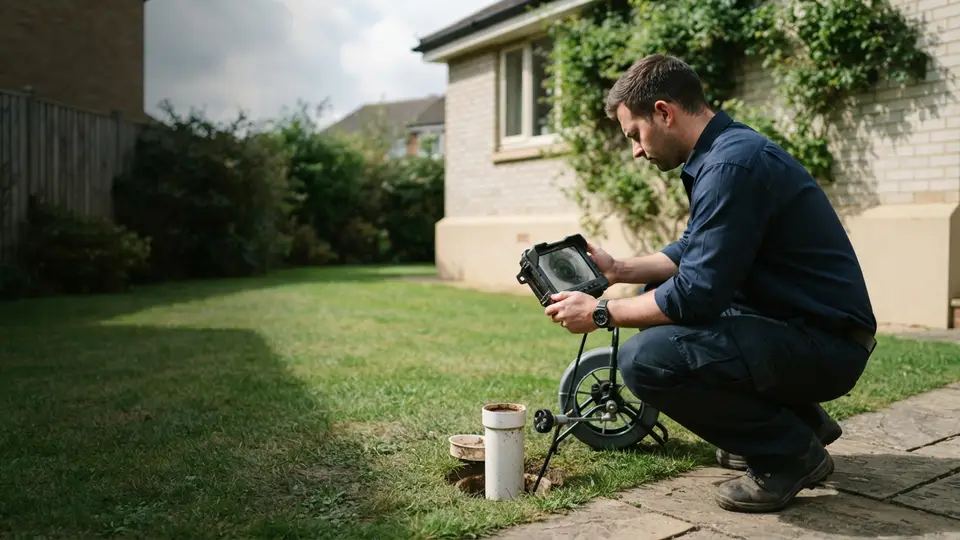
Every house connected to a public sewer has a building sewer, often called the lateral, that carries waste from the foundation to the city main. In most Alabama cities the owner is responsible for that pipe, at least up to the property line, so when it breaks the repair is yours to arrange. We inspect laterals with a camera, repair broken sections, line or burst pipe where the ground allows it and replace lines that have collapsed.
Choosing a sewer repair method
What it fixes: One crushed or separated section
Yard disruption: A single hole
What it fixes: Root-filled joints, cracks along sound pipe
Yard disruption: Little; uses cleanouts or small pits
What it fixes: Worn line replaced along the same route
Yard disruption: An entry and exit pit
What it fixes: Collapses, deep sags, wrong slope
Yard disruption: Trench along the line
Why Alabama
Close to half of the homes in our Alabama Census data (47%) went up before 1980, and in the older cities the share is far higher: 72% in Birmingham, 61% in Mobile and 61% in Florence. Laterals from those decades are usually vitrified clay with mortar or early gasket joints, or cast iron. Clay joints slip apart and cast iron scales and rusts through along its floor. In a younger city like Auburn, where 20% of homes predate 1980, we see mostly PVC.
Water oaks, pines, sweetgums and magnolias grow large and fast in Alabama. Their feeder roots find the smallest gap in a joint and fill the pipe with a mat that catches paper and grease.
Much of the state sits on dense red clay, and the Black Belt prairie soils swell and shrink sharply with rain and drought. Pipes laid in that ground shift over the years, joints open and low spots form where waste collects.
During long rains and tropical storms, water seeps into cracked laterals and overloads both the private line and the city main. That is when many homeowners first see sewage at a floor drain or lower-level shower.
Warning signs
Our process
Getting the drains working comes first, so the house is usable while we plan the repair.
A camera travels the lateral while a locator on the surface marks the depth and position of each defect.
You watch the video with our plumber, who walks through which repairs suit the damage and why.
You approve a written price, we pull the permit and call Alabama 811 so gas, power and water lines are marked.
We complete the repair, have it inspected where required and finish with a camera pass you can keep.
Typical cost
You get a written price for the job after the camera inspection, with the method and the restoration spelled out.
Get a written price: (833) 733-2357One bad joint is a small job; a lateral that is failing end to end is not.
Deep lines and wet ground, common near the coast and rivers, need more shoring and pumping.
Driveways, sidewalks and mature trees above the line add restoration if we dig.
Lining and bursting save digging but need the right pipe condition.
Permit and tap inspection fees differ from city to city.
Benefits
Fixing the broken joint or low spot ends the cycle of cleaning the same clog.
Trenchless methods leave lawns, beds and driveways mostly untouched.
A leaking lateral keeps the soil near the house wet; sealing it helps keep crawl spaces dry.
Before and after video answers questions when you sell.
Stop using all water in the house, including the dishwasher and washing machine. If you know where the outside cleanout is and the cap comes off easily, opening it can let a backup spill outdoors rather than into a bathroom; wear gloves and keep your face back.
Keep children and pets out of any room with sewage, and leave cleanup until the line is cleared. Then call us with what you saw, which fixtures backed up first and whether it followed rain.
In Alabama, repairing or replacing a building sewer usually needs a permit and inspection from the city or, in unincorporated areas, the county, and some utilities inspect the connection at the main themselves. Our plumbers are licensed through the Alabama Plumbers and Gas Fitters Examining Board. We pull the permit, arrange the 811 locate and schedule the inspection.
Why choose us
What you can count on every time one of our plumbers comes to your door.
Every job is handled by a plumber who holds the license your state or city requires, backed by liability insurance.
Our plumber explains the problem and the options, and you approve a written price before any work begins.
Burst pipes, sewage backups and failed water heaters get priority scheduling, including nights and weekends.
We pull permits when the job needs one and schedule the inspection, so the work holds up when you sell.
Repairs and installations come with a written warranty on labor, on top of the manufacturer's warranty on parts.
Our pages and plumbers account for your area's water, soil, climate and the age of the homes around you.
Related services
Service area
We repair sewer lines across 594 Alabama communities. Find yours:
The price rests on how much pipe is damaged, its depth, the method and what sits on top. After the camera inspection, we put the full price in writing.
Under driveways, slabs and mature trees it often costs less overall, because it avoids most digging and restoration. The pipe has to be intact enough to line.
The camera shows exactly what failed and where, so you pay for the right repair. You keep the recording either way.
Yes, when the rest of the line is sound. If the camera shows damage along most of the pipe, we explain why lining or replacement is the better value.
A transmitter on the camera head sends a signal we trace from above, marking the route, depth and each problem spot on the ground.
Usually the homeowner, at least to the property line, though Alabama utilities differ. We confirm the split with your utility before starting.
Yes. It can cause headaches and nausea, and it contains flammable methane. Ventilate, avoid flames and call us to find the source.
We advise against it. Gas and power lines often run nearby, and Alabama law requires an 811 call before digging. We handle the locate.
Point repairs and lining jobs are often done in a day. Full replacement by trench can take two days or more, plus inspection time.
Only while the line is open. We tell you ahead of time when to stop using water and keep that window as short as we can.
Cutting roots buys time; sealing the joints ends the problem. Lining or replacing the damaged section removes the gaps roots use.
For homes built before 1980, very much so. Finding a cracked clay lateral before closing is far better than after moving in.
When sewage enters the house or every drain stops. Stop running water and call; we clear the line first, then inspect it.
Storm water seeps into cracked laterals and overloads city mains. A damaged private line is often where the backup shows up first.
Usually, from the city or county. We pull it, call 811 and schedule the inspection so the work is on record.