Crawl space
Typical source: Supply joints, drain fittings, water heater lines
Clue you might notice: Musty smell, sagging insulation, high humidity
Water bill up and no idea why? Leak detection and repair in Alabama from our plumbers tracks down the hidden leak and fixes it. Alabama houses hide water well: under raised floors and in crawl spaces, behind tub walls, below slabs and in yard lines under thick lawns. Humidity means a slow leak can grow mold before anyone sees a drop. This page covers where leaks start in Alabama homes, how we find them without guesswork, how we handle burst and frozen pipes, and how to cut your risk.
The service
Most leaks are not a mystery once you know where to look. The hard part is that water travels along joists, pipes and slabs before it shows itself, so the stain on the ceiling may be several feet from the leak. Our job is to find the source with testing and instruments, open only that spot and repair it so it stays fixed.
Where Alabama leaks usually hide
Typical source: Supply joints, drain fittings, water heater lines
Clue you might notice: Musty smell, sagging insulation, high humidity
Typical source: Shower valve, tub drain, toilet supply
Clue you might notice: Loose tile, stains on the ceiling below
Typical source: Copper supply lines
Clue you might notice: Warm floor spot, constant meter movement
Typical source: Service line from the meter
Clue you might notice: Wet patch, low pressure
Typical source: Water heater or line in the attic
Clue you might notice: Ceiling stain, dripping from a light
Why Alabama
47% of the homes in our Alabama Census data were built before 1980, including 55% in Montgomery and 55% in Decatur. Galvanized steel from the 1950s and 60s rusts from the inside, and older copper joints weaken. One leak in that kind of piping is often the first of several.
Many Alabama homes built roughly between the late 1970s and mid-1990s were plumbed with gray polybutylene pipe, whose fittings can fail without warning. We see it often in suburbs that grew during those years.
North Alabama, around Huntsville, Decatur and Florence, gets several hard freezes most winters, and arctic outbreaks reach the whole state now and then. Pipes in crawl spaces, exterior walls and attics are the first to freeze. Huntsville alone has 104,388 homes in our data, and a single cold snap brings a wave of split-pipe calls.
In Alabama's humid climate, a small drip under a house or in a wall does not dry out. Wood rots and mold grows long before the water shows on a finished surface.
Warning signs
Our process
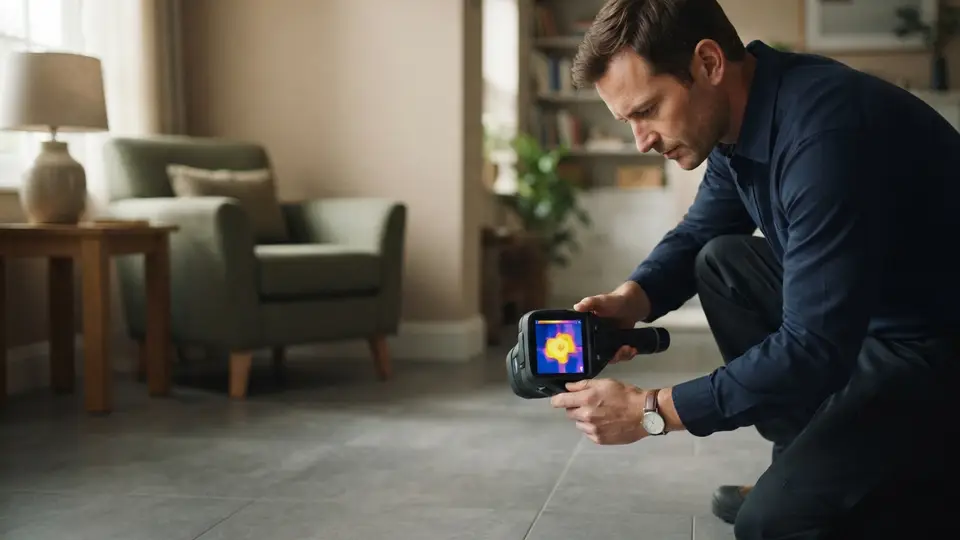
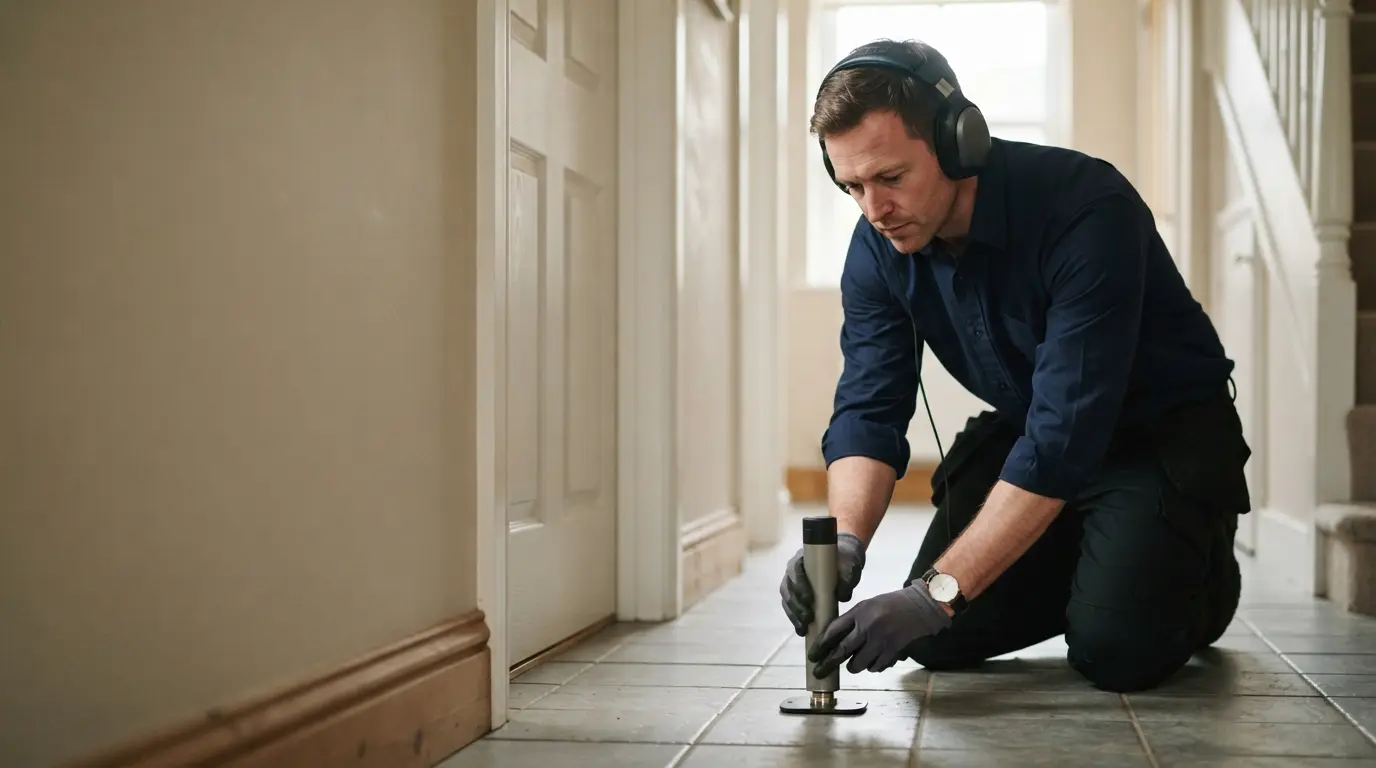
We confirm the leak at the meter, then split the system: house side or yard side, hot or cold, one branch or another. Acoustic listening gear picks up the hiss of escaping water, thermal cameras show the cool or warm trail it leaves, and moisture meters map how far it has spread. We crawl the crawl space and check the attic when that is where the clues point.
With the source marked, we open the smallest area we can, cut out the failed pipe or fitting, install new material and pressure test before closing up. If the surrounding pipe is in poor shape, we show you rather than patch blindly.
After a burst, we isolate the break, replace the damaged section, check nearby joints that may have been stressed and restore water. We point out soaked materials that should be dried or removed quickly in Alabama's humidity.
We thaw lines with safe heat, never a torch, then watch for splits that open as the ice melts. Afterward we insulate, add heat tape where it makes sense or reroute pipes away from cold walls.
Typical cost
We price detection and the repair separately, in writing, so you approve each step.
Get a written price: (833) 733-2357An open crawl space is far easier than a tiled shower wall or a slab.
Quiet leaks take longer to pinpoint than visible ones.
Polybutylene or corroded galvanized may make repiping the smarter fix.
Tile, plaster and finished ceilings add patching work.
After-hours emergency calls cost more than daytime appointments.
Benefits
Finding the exact spot keeps repair holes small.
In humid Alabama, drying out a leak quickly limits mold growth.
A running leak can waste water around the clock.
You learn whether the leak was a one-time failure or a sign the pipes are worn out.
Know where your main shutoff is. In Alabama homes it is often in the crawl space near where the line enters, in a utility room, or at the meter box by the street. If water is running, close it, switch off breakers for wet areas you can reach safely, and move belongings.
To test for a hidden leak, shut off every faucet and appliance and watch the meter for ten minutes. Write down what you see and call us. If pipes freeze, open the faucet they feed and warm the area gently with a hair dryer or space heater kept away from anything flammable; never use an open flame.
Small leak repairs usually do not need a permit in Alabama; replacing larger runs of pipe or the water service line often does, depending on the city or county. Our plumbers are licensed through the Alabama Plumbers and Gas Fitters Examining Board, and we pull any permit the repair needs.
Why choose us
What you can count on every time one of our plumbers comes to your door.
Every job is handled by a plumber who holds the license your state or city requires, backed by liability insurance.
Our plumber explains the problem and the options, and you approve a written price before any work begins.
Burst pipes, sewage backups and failed water heaters get priority scheduling, including nights and weekends.
We pull permits when the job needs one and schedule the inspection, so the work holds up when you sell.
Repairs and installations come with a written warranty on labor, on top of the manufacturer's warranty on parts.
Our pages and plumbers account for your area's water, soil, climate and the age of the homes around you.
Related services
Service area
Our plumbers track down leaks in 594 Alabama communities. Choose yours:
It depends on how hidden the leak is and where we have to look: crawl space, walls, slab or yard. We give you the detection price in writing first.
Yes. Once we know where the leak is and what the pipe looks like, we price the repair in writing before opening anything.
Many policies cover sudden water damage but not worn-out pipe or slow leaks. We document what we found to help with your claim.
We test at the meter, isolate parts of the system and use acoustic listening, thermal imaging and moisture meters to narrow it down.
Yes. Many Alabama leaks are under the house, and we inspect crawl spaces as part of tracking them down.
Often, yes. Polybutylene fittings tend to fail one after another. We show you the condition and price both options.
Yes. In humid weather, wet wood and drywall can start growing mold within a day or two, so fast drying matters.
Very. Stay out of standing water near electrical equipment and, if you can do it safely, shut off the main breaker.
Most are pinpointed in one to three hours. Slab and long yard line leaks can take longer.
Many repairs are finished during the same visit. Leaks under tile or concrete may need a second day.
Turn off all water and watch the meter or its small leak dial for ten minutes. Any movement means water is escaping.
Insulate crawl space and attic pipes, close foundation vents in winter and let faucets drip on the coldest nights.
Close the main valve, cut power to wet areas and call us. Burst pipes get priority scheduling, nights and weekends included.
Less often than in the north, but hard freezes do reach Mobile and Montgomery some winters, and exposed pipes can split.
Small repairs usually do not. Larger pipe replacements often do, and we pull the permit when one applies.