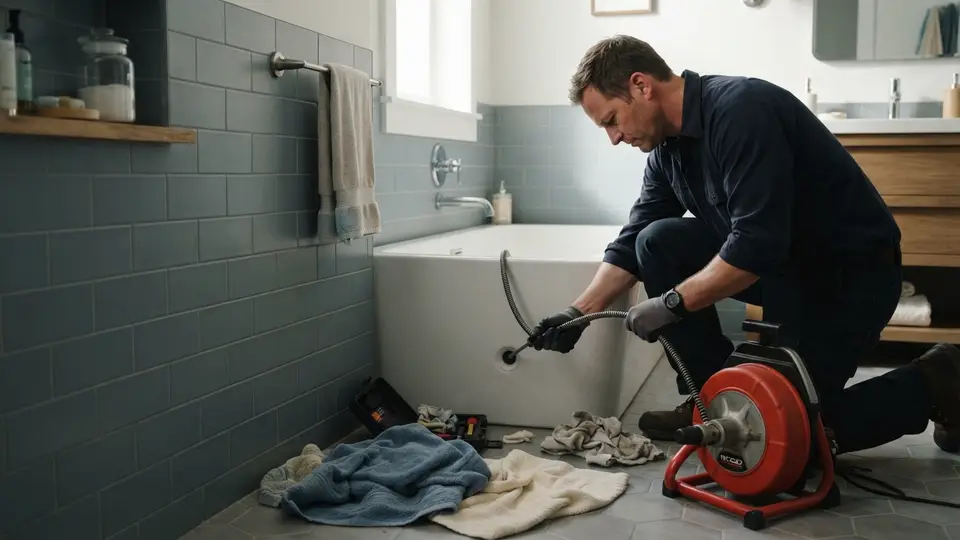
One sink or tub drains slowly
Likely location: That fixture's trap or drain line
Typical fix: Hand snake or small drum machine
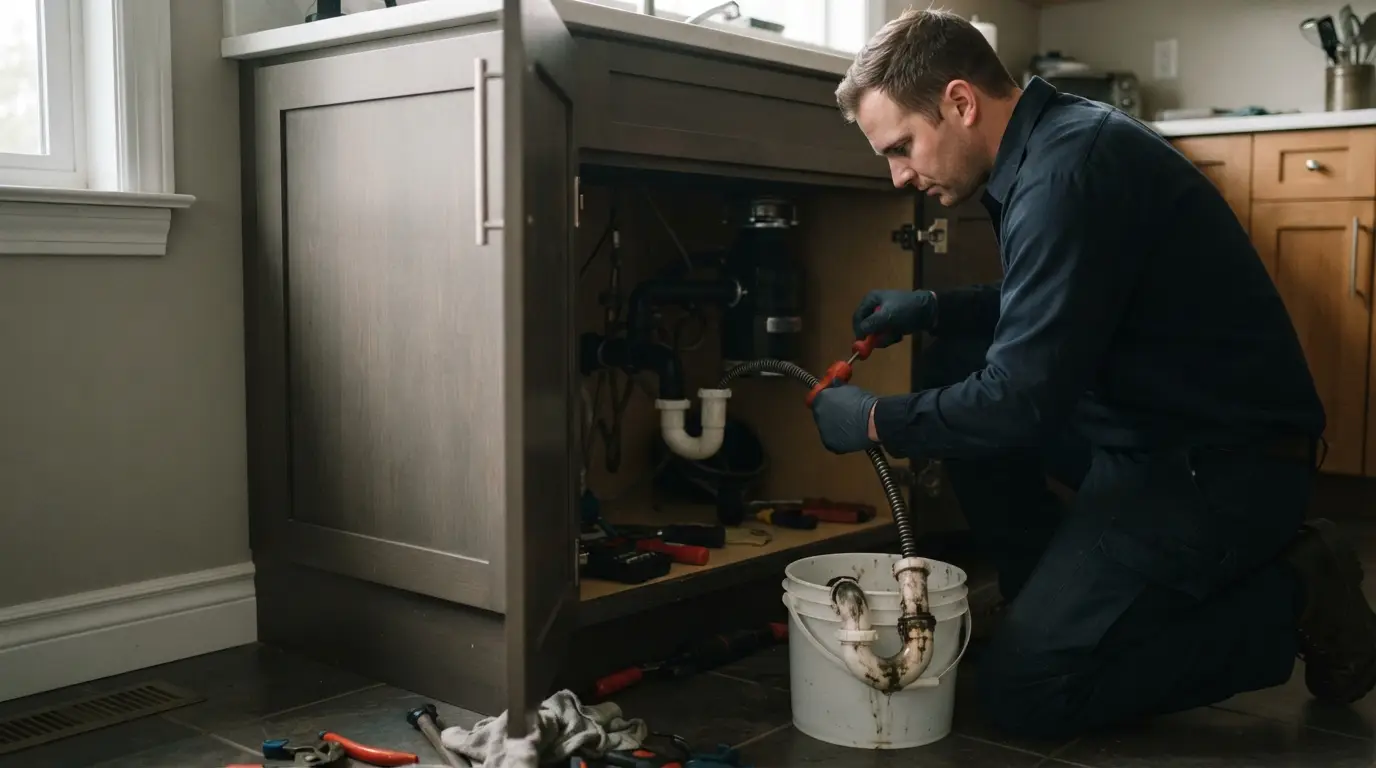
Sink, tub or toilet backing up again? Our plumbers handle drain cleaning and clog removal in Alabama and find out why the clog keeps coming back. Here it often means more than pulling out a hair clog. Tree roots, heavy rain, older cast iron lines and septic systems all play a part here. Here is what causes drains to back up in Alabama homes, how our plumbers clear them, what affects the price, and when a stubborn clog is a sign of a bigger problem in the sewer line.
The service
Drain cleaning means removing the buildup along the whole inside of a drain pipe, so the line is open wall to wall instead of having a narrow hole punched through the clog. Over time, kitchen drains collect grease and food solids, bathroom drains collect hair and soap scum, and every drain can collect mineral scale. A professional cleaning restores the full width of the pipe so water flows freely again and the clog does not return a week later.
Which drain is clogged?
Likely location: That fixture's trap or drain line
Typical fix: Hand snake or small drum machine
Likely location: Kitchen branch line, usually grease
Typical fix: Cable machine or hydro jetting
Likely location: Main line or vent
Typical fix: Main line cleaning through a cleanout
Likely location: Main sewer line
Typical fix: Main line cleaning and camera inspection
Why Alabama
Alabama's warm, wet climate grows big trees with aggressive root systems. Roots are drawn to the moisture and nutrients inside sewer pipes and slip in through the joints of clay and cast iron lines. Even small root intrusions catch debris and turn a clean line into a recurring clog. Root problems tend to get worse in spring and summer, when trees are growing fastest.
In established cities, a lot of drain piping is decades old. In Birmingham, 72% of homes were built before 1980, and cast iron drains of that age develop rough, scaled interiors that snag grease and paper. Newer suburbs such as Madison, where only 11% of homes predate 1980, mostly have PVC drains, where clogs usually come from what goes down the drain rather than the pipe itself.
During long, heavy rains, storm water seeps into older sewer lines through cracks and loose joints. The extra volume can push a partly blocked main line over the edge, and the first sign is often water rising in a basement floor drain or a ground-floor shower.
In rural Alabama, many homes drain to a septic tank. When the tank is overdue for pumping or the drain field is saturated, drains in the house slow down even though the pipes themselves are clear. Cleaning the house drains will not fix that, so a plumber should check the tank level when every drain is slow.
Warning signs
Our process
Our plumber runs water at several fixtures to tell a single clogged drain from a main line problem.
Fixture drains are cleaned through the drain or the trap. Main lines are cleaned through a cleanout, usually outside near the foundation or in a crawl space.
A rotating cable with a cutting head breaks up hair, grease and roots. For heavy grease or roots, hydro jetting scours the full inside of the pipe with high-pressure water.
If the clog was in the main line or keeps coming back, a camera inspection shows roots, cracks, sags or broken sections.
Our plumber runs water through the cleaned lines to confirm they drain at full speed.
Typical cost
Your written quote spells out what is included, such as clearing the line, a camera inspection or a follow-up check, so you know the full price before we start.
Get a written price: (833) 733-2357A single sink or tub drain costs less than a main line, which takes larger equipment and more time.
An outdoor cleanout makes main line work quicker. Without one, we may need to pull a toilet or go through the roof vent, and we may suggest adding a cleanout to make future service easier.
Heavy root growth or thick grease may call for hydro jetting instead of a cable, which costs more but cleans more thoroughly.
Adding a camera inspection raises the price of the visit but tells you whether a repair is needed.
Evening, weekend and storm-related calls cost more, and rural homes may see a trip charge.
Benefits
Clearing the whole pipe wall, rather than a narrow hole through the clog, keeps water moving for months instead of days.
A clean line is less likely to overflow into floors, crawl spaces and cabinets during heavy Alabama rain.
When we run a camera through the line, you see whether roots or a broken pipe are behind them.
Catching root growth early costs far less than digging up a collapsed sewer line.
Grease, coffee grounds, rice and starchy food cause most kitchen clogs. Grease goes down warm, then cools and coats the pipe a few feet downstream. Kitchen lines in homes that cook with a lot of oil are good candidates for hydro jetting.
Hair bound with soap scum causes most tub, shower and sink clogs, usually within the first foot or two of the drain. A toilet that clogs often may point to a partial blockage in the main line.
Washers release a lot of water quickly, along with lint. If the standpipe overflows when the washer drains, the laundry line or the main line may be partly blocked. A lint trap on the discharge hose helps, especially on septic.
If a single sink or tub is slow, a plunger may get water moving until our plumber arrives. Stop using water in the house if a toilet or floor drain starts to back up, because every flush and every load of laundry adds to the problem.
Call us right away when more than one drain is affected, when water comes up in a different fixture, when you smell sewage, or when a clog keeps coming back. Please skip chemical drain cleaners: they rarely clear a full blockage, they can damage older pipes and plastic traps, and they make the line hazardous to open.
Clearing a drain does not normally require a permit in Alabama. If the camera finds a broken pipe and the line needs to be dug up or replaced, that work is a sewer repair and usually needs a permit from the city or county. Our plumbers are licensed through the Alabama Plumbers and Gas Fitters Examining Board, we pull any permit the repair needs, and we coordinate septic repairs with the county health department.
Why choose us
What you can count on every time one of our plumbers comes to your door.
Every job is handled by a plumber who holds the license your state or city requires, backed by liability insurance.
Our plumber explains the problem and the options, and you approve a written price before any work begins.
Burst pipes, sewage backups and failed water heaters get priority scheduling, including nights and weekends.
We pull permits when the job needs one and schedule the inspection, so the work holds up when you sell.
Repairs and installations come with a written warranty on labor, on top of the manufacturer's warranty on parts.
Our pages and plumbers account for your area's water, soil, climate and the age of the homes around you.
Related services
Service area
Find local information on drain cleaning in your city, including what causes clogs in homes there.
It depends on the drain: a single sink or tub costs less than a main line, and roots or hydro jetting add to it. You get a written price before we start.
For grease-coated kitchen lines and main lines with roots, often yes. Jetting scours the full pipe wall, so the line stays clear longer than after cabling alone.
It is a separate line in the quote. We suggest it when a main line clogs repeatedly or we pull out roots, clay or gravel, signs of a damaged pipe.
We run water at several fixtures. One slow drain points to that fixture's line; several slow drains or water rising at the lowest drain point to the main line.
A cleanout makes the job quicker. Without one we may go through a toilet or roof vent, and we can add a cleanout to make future service easier.
We show you the footage and explain the options, from a spot repair to lining or replacement, with a written price before any digging.
We advise against it. Strong chemicals can damage older pipes, do nothing for roots and make a still-blocked line dangerous to work on.
No. Stop running water and flushing, because everything you drain adds to the backup, and keep children and pets away from the wastewater.
A single fixture drain often takes under an hour. A main line usually takes one to three hours, more with heavy roots or a hard-to-reach cleanout.
A properly cleaned line should stay clear a long time. If a main line needs cleaning more than once or twice a year, a root or pipe problem needs fixing.
Most homes need it only when a problem appears. Older homes with large trees near the sewer line may need main-line cleaning every year or two.
Pour grease into a can, scrape plates into the trash and run water after using the disposal. Grease causes most kitchen clogs.
When sewage comes up into a tub, shower or floor drain, or several drains back up at once. Stop using water and call us; backups get priority.
The warm, wet climate grows large trees whose roots seek the moisture in sewer pipes, entering through cracks and joints in older clay and cast iron lines.
Clearing a drain does not normally need one. If the line has to be dug up or replaced, a city or county permit usually applies, and we handle it.