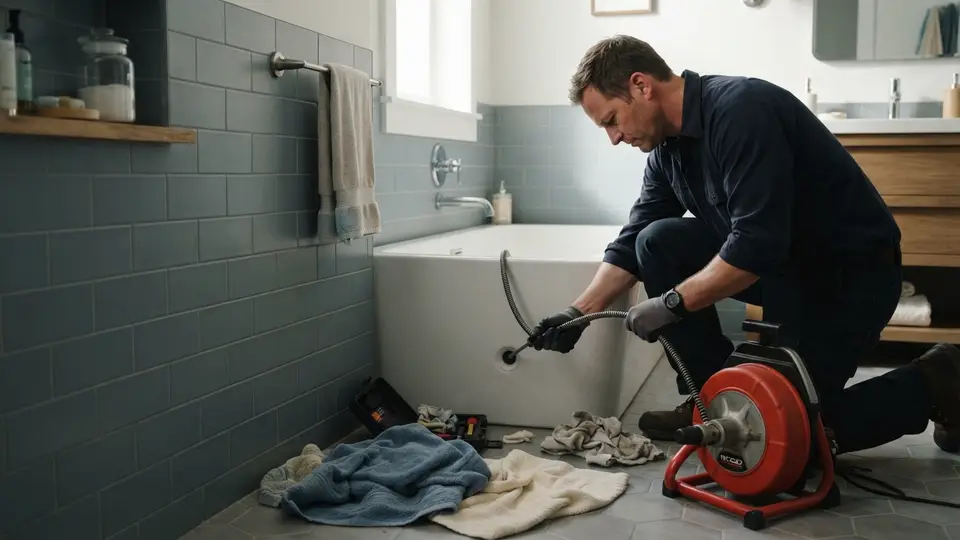
One sink or tub slow
Probable cause: Hair, soap or grease near the fixture
How we handle it: Hand auger or small cable
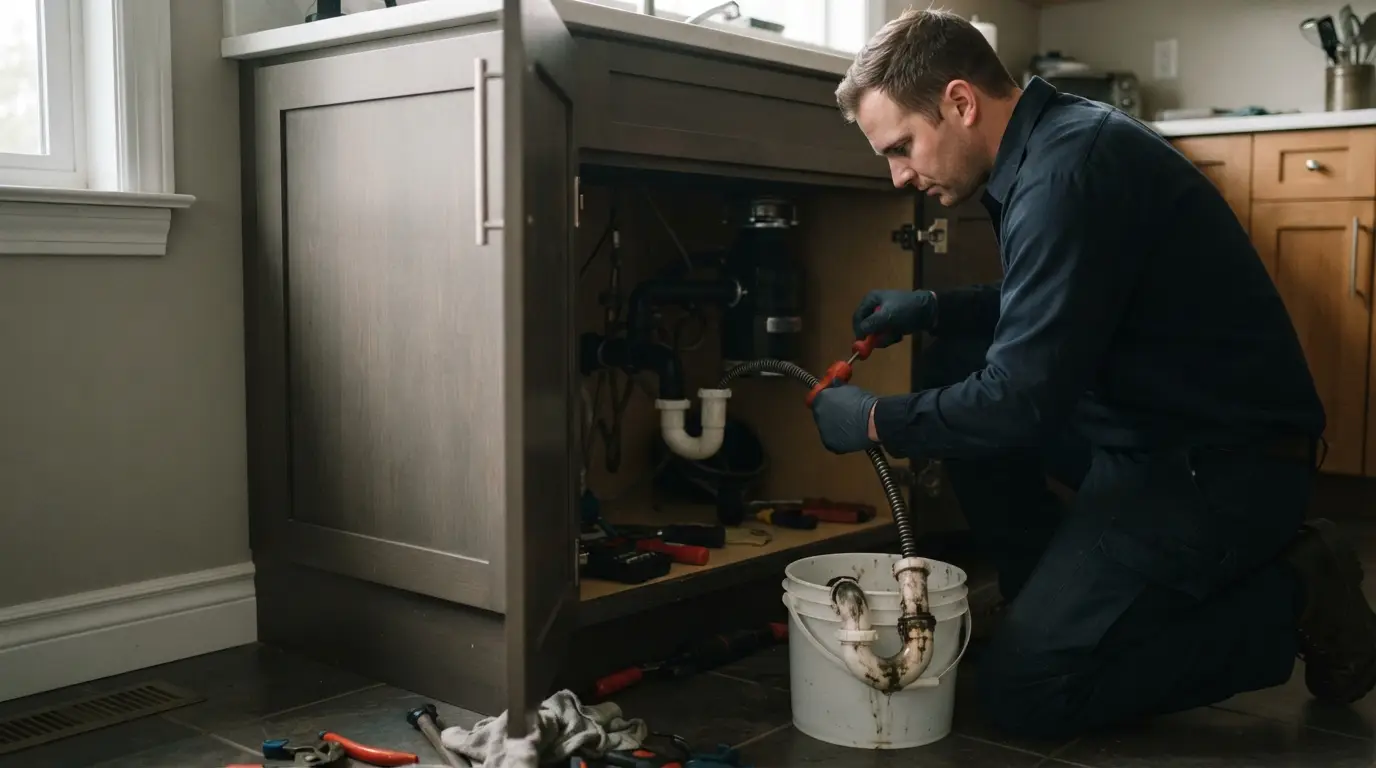
Kitchen sink full, or the basement floor drain backing up? Drain cleaning and clog removal in Alaska is work our plumbers do in every season. In Alaska a clog is not always a clog: drain and sewer lines can freeze, grease sets up hard in cold pipe, and septic lines slow down when the ground freezes deep. Our plumbers figure out which problem you have before we pick a tool. Below is what causes slow drains here, how we clear them, what moves the price and how to keep lines open through winter.
The service
We clear and clean fixture drains, kitchen and laundry lines, floor drains, the main building drain and the sewer line out to the city connection or septic tank. Cleaning means restoring the full inside of the pipe instead of poking a small hole through the blockage. For heavy grease we use hydro jetting, and for lines that keep clogging we run a camera to see why.
In winter we also thaw frozen drain and sewer lines, which looks like a clog from inside the house but needs a different approach.
What the symptom usually means
Probable cause: Hair, soap or grease near the fixture
How we handle it: Hand auger or small cable
Probable cause: Frozen sewer line or septic line
How we handle it: Locate the freeze, thaw with steam or hot water jetting
Probable cause: Grease hardened in cold pipe
How we handle it: Hydro jetting
Probable cause: Main line clog or root intrusion
How we handle it: Main line cleaning and camera
Why Alaska
A sewer line that runs shallow, sags or loses its snow cover can freeze, especially in a house that sits empty or uses little water. Ice builds in layers until nothing gets through. It is common on rural properties where the line runs to a septic tank across open ground.
Grease that goes down a drain warm cools fast in a cold crawl space or an exterior wall and sticks to the pipe. In winter, kitchen lines can close up much faster than in summer.
37% of homes in our Alaska Census data predate 1980, 45% in Anchorage, 51% in Fairbanks and 71% in Ketchikan. Cast iron and early plastic drains from those decades scale, crack and settle, and old clay or concrete sewer laterals let roots in.
In wet Southeast towns, big spruce and alder roots grow into older sewer laterals, and heavy rain carries silt into cracked lines and yard drains.
Warning signs
Our process
In winter, we first check whether the line is frozen, since cabling a frozen pipe can damage it.
Running water at several fixtures tells us whether it is one branch or the main line.
Cables with cutting heads for hair, roots and buildup; hydro jetting for grease; steam or hot-water jetting to thaw ice.
For repeat clogs, freezes or roots, a camera shows sags, cracks and low spots that hold water.
We run water through every cleaned line and tell you what would keep it from happening again, such as insulation or regrading.
Typical cost
You get a written price before we start that lists each part of the job.
Get a written price: (833) 733-2357A fixture drain is quick; a main or sewer line takes larger equipment.
Thawing a frozen sewer line takes longer than clearing a clog.
A cleanout buried under snow or behind finished walls adds time.
Hydro jetting costs more than cabling but lasts longer.
Remote properties and after-hours calls add to the price.
Benefits
A clean line drains fully, so less water sits in it to freeze.
Jetting removes grease from the whole pipe wall.
Camera footage shows whether a sag or crack is behind repeat trouble.
Finding a low spot or root early costs less than replacing a frozen, cracked line.
If one drain is slow, a plunger may help. If several drains back up at once, especially in deep cold, stop using water: a frozen sewer line cannot take more, and the backup will come up at the lowest drain.
Do not pour chemical drain openers into a line that may be frozen; they will not thaw it and they make the water dangerous for anyone working on the line. Do not use an open flame on drain pipe. Call us and tell us whether the cold has been unusual or the house was empty.
Clearing a drain normally needs no permit. Repairing or replacing a sewer line usually does, from the city or, where one exists, the borough. Our plumbers hold Alaska certificates of fitness, our firm is registered as a contractor with the state, and we handle any permit a repair needs.
Why choose us
What you can count on every time one of our plumbers comes to your door.
Every job is handled by a plumber who holds the license your state or city requires, backed by liability insurance.
Our plumber explains the problem and the options, and you approve a written price before any work begins.
Burst pipes, sewage backups and failed water heaters get priority scheduling, including nights and weekends.
We pull permits when the job needs one and schedule the inspection, so the work holds up when you sell.
Repairs and installations come with a written warranty on labor, on top of the manufacturer's warranty on parts.
Our pages and plumbers account for your area's water, soil, climate and the age of the homes around you.
Related services
Service area
We clear drains across 355 Alaska communities. Choose yours:
It depends on which line is clogged, whether it is frozen, access to a cleanout and location. You approve a written price before we start.
Usually, yes. Thawing takes more time and equipment than clearing a clog, and the price depends on the length and depth of the frozen section.
For kitchen lines that clog every winter, often yes. Jetting removes grease from the whole pipe wall, so it takes much longer to build back up.
We look at the weather, the pattern of slow drains and the line itself, and a camera or temperature check confirms it before we use any cable.
With steam or hot-water jetting fed into the line from a cleanout, working toward the ice until water flows again. No open flames.
Yes, for repeat clogs, freezes and roots. The footage shows sags, cracks and shallow spots, and you keep a copy.
Yes. Sewage carries bacteria. Stop using water, keep people and pets away and let us clear the line before cleanup.
No. Open flames can crack pipe, melt plastic and start fires in crawl spaces. Let us thaw the line safely.
A single fixture is often done within an hour. A frozen or heavily clogged main line can take several hours.
Right after we finish and test the line. If a freeze will return without a repair, we tell you how to manage until then.
Keep snow cover over the line, run water regularly, and have us fix sags or add insulation where the line is shallow.
Most homes only when trouble starts. Homes with heavy grease use or a line that froze before benefit from a check each fall.
Stop using water and call us. A frozen or blocked main is urgent, and these calls get priority scheduling.
Shallow or sagging lines, thin snow cover, long cold snaps and low water use let ice build up inside the pipe.
No. Sewer repair or replacement usually needs one from the city, and we pull it when the job requires it.