Exterior walls
Usual cause: Pipe froze and split
Clue: Leak starts as the house warms up
Pipe split in the cold, or a wet ceiling with no clear source? Leak detection and repair in Alaska from our plumbers finds the leak and fixes it properly. In Alaska, most leaks start with cold: a pipe that froze and split, a heating loop that sprang a leak, or a fitting stressed by frost movement or an earthquake. Water can also run unseen inside insulated walls and crawl spaces. This page covers where leaks hide here, how we find them, frozen and burst pipe repair, and how to prevent the next one.
The service
We find and repair leaks in supply lines, drain lines, water heaters and boiler or glycol heating loops. Detection comes first, so we open only the wall, floor or ceiling where the leak is. Repair follows, along with whatever it takes to stop the same pipe from freezing or failing again.
Common leak spots in Alaska homes
Usual cause: Pipe froze and split
Clue: Leak starts as the house warms up
Usual cause: Failed heat tape, torn insulation, broken skirting
Clue: Low pressure, musty smell
Usual cause: Frost movement or freezing at the foundation
Clue: Water at the basement wall, meter moving
Usual cause: Corroded fittings, failed valves
Clue: Pressure loss on the boiler, sweet glycol smell
Usual cause: Tank or valve failure
Clue: Water around the base
Why Alaska
When heat fails or extreme cold outlasts the insulation, water expands into ice and splits pipe and fittings. The leak shows up when the ice thaws. In the Interior, where Fairbanks has 13,793 homes and Badger 7,602 in our data, long stretches far below zero make this the most common leak we see.
37% of homes in our Alaska Census data were built before 1980, including 45% in Anchorage. Older copper, galvanized and some early plastic lines in those homes wear at joints, and one leak often signals others.
Frost heave and earthquakes stress pipes where they pass through the foundation or connect to fixed equipment. Rigid connections crack; flexible ones survive.
Boiler loops with glycol or water run hot and under pressure. Fittings, valves and older baseboard units develop slow leaks that show as a boiler that keeps losing pressure.
Warning signs
Our process
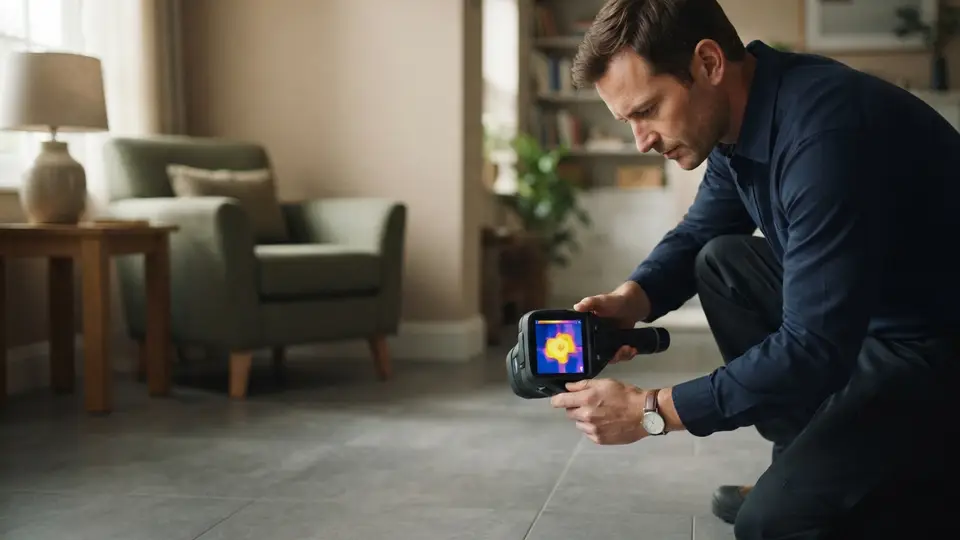
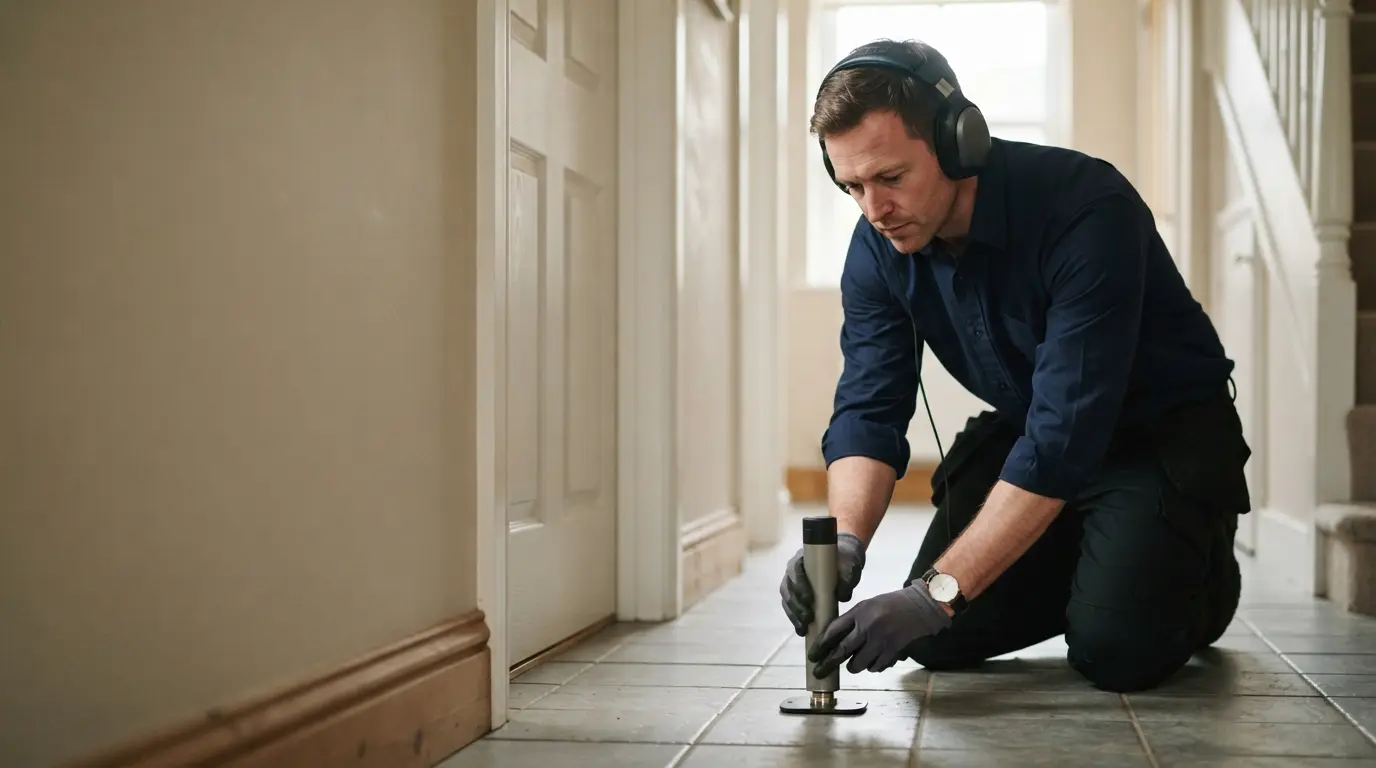
We confirm the leak at the meter or the boiler gauge, isolate parts of the system and use acoustic listening, thermal imaging and moisture meters to narrow it down. Thermal cameras are especially useful in Alaska, showing cold spots where insulation is missing as well as warm trails from hot water leaks.
We open the smallest area needed, replace the damaged pipe or fitting and pressure test. If the pipe sits in a cold spot, we insulate it or move it to a warmer chase.
We stop the water, replace the burst section, check nearby pipe that may have frozen too, and restore service. We point out wet materials that need drying, since insulation and drywall behind a vapor barrier hold water for a long time.
We thaw frozen pipes with safe heat, never an open flame, watch for splits as the ice melts and fix the reason it froze, whether failed heat tape, a gap in skirting or a pipe run along a cold wall.
Typical cost
We price detection and repair in writing before each step.
Get a written price: (833) 733-2357Crawl spaces and open basements are easier than insulated exterior walls.
After a freeze there may be several breaks along one line.
Opening and restoring insulated walls takes more work.
Adding heat trace or rerouting a cold pipe adds to the job but prevents repeats.
After-hours and remote calls cost more.
Benefits
Every hole in a cold wall has to be insulated and sealed again.
Water trapped behind vapor barriers dries slowly.
Finding why a pipe froze prevents the next break.
A steady leak wastes water and, on a hot line, heating fuel.
Know where your main shutoff is; in Alaska homes it is usually where the service line enters, often in a utility room or basement. If water is running, close it, cut power to wet areas and move belongings.
If a pipe is frozen but not leaking, open the faucet it feeds and warm the area gently with a space heater or hair dryer kept clear of anything flammable. Never use a torch. If the heat in the house has failed, call us right away.
Many Alaska leak calls come from homes left empty during a cold snap. If you travel in winter, keep the heat on, have someone check the house every day or two, and consider a temperature alarm that texts you if the house cools. A water sensor near the water heater and under sinks adds a second warning, and an automatic shutoff valve on the main can stop a burst pipe from running for days before anyone returns. For longer absences, we can drain and winterize the plumbing so there is no water left to freeze.
Small repairs usually need no permit; larger repiping or service line replacement often does, depending on the city. Our plumbers hold Alaska certificates of fitness, we are registered with the state as a contractor, and we pull permits when the work calls for them.
Why choose us
What you can count on every time one of our plumbers comes to your door.
Every job is handled by a plumber who holds the license your state or city requires, backed by liability insurance.
Our plumber explains the problem and the options, and you approve a written price before any work begins.
Burst pipes, sewage backups and failed water heaters get priority scheduling, including nights and weekends.
We pull permits when the job needs one and schedule the inspection, so the work holds up when you sell.
Repairs and installations come with a written warranty on labor, on top of the manufacturer's warranty on parts.
Our pages and plumbers account for your area's water, soil, climate and the age of the homes around you.
Service area
We find and fix leaks in 355 Alaska communities:
It depends on where the leak is hidden and how much testing it takes. Detection is priced in writing before we start.
Yes. Once we have found the leak, we price the repair in writing before opening anything.
Often, if the heat was maintained, though policies vary. We document the cause and damage for your claim.
With acoustic listening, thermal imaging and moisture meters, so we open only the spot where the leak is.
Yes. We find and repair leaks in heating loops and restore system pressure.
Yes. We look for failed heat tape, missing insulation or cold walls and fix them with the repair.
It can fall when saturated, and water near lights is an electrical hazard. Shut off water and power to the area.
No. Open flames can start fires in walls and crawl spaces. Use gentle heat or call us.
Most leaks are found in one to three hours. Several freeze breaks can take longer.
Shut off the water immediately and call us. Burst pipes get priority scheduling, nights and weekends included.
Keep the heat on, maintain heat tape and skirting, and open cabinets on cold walls during deep cold.
For long winter absences, yes. Draining the plumbing removes the water that could freeze.
Call us right away. If pipes may freeze, shut off the water and open faucets to drain the lines.
Extreme or long cold, gaps in insulation, failed heat tape and pipes along exterior walls can still let lines freeze.
Small repairs usually do not. Larger pipe replacements often do in cities, and we handle them.