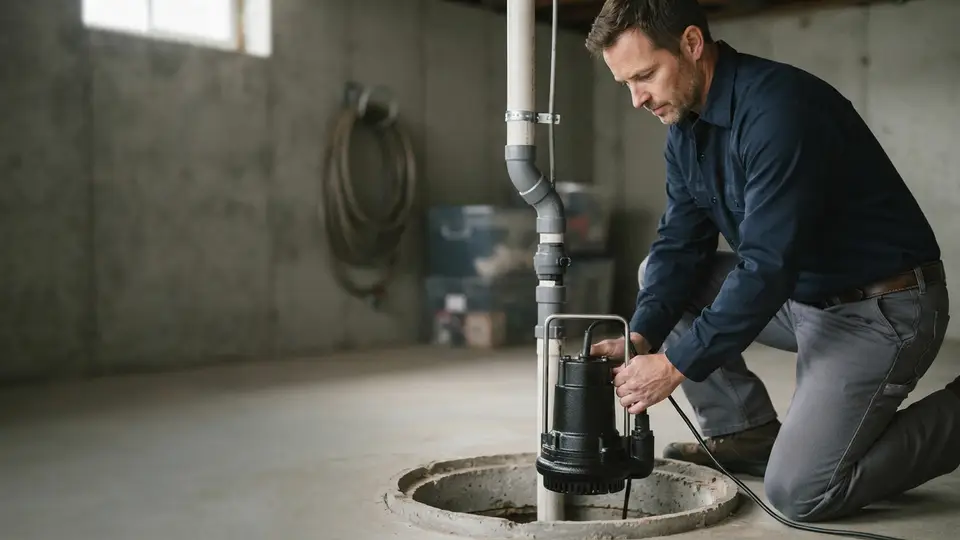
Submersible sump pump
Job: Removes ground and melt water
Common Alaska problem: Worn out after heavy breakup seasons
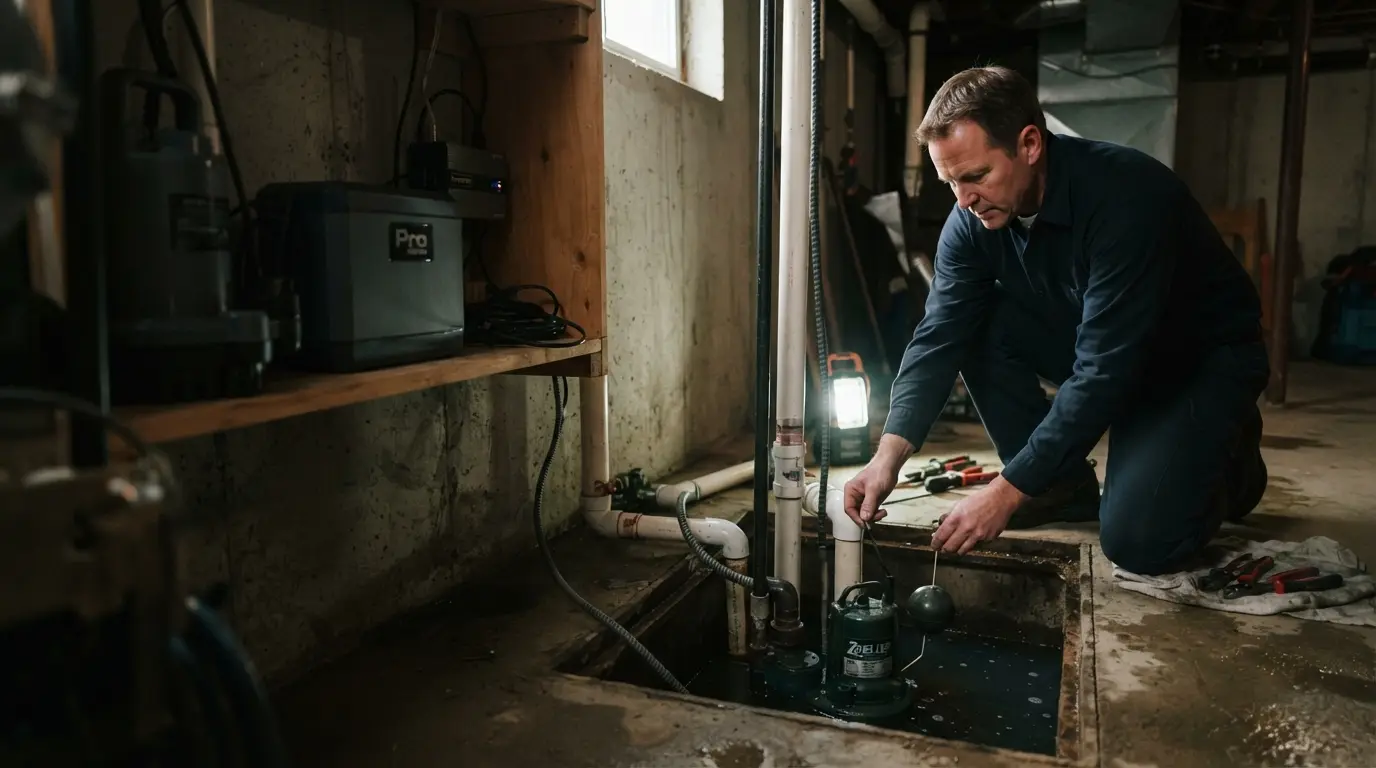
Basement wet every spring breakup? Sump pump repair and installation in Alaska is how our plumbers keep that water out. Basements and crawl spaces are common in Alaska, and they take on water from snowmelt in spring, from heavy rain in Southeast and from high groundwater in low areas. Winter brings its own problem: discharge lines that freeze solid. Here we explain how sump systems work, what goes wrong in Alaska, how we repair and install pumps and how to keep them running through freeze-up and breakup.
The service
Groundwater and melt water drain through gravel or perimeter drains into a pit at the low point of a basement or crawl space. A float switch starts the pump when the water rises, and the pump pushes it through a discharge line away from the foundation. A check valve keeps it from flowing back. Sewage ejector pumps do the same for basement bathrooms and laundries below the sewer line.
Equipment we service
Job: Removes ground and melt water
Common Alaska problem: Worn out after heavy breakup seasons
Job: Starts and stops the pump
Common Alaska problem: Stuck or tangled
Job: Carries water away
Common Alaska problem: Freezes in winter
Job: Runs during outages
Common Alaska problem: Dead battery
Job: Lifts waste from low fixtures
Common Alaska problem: Clogged or failed float
Why Alaska
When months of snow melt in a few weeks, the ground is often still frozen below the surface, so melt water cannot soak in. It runs along the frozen layer straight to foundations. Breakup is the busiest time of year for sump pumps, and the time a weak one finally fails.
Southeast Alaska is one of the wettest places in the country. Juneau has 14,249 homes in our Census data and Ketchikan 3,944, and many hillside homes there rely on drainage and pumps to stay dry year-round.
A discharge line that runs above ground or shallow can freeze solid. When the pump runs against a frozen line, it overheats or the pit overflows.
In Anchorage, 45% of homes predate 1980. Older basements often have failing perimeter drains, small pits and pumps that have been running for years.
Warning signs
Our process
We test the pump through a full cycle, check the float, check valve and discharge line, clear the pit and intake and replace failed parts. If a frozen line is the problem, we thaw it and fix the cause.
We size the pump for breakup flows, install a check valve and route the discharge so it drains between cycles and cannot freeze solid, often with a freeze-protected outlet near the house. We can dig and line a new pit where water collects.
A battery backup pump with its own float and alarm keeps working during power outages from wind and snow storms.
We repair and replace ejector pumps for basement bathrooms and laundries, with sealed, vented basins.
Typical cost
You get a written price before we begin.
Get a written price: (833) 733-2357A float or check valve costs less than a pump.
Homes with heavy breakup flows need larger pumps.
Cutting a basement floor adds labor.
Freeze-protected routing takes more work but prevents winter failures.
Battery systems add equipment.
Benefits
Water is removed before it reaches floors and storage.
A discharge line that cannot freeze keeps the pump working.
Dry basements and crawl spaces stay healthier.
A backup pump keeps going when the power fails.
Check that the pump is plugged in and its breaker or GFCI has not tripped. Unplug it before reaching into the pit to free a stuck float. In winter, look at the discharge outlet outside for ice.
If water is rising, move belongings up and keep clear of water near electrical equipment. For an ejector pump, stop using fixtures that drain to it. Then call us.
A few weeks before the big melt, shovel snow back from the foundation, especially where roofs drop snow along the walls. Make sure the ground outside the discharge point is not a frozen pond that will send water straight back toward the house. Check that window wells are clear of snow and ice. And test the pump: a pump that sat quietly all winter may have a stuck float or a seized motor that only shows when the water arrives.
If your basement took water last spring even with a working pump, the issue may be outside: grading, a blocked perimeter drain or roof water landing at the foundation. We look at those sources during the visit and tell you which fixes would help most.
Many Alaska homes sit over crawl spaces, and in low areas groundwater rises into them each spring and after heavy rain. Standing water under a house raises humidity, damages insulation and can freeze around pipes and footings in fall. A small crawl space sump with a vapor barrier keeps the space dry. Because crawl space pumps often sit in unheated areas, we protect the discharge line from freezing and set the pump so it can be reached for service.
If your crawl space floods every spring, we can also look at where the water enters and whether the ground outside slopes toward the house, and suggest grading or drainage changes that would cut how much water the pump has to move.
Replacing a sump pump usually needs no permit, while new pits, ejector systems and discharge connections may in cities with building departments. Sump water should not go into the sanitary sewer. Our plumbers hold Alaska certificates of fitness, and we are a state-registered contractor.
Why choose us
What you can count on every time one of our plumbers comes to your door.
Every job is handled by a plumber who holds the license your state or city requires, backed by liability insurance.
Our plumber explains the problem and the options, and you approve a written price before any work begins.
Burst pipes, sewage backups and failed water heaters get priority scheduling, including nights and weekends.
We pull permits when the job needs one and schedule the inspection, so the work holds up when you sell.
Repairs and installations come with a written warranty on labor, on top of the manufacturer's warranty on parts.
Our pages and plumbers account for your area's water, soil, climate and the age of the homes around you.
Related services
Service area
We service sump pumps across 355 Alaska communities:
Pump size, pit condition and discharge routing set the price. You get it in writing after we see the setup.
For basements with anything valuable, yes. Storms that cut power can strike during breakup or heavy rain.
It depends on the route. Rerouting or adding a freeze-protected outlet costs less than a winter flood.
We look at how fast the pit fills in spring and how far and high the water must be pushed.
Yes. We cut and line a pit at the low point and connect it to drainage where possible.
Away from the foundation to ground that drains, never into the sanitary sewer.
Not if water may reach outlets or appliances. Cut power to the area first or wait for us.
Yes. Sewage can back up into the basement. Stop using the fixtures that drain to it.
A replacement takes a few hours. A new pit or backup can take most of a day.
Many last 7 to 10 years. Heavy breakup seasons wear them faster.
Before breakup each spring and before fall rains in Southeast.
It runs shallow or above ground and holds water between cycles. Sloping and freeze protection fix it.
Check power, move belongings up and call us. Flooding calls get priority scheduling.
Melt water cannot soak into still-frozen ground, so it runs along the frost layer to foundations.
A replacement usually does not. New pits and ejector systems may in cities.